
“Still broken!”
That question has been directed a lot at both M and me over the last couple of weeks and yes, I’m afraid that is the answer we’ve almost flippantly begun to give in reply. As we head into our 8th week of a left leg in plaster, the initial pain and shock that gradually gave way to the novelty of the cast has all but disappeared and we are now well and truly into the “fed-up of it all and ready to move on” stage of his recuperation. M has borne the last 8 weeks with the fortitude and strength of spirit that we have come to expect of our youngest. They haven’t been the easiest, but he continues to persevere at finding the best in any given situation and whilst there has been the inevitable tears of frustration and angst, there have also been moments full of laughter and jokes and M’s unparalleled sense of humour. ![IMG_0308[1]](https://7yearstodiagnosis.com/wp-content/uploads/2016/04/img_03081-e1464812058488.jpg?w=300&h=139) With hopefully only another 2 weeks or so to go until the leg might finally reappear from underneath the protective plaster, I thought it about time I give you all a proper update.
With hopefully only another 2 weeks or so to go until the leg might finally reappear from underneath the protective plaster, I thought it about time I give you all a proper update.
After 10 days in the plain white, full-length, backslab cast with squishy top, M was upgraded to a lightweight, rock-hard, full-length cast in camouflage just as he had decided on that very first night in our local A&E. Fortunately, the green camouflage plaster ran out after  M’s leg was finished, rather than before, although that day’s orthopaedic technician did offer him the alternative of pink camouflage with sparkles whilst she was checking that stock levels were enough to cover his entire leg. 6 weeks later, and following regular fortnightly fracture clinic appointments with x-rays, the bone growth was considered enough to move M to a sarmiento cast – something we’d never heard of and instantly googled the moment it was first mentioned to us. This cast reaches up over M’s knee at the front, but below it at the back, enabling him to freely bend his leg without allowing it to twist. This is particularly important for M as he has a spiral fracture of his tibia, which needs time to fully heal correctly. Upon hearing his newest cast would need to be in place for at least 4 weeks,
![IMG_0479[1]](https://7yearstodiagnosis.com/wp-content/uploads/2016/06/img_04791.jpg?w=225&h=300) M requested a “70s Disco” theme for reasons that will later become clear, and believe me when I say that the bright orange and neon yellow stripes with added silver glitter certainly meets his somewhat unusual brief.
M requested a “70s Disco” theme for reasons that will later become clear, and believe me when I say that the bright orange and neon yellow stripes with added silver glitter certainly meets his somewhat unusual brief.
From a medical viewpoint, the fracture is mending well and in the latest set of x-rays we could clearly see the new bone growth that has formed. The latest orthopaedic consultant was fantastic and not only explained what was going on, but pointed it all out on the x-ray for M and me to see too, which meant that we both had a clear understanding of what he was talking about. M’s GOSH consultant and dietician have raised a concern over M’s bone density and health given the severity of this break and his previously broken arm, and have requested that a DEXA scan is carried out at our local hospital to check that all is as it should be. We are very much aware that the delay in reaching a diagnosis, the initial concerns about malabsorption issues during his early years and the subsequent increasing restrictions to his diet could have compromised the levels of both calcium and vitamin D in his bones. Hopefully this scan will reveal the current situation and indicate what additional steps should now be followed to improve his bone health.
Unsurprisingly, the shock of the break on his body caused an unwelcome flare of his EGID at the most inconvenient of times and the combination of flare and his necessary immobility meant that we took some massive steps backwards in terms of his general and bowel health in those first few weeks following the accident. As a result of this, all food challenges have had to be put on hold for the foreseeable future until we can regain the status quo we had worked so hard to achieve in the last few months. Coming so soon after we had finally recovered from the challenges of his December GOSH admission, this has been something of a bitter pill to swallow for us all, but M remains upbeat about the situation and continues to plan his upcoming hit-list of possible food contenders with gusto. This relapse has reminded us of just how precarious the balance is when it comes to M’s health and just how easily he can be tipped into a downwards spiral.
Naturally, the hardest impact of a broken leg has been the inability to move around freely, which for my very active lad has been absolute torture. Progress has been slow, but M has worked hard at each level meaning that he is finally beginning to master the set of crutches he was given when his cast was changed to a sarmiento one. The first 2 or 3 weeks saw M use almost exclusively a wheelchair to get from place to place, something that was only possible thanks to the British Red Cross, who lend wheelchairs on a 6-week basis for a small voluntary donation. This is an invaluable service, especially as the hospital wasn’t able to give us one and it has made going to school so much easier than it might otherwise have been. We quickly introduced a walker – think miniature Zimmer frame – to him too and the ability to use his walker to travel short distances as well as climb up and down stairs was key to his discharge from our local hospital after the break. Once the initial anxiety about re-hurting his leg disappeared, M has adapted to his one-leg status remarkably well and can move at astonishing speeds both on his walker and shuffling along on his bottom when the occasion demands. ![IMG_0506[1]](https://7yearstodiagnosis.com/wp-content/uploads/2016/06/img_05061-e1465074621823.jpg?w=260&h=300) The crutches have taken longer to adjust to, not least because M now needs to start putting some weight on to his leg, something he has been very reluctant to do. We finally seem to be breaking through that last mental barrier as he builds his confidence by beginning to stand unaided, though his walker is always close on hand should he need it.
The crutches have taken longer to adjust to, not least because M now needs to start putting some weight on to his leg, something he has been very reluctant to do. We finally seem to be breaking through that last mental barrier as he builds his confidence by beginning to stand unaided, though his walker is always close on hand should he need it.
Poor M has been forced to miss out on a number of activities as a result of his leg, though whenever possible, we have worked hard to involve him as much as we can. The first and biggest disappointment was that he was unable to act in a touring stage production at a regional theatre, something he loves to do and had been looking forward to for weeks. However, never one to let life get him down for too long, M insisted on going to watch the play instead as some of his friends were also involved and the production company kindly arranged for him to meet some of the other cast members following the performance. He did spend a lot of time talking about what he should have been doing, but his love for the theatre and the strength of his friendships saw him enjoy the afternoon regardless.
He also had to cope with his school’s Health and Fitness Week, where lessons are more or less put on hold whilst a number of visiting instructors as well as the staff introduce each class to a number of new sports activities. M was nominated “class photographer” and enjoyed spending his time cheering his friends on as well as capturing the week on film. His favourite activity turned out to be wheelchair basketball, booked months before but ironically apt for him and he has expressed an interest to training with the wheelchair basketball squad – once his leg is better! The end of that week culminated with school sports day and sadly, despite refusing to let his tube stop him participating last year, M’s leg made it impossible this. However, his fantastic school made sure he didn’t feel left out and he took charge of ringing the bell between events as well as announcing the scores throughout the morning. I am so grateful yet again that we have such an amazing school that has supported us all through the ups and downs of M’s 3 years with them. ![IMG_0439[1]](https://7yearstodiagnosis.com/wp-content/uploads/2016/06/img_04391-e1464811428943.jpg?w=226&h=300) He has not missed a single day of school due to his broken leg, other than for necessary appointments and that is due to the willingness of the Headteacher and his teaching team to accommodate M’s needs in a safe way and involve him in the classroom as best they can.
He has not missed a single day of school due to his broken leg, other than for necessary appointments and that is due to the willingness of the Headteacher and his teaching team to accommodate M’s needs in a safe way and involve him in the classroom as best they can.
Nor has being confined to a wheelchair stopped M’s extra-curricular activities, even if it might have limited them somewhat. He has continued with his weekly cello lessons at school, again thanks to a fantastic music teacher who has worked around his worries and allowed him to either play his cello or hone his oral skills as he has chosen. We experimented at home until we found the most comfortable position for him to be in to practice his instrument and he has been encouraged to take part in the school music concert in a couple of weeks time. As for the “70s disco” theme plaster, this specific request is because he, G and the rest of their ![IMG_0499[1]](https://7yearstodiagnosis.com/wp-content/uploads/2016/06/img_04991.jpg?w=225&h=300) Stagecoach school are performing a 70s tribute routine in a local carnival parade in the middle of June. He has once again been to every Stagecoach session this term, and so have I, and knows both the songs and the dance routine by heart, even though dancing it has been an impossibility. There is every chance that his cast may actually be off his leg by the time the parade happens, but we wanted to show wiling and be prepared “just in case”. Given the length of the parade route, M will unfortunately still be restricted to his wheelchair as his leg won’t be strong enough to walk its length, but we have some other suitably funky 70s ideas in mind to pimp both his costume and his wheelchair to fit the party vibe!
Stagecoach school are performing a 70s tribute routine in a local carnival parade in the middle of June. He has once again been to every Stagecoach session this term, and so have I, and knows both the songs and the dance routine by heart, even though dancing it has been an impossibility. There is every chance that his cast may actually be off his leg by the time the parade happens, but we wanted to show wiling and be prepared “just in case”. Given the length of the parade route, M will unfortunately still be restricted to his wheelchair as his leg won’t be strong enough to walk its length, but we have some other suitably funky 70s ideas in mind to pimp both his costume and his wheelchair to fit the party vibe!
 There were no strict guidelines as to the type of cell to be created and she had free reign as to the medium of her model, with even cake being a possibility if she so wanted. As is often the case when tackling the more challenging pieces of homework set, G and I spent some time discussing at length what she could do before reaching a decision.
 To my relief, as my fount of inspiration was certainly beginning to run dry, she loved the idea and instantly sat down to research as much as she could as, whilst we know all about what
![IMG_0460[1]](https://7yearstodiagnosis.com/wp-content/uploads/2016/05/img_04601.jpg?w=225&h=300) he could also organise some break-time games to raise some money for
he could also organise some break-time games to raise some money for ![IMG_0464[1]](https://7yearstodiagnosis.com/wp-content/uploads/2016/05/img_04641-e1463753837830.jpg?w=375&h=211)
![IMG_0467[1]](https://7yearstodiagnosis.com/wp-content/uploads/2016/05/img_04671.jpg?w=225&h=300)

 Of course, I obviously can’t ignore the fact that my blog focuses a lot on the impact M’s complex food allergies has on our everyday life. So much of my time and energy is spent researching, adapting and learning more about how to feed him varied meals whilst coping with such a restricted diet that food allergies undeniably rule my kitchen. As a fellow EGID Mum recently posted, every single aspect of our children’s lives are affected by food, no matter how many food allergies they are dealing with. Everything has to be planned and thought about, there can be no leaving things to chance and there’s rarely an opportunity to be completely spontaneous. At home, at school, going out for meals, tea at a friend’s house, family gatherings, holidays, hospital admissions, trick or treating, birthday parties, Christmas, Easter, the list is endless and all-consuming. There’s also unquestionable irony in the fact that we as a family will be “eating like M” to draw attention to the eosinophil awareness week. The reason? I know our restricted diets will allow us to engage with others who will be intrigued by the limitations and in turn that will enable us to share the EGID story too.
 We’re marking our 4th National Eosinophil Awareness Week and despite all our best efforts, I still find myself spending a lot of time explaining that there is more to M than his food allergies. This year is a particularly tough one as there is a lot of uncertainty and discussion in the medical community about the validity of EGID as a diagnosis. Hospitals and their consultants are questioning whether EGID is really anything more than complicated food allergies, but they are failing to talk, and more importantly to listen, to the families who are living with it on a daily basis, who are surviving those symptoms I’ve mentioned above and who are having to battle to get their voices heard. Some parents have found themselves in a situation where treatment has been removed suddenly because the veracity of their child’s EGID diagnosis is under review and are left watching their loved ones spiralling back into chronic ill-health whilst the medics argue over whether EGID exists. I can’t predict what the next 12 months will bring for those of us living with the presence of EGID in our families, but I do know, without a shadow of a doubt, that we will all continue to fight for ongoing good health and that every battle won is a huge success.
 Do you remember that long,


 My starting point was actually a conversation with M as there was no need to stress about how to create a French-inspired masterpiece for him, if he’d simply be satisfied with a
 ![IMG_0207[1]](https://7yearstodiagnosis.com/wp-content/uploads/2016/03/img_02071.jpg?w=225&h=300) The coconut oil solidifies at cold temperatures and by the time I was ready to make and bake the croissants on Thursday evening, my pastry was now filled with marble-sized lumps of coconut oil that I just had to remove. Whether this made much of a difference to my final product, I really don’t know, but given that a lot of the flavour in a French pastry comes from the fat added to it, I don’t think I did myself any favours.
The coconut oil solidifies at cold temperatures and by the time I was ready to make and bake the croissants on Thursday evening, my pastry was now filled with marble-sized lumps of coconut oil that I just had to remove. Whether this made much of a difference to my final product, I really don’t know, but given that a lot of the flavour in a French pastry comes from the fat added to it, I don’t think I did myself any favours.![IMG_0209[1]](https://7yearstodiagnosis.com/wp-content/uploads/2016/03/img_02091.jpg?w=300&h=225) I popped them into the oven, set the timer and attempted to forget all about them until the bell rang. The turnovers ended up being a little overdone and I wasn’t entirely convinced by the
I popped them into the oven, set the timer and attempted to forget all about them until the bell rang. The turnovers ended up being a little overdone and I wasn’t entirely convinced by the 
 I’m sure that there will be things I’ve already forgotten and likewise, there’s no doubt that there will be more items added to my list as March passes by. Needless to say, I will be blogging about many of these occasions and just how I overcome the challenges of taking my M-friendly cooking and baking a step further than I ever imagined possible. Once all of these things are out of the way, it’ll be time for a well-deserved drink and, in case you’re wondering, mine’s a large gin!
 There is nothing G loves to do more than read; she really is her mother’s daughter when it comes to that particular pastime. Whenever she has a spare 5 minutes, and even if she doesn’t, you can usually find her with a book in hand, curled up somewhere quiet in the house. In fact, if you ever need to track G down, the best place to start is her bedroom as the chances are you’ll find her on her bed, engrossed in the story unfolding before her and completely lost to the outside world. Mike and M will willingly tell you that I am no different, much to M’s disgust, so the occasional times when it’s just G and me in the house can be surprisingly quiet.
 Not long into the new term, G’s secondary school announced that they were taking part in
  the recent half-term, she penned an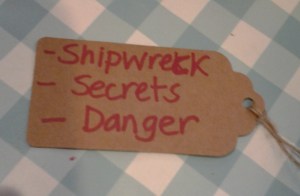
 “Shipwrecked” by
![IMG_0131[1]](https://7yearstodiagnosis.com/wp-content/uploads/2016/02/img_01311-e1455811200839.jpg?w=175&h=202) But, and believe me when I say it was quite a big “but”, the sticking point sadly was the price. This type of technology is not available to anyone through the NHS as yet and funding the sensors alone would cost in the region of £100 a month. I know that you cannot put a price on good health, but as a Mum to 2 children with multiple food allergies and an already increased monthly bill due to the high costs of free from food, the challenge of finding that extra £100 each month (£125 extra earned pre-tax) felt quite daunting and I shelved any thoughts of such an investment for the time being.
But, and believe me when I say it was quite a big “but”, the sticking point sadly was the price. This type of technology is not available to anyone through the NHS as yet and funding the sensors alone would cost in the region of £100 a month. I know that you cannot put a price on good health, but as a Mum to 2 children with multiple food allergies and an already increased monthly bill due to the high costs of free from food, the challenge of finding that extra £100 each month (£125 extra earned pre-tax) felt quite daunting and I shelved any thoughts of such an investment for the time being.![IMG_0135[1]](https://7yearstodiagnosis.com/wp-content/uploads/2016/02/img_01351-e1455809989998.jpg?w=175&h=221) The concept is a simple one and reassuringly easy to use. You insert a small sensor with a thin, 5mm needle into the back of your arm and, although the initial instructions for applying it appear quite complex, it really was quick and easy to do. I didn’t find it painful at all and whilst it takes some time to get used to the constant presence of this sensor on my arm, I’ve had no problems with it. The sensor measures what is called the interstitial fluid glucose levels, which are not identical to BGLs as this is the fluid found between the cells, but are considered accurate enough for monitoring what is going on. To find out your BGL, you simply wave the scanner over your arm and it gives you the result almost instantaneously.
The concept is a simple one and reassuringly easy to use. You insert a small sensor with a thin, 5mm needle into the back of your arm and, although the initial instructions for applying it appear quite complex, it really was quick and easy to do. I didn’t find it painful at all and whilst it takes some time to get used to the constant presence of this sensor on my arm, I’ve had no problems with it. The sensor measures what is called the interstitial fluid glucose levels, which are not identical to BGLs as this is the fluid found between the cells, but are considered accurate enough for monitoring what is going on. To find out your BGL, you simply wave the scanner over your arm and it gives you the result almost instantaneously. ![IMG_0129[1]](https://7yearstodiagnosis.com/wp-content/uploads/2016/02/img_01291.jpg?w=175&h=233) The sensor continually reads the changes in the glucose levels and, as long as you scan at least once every 8 hours, the easy-to-read graphs given on the screen indicate what has happened during the times you didn’t test. As with most CGM systems (Continuous Glucose Monitoring), it is recommended that the FSL user occasionally uses a standard glucose monitor to test their blood sugars and check that reading to the one given by the FSL – my tests have shown a difference of less than 0.3 mmol, which is incredible.
The sensor continually reads the changes in the glucose levels and, as long as you scan at least once every 8 hours, the easy-to-read graphs given on the screen indicate what has happened during the times you didn’t test. As with most CGM systems (Continuous Glucose Monitoring), it is recommended that the FSL user occasionally uses a standard glucose monitor to test their blood sugars and check that reading to the one given by the FSL – my tests have shown a difference of less than 0.3 mmol, which is incredible.![IMG_0128[1]](https://7yearstodiagnosis.com/wp-content/uploads/2016/02/img_01281-e1455811252823.jpg?w=175&h=246) and am able to discreetly test whenever I want or feel the need. The amount of information available is vast and you can look at enough graphs, bar charts and log books to satisfy even the biggest techno-geek. It has become strangely addictive to do and has already started to give me an even greater understanding of what my T1D is doing than I’ve ever had before. The non-invasive nature of the testing means that it would be easy for a parent to do during the night with no fear of disturbing their child’s sleep, and similarly for Mike to do if he ever feels that my blood sugars are dropping overnight – no need to wake me to ask me if I’m going hypo and then having to survive the often stroppy response his concerns are rewarded with, whether they are or not – yes I am precious about my sleep! I also have no doubt that it would appeal to every tech-savvy under-18 out there, which would no doubt reduce the chances of non-compliance and teen rebellion that so many young T1Ds experience,
and am able to discreetly test whenever I want or feel the need. The amount of information available is vast and you can look at enough graphs, bar charts and log books to satisfy even the biggest techno-geek. It has become strangely addictive to do and has already started to give me an even greater understanding of what my T1D is doing than I’ve ever had before. The non-invasive nature of the testing means that it would be easy for a parent to do during the night with no fear of disturbing their child’s sleep, and similarly for Mike to do if he ever feels that my blood sugars are dropping overnight – no need to wake me to ask me if I’m going hypo and then having to survive the often stroppy response his concerns are rewarded with, whether they are or not – yes I am precious about my sleep! I also have no doubt that it would appeal to every tech-savvy under-18 out there, which would no doubt reduce the chances of non-compliance and teen rebellion that so many young T1Ds experience,![IMG_0130[1]](https://7yearstodiagnosis.com/wp-content/uploads/2016/02/img_01301-e1455811224240.jpg?w=175&h=179) thereby similarly reducing the risk of complications from poor control. I really can’t speak highly enough of my experience so far with the Freestyle Libre and wouldn’t hesitate to recommend it to every T1D out there. It has been a struggle to find a down-side other than the price, which is due to the £50 sensors needing to be replaced every 14 days. My personal solution to that is to fund 1 sensor a month for the time being, or at least until the point I finally win that elusive lottery jackpot!
thereby similarly reducing the risk of complications from poor control. I really can’t speak highly enough of my experience so far with the Freestyle Libre and wouldn’t hesitate to recommend it to every T1D out there. It has been a struggle to find a down-side other than the price, which is due to the £50 sensors needing to be replaced every 14 days. My personal solution to that is to fund 1 sensor a month for the time being, or at least until the point I finally win that elusive lottery jackpot!
 When you are tube-fed, I think it’s only natural to expect the support of your nearest and dearest, especially in the case of the tube-fed child. In a recent interview about her MS diagnosis, actress
  Young Carers groups try to meet on a regular basis to give the youngsters a much-needed break from the day-to-day, the opportunity to meet other young carers who will truly understand the pressures and strains they are under and the chance to have fun and be a child. Depending on the location, and sadly on the funding available, these organisations may offer evening clubs, weekends away, days out and even holidays as well as friendly advice, information and counselling to both the young carer and their family. In our area, there is also a school worker who runs lunchtime clubs at some of the local secondary schools, hold awareness assemblies and will act as an advocate for the child if needed.
 She and a close friend in a not-too-dissimilar position have since met with this teacher a couple of times and have been given more information about our local young carers group as well as a list of useful contact names and numbers.
 “…to celebrate and recognise the unspoken and often forgotten support that siblings provide to loved ones suffering.” This is just one person’s small step to make a difference to these unfailing supporters, but with the help of projects like The Forgotten Ones and Young Carers, we can all help support our sick children and their unsung heroes.
 7 years to diagnosis