
In a world that is frighteningly open as people regularly share their location, activities and even the contents of their lunch box via social media, there is still a huge reluctance to linger on anything that hints at emotional instability or mental distress; but the sad truth is that matters of mental health are a huge part of living with a chronic illness and not just for the individual concerned. Today is World Mental Health Day, a day that is seeking to raise awareness of mental health conditions in an open and honest way, to encourage individuals to understand more about how these problems can affect just about anyone at one time or another in their lives and how others can support them. There is a tendency to make light of the language used when referring to mental health issues, after all, how many times have we heard someone say that they’re feeling depressed about having to go back to work after a holiday or the break-up of a particular pop group , when what they really mean is that such events have saddened or upset them rather than the total immobilisation that comes when you struggle with depression on a daily basis. I am not devaluing the emotions they may be experiencing when those things happen, but are they really akin to the overwhelming nature of depression? I think not.
I don’t speak lightly as I have been dealing with the constant presence of recurring depression since my teenage years. I know what that “black dog” is like and just how much it can impact on your ability to function on a day-to-day basis in the real world. As a teenager living with T1D, I struggled with accepting that this was a reality that was never going to change for me, that the need for regular injections, sensible eating and facing the risk of serious complications was never going to disappear. I didn’t handle it well. Though few of my peers may have realised it at the time, I refused to do what I needed to do to maintain my health, not because I wanted to cause myself problems, but because I couldn’t see a way to live like my friends and not feel isolated by my T1D diagnosis. I know that I was not alone in my reaction to my chronic illness and my family and I owe a great deal to my fantastic consultant who worked hard to help minimise what often felt like insurmountable differences as I went through those troubled years. With time and support, 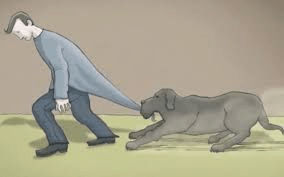 I did eventually come to terms with my diagnosis, though sadly my determination to get my T1D control back on an even keel brought with it an unexpected complication with my eyes, which in turn has led to even more serious implications than I could ever have imagined when I was 13 and feeling very much on my own in a battle against the rest of the outside world.
Move forward a few years and I found myself back in the mental health fight when I was diagnosed with post-natal depression following the difficult pregnancy and early arrival of M. This time I was more open to receiving help and my diagnosis, when it came, proved a huge relief as I didn’t have to actively speak out and ask for that support. Having struggled with counselling as a sole answer to my depression as a teenager, I readily accepted the suggestion from my GP that I be prescribed with low-level anti-depressants for the first few months and am not ashamed to say that those helped me through some very dark times indeed. Anti-depressants are not for everyone, just as much as counselling hasn’t always proved to be a success for me. There should be no stigma attached to needing that medicine to survive the battering of a mental health problem. It is a necessity for some, just as insulin keeps me alive or a feeding tube and elemental feed proved to be what M needed to help him regain better health.
I have learned over the years to identify when I start to feel a little low and my ability to cope with the everyday becomes more of a strain. Mike and my Mum have developed their own sixth sense to pick up when I am beginning to struggle and offer me their unfailing support as I try to find my way back out of the pit. Our 7 year journey to get an initial diagnosis for M and the ongoing challenges in keeping him fit and well have taken their toll and there have been times when tempers are frayed and relationships fractured because of it.  That strong support network of family and friends who are constantly surrounding me is invaluable and the knowledge of what is really important – M and G – keeps me getting out from under the duvet every morning and making my way through each day.
Even more importantly, my own experiences with chronic illness mean that I am well-tuned to the impact that his own diagnosis will have on M. It is a frightening reality to face that your own child might end up fighting the same demons that you did at that age, but it also gives me an insight that lends a level of trust and understanding between M and me that is unlike the relationship he has with anyone else. I can fully empathise when life seems unfair and unjust and he can allow his emotions to pour out because he believes that I get it. We have long been arguing for psychological support for M and finally, thanks to a developing shared care relationship with our local hospital, that seems to be being put in place. Our new gastro consultant has fully acknowledged that the EGID diagnosis will have not only shaped the person M has become, but also had an effect on G and on our family dynamics. He wants to adopt a holistic approach to treating M and the next few weeks will tell if that is a solution that will make a significant difference going forward. I know that recognising the signs of mental stress now are really important when it comes to M’s ongoing mental health, especially as there can be no denying that he already struggles with mood swings, anxiety and feelings of isolation, not just due to his EGID, but also because of his dyslexia and dyspraxia. Early recognition of those symptoms will help us and the medical professionals find a way to put into place coping mechanisms that will serve him, not just now, but into his adulthood too. He already has a good cohort of friends surrounding and looking for him, but they are young, only 10 years old. Just as with any other child as they grow up, he will learn to distinguish those who will stand by him through thick and thin and those who are just there for the fun times. Most importantly to me, 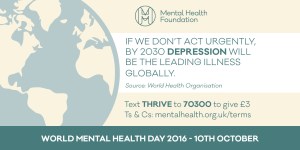 is that he doesn’t feel ashamed or embarrassed by the times when he’s not able to cope emotionally, or mentally, or even physically with the pressures that his diagnoses will have on his life, and that he learns to openly acknowledge them; and that he realises that he’s not on his own in that regard.
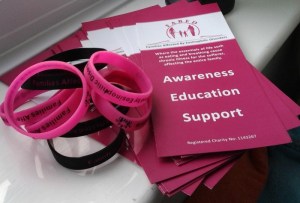
Likewise, we can’t ignore the reality that having a chronically ill sibling has a massive impact on G and her mental health too. The Young Carers meetings that she has attended over the last few months have covered the areas of anxiety, facing fears and anger management, which are all inextricably tied up with the role of being a young person caring for another. Those sessions have taught her strategies for dealing with her yo-yoing emotions and provide an outlet for them in a safe and understanding environment. She has made stress balls and relaxation jars to bring home and use as she needs. I hope that the proposed psychology appointments at our local will not only look to support M, but also to help G in her own right as well as us as a family. These are all things you don’t want to even consider that your children might ever need to deal with, but there is no escaping the reality of chronic illness and mental health, and we need to accept our responsibility to help them both. That is the key message of today’s World Mental Health Day – that we all have a role to play in supporting those around us as best we possibly can.
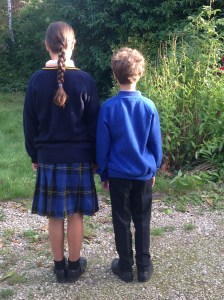 I know that next year when M moves up to our local secondary school it will be a very different picture, but after 3 years of working with the teaching community at our junior school, and with no major changes to contend with, M was able to start in Year 6 without this over-anxious Mum hovering in the background.
 but also knew that his health problems were a big part of his everyday life and couldn’t be ignored. At the end of his first week there, M’s teacher held a circle time in class where she shared about M’s ill-health and restricted diet with his classmates. It was done in such a nurturing and non-confrontational manner that by the end of the session M was willing to answer any question that his new friends had about what they had been told himself and has being doing so ever since.
 The information sheets that I had provided were given to the teachers and, combined with the notes they had taken whilst talking with me, used to draw up a
 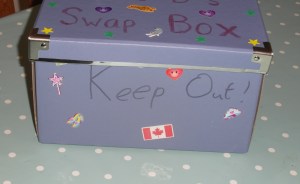 As for his swap box, it has proved to be an invaluable tool in the classroom setting and is something that is really easy to implement. The idea behind the
 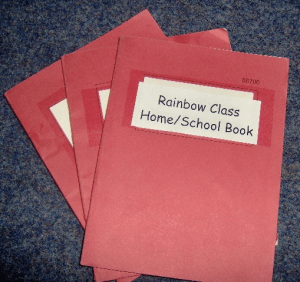 happy to leave M in their more than capable hands on a daily basis. It is a testament to their dedication to their work that, in the last 3 years, the only things that have caused an extended absence from school have been the annual hospital admissions at GOSH. They have always endeavoured to make sure that M is safe whilst at school and the fact that he was able to attend as normal with both his NG feeding tube and his broken leg is incredible. A truly remarkable relationship has grown over the years between our family and so many of the teachers and is something I really value.
 every class in the school. When he left his Infants school, he was a child reluctant to talk about his food allergies or hospital appointments because he was scared of being isolated and bullied because of how different he was to everyone else. These days he has an incredibly strong friendship group who look out for him during school hours and think about him when he’s had to be in hospital, and he never thinks twice to share what’s going on with his friends.
![IMG_0743[1]](https://7yearstodiagnosis.com/wp-content/uploads/2016/07/img_07431-e1469212032275.jpg?w=292&h=300) have been filled with unexpected angst as one of the other positions I had applied for requested an interview and then offered me the job. After hours of deliberation and discussion and numerous sleepless nights, I have decided to accept this second role as it is an incredibly exciting and challenging position that I believe I would regret turning down. I am really looking forward to starting this new job at the beginning of October, which will bring some significant changes to our household as I will be back to working full-time hours for the first time since G was born, although I am lucky that they are happy to give me flexible hours and everything I need to sometimes work at home.
have been filled with unexpected angst as one of the other positions I had applied for requested an interview and then offered me the job. After hours of deliberation and discussion and numerous sleepless nights, I have decided to accept this second role as it is an incredibly exciting and challenging position that I believe I would regret turning down. I am really looking forward to starting this new job at the beginning of October, which will bring some significant changes to our household as I will be back to working full-time hours for the first time since G was born, although I am lucky that they are happy to give me flexible hours and everything I need to sometimes work at home.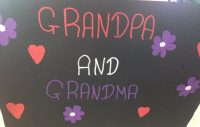 September has also been the month where we enjoyed a flying visit from Grandma and Grandpa, Mike’s parents, from Canada. G and M were so excited to see their grandparents for the first time in 4 years that they created a banner to welcome them when we went to collect them from our local airport.
  Mike finally finished the renovation job on our 4th bedroom, a task that had been started back in April,
![IMG_0791[1]](https://7yearstodiagnosis.com/wp-content/uploads/2016/08/img_07911.jpg?w=225&h=300) he was due to head off to camp on the Monday and the assurance of the consultant that his leg was at long last fully healed gave M the confidence he needed that he could fully participate in all the activities on offer during the week.
he was due to head off to camp on the Monday and the assurance of the consultant that his leg was at long last fully healed gave M the confidence he needed that he could fully participate in all the activities on offer during the week.![IMG_0792[1]](https://7yearstodiagnosis.com/wp-content/uploads/2016/08/img_07921.jpg?w=225&h=300) And when M commented on how comfortable his bed was compared to the ones in hospital I could see the volunteers in the room with us, both of whom were new this year, take a deep breath, unexpectedly shaken just a little by this vivid reminder that every child there is facing a chronic illness that is not always obvious at first glance. I was not immune to the pathos of that situation and my heart broke a little that this was his first thought, his opening response to this new experience.
And when M commented on how comfortable his bed was compared to the ones in hospital I could see the volunteers in the room with us, both of whom were new this year, take a deep breath, unexpectedly shaken just a little by this vivid reminder that every child there is facing a chronic illness that is not always obvious at first glance. I was not immune to the pathos of that situation and my heart broke a little that this was his first thought, his opening response to this new experience. had been sent a draft menu for M that one of the camp chefs had devised based on his safe foods at the time and we were all drooling at the sound of some of the dishes. In the 2 weeks leading up to camp, OTW contacted me again to check whether there had been any changes to his diet and to reassure me that they were prepared for the challenge of feeding him whilst he was there.
![IMG_0812[1]](https://7yearstodiagnosis.com/wp-content/uploads/2016/08/img_08121.jpg?w=225&h=300) As they lined up outside the car and waved us off, the atmosphere inside was in stark contrast to when we arrived as M sat smiling bravely, with tears rolling down his cheeks because he wasn’t ready to leave camp and go back home. He was emotionally and physically exhausted, but refused to let sleep overcome him, instead spending the entirety of our homeward journey sharing every tiny aspect of the week he’d just enjoyed. As M told us about camp, he was worried that he would hurt my feelings when he said that the chef cooked some delicious meals that were, in the most part, “..even better than yours Mummy!”, but I didn’t mind a bit. His close new friendship with one of the other boys in his team, who also had food allergies, meant that neither of them felt isolated as they sat next to each other as their food was served at each meal. And my heart swelled when he said he hadn’t really missed us or thought of us that much because he had been having such a good time as I understand that that was so much more than I could ever have wanted for his first experience away from home.
As they lined up outside the car and waved us off, the atmosphere inside was in stark contrast to when we arrived as M sat smiling bravely, with tears rolling down his cheeks because he wasn’t ready to leave camp and go back home. He was emotionally and physically exhausted, but refused to let sleep overcome him, instead spending the entirety of our homeward journey sharing every tiny aspect of the week he’d just enjoyed. As M told us about camp, he was worried that he would hurt my feelings when he said that the chef cooked some delicious meals that were, in the most part, “..even better than yours Mummy!”, but I didn’t mind a bit. His close new friendship with one of the other boys in his team, who also had food allergies, meant that neither of them felt isolated as they sat next to each other as their food was served at each meal. And my heart swelled when he said he hadn’t really missed us or thought of us that much because he had been having such a good time as I understand that that was so much more than I could ever have wanted for his first experience away from home.![IMG_0817[1]](https://i0.wp.com/7yearstodiagnosis.com/wp-content/uploads/2016/08/img_08171.jpg?w=397&h=298&ssl=1 "IMG_0817[1]")


![IMG_0816[1]](https://i0.wp.com/7yearstodiagnosis.com/wp-content/uploads/2016/08/img_08161-e1471006939733.jpg?w=419&h=264&ssl=1 "IMG_0816[1]")
![IMG_0794[1]](https://i0.wp.com/7yearstodiagnosis.com/wp-content/uploads/2016/08/img_07941.jpg?w=198&h=264&ssl=1 "IMG_0794[1]")

![IMG_0506[1]](https://7yearstodiagnosis.com/wp-content/uploads/2016/06/img_05061-e1465074621823.jpg?w=260&h=300) During that unexpected extra time, M had really made the effort to use his leg even more and became scarily fast and adept at using his crutches in every situation. The last week saw even more development as he more or less abandoned his crutches at home and finally started putting his full weight on his left leg. All this to ensure that that cast would well and truly be removed that afternoon and be needed no more.
During that unexpected extra time, M had really made the effort to use his leg even more and became scarily fast and adept at using his crutches in every situation. The last week saw even more development as he more or less abandoned his crutches at home and finally started putting his full weight on his left leg. All this to ensure that that cast would well and truly be removed that afternoon and be needed no more.![IMG_0777[1]](https://7yearstodiagnosis.com/wp-content/uploads/2016/07/img_07771-e1470003134182.jpg?w=300&h=120) M and I sat waiting for the orthopaedic consultant to look at his x-rays before giving us his opinion, so I tentatively peeled back the tubigrip stocking that had been the only barrier between his leg and the plaster for the last 3 months. His left leg was a little skinnier than his right, though not as much as we had feared it might be, but was also incredibly hairy, something we hadn’t anticipated at all. A little research told us that when a cast is in place for an extended period, it causes constant irritation of the skin and so the hair grows to form a protective layer between the skin and the plaster cast. It was a completely unexpected insight into what M might look like when he eventually hits those dreaded teen years and puberty – and he really wasn’t impressed! In stark contrast to his skinny, white and very hairy leg, M’s foot was almost orange in colour and as scaly as his
M and I sat waiting for the orthopaedic consultant to look at his x-rays before giving us his opinion, so I tentatively peeled back the tubigrip stocking that had been the only barrier between his leg and the plaster for the last 3 months. His left leg was a little skinnier than his right, though not as much as we had feared it might be, but was also incredibly hairy, something we hadn’t anticipated at all. A little research told us that when a cast is in place for an extended period, it causes constant irritation of the skin and so the hair grows to form a protective layer between the skin and the plaster cast. It was a completely unexpected insight into what M might look like when he eventually hits those dreaded teen years and puberty – and he really wasn’t impressed! In stark contrast to his skinny, white and very hairy leg, M’s foot was almost orange in colour and as scaly as his ![IMG_0783[1]](https://7yearstodiagnosis.com/wp-content/uploads/2016/07/img_07831.jpg?w=225&h=300) We were sent home with a walking boot and crutches to help ease him back into the routine of walking and exercising without his leg in a cast and within 3 weeks both had been abandoned to one side. We’ve been back for our final fracture clinic, where M was discharged with a clean bill of health and permission from the consultant to participate in as many of the activities as he wants at next week’s activity camp. Unbelievably there is no physiotherapy available for M through the NHS, but we have an excellent private physio in a nearby town and M will have a couple of sessions there to get him well on the road to recovery. He is having to learn to pace himself, something my hyperactive 10 year-old is not very good at doing, but the aching leg that results from a couple of hours running around our garden with G is a harsh reminder that his leg won’t just bounce back to where it was at the start of the year. It will take a few months to recover the strength, muscle tone and mobility that M is used to, but some hard work and focus will get him there in the end.
We were sent home with a walking boot and crutches to help ease him back into the routine of walking and exercising without his leg in a cast and within 3 weeks both had been abandoned to one side. We’ve been back for our final fracture clinic, where M was discharged with a clean bill of health and permission from the consultant to participate in as many of the activities as he wants at next week’s activity camp. Unbelievably there is no physiotherapy available for M through the NHS, but we have an excellent private physio in a nearby town and M will have a couple of sessions there to get him well on the road to recovery. He is having to learn to pace himself, something my hyperactive 10 year-old is not very good at doing, but the aching leg that results from a couple of hours running around our garden with G is a harsh reminder that his leg won’t just bounce back to where it was at the start of the year. It will take a few months to recover the strength, muscle tone and mobility that M is used to, but some hard work and focus will get him there in the end.![IMG_0645[1]](https://7yearstodiagnosis.com/wp-content/uploads/2016/07/img_06451.jpg?w=188&h=250) This year was no different and G ate her way around the show, delighted to try some old favourites as well as the new products that we hadn’t seen before. It was understandably a much harder show for M this time than ever before, but he pinpointed on the map which stalls he wanted to visit and was thrilled that we managed to find some great new food options for him too. I am also extremely glad that we chose to take the wheelchair with us as it proved to be useful, not just for helping M negotiate the crowds flocking round each stall, but also as a receptacle for the numerous bags of goodies we gained during the day.
This year was no different and G ate her way around the show, delighted to try some old favourites as well as the new products that we hadn’t seen before. It was understandably a much harder show for M this time than ever before, but he pinpointed on the map which stalls he wanted to visit and was thrilled that we managed to find some great new food options for him too. I am also extremely glad that we chose to take the wheelchair with us as it proved to be useful, not just for helping M negotiate the crowds flocking round each stall, but also as a receptacle for the numerous bags of goodies we gained during the day.![IMG_0647[1]](https://7yearstodiagnosis.com/wp-content/uploads/2016/07/img_06471.jpg?w=225&h=300) . It was fantastic to see G and M recognised and welcomed by so many of these lovely individuals and they happily chatted away almost as much as Mike and I did. We spent some time at the
. It was fantastic to see G and M recognised and welcomed by so many of these lovely individuals and they happily chatted away almost as much as Mike and I did. We spent some time at the ![IMG_0651[1]](https://7yearstodiagnosis.com/wp-content/uploads/2016/07/img_06511-e1468489077363.jpg?w=300&h=300) discovering all those hidden gems that were tucked away in remote corners of the space. We had taken some safe food for M with us for his lunch as we just didn’t know what would be available at the site and G enjoyed a gluten- and dairy-free pizza from Schar that was cooked to order. The Show now visits 3 UK locations during the year – London, Liverpool and Glasgow – and I would highly recommend a visit if you get a chance to go. It is a brilliant day out for anyone living with food allergies and offers the opportunity to discover so many safe alternatives that often don’t make it to the High Street.
discovering all those hidden gems that were tucked away in remote corners of the space. We had taken some safe food for M with us for his lunch as we just didn’t know what would be available at the site and G enjoyed a gluten- and dairy-free pizza from Schar that was cooked to order. The Show now visits 3 UK locations during the year – London, Liverpool and Glasgow – and I would highly recommend a visit if you get a chance to go. It is a brilliant day out for anyone living with food allergies and offers the opportunity to discover so many safe alternatives that often don’t make it to the High Street.![IMG_0617[1]](https://7yearstodiagnosis.com/wp-content/uploads/2016/06/img_06171-e1467302233284.jpg?w=225&h=300)
![IMG_0502[1]](https://7yearstodiagnosis.com/wp-content/uploads/2016/06/img_05021-e1465074582260.jpg?w=194&h=300) The preceding weeks had been busy with costume preparations and plans to pimp his wheelchair for the event and his decision to ask for a 70s themed cast at the previous fracture clinic meant that we were all set for the parade. Mike and I had also been roped in to help out for the day and I had even managed a few tweaks to our own clothes to make sure we were part of the 70s disco theme. All of the children were fantastic as they sang and danced their way towards the town’s football club and entertained the crowds, who joined in with the familiar moves of “Night Fever” and “Tragedy”. I was particularly proud of G, whose hard work and dedication to her dance saw her selected to be one of the 2 dance captains and she led the group with a flair and sense of fun that I rarely see from her when she’s performing. She really stepped up to the mark and the smile on her face showed just how much she enjoyed it.
The preceding weeks had been busy with costume preparations and plans to pimp his wheelchair for the event and his decision to ask for a 70s themed cast at the previous fracture clinic meant that we were all set for the parade. Mike and I had also been roped in to help out for the day and I had even managed a few tweaks to our own clothes to make sure we were part of the 70s disco theme. All of the children were fantastic as they sang and danced their way towards the town’s football club and entertained the crowds, who joined in with the familiar moves of “Night Fever” and “Tragedy”. I was particularly proud of G, whose hard work and dedication to her dance saw her selected to be one of the 2 dance captains and she led the group with a flair and sense of fun that I rarely see from her when she’s performing. She really stepped up to the mark and the smile on her face showed just how much she enjoyed it.![IMG_0850[1]](https://i0.wp.com/7yearstodiagnosis.com/wp-content/uploads/2016/07/img_08501-e1468346986785.jpg?w=229&h=587&ssl=1 "IMG_0850[1]")
![IMG_0844[1]](https://i0.wp.com/7yearstodiagnosis.com/wp-content/uploads/2016/07/img_084411-e1468346857806.jpg?w=388&h=333&ssl=1 "IMG_0844[1]")


 making sure more people know about this condition and what it means to be living with it, and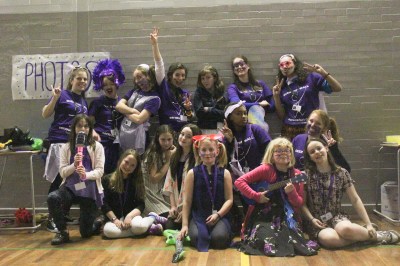
 The reasoning behind this plan was simple and easy to understand: G and M. They wanted to show support to G as one of their own and, knowing how much she had benefitted from her week away and recognising her commitment to supporting M during NEAW, believed that this was the perfect opportunity to do it.

 7 years to diagnosis