
 When you are tube-fed, I think it’s only natural to expect the support of your nearest and dearest, especially in the case of the tube-fed child. In a recent interview about her MS diagnosis, actress Jamie-Lynn Sigler from the US TV show “The Sopranos” said that “when one person in the family has a chronic illness, the whole family has it.” and this really resonated with me. M, I hope, has never needed to question the unfailing and unconditional support that Mike and I will give him along every step of his journey, but it’s not just us who have walked that way with him over the last 12 months. Without any say in the matter, G has been dragged along for the ride too and has been a great comfort and support to M when it matters most, arguments and fallings-out aside. I have talked before about the amazing community that surrounds our family, but G has been something of an unsung hero in the story. Over the last few years we have seen her struggle to cope with the reality of having a chronically ill brother, which has manifested itself in behaviour and attitudes that are less than ideal and which need love and understanding in the most testing of times. We work hard to try to give G as much time as we can, but sometimes that can’t be as much as we’d want, especially when going through a particularly tough time with M. Sometimes siblings need more time than the parents can find, so who is it that can help parents support these young supporters?
Many people will have heard of Young Carers projects, but perhaps will not realise how massive and vital a role these groups can play in families dealing with chronic illness. Young carers are defined as “children and young people who often take on practical and/or emotional caring responsibilities that would normally be expected of an adult.” Being a young carer is an isolating experience as the child may be reluctant to discuss their home life with friends at school for fear of bullying and will often feel that they are in a unique situation.  Young Carers groups try to meet on a regular basis to give the youngsters a much-needed break from the day-to-day, the opportunity to meet other young carers who will truly understand the pressures and strains they are under and the chance to have fun and be a child. Depending on the location, and sadly on the funding available, these organisations may offer evening clubs, weekends away, days out and even holidays as well as friendly advice, information and counselling to both the young carer and their family. In our area, there is also a school worker who runs lunchtime clubs at some of the local secondary schools, hold awareness assemblies and will act as an advocate for the child if needed.
Frequently these youngsters don’t identify themselves in the role of a young carer and it came as no surprise to me that G didn’t as I certainly had never really thought about her in terms of being a young carer until fairly recently. Thanks to a well-placed poster, a stray comment at school and some gentle prodding from a fab EGID friend, I contacted our local Young Carers group, filled in their referral document and sent it off with my fingers tightly crossed that something helpful would come from it. With the most amazing coincidental timing, at almost the same time that I was waiting for a reply, G had spotted a poster in the Year 7 canteen, took a photo on her phone and showed it to me, asking if I thought this was something that she could find out more about. Delighted that she was interested in this support and wanting to encourage her to investigate the opportunity under her own steam too, I agreed that she should contact the teacher named and see what further information she would be given from within school.  She and a close friend in a not-too-dissimilar position have since met with this teacher a couple of times and have been given more information about our local young carers group as well as a list of useful contact names and numbers.
We also had a positive response from my referral form and last week G and I met with Hannah, one of the Young Carers team. She was with us for about an hour and talked to G about all things Young Carers. Having established that G understood what was meant by the term “young carer”, Hannah then took the time to explain how G fit into that role and then they discussed at length just how G helps M and the rest of the family and how she feels about it. I stayed in the kitchen the whole time, but switched between sitting at the table with them and carrying on with preparing feeds, meds, packed lunches and dinner in order to give G the chance to open up about her feelings. I reassured her that we wanted her to be 100% honest about the emotional impact that M’s illness has on her and was pleased to hear her being just that. Nothing she said surprised me in the slightest and I found it a relief to see her open to the idea of the Young Carers groups and all they can offer. She is keen to get started as soon as possible and is just waiting for the paperwork to be processed and the invitation to drop onto the doormat Hogwarts-style!
I am fascinated and pleased to see that there is an increasing awareness worldwide of the lasting impact of chronically ill siblings on children and the need to seek ways to effectively support them as they grow up, often in the shadow of the sick child. Last year I became aware of another fantastic project, this time by Australian photographer, Alexandrena Parker and Rare Voices Australia, entitled The Forgotten Ones, which sought to highlight this aspect of the rare disease community and  “…to celebrate and recognise the unspoken and often forgotten support that siblings provide to loved ones suffering.” This is just one person’s small step to make a difference to these unfailing supporters, but with the help of projects like The Forgotten Ones and Young Carers, we can all help support our sick children and their unsung heroes.
*The wonderful charity, Over the Wall, also provides respite camps for sick children, their siblings and their families, either all together or separately. You can find out more here.
 going to make me feel better and I was very worried that I would be teased at school about it.
 Last summer, my classmates decided to wear a 2.5kg backpack for the morning so that they could understand exactly what I go through each day. The whole class did it as well as our teacher and the other teaching assistants.
 In addition to virtually every practising dietician in the UK, it is mailed directly to all senior gastroenterologists, all nutrition nurse specialists and all nutrition pharmacists, as well as lecturers, industry professionals, consultant dieticians and students.
For day 3 of
In addition to virtually every practising dietician in the UK, it is mailed directly to all senior gastroenterologists, all nutrition nurse specialists and all nutrition pharmacists, as well as lecturers, industry professionals, consultant dieticians and students.
For day 3 of  We weren’t provided with any information about enteral feeding beforehand from the health professionals involved in M’s care and I found most of our information came from online support groups, such as PINNT and
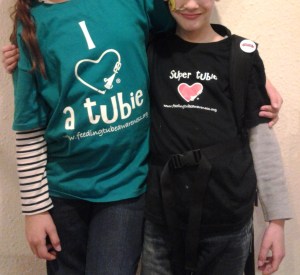 We’ve encouraged her to get involved as much as possible and as much as she wants, and she is now very capable of helping with his feeding pump. She’s recently started horse-riding, which is something M doesn’t do and gives me some time to spend just with her. As for our holidays, in the past we often went abroad, but didn’t feel confident enough to try it this first year with his tube. Instead we went to Cornwall this summer, with our car packed full of all the necessary medical equipment and enjoyed an amazing week away. We’re now feeling much more able to cope and are hoping to go to Portugal next summer.
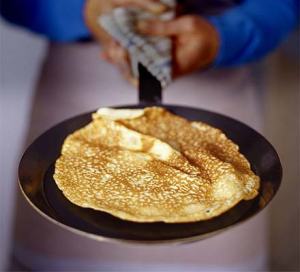 *I can’t let today’s post pass without a nodding acknowledgement that it is, in fact, Shrove Tuesday; the day when many of us enjoy a pancake or two before the start of Lent. I can’t even remember whether we managed to eat pancakes last year as M had only just started to trial foods after his 8 weeks on E028, but there’s a sneaking recollection that maybe my Mum cooked some for G, whilst the rest of us ignored the day to the best of our ability. I’m excited that this year I will once again be able to cook pancakes for the whole family and, just in case you need an allergy-friendly recipe to cook for your loved one, I’ve got the perfect one
 He loves to run around and be on the go and into everything all of the time. I mean it. M just doesn’t stop, ever. He’s always given 110% to whatever activity he’s doing, even if it meant trying to finish a swimming lesson white as a ghost and with a temperature of 39.5°, or running the magic mile on the first day back at school after a week off vomiting and barely able to move from his bed or the sofa. Whilst you might often find G curled up in a chair or on her bed reading a favourite book, the only time you’re likely to find M doing the same is at 11pm when he’s waiting for me to come to bed before settling down himself, and even then you’re just as likely to find him playing his cello, or perfecting his dance routine, or building with his Lego.
 If anyone was going to describe the last decade of my life, the one indisputable conclusion they’d end up reaching is that it’s been anything but boring. Thanks to a pair of children who have thrown more than their fair share of life challenges into the mix, we’ve weathered more storms than I ever believed possible and, for the most-part, we’ve come out the other side still smiling and relatively unscathed. We’ve survived a lot of challenges, met a whole host of amazing people and learned a great deal along the way; and if I had to pick just one lesson that constantly resonates, I’d have to say that we now know to never take things for granted as they can change at the drop of the proverbial hat. Two years ago I
  We all felt the benefits of that visibility to start with and I no longer felt the underlying pressure to defend the true extent of M’s illness and food allergies whilst my outwardly healthy-looking youngster was intent on tearing around practically making a mockery of every problem and pain we said he was suffering.
 For those of you who are not in the know, the #FFFA are the brainchild of Michelle Berriedale-Johnson and were launched in 2008 to celebrate excellence and encourage innovation within the free from food industry. Each year a group of judges from across the allergy and free from community are invited to taste a variety of new free from products and rate them on quality, usefulness, innovation and nutritional value. The foods are all tasted “blind” in the first instance, with names and packaging removed so that the products really are assessed on their own individual merits. Then follows an active discussion as each individual judge is asked to help reach a group consensus on the category winner and which other products deserve to be shortlisted, commended or given a highly commended award. Given the judges have a variety of backgrounds from free from food professionals to health professionals and from allergy sufferers to allergy bloggers as well as the occasional “normal” person to compare each item to their non-allergy counterpart, you really do get a rounded point of view about what makes the highest quality free from product. Believe me when I say that any manufacturer who wins a category is producing something that has impressed across the board.
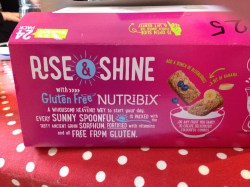 Breakfast:
  Confectionery:
 ![IMG_0094[1]](https://7yearstodiagnosis.com/wp-content/uploads/2016/02/img_00941.jpg?w=225&h=300) I’m so excited for it to hit our shelves in the next couple of months and can’t wait for G to try it. My other choice is something I know G won’t want to try, but it ticked so many boxes for me as it was tasty, free from and could be prepared in the microwave in less than 5 minutes, truly the quintessential ready meal.
I’m so excited for it to hit our shelves in the next couple of months and can’t wait for G to try it. My other choice is something I know G won’t want to try, but it ticked so many boxes for me as it was tasty, free from and could be prepared in the microwave in less than 5 minutes, truly the quintessential ready meal.  The teatime category was again filled with a delicious array of biscuits and cakes, but there was one product that for me stood head and shoulders above the rest: the amazing
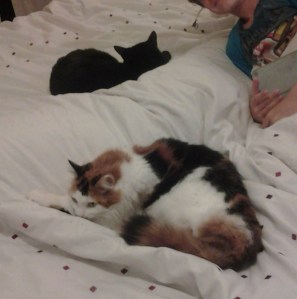 We’ve had more than our fair share of animals since the children were small and over the years our house has been home to, believe it or not, 7 cats, 1 rabbit, numerous fish and now our latest family member, Leo. For the last 2 years or so, M has been eager to add another pet to our household and not just any pet: he has been very specific about the animal he’s had in mind. I have to be honest and say that I didn’t leap at the chance when he first made his bid, after all I have years of Mummy experience with M’s wildly fantastic and short-lived fads and this wasn’t one I was prepared to indulge unless he was genuinely intent on looking after it for the long haul. I’ve long-held the opinion that our
 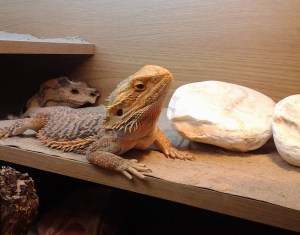 The first step was to buy him a book about them and he has spent hours reading and re-reading about bearded dragons and how to best look after one. His knowledge about these interesting animals is impressive and he has willingly shared what he knows with friends, family, doctors and nurses alike. Knowing that a GOSH admission could happen any day, we delayed our actual purchase until M was back home and life had settled down to something resembling our normal once again.

 and kept my fingers crossed. The first batch looked delicious and I couldn’t wait to take a sneaky bite or two to…ahem…”taste test” before serving them to my discerning public. The smell wafting through the house worked better than a dinner bell and first one child, and then the other, drifted to the table with washed hands, ready to try dinner. For that first meal, I prepared 2 chicken breasts worth of popcorn and left my youngest bitterly disappointed that there was absolutely not another morsel left for him to consume. Subsequent meals have seen bigger portions prepared and disappear in similarly quick fashion, and I’m delighted to have found another winning
  With the start of a new year, we decided to branch out and challenge yet another popular old friend, TGI Fridays. M has been reluctant to visit this restaurant since he went elemental last year and our first suggested meal out after he was discharged from GOSH fell sadly flat, when he refused to stay there because “..everyone around me will be eating chips Mummy…“. As we had not long had to stop the potato trial due to all his
  For those of you not in the know, TGI Fridays has a separate menu for allergies, which lists the lactose- and gluten-free options readily available. G was delighted to see such a selection of starters that were safe for her and begged to be allowed to try one of those as well as her main course. She opted for the BBQ houmous starter with corn tortilla chips, followed by the Bacon burger with fries from the allergy-friendly children’s menu. Having sorted our little Miss out, we’re turned our attentions to the more knotty problem of young Master M and here I have to say, TGI Fridays came into their own. The manager came to sit with us at the table, armed with a mammoth allergy information folder and cross-referenced every single menu item we were considering for both children to ensure the food would be absolutely safe. He advised us that they used separate chopping boards for the food preparation to avoid cross-contamination risks and showed an in-depth understanding of our requirements which reflected the extensive food safety courses I later found out the restaurant chain insists all their managers attend.
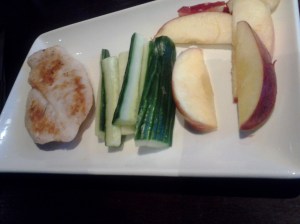 I was impressed to discover that before settling on that as an option, he had actually investigated whether they could get hold of any rapeseed oil from one of the neighbouring restaurants for M’s chicken breast, but had rejected that option when he discovered those restaurants couldn’t guarantee that there was no cross-contamination risk. Instead, the chefs prepared the chicken oil-free and the speed at which it disappeared from M’s plate is a testament to how well prepared and tasty this dish turned out to be. G’s food vanished in similarly quick fashion and Mike and I breathed a huge sigh of relief that our risky restaurant choice proved to be such a success.
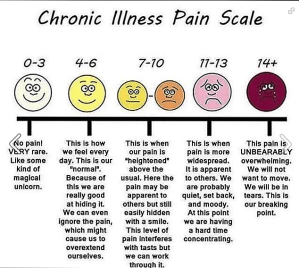 G’s godmother shared this pain scale image with me and I love the wording that is attached to it as it sums up to a tee how M has described his levels of pain over the years. From the magical unicorn of no pain at all which happens occasionally, to the breaking point of inconsolable sobbing and unbearable pain that little can ease, I’ve seen M pass through every stage of this chart on all too regular a basis. I doubt the colours, images or facial expressions would appeal overly to him, but it helps to clearly explain how he copes to those who need to know.
 A fellow
  This third one I discovered through Twitter and was posted up by @2tubies, whose 6-year old son helped make his own pain chart for the school environment with the help of the school SENCo and his Mum. They used Lego figurines to depict how he might be feeling and offered some easy solutions for his symptoms. This solution-based approach is one that I find works well with M and have started using it more and more over the years. I rarely give M the option of staying home from school when he’s feeling unwell, but will instead list out those solutions I think might ease not only his pain, but also the whirlwind of emotions that is so frequently tied into what he’s feeling on a physical level. Whilst he was still being tube-fed, I would always start with the offer to slow down or even stop his pump for a limited amount of time and then followed that up with pain relief or a hot water bottle. My final question has always been what M thinks will help him the most and given he has a clear idea of what I’m suggesting, then we have always been able to find a solution that works for us both. Whilst giving these choices verbally works well at home, I imagine that presenting them in a pictorial fashion would make great sense in the school setting.
 At G’s secondary school, they have included traffic light coloured pages in the back of the pupils’ planners and the children are encouraged to use them by putting the relevant colour facing up on the desk if they need some help during a lesson, but are too worried or nervous to ask. For some children, a “traffic lights” approach using counters or cards can also be effectively used to indicate how they are feeling in any given situation, where red can indicate their sense of losing control or not coping with the environment surrounding them. The opportunity to be tactile with the counters may also help children with sensory issues order their thoughts and be more able to express them when asked. Even if the child is not able to share what’s troubling them, a clear plan of how the teacher or adult in charge should respond to each colour will change that child’s perceptions and experiences away from home. Similarly, M’s school uses a “Fist to 5” approach to their work, where fist indicates a lack of understanding and the need for some help, and 5 means they are confident and happy to carry on on their own.
 7 years to diagnosis