Tag Archives: tube feeding

A tri-umph of rice-themed goodies!

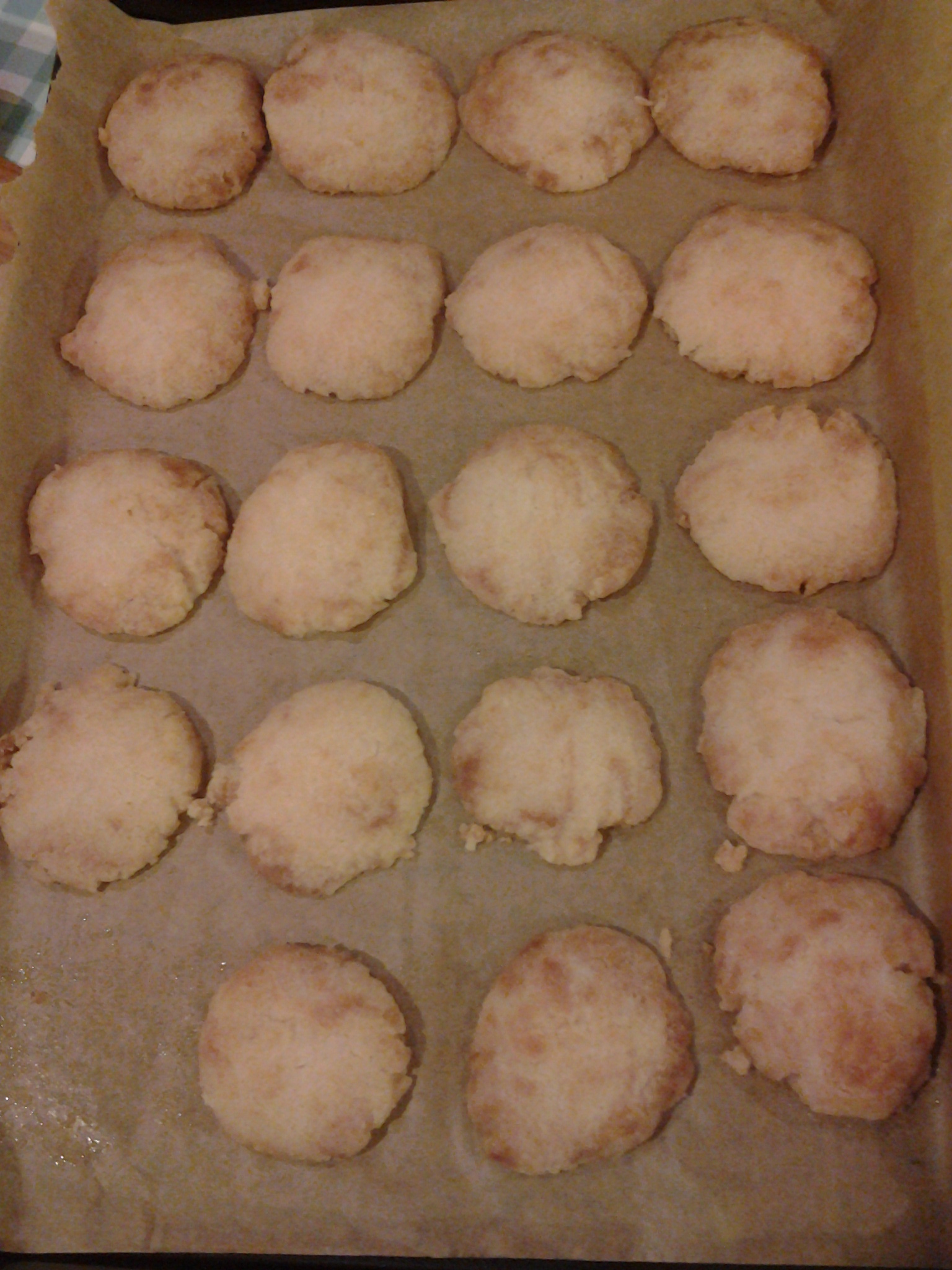
Recently I’ve been spending my time baking and cooking up a whirlwind as the days ahead have been looking busy.  With a day for G and M at the holiday club run at Mike’s work, an appointment with M’s consultant and dietitian at GOSH to review his progress 4 months post-tube and a planned short stay in London to see the sights and to dip our toes into the world of being away from home with NG-tube in tow, a plethora of safe snacks and treats for M were much in need.  I prepared rice pudding, rice-flour sugar cookies and rice krispie cakes to satisfy the appetite of my youngest and to reassure myself that we would have some things with us to feed him whilst the rest of us enjoyed some much-missed meals out.  I also used the opportunity whilst trialling banana to add some to the mix and made some banana sugar cookies too.

The recipes can be found in the everything-free recipes section and are so easy to follow that next time round, my plan is to be sitting back with a cup of tea, whilst G and M get on with the task of creating their own delicious masterpieces!

20150314_213802 20150321_191535

20150403_162354

Who knew you could make so much from rice, sugar, rice milk and canola oil?  Any other suggestions for simple recipes will be very gratefully received!

Easter weekend

Last year, Easter weekend was all about…

20140419_203912

A slice or two of this

20140418_154823

  …several of these

moo free

….and quite a lot of this!

This year, it’s more about this…

20150402_183827 20150402_183532

Happy Easter!

“I like rice…

..Rice is great if you’re hungry and want 2000 of something.”

– Mich Ehrenborg

I never realised just how daunting food could be until we embarked on our dietary journeys with our children.  It might sound ridiculous, but having achieved such a resounding success from M’s move to the elemental diet, the prospect of food reintroductions caused my heart to beat a little faster, my palms to grow a little sweatier and several middle-of-the-night awakenings to contemplate just how the whole process would work.  A big part of the problem was the lack of useful any information from the dietetics team about…well about anything I wanted to know.  I like to have a clear plan to follow and needed to understand how we would choose which foods to start with, how each food should be prepared, how much to give and how often.  The vagaries of sweeping statements such as serve M “a portion”, with no hard and fast details of the specifics drove me insane, but with lots of discussion, frantic e-mailing and a move back to our old and trusted dietitian rather than the one I’d had run-ins with during M’s admission, we finally got the answers we were after.

Courtesy of alternative-doctor.com

Courtesy of alternative-doctor.com

The decision was to begin with rice, commonly considered to be hypoallergenic and therefore a great starting place for M.  Whilst many children reintroducing foods following the elemental diet might trial potato first, this was one of the known triggers for M’s allergic reactions and so we needed to find a basic food that was likely to be safe.  Despite being told that we could comfortably start with a “portion” of rice, I chose instead to take things slow and M had just 1 tablespoon of plain, boiled rice on that first night.  He enjoyed his mouthful and, looking forward to having more the next day, carried on somewhat oblivious to the anxious monitoring I was trying desperately to hide.  The evening passed without event and we all went to bed happily – well, the rest of the family went to bed happily, I went battling the usual Mummy-paranoia that accompanies anything and everything that involves my children and their welfare.

Courtesy of smartwebsite.ru

Courtesy of smartwebsite.ru

Since that day, around 4 weeks ago now, we have been able to gradually increase the amounts of rice M eats each day and have branched out to include rice milk, rice cakes and gluten-free rice cereal – a veritable feast!  This week I even managed a rice batter, using rice flour and sparkling water and made some deep-fried rice balls to tantalise his taste buds.  M has shown an occasional atopic reaction to the rice as it triggered a rash across his shoulders and back, although the hives have now calmed down as his body has become accustomed to eating once again.  Despite this rash, we have seen no reaction in his bowels and are able to count rice as a “safe” food for him.  Even better, we have also been able to add chicken to the mix and this week have been trialling pineapple, though the jury is still out as to whether this may be causing a mild behavioural reaction akin to the one we’ve seen him experience before to soya.  Assuming all is well with the pineapple, we have plans to trial pork, cucumber and carrot over the coming weeks and may even have time to squeeze in another carbohydrate before we head back to GOSH in April.

E028 – the success story

When we started this new chapter in M’s life 10 weeks ago, we approached it with the attitude of “hope for the best, but prepare for the worst”.  We hoped that the move to an elemental diet, consisting of 1500mls of E028 each day, would bring some much-needed relief to his bowel and body and that, from that recuperation would come a way forward that would improve M’s quality of life.  And whilst we were well prepared that there was a chance it might not work; that it might not bring the recovery M desperately needed and that we might have to look to even more extreme measures to reach our end goal of improved health; that wasn’t a prospect we were prepared to spend too much time on, yet.  It was far more important to be positive about the route we had chosen, which wasn’t an easy choice to make and had its challenges from the start: be they passing the NG-tube at GOSH or figuring out our new routine at home.

Courtesy of nameonline.net

Courtesy of nameonline.net

Despite the roadblocks thrown in our path, we’ve kept plodding on, negotiating our way skilfully around the inevitable melt-downs, tantrums and even those tempers that lead to a tube being pulled out accidentally.  We’ve all learned valuable lessons – don’t storm off in a temper following a sibling argument leaving your pump behind being a key one for M – and we’ve survived as a family and, dare I say it, grown stronger as one too.  We have laughed, cried and got angry together.  We’ve used that laughter to overcome the depths of despair and we’ve focussed on the important things in life.  Mike and I have long been a team, since the disastrous surgery on my left eye for diabetic retinopathy 17 years ago just weeks after Mike had moved to the UK and before we were even married.  We may not always see eye to eye, but we have grown together and take turns in being the strong one when the other is feeling weighed down by the world.  Now we have 2 children who are learning those same lessons and this experience has shown me just how amazingly strong our children are. They’ve coped with all that life has thrown at them and whilst they may have been knocked down occasionally, they’ve learned to pick themselves up, to brush themselves off and to keep going along their paths. The last 10 weeks have seen them grow in their empathy for others and they too have taken turns in being the strong one when faced with adversity.

Courtesy of artiwards.com

Courtesy of artiwards.com

The best news of all is that we now know that every exhausted step has been worth it and I’m thrilled to be able to share that, for M, the E028 has been his success story.  Within days of the switch to a food-free diet, the near constant diarrhoea that has been the bane of the last 9 years of our lives stopped.  Just like that. No magic potions, no magic wands, no tricks and, so far, no looking back.  M has become the fun-loving, caring, well-behaved little boy we all knew was hiding somewhere within himself.  His joie de vivre has returned and his humorous outlook on life is much more evident.   As each day passes, we are slowly and surely making more and more progress and his confidence has grown as evidenced by his abandonment of his daytime reliance on pull-ups for the first time in a year.  It’s not been a perfect cure by any stretch of the imagination and his weight is once again giving us, and the medics, cause for concern, but it’s a massive step, a giant leap in the right direction.  We are lucky that this proved to be the way forward for M and we are truly grateful for that as we know so many other families who have not found it to be the answer to their health problems and are still battling on.

Meanwhile, the next step is the big one for us: food reintroduction.  We need to work on getting food back into M’s diet without upsetting this balance that he has found right now.  There’s a “sort-of” plan from the dietitians about how we go about trialling each food with M, but for the most part it’s going to be driven by us.  Having finally got my lad to the point where “I feel better Mummy, my tummy’s less grumbly and I just feel…well…feel so much better in myself“, I refuse to be hurried and I’m going to protect this new sense of well-being with all my strength and determination.


Pump action

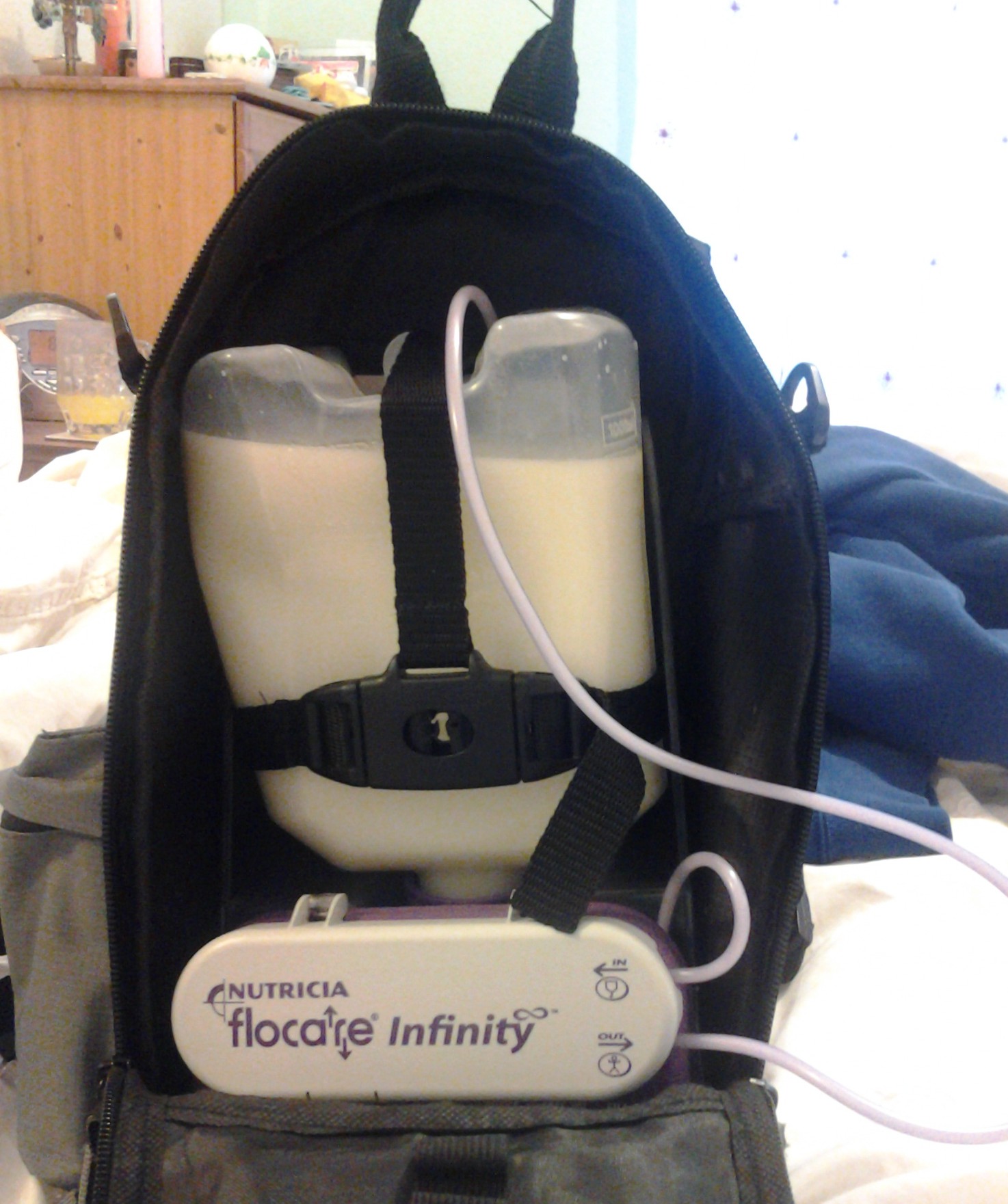
pumpHaving sussed making the elemental feeds, and NGT management having quickly become second nature, our final challenge was to learn all about the small piece of equipment that is going to become a key member of our household for the next few months – the pump.  M has the Flocare Infinity pump from Nutricia, which has proved to be easy to handle and quick to program.  I was trained in just 40 minutes whilst M was still admitted at GOSH and even though it all felt rushed, it was actually all I needed and I was just about confident enough to go home with him 2 days later.  Our excellent Nutricia nurse, from their local community nursing team, came out to train Mike the day after M was discharged and she has also held a training session at school to ensure key members of staff are up to speed with what they need to do during the school day.

The set-up is easy.  The first thing we have to do is set the volume of the feed – either 1000mls or 500mls for M – and the rate in ml/h, which we set to 150 ml/h.   The pump retains the information from the previous feed, so it is important to check that these 2 figures have been set correctly for the feed you’re giving.  I then press the “info” button, which tells me the exact dosage that was given to M in his previous feed and clear this number from the pump’s memory.  This records how much of the required volume has been given since the pump was started, so if you don’t take care to delete the previous information, you could find yourself giving a lot less than the required amount.

The pump is then attached to the feed bottle via a feeding kit, which is a length of tube that joins the bottle to the NGT via the pump itself.  We were provided with a small plastic stand, which holds the pump at the bottom with the bottle hanging upside down above it, firmly strapped in place.  The feeding kit is attached to the top of the bottle, threaded around the pump stand, carefully avoiding getting it trapped between pump and stand, and then looped around the mechanism inside the pump.  Before connecting the loose length of the feeding kit to the NGT. you need to fill the entire length of the feeding kit tube with the feed to make sure you’re not pumping air into your child.  We were shown to do this using the “fill set” button, which runs at the fastest rate possible and takes seconds to fill up.  Once this is done, it’s simply a case of attaching NGT to feeding kit tube and pressing start.  All being well, the feed is now underway and, in an ideal world, you can leave the pump alone until the feed is finished.

20150212_082048

However, reality is very different and you will quickly become attuned to the beeping of the pump alarm.  It can and will beep for any number of reasons: there’s air in the tube, the tube has become kinked or blocked on the way into the pump mechanism,  the tube between the pump and your child’s NGT has been kinked/blocked/sat on/folded tightly between your child’s fingers such that the formula has no place to go or sometimes, just because.  Sometimes the alarm is easy to resolve, simply a case of stopping the pump, removing the air/blockage/kink and restarting; but sometimes no amount of jiggling wires, shaking formula bottles or removing everything from the bag and the stand will stop that alarm sounding every 5 minutes or less.  We’ve even tried that old IT support favourite of switching it off and then on again and have had limited success in silencing the beeping for more than 5 minutes.  Both G and M know how to switch the alarm off, but both are guilty of occasionally forgetting to make note of what fault featured on the digital display, leaving it to my superior Mummy detective skills to work out exactly what might have caused the problem that time round.  Nevertheless, the odd mad beeping episode aside, the pump generally does what it should and copes in an admirable fashion with being bounced around on M’s back for 10 hours a day.

Courtesy of minionlovers.weebly.com

Courtesy of minionlovers.weebly.com

So this little purple pump has become our new best friend.  Just like a favourite fashion accessory, we rarely leave the house without it or the trusty back-pack.  M can do almost everything whilst wearing it and has become adept in the art of adapting to its very presence in his everyday routine.  And whilst it is ever-present, we’ve learnt to have a laugh and have attributed it with its very own personality.  Some of the lovely FABED family shared that naming the pump helped make the whole experience easier and more fun for their child and one Mum even said that the pump reminded them of a minion.  This latter idea made all of us smile because we knew instantly what she was referring to: the incessant beeping of the alarm which is hard to distinguish from the “Bee-do bee-do” heard from the Fireman minion who helps put out Gru’s office fire.  Of course, even though M’s pump bears more resemblance to one of the evil purple minions from Despicable Me 2, bent on a path of destruction, it’s hard work and support in providing M with the means to have the nutrition he needs is far more comparable to their loveable yellow counterparts.

Disclaimer:  I am not a medical expert and this blog does not constitute medical advice. I have detailed how we have been taught to run M’s pump by the professionals involved in his care. Please note that any questions concerning a feeding pump and the associated kit should always be directed to your medical team.

A Super Tubie of my Own

Courtesy of feedingtubeawareness.com

Courtesy of feedingtubeawareness.com

This week is #feedingtubeawarenessweek, a week that our family is embracing with every ounce of our being this year.  Last year I wrote about our 2 previously brief encounters with a NG-tube, knowing that there was an ever-present chance that M might end up needing one at some as-yet-unspecified point in the future.  Just 12 months on and the state of M’s health due to his EGID means that a NG-tube is now part of our everyday family life.  The aim of the campaign this year is to dispel the myths and misconceptions that surround tube feeding and to show that adults and children can live their lives and have fun with the tube in place.  A tube is often the path to improved health and development and should be embraced as such by us all.  Their theme is “The truth about tube feeding”.
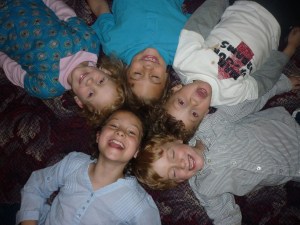
Picture1M’s friends and class-mates have accepted it as very much part of who M is and have been amazing at looking out for him at every turn without leaving him out of their games.  One friend was so intrigued by the tube and how it worked that I spotted him peering up M’s nostril to see where the tube went, just before M opened his mouth wide and pointed out that the tube could also be seen at the back of his throat – how I love the honest interest of 9-year old boys!  He was more bothered by the Year 3 children at school, who he often caught staring at his tube, but he developed his own coping mechanisms and when asked what “that” was – a question often accompanied by a finger pointing towards his nose – he started telling them it was “…nothing, but a mere figment of your imagination…”, before walking off, leaving in his wake a stream of very confused 7- and 8-year olds.

In light of all this, I was chatting to M this afternoon about his tube and people’s attitudes towards it.  I was interested to find out how he feels about strangers staring and what response he would want them to give instead.  His reply fascinated me as it expressed clearly how much more awareness is needed about tube-feeding and the impact had on those living with a tube. He didn’t mind the idea of people asking me about his tube and the reasons for it, but he isn’t yet comfortable with having to deal with those questions himself.  However, the most telling statement was this one:

“Adults should know not to stare, but sometimes they do and I don’t know why”

and that, in turn, made me think about how I feel about M and his NG-tube.  Hospital, home and support groups all exist within a protective bubble, where nothing is unusual and normal is defined by each individual and their particular needs.  It’s only when you go out into the outside world that you suddenly come up against opinion and prejudice and the harsher side of life; against people who don’t understand that this tube is bringing nutrition and healing to my child and who find themselves unable to pull their eyes away from the tube stuck to the side of his small face.
Courtesy of timemanagementninja.com

Courtesy of timemanagementninja.com

We’ve been lucky and haven’t experienced negative comments or unwanted interest.  Yes, I’ve seen the intrigued looks or double-takes as passers-by register his tube, and I’ve received the sympathetic smiles from other parents as they’ve watched me attaching his pump or silencing the alarm, but nothing more.  We’ve been fortunate to have the most amazing support from the families and friends who are part of FABED, many of whom have been in the same boat at one time or another and know how it feels to be suddenly following a slightly different path through life than the one we thought we were on.

Today, I found an article written by Traci Nagy, the founder of the Feeding Tube Awareness Foundation, in 2013 to discuss the importance of feeding tube awareness and thought I’d share with you this excerpt that sums up for me just why awareness matters so much to families like mine:

“It matters that people understand something about feeding tubes other than Terry Schiavo or that silly KE diet.  It matters that they know there are well over 200 medical conditions and diseases that can lead children to need extra nutritional support through tube feeding.  It matters that they realize that these conditions aren’t always visible, and that looking “normal” doesn’t mean there isn’t more going on inside.  It matters that they know that the feeding tube can be thought of like any other medical device in that it helps you do what you can’t do on your own…for now.  It matters that they understand that the benefit is that children get the nutrition and hydration they need to grow, develop and thrive.”
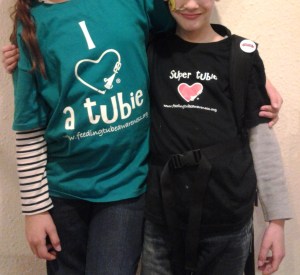
20150208_181917So, this week we’re the family proudly sporting the “I love a Tubie” t-shirts accompanied by the live-wire that is our very own “Super Tubie”.  Stop and say hello and don’t be afraid to ask me questions, but let M get on with whatever he’s doing.  We’re hoping to raise awareness and are happy to start in our community, after all, we know that every journey begins with a single step.

Christmas without food

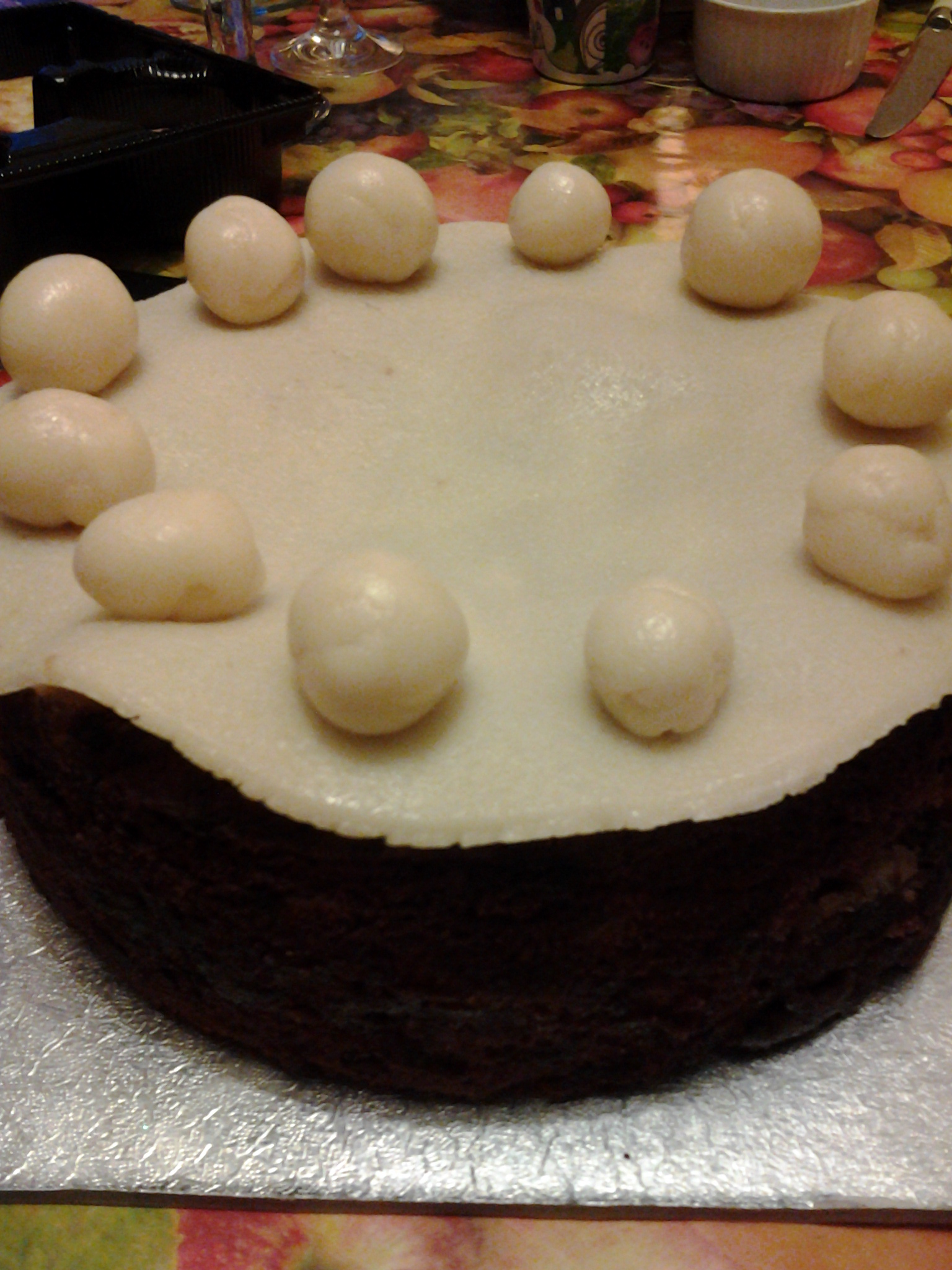
foodIt’s not until you find yourself in a situation where you need to avoid food that you realise just how much of our everyday lives and how many social occasions revolve around meals or other food-based activities.  Just think about it: birthdays are celebrated with a mix of party food, cake, treats for your friends and – when you’re turning 9 – party bags filled with sweets; Easter inevitably includes the requisite chocolate egg plus Easter biscuits and Simnel cake; a catch-up with old friends often starts with coffee and cake and may well move on to drinks and dinner; and Christmas is, quite simply, the time when we all over-indulge and go mad, filling our cupboards and fridge with chocolates, biscuits, mince pies and brandy butter in a manner that suggests there’s a genuine risk that we might run out at any minute.

Our plans for this Christmas itself were relatively simple.  My Mum had suggested that we served a buffet over the festive period, rather than having the traditional mid-afternoon sit-down feast that we’ve all become accustomed to, which seemed a great alternative and allowed us to cater for everyone’s needs.  Much to my surprise, M was keen for the rest of us to sit at the table for supper on Christmas Eve, whilst he sat in the other room watching some Christmas TV and sipped his glass of full-sugar 7-up, one of the few treats he’s allowed alongside his elemental feed.  By Christmas Day, he wanted to have company in front of the TV and Boxing Day saw us eating in shifts, whilst the others played board games or watched films with M. We quickly learned to let M decide where he was happiest being at meal-times and included him in as many traditions as we could – pulling Christmas crackers, sharing the jokes, wearing paper crowns and making the time as normal as possible without focussing all our attention, and his, on the food.

Courtesy of abcnews.go.com

Courtesy of abcnews.go.com

We thought we had covered all the bases this Christmas, or at least, all those we considered to be the biggies, but it was the little things that crept up and caught us unawares.  Our Christmas stockings always include chocolate treats (dairy- and soya-free naturally), a box of tic-tacs, a handful of nuts and a satsuma pushed down to the toe, but none of those could find its way into M’s stocking this year.  I had bought Moo-free chocolate advent calendars and selection boxes for both children before we knew he’d be going into hospital and whilst M had managed to have 4 advent chocolates before his admission and G enjoyed the rest whilst he was in, I had to work out how to give G the selection boxes without rocking M’s world too much.  This was one of those small things that needed a lot of late night planning on Christmas Eve. slices

In stark contrast, Mike and I had considered beforehand the treats that usually adorn the coffee table at home and deliberately didn’t leave out the boxes of Turkish delight or the dates or the orange and lemon slices in their normal home.  Instead, we stored them in a safe corner to be pulled out once both children were in bed as we didn’t want them to be a constant reminder of what M couldn’t eat and yet he objected more to us hiding these goodies away than leaving them on display. “It just isn’t Christmas, Mummy” was his feeling on the matter, without these seasonal delights out for all to share and enjoy.

I’m not sure I know that we didn’t get everything 100% right, but given that we were very much thrown in the deep end with little advice on how to survive the day, I think we did okay.  The biggest lesson learnt was to be flexible on a daily basis and not to expect one day to be like the next, both at home and at school.  Some days M sits and chats with G at the dinner table, enjoying a Foxes glacier mint (another small treat allowed) and a glass of 7-up whilst she eats her meal and yet the next will find him close to tears and hidden away in another room for the duration.  There is no pressure for him to constantly be a part of every meal-time and as long as he spends some quality time with the rest of the family, I’m happy to give him the time-out he sometimes so desperately needs.

The 3rd and final step

M and his tube at GOSH

M and his tube at GOSH

With steps 1 and 2 complete, we were now onto the third step, the one which is going to have the biggest impact on M’s life for the next few months.  NG-tube in place, dis-impaction done and pellet study under way, it was now time to move M to an “elemental” diet, one which sees all foods removed from his diet and replaced by a nutritionally complete feed that consists of amino acids, carbohydrates, fats, vitamins and minerals.  The ideal would be for M to drink the 1.8 litres of this feed that he needs each day to have the right amount of calories and nutrients for his age, weight and height, but I knew we had no chance of getting him to do that.  Not only is he a reluctant drinker at the best of times, meaning it would be nigh impossible to get nearly 2 litres of liquid into him on a daily basis, but the feed is truly revolting to taste and even adding generous quantities of approved flavouring was never going to be enough to convince him to let more than a minimal amount pass his lips.  The only alternative was to feed him via his NG-tube, which meant an intensive few days in hospital for us as we worked out how best to give the feeds, the timings and rates that he could tolerate and I was trained on how to manage his tube.

The original plan proposed by the dietitians was that M receive six 300mls feeds a day via the gravity-feeding method, which meant that we would attach a large syringe to the end of his tube and gradually add the 300mls over the duration of the feed to ensure he took the full amount.  The principle of gravity feeding is that you can adjust the speed of the feed as the flow of the liquid is driven by the height of the syringe and the effect of gravity:  the higher the syringe, the faster the flow. The dietitian was keen that the feed be given over around 20 minutes, but it quickly became obvious that this just wasn’t going to be a method that would suit M.  Within 5 minutes of his very first feed starting, he turned pale and grey and complained that his stomach was hurting. The nurse giving the feed adjusted how high the syringe was held, but no matter how the syringe was positioned, things didn’t get better and by feed number 2, the nurses were adamant that this just wasn’t going to work for him, something I wholeheartedly agreed with.  At this point, we were only giving him 200mls instead of the full 300mls, but even that was proving too much for M’s sensitive digestion, so the dietitian finally had to agree to what the nurses were telling her and everything was changed yet again.

M's rather snazzy new pump

M’s rather snazzy new pump

Our new routine saw the feed mixed to a higher concentration, meaning that we only needed to get 1.5 litres into him a day and we were introduced to the wonders of a pump.  The pump means that the rate of giving the feed can be at a speed that best suits M and can easily be tweaked as each individual situation requires.  There was a lot to learn in the few days we had as I needed to know and be confident in how to check that his tube was correctly positioned, what to do if it appeared to have moved, how to prepare the elemental feeds and how to attach and properly operate the pump.  There was also the added complexity that the pumps used on ward by GOSH were not the same as the one approved in our community and whilst the principle was the same, the processes were slightly different.  However, by the time discharge finally happened, I was as au fait with this new part of our life as I could hope to be, felt that we could cope at home and, more crucially, had enough medical supplies to see us through the next few days.

M and his tube at home

M and his tube at home

Since that first day, now over a month ago, that original regime has been changed and tweaked more times that I care to imagine.  The suggestion of 6 feeds being administered at separate 30 minutes periods throughout the day were impossible for M to manage as he wasn’t able to tolerate the 250mls over either the initial proposed 30 minutes, nor our second attempt of an hour.  It also quickly proved impractical as any issues with the placement of the tube would take at least 20 minutes to resolve and that was time that we couldn’t expect the school to give him as he doesn’t get any individual support.  We soon realised that M wasn’t coping either physically or emotionally with the constant feeding and we have now settled on a routine that seems to work for everyone concerned.  His first feed is a 1 litre one starting at around 6.30am, which is given slowly enough to avoid too many tummy aches or occurrences of reflux and which lasts until the end of lunch-time.  The pump is disconnected at that point and M is able to enjoy an afternoon free of the encumbrance of his pump whilst at school.  The final 500mls feed begins between 4pm and 4.30pm and takes us all the way through to bedtime.

This is the routine that we will be living with for the next month or so and then the task of food reintroduction will begin.  As our local dietetics team has refused to be involved in M’s care, we will be working with the dietitians from GOSH to work out a detailed approach to trialling foods and the order we try them in.  The elemental feeding via NG-tube will continue alongside these food challenges until we have identified enough safe foods for M to eat and get all the calories and nutrients he needs to be healthy.  It’s not going to be an easy or quick task to complete, indeed there is a long and arduous road ahead, but it should be one that leads to more answers for M’s health than we’ve ever had before.

Round Two: the Pellet study and other adventures

Courtesy of 123opendata.com

Courtesy of 123opendata.com

Once the NG-tube was finally in place, M and I then had 5 long days to survive the copious amounts of Klean-prep, senna and picolax that were pumped into his system to clear his troublesome bowel.  Although we appeared to be off to a slow start, these powerful laxatives finally did their job and by late Monday afternoon, the gastro registrar was confident that we were ready to start the pellet study and a x-ray confirmed his opinion.  I had already met with one of the gastro investigation nurses, so knew that the 3 pellets, containing different shaped plastic markers, were ready and waiting on the ward for M and all we needed to work out was how best to get him to swallow them.

Over the last year, we have made huge strides in getting M to swallow tablets whole and no longer need a spoonful of Grandma’s jam to help the medicine go down as he has conquered his struggles and now merrily swallows them with just a mouthful of water to help.  However, there were 2 problems we now had to overcome:  M’s new-found fear of swallowing capsules with the NG-tube in place and the fact that these pellets are of a size that even I would struggle to take easily, let alone a small child.  The nurse suggested we resorted to mixing the markers into a couple of spoonfuls of jam and that was our first attempt.  For reasons that will remain forever unclear, M found even this method difficult to manage and instead resorted to swallowing the pellets one tiny marker at a time.  It may have taken considerably longer than anyone expected, but the pellets were taken and so round 2 of our admission was well underway.

The week should have been an easy one, as it was supposed to require nothing more of us than completing the pellet study, but unfortunately it was at this point that I had to brace myself and find the strength to weather an unexpected and turbulent storm.  Despite both Mike and I having repeatedly made clear that we have almost no support from our local hospital and their paediatric gastro team, this information appeared to have got lost along the way and I found myself embroiled in a battle to keep M in hospital once the pellet study had started.  GOSH felt sure that we would receive all the care and advice we would need from our local and nothing I said would convince them otherwise. battle I spent more hours than I care to remember fighting M’s corner and insisting that the consultants didn’t discharge him before the study was complete and the NG feeding started.  The pressure was huge, both on me – as I talked, discussed and cried my way through numerous meetings with nurses, doctors, dietitians, psychologists, PALs workers and indeed anyone else who would listen – and on Mike – as he sought to juggle the challenges of working, looking after G at home and supporting M and me whilst we were several hours away and only contactable by phone.

It quickly became evident that GOSH simply could not conceive that we could be as lacking local support as I was asserting we were and I have no doubt that they were beginning to view me as something of an overwrought, overtired, over-emotional and somewhat neurotic mother, who was unbelievably arguing to keep her child in hospital, when most other parents were trying desperately to get their children discharged before Christmas.  By the end of the week, it had all come to a head and I was at my wits’ end, but was finally vindicated late Friday afternoon, when our local dietetics team refused in no uncertain terms to take on M on a shared care basis with the GOSH dietitians – an entirely new experience for GOSH, though sadly an all too familiar one for us.

lighttunnelDespite all the heartache and distress this unnecessary battling caused, there was some really positive light at the end of the transit study tunnel.  The final x-ray on Friday indicated that M’s bowel is working more or less as it should.  It may be a little slower than ideal, but the markers had moved through M’s system and the consultant was delighted with this result, which means that the bowel is currently doing its job.  We really couldn’t ask for anything more.  So, the conclusion drawn is that it is the complex and multiple food allergies that have been causing M’s diarrhoea and other symptoms because of his underlying condition, EGID and the final step is to identify these as accurately as possible.

Busy days

Now that Halloween and Bonfire night are behind us and Christmas is fast approaching, there’s finally a little time to look back and reflect on the start of the new academic year.  September seems like a lifetime ago and yet was a busy month with appointments right, left and centre that have had a lasting impact on decisions about M’s long-term care.  We had appointments with GOSH, a new community paediatrician, M’s OT and with CAMHS; and I needed to be the thread that linked them all to ensure that M remained at the centre of their focus and that all agencies were working together to provide the best support they could.

Courtesy of travaasa.com

Courtesy of travaasa.com

The OT’s review was everything we needed it to be and she has already started going into school once a week to work with M on his handwriting skills.  The clinical psychologist he meets with fortnightly through CAMHS is slowly building a relationship with him and gently pushing him to talk about how he feels about life with EGID and the frustrations he experiences.  As for the new community paediatrician, who was recommended by our local hospital, well, lets just say we won’t be rushing to meet with her again.  Her complete lack of understanding of his condition was glaringly evident as she suggested that regular toileting and a sticker chart were the answers to all our problems.  How I refrained from saying something very rude is nothing short of a miracle!

The most important of all these, for us, was our regular appointment at GOSH with the gastro team charged with M’s care.  The restricted diet and increased medications over the last 3 years have not brought about the results we’ve been aiming for and M continues to be symptomatic a lot of the time.  We have become increasingly concerned about his emotional well-being as he struggles with the impact of EGID and multiple food allergies on his daily routines and I was determined to come away from that appointment with a tangible plan in place.  Despite our best efforts with the challenging treatment suggested by the local consultant leading into the summer, our worst fears were realised when the registrar told us that M appeared to be impacted again and we would need another course of fairly heavy-duty laxatives to empty his bowel.

planningThat led into a lengthy discussion about where we’re headed and what the most sensible next steps for M’s care are.  Short-term plans are all well and good, but we now need a long-term care plan put in place.  He agreed that we can’t keep limping from one appointment to the next and promised to discuss M’s current situation with our consultant.  Medical terms such as “pellet study“, “elemental diet” and “manometry” were bandied around and I am glad that, thanks to the support from other FABED families, I have a reasonable layman’s understanding of what all these terms actually mean.

We left the hospital feeling that we were beginning to making some progress in dealing with the problems that continue to dog M’s every step and a short-term plan that would start to deal with the current impaction issue.  The longer term decisions would be discussed both internally and with us before anything was settled on for definite.  A follow-up appointment with the consultant herself was made and our step was just a teeny bit lighter as we felt our concerns were being heard and addressed.

Courtesy of abercrombierealestate.com

Courtesy of abercrombierealestate.com

However, since that day, over 7 weeks ago, I have spoken to GOSH at least once a week and almost daily over the past 10 days.  The improvements expected haven’t happened and so the decision has been made to admit M into the hospital for further testing.  We need to understand whether his bowel is working as it should or not as that will give us a clue as to the direction we need to head.  We have also agreed with his consultant that the diet and medicines just aren’t helping his hugely allergic colon and so have made the decision to remove all food from his diet and follow the elemental diet via NG-tube for a while.  This should give his bowel and body some much-needed time to rest and recuperate, something I believe it so desperately needs.