Tag Archives: support

Reaching out

I am, without a doubt, a firm believer that things happen for a reason and that the lessons I’ve learned, the situations we’ve survived and the successes we’ve fought for and achieved over the last few years have given me an understanding and empathy that nothing else could have done in the same way. I have discovered within myself a strength I didn’t know was lurking, which has seen me through some of the darkest days I’ve ever had to face. My Mum and Aunt love to remind me I come from a line of strong women and these challenges have helped me grow even stronger. The struggles I’ve had to face have enabled me to reach out and bring some comfort and reassurance and offer an ear always ready to listen when others have most needed it. What’s more, not only can I speak from a shared experience and the common bond of parenting a child with a chronic illness, but I want to give support when it’s most needed. you-never-know-how-strong-you-are-until-being-strong-is-the-only-choice-you-haveThat incomparable insight is what almost makes the challenges of M’s health worthwhile, for whilst I would give anything for him not to have to live with a rare illness like EC, it has, without a doubt, given me a compassion and understanding beyond what I would otherwise have known.

When setting up my blog 3 years ago, part of the process was to pen something that would honestly capture who I am and the reasons behind my decision to start it to include in my “About me” page. I won’t deny that this blog has undoubtedly become an inexpensive form of therapy for me, allowing me to explore my innermost thoughts and feelings about the chronic illness that has dominated so much of the last 10 years of our lives as well as sharing our experiences of it; but that wasn’t my raison d’être. What I wanted most was to be able to reach out to others who were facing similar challenges “…if I am able to speak to the heart of even one parent who is going through the same turmoils, then I know the hard work will have been worth it…” In the months since I first wrote down that somewhat ambitious desire, I have received the occasional e-mail telling me that what I’ve written has really resonated with another parent, responses that have meant so much as they acknowledge an achievement of my goal above and beyond what I originally wanted.

Knowing that I have received those messages you could easily assume that I might consider it a job well done and just leave it there, but over the last few weeks I have received more messages of encouragement than I ever anticipated and have found myself in the position of being able to offer support and advice when I least expected it. Those opportunities have drawn on the many facets of my life experiences, from seeking a diagnosis of EC to coping with a new diagnosis of T1D and from facing the daunting reality of tube-feeding to the challenge of switching a child to a gluten-free diet. What is even more amazing is that the people I’ve been talking to have been a mix too: Mums from school, friends met through support groups and those just looking for reassurance from someone who has already walked the path they now find themselves on. I don’t claim to be an expert in any of these things, but I am an expert in my child and our experiences and can offer an insight into how we have coped and the tips I’ve picked up along the way. When we started out on our search for a diagnosis for M, and then again when we made the decision to move to tube-feeding, the information readily available was scant and it took dedicated research and hours of reading, and re-reading, medical journals and the such-like to even begin to understand what we were facing. It was thanks to on-line forums such as FABED and PINNT and their members that we began to truly comprehend the complexities of life with a chronically ill child. social-media-treeMy blog has simply been an effective way to put all of our experiences into one place, hopefully with some useful pointers for others in the same shoes and, by doing that, to create my very own, very personal resource.

What’s even better in my opinion is that my passion to reach out and help others has been adopted by both children too. G has developed an empathy and understanding that extends out from the home into the classroom and wider world, and which has been commented on in recent weeks by her teachers and the volunteers at camp. She shows an amazing amount of tolerance towards the challenging behaviours and differing views of her peers and is always prepared to listen and respect what they have to say, whilst standing her ground with her own opinions. G is also sympathetic to those who are in the same position of having a sibling with a chronic illness and can fully understand the frustrations that the sometimes difficult behaviours of those siblings can cause. Whilst sometimes reluctant to deal with M at home, she never hesitates to offer help to those around her when it’s needed.

In similar fashion, M has developed a compassion that I can only attribute to the reality of a life altered beyond recognition by EC and multiple food allergies. At a recent birthday party, one of his friends was confined to a wheelchair due to an ankle injury and M immediately stepped in to make sure this friend could be as involved as possible, despite the constraints of the wheelchair. He took the time to push his friend around the garden so he could join in the activities and toasted marshmallows on the camp-fire for him, even though he wasn’t able to eat them himself. Likewise, another good friend has just been switched to a gluten-free diet and M has made sure he sits with him during lunchtimes at school to discuss the different foods that C has been trying. The parent of this friend rocked my world nearly 3 years ago by inviting M home for tea and being willing to cook to suit his complicated needs, not just that one time, but numerous times since. It feels rather wonderful to know that my boy is now returning that favour and giving this friend the chance to vent about his new diet.

I don’t know what the next few months will bring and the opportunities to offer support may start to dwindle, but there’s one thing I know for sure, as a family we will all continue to reach out and help out whenever we can.


reach-out

Limping towards the Finish line

bucket listDo you remember that long, long list of things that I was facing at the beginning of March? With the month-end in sight, I am, quite literally, limping towards the finish line, just thankful that the long Easter weekend ahead means the opportunity for some much-needed lie-ins and down-time; but how did March go in then end?

World book day and required costume x 1 – M decided on what can only be described as something of a left-field choice for your average 9 year-old and dressed up as Ford Prefect from Douglas Adams’ well-loved trilogy of 5 books, “The Hitchhiker’s Guide to the Galaxy“. It was one of the easiest costumes he’s ever asked me to make and to our delight, he won a £5 book token for the best WBD costume in his class.'Oh yes we're very proud of him. He's in publishing you know!'

Parents evenings x 2 – Both evenings went extremely well and we are so proud of the strides both children have made during this school year. M has been working hard at beating the challenges of his dyslexia and dyspraxia and is developing some beautiful handwriting when he remembers to try. G has settled well into Year 7 and was described to me as a “conscientious, hard-working, empathetic and focused” member of her tutor group. I was delighted to hear that her confidence has grown throughout the year and that she is developing into a well-respected and natural leader amongst her peers too.

School book fairs x 2 – Attended and books bought.

M-friendly croissants – Recipe adapted, croissants baked and hugely enjoyed as part of the school’s French role-play activity. I achieved above and beyond what I thought was possible with so little notice.

Mothers Day – We enjoyed a quiet day together, although sadly my Mum was unwell and not able to come out for lunch with us. We ate at one of our favourite M-friendly restaurants and were once again impressed by the phenomenal memory of the restaurant manager and the care awarded to both children by all the staff. Well done Wagamama!

Riding lessons – G continues to ride every other weekend and her passion for this hobby is growing. Her latest lesson saw her not only trotting and cantering with confidence, but beginning some preparatory steps to get her ready for jumping – scary stuff but she’s loving every moment.

A 10th birthday and a class assembly – These happened on the same day and were both celebrated in style. It’s hard to believe that my little bean has reached the end of his first decade and I can’t begin to imagine what the next one will hold.IMG_1765

Birthday celebrations – M chose a reptile-themed birthday party and I braved holding a tarantula to help encourage G to beat her fears and do it herself. We combined the day into a double celebration and headed out to a local trampoline park in the afternoon with a couple of friends for a belated marking of G’s 12th birthday too.

Dentist and hair appointments – These both happened as planned and really there’s not much more to say.

GOSH appointment – Mike, M and I headed to London for our first appointment at GOSH since the disastrous admission last December. We weren’t quite sure what to expect, not least because the gastro department is currently in a state of great upheaval. M is doing well, even though we haven’t managed to introduce any more foods safely into his diet since last summer and continues to impress us all by drinking the 400mls of E028 necessary to supplement his limited repertoire of food. His weight has dropped on the centile charts and will need some careful monitoring over the next few months as we continue to search for some more safe foods for him. There is, at long last, a chance of some shared care between GOSH and our local gastro team, which would add some much-needed local level support for our family and the next step is really to wait and see when and if that happens.

School play – Thankfully M’s role as Poseidon meant that I could re-use his toga from Stagecoach last year, so that was one costume crisis off my hands. He was only able to take part in one performance as the matinée was on the same day as his GOSH appointment and unfortunately I wasn’t able to see his evening performance as it clashed with G’s parents evening. However, Mike and G went to watch and told me it was great fun and he did really well.

Performing Arts Exams x 2 – Taken by one very-tired G and one determined-to-do-well M. We won’t know just how well they’ve done until mid-April, but I’m told that they both worked hard and performed well on the day. Having watched their performances the week before, I can’t wait to see if all their efforts paid off and are reflected in their marks.index

Spa day – This was a late birthday celebration, a treat that Mike had sorted out for me and my dear friend, and M’s godmother, L. We had a lovely afternoon being pampered, drinking coffee and chatting without interruption by small people, before enjoying a delicious dinner and a few bubbles to mark the day.

Events linked to school topics – This term M’s topic has been India and part of the school experience was to share an Indian meal from a local restaurant. Thanks to previous experience from G’s time in Year 5, I had been anticipating this one for months and a few mini trials of herbs and spices meant that I’ve been able to create a curry-esque meal that’s suitable for M. A mix of cumin, coriander, ginger and rosemary combined with our new discovery of rice cream created the sauce for his staples of chicken and rice. It might not be an authentic dish, but he loves it and it’s meant that he has been able to join in a meal with the rest of his class.

Preparations for G’s sibling camp – I haven’t quite started on this one, but the weekend’s going to be busy as G goes off to camp on Monday. She’s been looking at the list of things she needs and chatting to a friend via e-mail as she prepares for a week filled with fun and activities away from the hustle and bustle of home. She also went to her first Young Carers meeting this week and seemed to settle in really well. There are some other girls the same age as G, including one from her school, who have just started too and she’s looking forward to an afternoon at a local trampoline park during the Easter holidays. Watch this space for more of an update once she’s back and has shared all the news with me!

Easter – Preparations are sorted, food trials are planned, eggs have been bought and I’m looking forward to a peaceful family weekend at home.

8a165f06e3cedd424f2724dc4a5cc6bc

Happy Easter!


Double digits

And, just like that, the last member of our family has left the years of single digits behind him and has joined the ranks of those celebrating double digit birthdays. As well as celebrating the first decade of M’s life, we’re also marking 10 years of astounding challenges, amazing courage and unbelievable joy. Happy 10th little bean xxx

P1000073


“Promise me you’ll always remember: You’re braver than you believe, and stronger than you seem, and smarter than you think.”

What makes them rare

February 29th: a special day, an unusual day, a day so rare that it only comes round once every 4 years and, quite frankly, the perfect day to mark Rare Disease Day 2016. This is the opportunity to raise awareness of rare diseases and the impact they have on the people living with them, not just with the general public, but amongst medical professionals and policy-makers too. It initially launched as a European event in 2008 and is now marked in over 80 countries worldwide.

12801187_788532541290267_734133436349093167_n

What is meant by a rare disease? Definitions of “rare” do differ from country to country, but across Europe a disease is considered rare when fewer than 1 in 2,000 people is diagnosed with it. The threshold in the USA is defined as when fewer than 200,000 Americans are diagnosed with that illness at any given time.

How many rare diseases are there? There are over 6,000 rare diseases known to be in existence and 80% of these have been identified as having genetic origins. Astonishingly, approximately 5 new rare diseases are described in medical literature every week.

Who is affected? Rare diseases can affect everyone, they’re not fussy about who they pick on. Over 3.5million people in the UK are affected by a rare disease, which equates to 1 in every 17 UK nationals. Somewhere between 50% and 75% of rare diseases will affect children and scarily, 30% of rare disease patients will die before they reach their 5th birthday.

Why raise awareness? The symptoms of a rare disease are frequently multiple and varied and not only are they not exclusive to that illness, but neither are they all experienced by all patients, which makes diagnosis a long and drawn out process. All too often the diseases are misdiagnosed and beneficial treatment can be unavoidably delayed. A lack of scientific knowledge and consensus throughout the medical community can add to the complexity of reaching a diagnosis and adds significantly to the burdens placed on the patient and their family.

What does Rare Disease Day mean to us?

Imagine being told that your child has a chronic illness that neither you, nor most of the medical professionals you’ll end up meeting from that point on, can pronounce – or have even heard of until that moment. stats

Imagine finding out that that illness is rare: that around 1 in 10,000 people are diagnosed with the most common form, but that your child has one of the rarest forms and that there is little research into it.

Imagine learning that even the medical community struggles to reach a consensus about this rare disease and whether it really exists or is simply part of a much bigger picture – but nonetheless, having to live with the reality of this rare disease and its effects on 19686_830453950379123_8588932072036308849_nyour family’s life on a daily basis.

(For those who wonder if EGID is real, try living with anyone who is in the midst of an EGID flare up and, bigger picture or not, you’ll understand why we will continue to fight for research into this unquestionably chronic and life-impacting illness.)

Imagine the heartbreak of holding your sobbing child at 3am, with tears streaming down your own face, as you struggle to find some, any words to bring him a little comfort.

Imagine taking one food after another out of his diet in a hope to bring some relief from the chronic pain and poor bowel function, until you are left with the final realisation that perhaps you need to remove everything and feed him via a tube to see if that is the answer you’ve been seeking for the first 9 years of his life.

And then imagine starting to put foods back in, one at a time, only to discover that his body has allergic reactions to more than you ever thought possible.

Does this sound familiar to you?

This is the reality of the last 3 years of our life with a rare disease as the truth of EGID is that symptoms are complex, understanding is limited and medical research funding scarce. M’s diagnosis with EC makes him rare, so please help raise awareness today, not just about EGID, but of other rare diseases and those living with them too.

rdd-logo


My One Constant Companion

HS_Birthdays_30thToday I’m celebrating a very special day, a milestone birthday of a very different kind. Google has revealed that Steve Jobs, Ben Miller and Kristin Davis were all born on this day, but as interesting as that is, I’m not really celebrating their birthdays. Today is my Godmother’s birthday, but it’s much more than that too. Today also happens to be my birthday, but, according to my birth certificate and my Mum, both of whom I trust implicitly, I’ve got another 366 days to wait until I reach my next noteworthy milestone, so my birthday celebrations this year are relatively low-key. Despite all these great reasons to celebrate, today I’m marking 30 years of one of the most significant events in my life:

30 years of living with T1D*

IMG_0138[1]

This is me, the Christmas before I was diagnosed

With a less than auspicious twist of fate, my life changed completely on the day I celebrated my 9th birthday and, believe it or not, 30 years on I can say that it arguably changed for the better. Don’t get me wrong, I would give anything to not be living side-by-side with a chronic illness, but the events of that day enabled me to return to much improved health and, most importantly, haven’t stopped me doing pretty much anything I’ve wanted to since then. After months, and maybe even years, of displaying what are now the well-recognised symptoms of undiagnosed diabetes – think excessive, unquenchable thirst; massive weight loss; increasing and unexplained lethargy and a constant need to wee – an unexpected collapse at school led to an emergency hospital admission, a fear-filled night as my parents had to face the unimaginable possibility of losing me and finally a diagnosis that would shape the way my future unfolded. Without even knowing it, and certainly with little regard for my opinion, this uninvited visitor came and took up permanent residence in my body, where it has lived in varying degrees of co-operation since the mid-1980s.

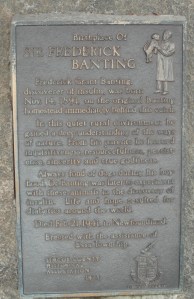
The last 30 years have seen amazing developments in the care of T1D, but the most momentous event actually happened 65 years before my own diagnosis. Before 1921, my parents’ worst fears of that night would have been realised as, until the discovery of insulin at the University of Toronto by Banting and Best, SAM_0827those diagnosed with diabetes mellitus had no chance of survival and could only delay death from the illness itself by starving the body instead. Their discovery followed on from the hard work of  other scientists and medics from around the world such as Oskar Minkowski, Joseph von Mehring and Paul Langerhans, for whom the cells in the pancreas were named, and I doubt that any can deny the life-changing impact that the discovery of insulin has had on those of us living with T1D.

My first decade with T1D was heavily influenced by the incredible mind of my consultant, Professor B, who was compassionate, understanding and impressively forward-thinking in his approach to my care. One great example of his progressiveness is reflected by the DAFNE (Dose Adjustment For Normal Eating) approach to T1D management, which teaches PWD** to “…match their insulin dose to their chosen food intake on a meal by meal basis…“, and which was introduced to mainstream diabetes care in 1998 as a somewhat revolutionary new step. I somewhat nonchalantly shrugged my shoulders at the announcement as I’d been following that regime for around 10 years before it was accepted as being effective by the rest of the diabetes world, all thanks to Professor B and his focus on helping to improve my teen struggles with T1D.

IMG_0139[1]

My collection of Novopens!

Likewise, within 2 or 3 years of diagnosis, my “futuristic” disposable syringes and bottles of insulin, which had replaced the glass syringes and metal hypodermic needles of the 1950s that needed constant sterilising and re-sharpening, had themselves been replaced with one of the first models of the Novopen. This was the first insulin pen injector of its type and combined syringe, needle and insulin bottle in one unit. I worked my way through several upgrades of the Novopen and these days use a combination of a pre-filled disposable pen injector and the last pen injector that I had, a green Novopen 3, which still works in impeccable fashion nearly 20 years on from when I was first given it. Two decades on and I’m so excited to have embarked on another adventure, this time with the relatively new innovation in diabetes care, the Freestyle Libre system for blood glucose monitoring. Whilst I’m not at the forefront of PWDs trialling its use, I have offered to collect data concerning my usage for a research student looking to compare blood glucose monitoring behaviour following the use of the Freestyle Libre, a study that I would hope would encourage some NHS funding for these short-lived sensors which really could revolutionise T1D for many.

To put the last 30 years into context, I worked out some quick statistics of what 3 decades living with T1D has meant for me:

  • An average of 3-4 BGLs measured a day, sometimes a lot more and sometimes considerably less, adds up to around 43,838 blood sugar tests…
  • …and assuming equal use, though the truth is anything but, each of my fingers has been pricked nearly 4,500 times.
  • There’s been in the region of 41,636 injections to keep me healthy…
  • …most of which have in my thighs, bum and upper arms…
  • …although, after 25 years of steadfast refusal to consider anywhere else, I now inject almost exclusively in my stomach and have the bruises to prove it!
  • I’ve been involved in several research projects since almost day 1, including one which resulted in the longer-acting insulin I now use on a daily basis…
  • …and more medical students, visiting foreign doctors and interested consultants than I care to remember…
  • …and the involvement of both G and M in current research to investigate a possible genetic marker for T1D.
  • One amazingly fantastic juvenile T1D consultant, considered to be one of the top men in the diabetes world, around the world
  • …and another who I remember joining my team as a junior doctor at our local hospital and who is now a Professor in this field in that same hospital…
  • ..as well as the care of another unrivalled T1D consultant during both my pregnancies to ensure the safe arrival of my babies and my continued health too.
  • And there have been the inevitable times in hospital, particularly during my emotion-ridden years and fortunately only 1 major complication resulting from my teenage rebellion stage.

A cure may not yet be in sight, but with the amazing developments of the last 100 years, who knows what the next 30 years will bring?jdrf-ndam


*T1D – Type 1 Diabetes                                                                                                                      **PWD – People With Diabetes

The Bionic Woman

For the last 6 days Mike has taken to calling me the “bionic woman”. Needless to say, I have not recently had a skydiving accident which has led to bionic modifications to my broken body resulting in amplified hearing, a right arm with the strength of 10 men and the ability to run at speeds over 60mph; in fact, there has been no incident of note and my 1 broken body part, my pancreas, remains well and truly broken. Rather there has been a conscious decision on my part to finally fully embrace a relatively new technological development that I hope will make a significant difference to my diabetes care.

I first became aware of this new bit of kit through M’s school friend, F and his fantastic parents, L and I. I can’t remember quite how we got onto the subject, but I’m reasonably certain that it had something to do with school Sports Day, the challenge of T1D vs. the active child and watching L check his blood sugars simply by waving a black box over his arm. To be fair, M had been wittering on telling me for quite some while about the “white, circular sensor-thingy” attached to F’s arm that enabled him to test his blood glucose levels (BGLs), but the lack of clarity in his description combined with my own lack of relevant knowledge meant that I had absolutely no idea what M was talking about and had dismissed the subject without really giving it a second thought. However, my interest was piqued through that chance encounter on the school field and it led to the opportunity for an enlightening conversation about what this thing was.

The Freestyle Libre (FSL) is marketed as a “flash glucose monitoring system” with a tagline of:

FL

and I was intrigued enough by this to want to find out more and discover whether this might be for me, or not. I read their website, researched on-line for users’ reviews, joined the FB forum for FSL users and wondered if it was too good to be true. I’ll be honest, when I first looked into whether it would be a benefit to me and my T1D care, I loved how easy it appeared to be and, having spoken at length to L and I on more than 1 occasion, could see just how revolutionary it could be, especially for children with T1D.IMG_0131[1] But, and believe me when I say it was quite a big “but”, the sticking point sadly was the price. This type of technology is not available to anyone through the NHS as yet and funding the sensors alone would cost in the region of £100 a month. I know that you cannot put a price on good health, but as a Mum to 2 children with multiple food allergies and an already increased monthly bill due to the high costs of free from food, the challenge of finding that extra £100 each month (£125 extra earned pre-tax) felt quite daunting and I shelved any thoughts of such an investment for the time being.

However, even though the price was making me think twice, I was reluctant to dismiss the option out-of-hand and, given the lengthy UK waiting list, decided to add my name and wait to see what happened in the meantime. The daily events of life with M and G quickly overtook everything else and the FSL soon dropped far down my list of priorities, though it was never far from my thoughts. I’m not exaggerating when I say months passed, but at long last, in January 2016, I saw the message I’d been waiting for: the news that monitors and sensors were once again readily available in the UK and I decided to bite the bullet and order a starter pack to finally see if the FSL’s claims were all true.

IMG_0135[1]The concept is a simple one and reassuringly easy to use. You insert a small sensor with a thin, 5mm needle into the back of your arm and, although the initial instructions for applying it appear quite complex, it really was quick and easy to do. I didn’t find it painful at all and whilst it takes some time to get used to the constant presence of this sensor on my arm, I’ve had no problems with it. The sensor measures what is called the interstitial fluid glucose levels, which are not identical to BGLs as this is the fluid found between the cells, but are considered accurate enough for monitoring what is going on. To find out your BGL, you simply wave the scanner over your arm and it gives you the result almost instantaneously. IMG_0129[1]The sensor continually reads the changes in the glucose levels and, as long as you scan at least once every 8 hours, the easy-to-read graphs given on the screen indicate what has happened during the times you didn’t test. As with most CGM systems (Continuous Glucose Monitoring), it is recommended that the FSL user occasionally uses a standard glucose monitor to test their blood sugars and check that reading to the one given by the FSL – my tests have shown a difference of less than 0.3 mmol, which is incredible.

I can’t begin to tell you how impressed I am with this small device. It really was easy to understand how to use it and the whole family – Mike, G, M and even my Mum – have taken their turn in testing my BGLs for me. Everyday I sit with the scanner amongst the rest of my accountancy paraphernalia in front of me on my desk IMG_0128[1]and am able to discreetly test whenever I want or feel the need. The amount of information available is vast and you can look at enough graphs, bar charts and log books to satisfy even the biggest techno-geek. It has become strangely addictive to do and has already started to give me an even greater understanding of what my T1D is doing than I’ve ever had before. The non-invasive nature of the testing means that it would be easy for a parent to do during the night with no fear of disturbing their child’s sleep, and similarly for Mike to do if he ever feels that my blood sugars are dropping overnight – no need to wake me to ask me if I’m going hypo and then having to survive the often stroppy response his concerns are rewarded with, whether they are or not – yes I am precious about my sleep! I also have no doubt that it would appeal to every tech-savvy under-18 out there, which would no doubt reduce the chances of non-compliance and teen rebellion that so many young T1Ds experience,IMG_0130[1] thereby similarly reducing the risk of complications from poor control. I really can’t speak highly enough of my experience so far with the Freestyle Libre and wouldn’t hesitate to recommend it to every T1D out there. It has been a struggle to find a down-side other than the price, which is due to the £50 sensors needing to be replaced every 14 days. My personal solution to that is to fund 1 sensor a month for the time being, or at least until the point I finally win that elusive lottery jackpot!
 

12417922_946040332153817_2856366599477784994_n

Day 7: Showing a lot of Tubie love!

This is what this week has been about: raising awareness, educating those around us, supporting all those affected by tube-feeding and showing a lot of Tubie love:

20150208_181917


Day 6: Educating those around us

With the growth of the internet and the increasing popularity of social media platforms as well as the plethora of blogs out there that cover a multitude of topics, the world has become a lot smaller and it’s easier to spread the word and work towards greater understanding. Our family has become adept at educating those around us about EGID, a necessity when even the medical community struggles to reach a consensus about this rare disease and whether it really exists or is simply part of a much bigger picture. As a quick aside, try living with anyone who is in the midst of an EGID flare and, bigger picture or not, you’ll understand why we will continue to fight for research into this unquestionably chronic and life-impacting illness. T_2384403_orighe same is true when it comes to feeding tubes as sadly misconceptions are rife and the reasons behind a tube can be as complex and individual as there are stars in the sky. Even with children or adults living with the exact same condition, their symptoms and need for additional nutrition can be vastly different.
Of course, those of us who live with the reality of additional nutritional support and tube-feeding often have the best opportunity to educate those around us about it, but we can’t do it on our own. PINNT (Patients on Intravenous & Nasogastric Nutrition Therapy) here in the UK and the Feeding Tube Awareness Foundation in the USA do an amazing job of supporting families going through nutrition therapy, be that newcomers to the world of tube-feeding or those who’ve been doing it for years. They also provide tools and advice that can be effectively used to educate the outside world about the reasons behind this treatment and how to give easy-to-understand answers to the most difficult of questions.

Last year, M made a video for National Eosinophilic Awareness Week, which he used to help teach his classmates and the wider school not just about EGID, but also about his tube and, to be perfectly honest, I couldn’t think of a better way to help educate my community than sharing it once again:

Day 5: But who supports the supporters?

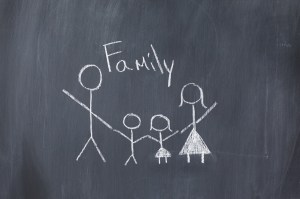
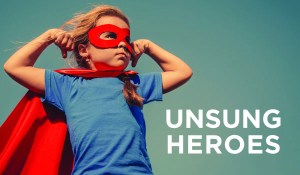
Family on Blackboard-webWhen you are tube-fed, I think it’s only natural to expect the support of your nearest and dearest, especially in the case of the tube-fed child. In a recent interview about her MS diagnosis, actress Jamie-Lynn Sigler from the US TV show “The Sopranos” said that “when one person in the family has a chronic illness, the whole family has it.” and this really resonated with me. M, I hope, has never needed to question the unfailing and unconditional support that Mike and I will give him along every step of his journey, but it’s not just us who have walked that way with him over the last 12 months. Without any say in the matter, G has been dragged along for the ride too and has been a great comfort and support to M when it matters most, arguments and fallings-out aside. I have talked before about the amazing community that surrounds our family, but G has been something of an unsung hero in the story. Over the last few years we have seen her struggle to cope with the reality of having a chronically ill brother, which has manifested itself in behaviour and attitudes that are less than ideal and which need love and understanding in the most testing of times. We work hard to try to give G as much time as we can, but sometimes that can’t be as much as we’d want, especially when going through a particularly tough time with M. Sometimes siblings need more time than the parents can find, so who is it that can help parents support these young supporters?

Many people will have heard of Young Carers projects, but perhaps will not realise how massive and vital a role these groups can play in families dealing with chronic illness. Young carers are defined as “children and young people who often take on practical and/or emotional caring responsibilities that would normally be expected of an adult.” Being a young carer is an isolating experience as the child may be reluctant to discuss their home life with friends at school for fear of bullying and will often feel that they are in a unique situation. imagesYoung Carers groups try to meet on a regular basis to give the youngsters a much-needed break from the day-to-day, the opportunity to meet other young carers who will truly understand the pressures and strains they are under and the chance to have fun and be a child. Depending on the location, and sadly on the funding available, these organisations may offer evening clubs, weekends away, days out and even holidays as well as friendly advice, information and counselling to both the young carer and their family. In our area, there is also a school worker who runs lunchtime clubs at some of the local secondary schools, hold awareness assemblies and will act as an advocate for the child if needed.

Frequently these youngsters don’t identify themselves in the role of a young carer and it came as no surprise to me that G didn’t as I certainly had never really thought about her in terms of being a young carer until fairly recently. Thanks to a well-placed poster, a stray comment at school and some gentle prodding from a fab EGID friend, I contacted our local Young Carers group, filled in their referral document and sent it off with my fingers tightly crossed that something helpful would come from it. With the most amazing coincidental timing, at almost the same time that I was waiting for a reply, G had spotted a poster in the Year 7 canteen, took a photo on her phone and showed it to me, asking if I thought this was something that she could find out more about. Delighted that she was interested in this support and wanting to encourage her to investigate the opportunity under her own steam too, I agreed that she should contact the teacher named and see what further information she would be given from within school. P1000101She and a close friend in a not-too-dissimilar position have since met with this teacher a couple of times and have been given more information about our local young carers group as well as a list of useful contact names and numbers.
We also had a positive response from my referral form and last week G and I met with Hannah, one of the Young Carers team. She was with us for about an hour and talked to G about all things Young Carers. Having established that G understood what was meant by the term “young carer”, Hannah then took the time to explain how G fit into that role and then they discussed at length just how G helps M and the rest of the family and how she feels about it. I stayed in the kitchen the whole time, but switched between sitting at the table with them and carrying on with preparing feeds, meds, packed lunches and dinner in order to give G the chance to open up about her feelings. I reassured her that we wanted her to be 100% honest about the emotional impact that M’s illness has on her and was pleased to hear her being just that. Nothing she said surprised me in the slightest and I found it a relief to see her open to the idea of the Young Carers groups and all they can offer. She is keen to get started as soon as possible and is just waiting for the paperwork to be processed and the invitation to drop onto the doormat Hogwarts-style!

I am fascinated and pleased to see that there is an increasing awareness worldwide of the lasting impact of chronically ill siblings on children and the need to seek ways to effectively support them as they grow up, often in the shadow of the sick child. Last year I became aware of another fantastic project, this time by Australian photographer, Alexandrena Parker and Rare Voices Australia, entitled The Forgotten Ones, which sought to highlight this aspect of the rare disease community and unsung-hero-greport…to celebrate and recognise the unspoken and often forgotten support that siblings provide to loved ones suffering.” This is just one person’s small step to make a difference to these unfailing supporters, but with the help of projects like The Forgotten Ones and Young Carers, we can all help support our sick children and their unsung heroes.
 

*The wonderful charity, Over the Wall, also provides respite camps for sick children, their siblings and their families, either all together or separately. You can find out more here.

Day 4: Development, both physical and emotional

The last 12 months have seen many changes in M. Some were the physical ones we were hoping for – improved health, weight gain and his symptoms disappearing – and some were an unexpected bonus on an emotional level. When I offered to write the article for PINNT, it was important for me to discuss with M whether he was happy for me to talk openly and honestly about our experiences. Both he and G know that I have been writing my blog for the last 3 years and are fully aware that I protect their anonymity throughout my writing. This article was going to be something very different as I would be using our real names and providing photos of M to be included in the magazine. To my surprise, not only did he give me the go-ahead, but he also asked if he could jump on the family writing bandwagon and include his own thoughts about his year with a NG-tube. For me this showed a real development in his attitude about his EGID, one that reflected a maturity I had seen growing since the tube was passed in 2014. From producing his video for National Eosinophilic Awareness week last May to the multiple presentations at his school and now this eagerness to share his opinions, M has started to grow up and slowly come to terms with the reality of his life with a chronic illness. This is what he had to say:

Living on EN – The patient’s perspective (child)

My name is M, I’m 9 years old and this Christmas will have had my NG-tube for a year. My Mum and Dad and my doctor made the decision for me to have a tube because so many foods were having to be taken out of my diet because I have EGID (Eosinophilic Gastro-Intestinal Disease) and multiple food allergies. When I first found out that I was going to have a NG-tube, I felt upset because I didn’t think that the tube was 11009339_10152614451586123_8225188594845865541_ogoing to make me feel better and I was very worried that I would be teased at school about it.

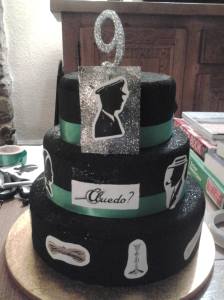
The first 8 weeks were very difficult as I felt angry and had several melt-downs as I got used to my tube. Christmas was tough because I couldn’t eat anything and I missed having turkey, Christmas pudding and mince pies. I was jealous that my friends and family were able to eat as I really enjoyed eating lots of foods. When I had my birthday a couple of months later, my Mum made me a special cake out of polystyrene cakes and decorated it to match my Cluedo-themed party. My friends thought it was brilliant and the best thing is I got to keep the cake!

At school, all of my friends are very supportive, they don’t tease me and now don’t seem to notice it. Some say they have even forgotten what I look like without it! 20150710_111650Last summer, my classmates decided to wear a 2.5kg backpack for the morning so that they could understand exactly what I go through each day. The whole class did it as well as our teacher and the other teaching assistants.

Twelve months on, I feel much better both emotionally and health-wise. During the first few weeks I didn’t feel very sure about how I would cope, but now I feel confident about having it in. I would still prefer not to have it, but I don’t mind it so much. The first few tube changes were hard, but I’ve become an expert and can now have my tube changed in less than 5 minutes – I even take my old tube out myself.

If I had to give some advice to another child about to have a tube, I would say don’t worry because it’s not as bad as you think it will be. You can do practically anything with it and it will help you feel a lot better in the long-run. My tube doesn’t stop me doing anything and in the last year I have continued to play my cello, performed in a dance display and have even been given my first modelling job.