
As Mum to a child with additional health needs, you have to be prepared the minute you venture outside your front door. You don’t just carry with you the medicines, equipment and food items you need to get you through the next few hours relatively unscathed, but also the necessary mental strength to explain your child’s needs to everyone you encounter and ensure that your trip outside of the safe bubble at home goes as smoothly as it possibly can. There are, of course, times when an essential gets left on the kitchen counter and you have to think on your feet and find a solution that will work until you get back home, and, for us, there have been times when, despite the clear explanations given and the seeming comprehension of the waiting staff, mistakes have been made and the children have suffered the consequences of those misunderstandings.

When you add travelling abroad to the mix, those unavoidable stresses become even more intense and, as an allergy Mum, I can tell you that worries about safe food are right at the top of the list. As you may remember, last year we decided to stay in the UK during that first holiday season with a tube in place and had the most amazing week in Cornwall, where we discovered hidden treasures of restaurants and sight-seeing spots that we are still talking about nearly 12 months on. However, we decided that this year we would venture back to a favourite haunt and visit the Algarve in Portugal, with a few extra days in Lisbon tacked on to the start of our trip. We know the resort of Alvor extremely well, but this will be the first time of visiting with such a restricted diet and I have to confess that nerves have been a little greater as we plan our 10-day stay away from home.
One thing I learned early on in our holiday planning with M was to talk to our airline about taking an extra case filled with whatever medicines or foods we will need whilst we’re away and have had superb experiences with both Easyjet to Portugal and Virgin Atlantic to Florida. These conversations paved the way for our long-haul flight to the USA and we found that both the airport lounge and the airline were able to provide safe meals for M when we gave them a little advance warning, but what happens once we’ve landed abroad, especially in a country where we don’t speak a word of the native language?  Our back-up plan is our self-catering apartment, which means that there is always somewhere to prepare a simple meal of M’s safe foods without too much trouble, but I do, perhaps selfishly, want a holiday from that daily grind of cooking and be able to enjoy a family meal as we used to do when the children were small. Our previous holidays to Portugal were challenging, but not impossible as M loves fish and seafood which are always readily available, but I worried that the current restrictions might be a demand too far.
Fortunately, there are answers to the anxiety about communicating food allergy requirements in a foreign language and whilst it took a little more effort than originally planned, I got our perfect solution in the end. I started by calling Allergy UK, who offer a fantastic service of providing translation cards which “…feature an allergy alert message, an emergency message and a message for use in restaurants to ensure that your food order is free from the particular allergen that causes your reaction…” and can be ordered in any one of 36 languages to cover 70 different allergens. However, I really wanted a bespoke message detailing M’s current safe foods and unfortunately Allergy UK was not able to tailor their cards accordingly, but they did point me in the direction of the amazing Yellow Cross, a company I had never even heard about until recently.
![IMG_0824[1]](https://7yearstodiagnosis.com/wp-content/uploads/2016/08/img_08241-e1470587215827.jpg?w=220&h=300) Thanks to a detailed e-mail conversation with Yellow Cross Director, Jane Harrison, she agreed that it would make far more sense to detail what M can eat, rather than a lengthy list of his many allergens and suggested she spoke to their translator to cost out these personalised cards. We settled on appropriate wording, it was passed to their Portuguese translator and I was quoted a very reasonable £20 for a set of 4 eating out translation cards. I confirmed that we wanted the cards, made payment and in less than a week, the finished credit card-sized cards dropped through our letter box. The cards are printed on card and then carefully laminated to extend their life, and I couldn’t be happier with the finished product. They clearly state the wording I had discussed and agreed with Jane and their service was absolutely faultless. I found Yellow Cross willing to help us with our request and I’m certain that the inclusion of these cards in our travel survival pack will ensure that our Portuguese holiday goes with a swing.
Thanks to a detailed e-mail conversation with Yellow Cross Director, Jane Harrison, she agreed that it would make far more sense to detail what M can eat, rather than a lengthy list of his many allergens and suggested she spoke to their translator to cost out these personalised cards. We settled on appropriate wording, it was passed to their Portuguese translator and I was quoted a very reasonable £20 for a set of 4 eating out translation cards. I confirmed that we wanted the cards, made payment and in less than a week, the finished credit card-sized cards dropped through our letter box. The cards are printed on card and then carefully laminated to extend their life, and I couldn’t be happier with the finished product. They clearly state the wording I had discussed and agreed with Jane and their service was absolutely faultless. I found Yellow Cross willing to help us with our request and I’m certain that the inclusion of these cards in our travel survival pack will ensure that our Portuguese holiday goes with a swing.
![IMG_0506[1]](https://7yearstodiagnosis.com/wp-content/uploads/2016/06/img_05061-e1465074621823.jpg?w=260&h=300) During that unexpected extra time, M had really made the effort to use his leg even more and became scarily fast and adept at using his crutches in every situation. The last week saw even more development as he more or less abandoned his crutches at home and finally started putting his full weight on his left leg. All this to ensure that that cast would well and truly be removed that afternoon and be needed no more.
During that unexpected extra time, M had really made the effort to use his leg even more and became scarily fast and adept at using his crutches in every situation. The last week saw even more development as he more or less abandoned his crutches at home and finally started putting his full weight on his left leg. All this to ensure that that cast would well and truly be removed that afternoon and be needed no more.![IMG_0777[1]](https://7yearstodiagnosis.com/wp-content/uploads/2016/07/img_07771-e1470003134182.jpg?w=300&h=120) M and I sat waiting for the orthopaedic consultant to look at his x-rays before giving us his opinion, so I tentatively peeled back the tubigrip stocking that had been the only barrier between his leg and the plaster for the last 3 months. His left leg was a little skinnier than his right, though not as much as we had feared it might be, but was also incredibly hairy, something we hadn’t anticipated at all. A little research told us that when a cast is in place for an extended period, it causes constant irritation of the skin and so the hair grows to form a protective layer between the skin and the plaster cast. It was a completely unexpected insight into what M might look like when he eventually hits those dreaded teen years and puberty – and he really wasn’t impressed! In stark contrast to his skinny, white and very hairy leg, M’s foot was almost orange in colour and as scaly as his
M and I sat waiting for the orthopaedic consultant to look at his x-rays before giving us his opinion, so I tentatively peeled back the tubigrip stocking that had been the only barrier between his leg and the plaster for the last 3 months. His left leg was a little skinnier than his right, though not as much as we had feared it might be, but was also incredibly hairy, something we hadn’t anticipated at all. A little research told us that when a cast is in place for an extended period, it causes constant irritation of the skin and so the hair grows to form a protective layer between the skin and the plaster cast. It was a completely unexpected insight into what M might look like when he eventually hits those dreaded teen years and puberty – and he really wasn’t impressed! In stark contrast to his skinny, white and very hairy leg, M’s foot was almost orange in colour and as scaly as his ![IMG_0783[1]](https://7yearstodiagnosis.com/wp-content/uploads/2016/07/img_07831.jpg?w=225&h=300) We were sent home with a walking boot and crutches to help ease him back into the routine of walking and exercising without his leg in a cast and within 3 weeks both had been abandoned to one side. We’ve been back for our final fracture clinic, where M was discharged with a clean bill of health and permission from the consultant to participate in as many of the activities as he wants at next week’s activity camp. Unbelievably there is no physiotherapy available for M through the NHS, but we have an excellent private physio in a nearby town and M will have a couple of sessions there to get him well on the road to recovery. He is having to learn to pace himself, something my hyperactive 10 year-old is not very good at doing, but the aching leg that results from a couple of hours running around our garden with G is a harsh reminder that his leg won’t just bounce back to where it was at the start of the year. It will take a few months to recover the strength, muscle tone and mobility that M is used to, but some hard work and focus will get him there in the end.
We were sent home with a walking boot and crutches to help ease him back into the routine of walking and exercising without his leg in a cast and within 3 weeks both had been abandoned to one side. We’ve been back for our final fracture clinic, where M was discharged with a clean bill of health and permission from the consultant to participate in as many of the activities as he wants at next week’s activity camp. Unbelievably there is no physiotherapy available for M through the NHS, but we have an excellent private physio in a nearby town and M will have a couple of sessions there to get him well on the road to recovery. He is having to learn to pace himself, something my hyperactive 10 year-old is not very good at doing, but the aching leg that results from a couple of hours running around our garden with G is a harsh reminder that his leg won’t just bounce back to where it was at the start of the year. It will take a few months to recover the strength, muscle tone and mobility that M is used to, but some hard work and focus will get him there in the end.![IMG_0743[1]](https://7yearstodiagnosis.com/wp-content/uploads/2016/07/img_07431-e1469212032275.jpg?w=292&h=300)

![IMG_0650[1]](https://7yearstodiagnosis.com/wp-content/uploads/2016/07/img_06501-e1468508813859.jpg?w=300&h=250) G and M could eat, quickly made informed suggestions about the dinner that they could prepare for them to enjoy during our visit. Of course, the proof of the pudding is, as they say, in the eating, but we were hopeful that they would meet the high expectations we now had for the meal and booked a pre-performance table timed to fit exactly into the short gap we had between finishing at the Allergy Show and sitting down to watch Bugsy.
G and M could eat, quickly made informed suggestions about the dinner that they could prepare for them to enjoy during our visit. Of course, the proof of the pudding is, as they say, in the eating, but we were hopeful that they would meet the high expectations we now had for the meal and booked a pre-performance table timed to fit exactly into the short gap we had between finishing at the Allergy Show and sitting down to watch Bugsy.![IMG_0659[1]](https://7yearstodiagnosis.com/wp-content/uploads/2016/07/img_06591-e1468509166608.jpg?w=300&h=193)
![IMG_0661[1]](https://7yearstodiagnosis.com/wp-content/uploads/2016/07/img_06611-e1468509189964.jpg?w=300&h=196)
 were fortunate to go to one and the photos and comments about it posted by their Mum, Annie left me determined to find out more and see whether M might similarly qualify for a place.
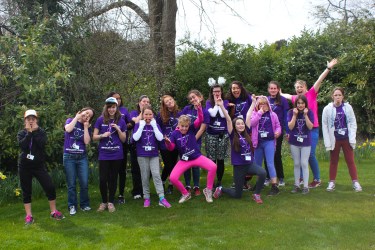 It was a week to be herself, not defined or viewed in her role as M’s big sister, and encouraged to take time to focus on herself without worrying about M and how he would feel.
 Discos, team games, inter-team challenges, morning singsongs, new activities, skills learned, old favourites and even a talent show sum up G’s week away.
 M was reluctant to admit to missing having G around to play with and torment, but his move to sleep in her bed every night she was away revealed the depth of those feelings he didn’t want to show.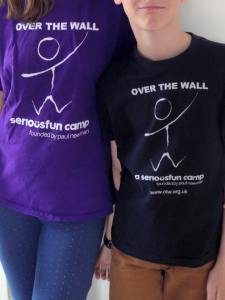








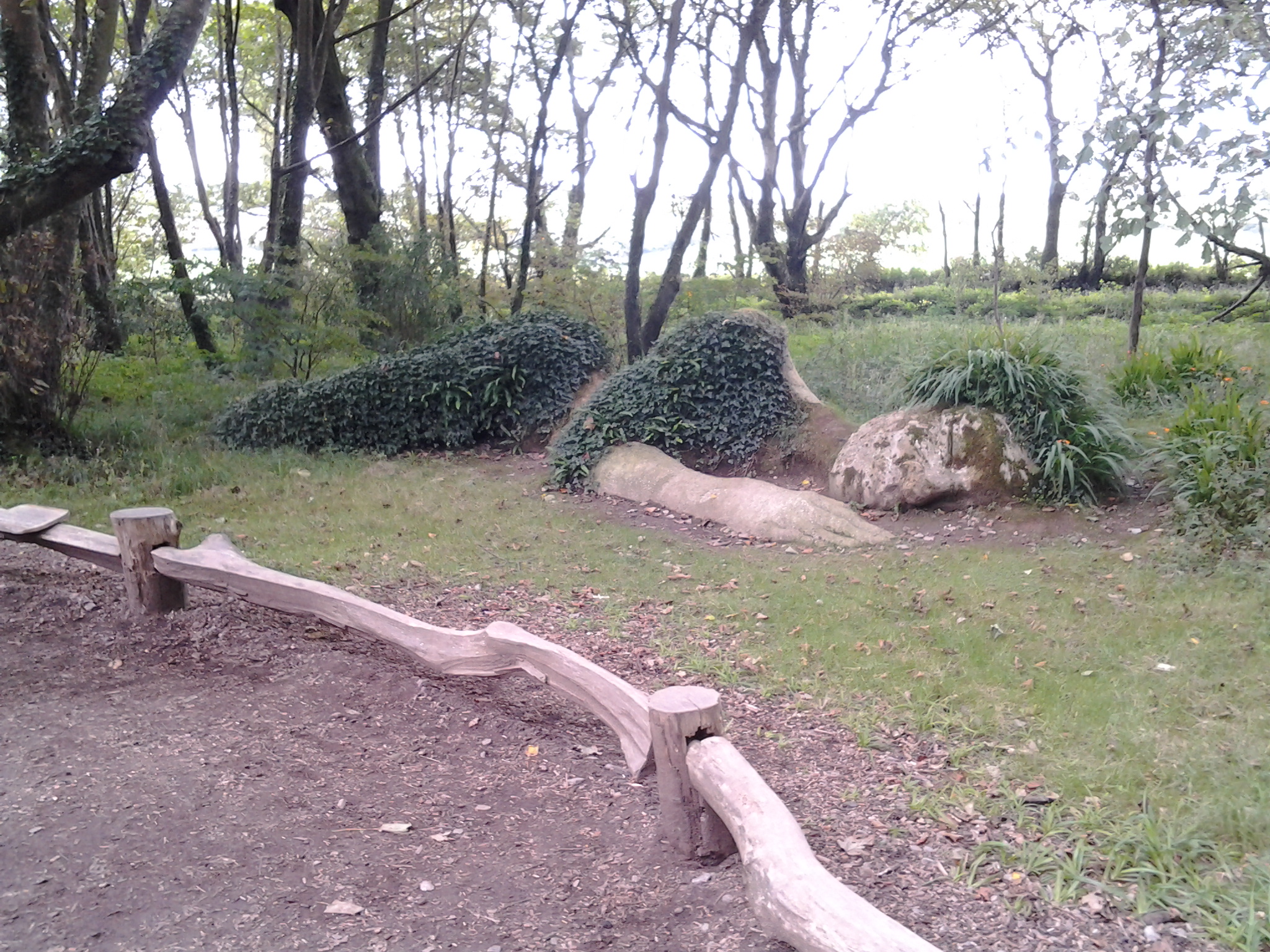
 eing photographed next to the rice. This summer, the Eden Project was also home to the

 7 years to diagnosis