Tag Archives: Eosinophilic

Reaching out

I am, without a doubt, a firm believer that things happen for a reason and that the lessons I’ve learned, the situations we’ve survived and the successes we’ve fought for and achieved over the last few years have given me an understanding and empathy that nothing else could have done in the same way. I have discovered within myself a strength I didn’t know was lurking, which has seen me through some of the darkest days I’ve ever had to face. My Mum and Aunt love to remind me I come from a line of strong women and these challenges have helped me grow even stronger. The struggles I’ve had to face have enabled me to reach out and bring some comfort and reassurance and offer an ear always ready to listen when others have most needed it. What’s more, not only can I speak from a shared experience and the common bond of parenting a child with a chronic illness, but I want to give support when it’s most needed. you-never-know-how-strong-you-are-until-being-strong-is-the-only-choice-you-haveThat incomparable insight is what almost makes the challenges of M’s health worthwhile, for whilst I would give anything for him not to have to live with a rare illness like EC, it has, without a doubt, given me a compassion and understanding beyond what I would otherwise have known.

When setting up my blog 3 years ago, part of the process was to pen something that would honestly capture who I am and the reasons behind my decision to start it to include in my “About me” page. I won’t deny that this blog has undoubtedly become an inexpensive form of therapy for me, allowing me to explore my innermost thoughts and feelings about the chronic illness that has dominated so much of the last 10 years of our lives as well as sharing our experiences of it; but that wasn’t my raison d’être. What I wanted most was to be able to reach out to others who were facing similar challenges “…if I am able to speak to the heart of even one parent who is going through the same turmoils, then I know the hard work will have been worth it…” In the months since I first wrote down that somewhat ambitious desire, I have received the occasional e-mail telling me that what I’ve written has really resonated with another parent, responses that have meant so much as they acknowledge an achievement of my goal above and beyond what I originally wanted.

Knowing that I have received those messages you could easily assume that I might consider it a job well done and just leave it there, but over the last few weeks I have received more messages of encouragement than I ever anticipated and have found myself in the position of being able to offer support and advice when I least expected it. Those opportunities have drawn on the many facets of my life experiences, from seeking a diagnosis of EC to coping with a new diagnosis of T1D and from facing the daunting reality of tube-feeding to the challenge of switching a child to a gluten-free diet. What is even more amazing is that the people I’ve been talking to have been a mix too: Mums from school, friends met through support groups and those just looking for reassurance from someone who has already walked the path they now find themselves on. I don’t claim to be an expert in any of these things, but I am an expert in my child and our experiences and can offer an insight into how we have coped and the tips I’ve picked up along the way. When we started out on our search for a diagnosis for M, and then again when we made the decision to move to tube-feeding, the information readily available was scant and it took dedicated research and hours of reading, and re-reading, medical journals and the such-like to even begin to understand what we were facing. It was thanks to on-line forums such as FABED and PINNT and their members that we began to truly comprehend the complexities of life with a chronically ill child. social-media-treeMy blog has simply been an effective way to put all of our experiences into one place, hopefully with some useful pointers for others in the same shoes and, by doing that, to create my very own, very personal resource.

What’s even better in my opinion is that my passion to reach out and help others has been adopted by both children too. G has developed an empathy and understanding that extends out from the home into the classroom and wider world, and which has been commented on in recent weeks by her teachers and the volunteers at camp. She shows an amazing amount of tolerance towards the challenging behaviours and differing views of her peers and is always prepared to listen and respect what they have to say, whilst standing her ground with her own opinions. G is also sympathetic to those who are in the same position of having a sibling with a chronic illness and can fully understand the frustrations that the sometimes difficult behaviours of those siblings can cause. Whilst sometimes reluctant to deal with M at home, she never hesitates to offer help to those around her when it’s needed.

In similar fashion, M has developed a compassion that I can only attribute to the reality of a life altered beyond recognition by EC and multiple food allergies. At a recent birthday party, one of his friends was confined to a wheelchair due to an ankle injury and M immediately stepped in to make sure this friend could be as involved as possible, despite the constraints of the wheelchair. He took the time to push his friend around the garden so he could join in the activities and toasted marshmallows on the camp-fire for him, even though he wasn’t able to eat them himself. Likewise, another good friend has just been switched to a gluten-free diet and M has made sure he sits with him during lunchtimes at school to discuss the different foods that C has been trying. The parent of this friend rocked my world nearly 3 years ago by inviting M home for tea and being willing to cook to suit his complicated needs, not just that one time, but numerous times since. It feels rather wonderful to know that my boy is now returning that favour and giving this friend the chance to vent about his new diet.

I don’t know what the next few months will bring and the opportunities to offer support may start to dwindle, but there’s one thing I know for sure, as a family we will all continue to reach out and help out whenever we can.

reach-out

The Sunday Roast

It seems to be one of those dishes that is quintessentially British and yet its exact origins are not exactly clear. First published in recipe books dating back to the early 1700s, over the last 300-odd years it has become a key component of the Sunday roast, especially when that roast joint is beef.  roast-beef-hero-006b0a8d-916f-4b1e-bffe-b6f00c34b96d-0-472x310Beef is actually the next on our hit-list of foods to trial with M, but when this recipe for vegan Yorkshire puddings caught my eye, posted somewhere that I can’t quite remember, I knew that, inclusion of beef or not, adapting this to a M-friendly version was high on my list of priorities.

Despite numerous food challenges over the last few months, we haven’t been able to find a new safe food for M to enjoy since last August, when pear became lucky number 5. The monotony of only being able to eat the same 5 foods day in, day out has understandably taken its toll on his spirit and it has become something of a life’s mission for me to create new and varied ways of preparing those foods to help him enjoy them as much as possible. That aim has resulted in the absolute flurry of new recipes that has hit my blog over the last few weeks and which will continue to do so, until no stone is left unturned from a culinary point of view.

IMG_0263[1]The recipe was surprisingly easy to adapt and delightfully successful in its bake. M and G had no idea what I was preparing to accompany our Easter lunch and despite some optimistic guesses of chocolate pancakes from M, neither child got close with their hunches. As ever, I was slightly nervous until they took the first bite, but I really didn’t need to worry. My batch of 12 quickly dwindled down to 3 – well Mike and I had 2 each too, just to taste test you understand – and M declared them a hit. He took great pleasure in stuffing each pudding with some of his seasoned rice, which actually led to Monday night’s dinner of the remaining 3 puddings stuffed with rice, chicken and a home-made and M-friendly dressing. The greatest pleasure for me was being able to turn yet another popular dish into a M-friendly equivalent and know that his EGID and food allergies have been driven into the background once again.

Double digits

And, just like that, the last member of our family has left the years of single digits behind him and has joined the ranks of those celebrating double digit birthdays. As well as celebrating the first decade of M’s life, we’re also marking 10 years of astounding challenges, amazing courage and unbelievable joy. Happy 10th little bean xxx

P1000073


“Promise me you’ll always remember: You’re braver than you believe, and stronger than you seem, and smarter than you think.”

What makes them rare

February 29th: a special day, an unusual day, a day so rare that it only comes round once every 4 years and, quite frankly, the perfect day to mark Rare Disease Day 2016. This is the opportunity to raise awareness of rare diseases and the impact they have on the people living with them, not just with the general public, but amongst medical professionals and policy-makers too. It initially launched as a European event in 2008 and is now marked in over 80 countries worldwide.

12801187_788532541290267_734133436349093167_n

What is meant by a rare disease? Definitions of “rare” do differ from country to country, but across Europe a disease is considered rare when fewer than 1 in 2,000 people is diagnosed with it. The threshold in the USA is defined as when fewer than 200,000 Americans are diagnosed with that illness at any given time.

How many rare diseases are there? There are over 6,000 rare diseases known to be in existence and 80% of these have been identified as having genetic origins. Astonishingly, approximately 5 new rare diseases are described in medical literature every week.

Who is affected? Rare diseases can affect everyone, they’re not fussy about who they pick on. Over 3.5million people in the UK are affected by a rare disease, which equates to 1 in every 17 UK nationals. Somewhere between 50% and 75% of rare diseases will affect children and scarily, 30% of rare disease patients will die before they reach their 5th birthday.

Why raise awareness? The symptoms of a rare disease are frequently multiple and varied and not only are they not exclusive to that illness, but neither are they all experienced by all patients, which makes diagnosis a long and drawn out process. All too often the diseases are misdiagnosed and beneficial treatment can be unavoidably delayed. A lack of scientific knowledge and consensus throughout the medical community can add to the complexity of reaching a diagnosis and adds significantly to the burdens placed on the patient and their family.

What does Rare Disease Day mean to us?

Imagine being told that your child has a chronic illness that neither you, nor most of the medical professionals you’ll end up meeting from that point on, can pronounce – or have even heard of until that moment. stats

Imagine finding out that that illness is rare: that around 1 in 10,000 people are diagnosed with the most common form, but that your child has one of the rarest forms and that there is little research into it.

Imagine learning that even the medical community struggles to reach a consensus about this rare disease and whether it really exists or is simply part of a much bigger picture – but nonetheless, having to live with the reality of this rare disease and its effects on 19686_830453950379123_8588932072036308849_nyour family’s life on a daily basis.

(For those who wonder if EGID is real, try living with anyone who is in the midst of an EGID flare up and, bigger picture or not, you’ll understand why we will continue to fight for research into this unquestionably chronic and life-impacting illness.)

Imagine the heartbreak of holding your sobbing child at 3am, with tears streaming down your own face, as you struggle to find some, any words to bring him a little comfort.

Imagine taking one food after another out of his diet in a hope to bring some relief from the chronic pain and poor bowel function, until you are left with the final realisation that perhaps you need to remove everything and feed him via a tube to see if that is the answer you’ve been seeking for the first 9 years of his life.

And then imagine starting to put foods back in, one at a time, only to discover that his body has allergic reactions to more than you ever thought possible.

Does this sound familiar to you?

This is the reality of the last 3 years of our life with a rare disease as the truth of EGID is that symptoms are complex, understanding is limited and medical research funding scarce. M’s diagnosis with EC makes him rare, so please help raise awareness today, not just about EGID, but of other rare diseases and those living with them too.

rdd-logo


Day 6: Educating those around us

With the growth of the internet and the increasing popularity of social media platforms as well as the plethora of blogs out there that cover a multitude of topics, the world has become a lot smaller and it’s easier to spread the word and work towards greater understanding. Our family has become adept at educating those around us about EGID, a necessity when even the medical community struggles to reach a consensus about this rare disease and whether it really exists or is simply part of a much bigger picture. As a quick aside, try living with anyone who is in the midst of an EGID flare and, bigger picture or not, you’ll understand why we will continue to fight for research into this unquestionably chronic and life-impacting illness. T_2384403_orighe same is true when it comes to feeding tubes as sadly misconceptions are rife and the reasons behind a tube can be as complex and individual as there are stars in the sky. Even with children or adults living with the exact same condition, their symptoms and need for additional nutrition can be vastly different.

Of course, those of us who live with the reality of additional nutritional support and tube-feeding often have the best opportunity to educate those around us about it, but we can’t do it on our own. PINNT (Patients on Intravenous & Nasogastric Nutrition Therapy) here in the UK and the Feeding Tube Awareness Foundation in the USA do an amazing job of supporting families going through nutrition therapy, be that newcomers to the world of tube-feeding or those who’ve been doing it for years. They also provide tools and advice that can be effectively used to educate the outside world about the reasons behind this treatment and how to give easy-to-understand answers to the most difficult of questions.

Last year, M made a video for National Eosinophilic Awareness Week, which he used to help teach his classmates and the wider school not just about EGID, but also about his tube and, to be perfectly honest, I couldn’t think of a better way to help educate my community than sharing it once again:

Day 3: Nutrition and teaching the experts

Back in November, I offered my help to PINNT to write an article for a nutritional magazine on the subject of being a parent to a tube-fed child. I wanted to share our experiences of the last 12 months and, upon reading the questions asked, I felt it was a real opportunity to reach out and teach the medical professionals who work with families like ours. The potential impact of this article is huge as the magazine has a UK readership of over 13,000 health professionals and is the only nutrition magazine that reaches across the nutrition profession.

magsIn addition to virtually every practising dietician in the UK, it is mailed directly to all senior gastroenterologists, all nutrition nurse specialists and all nutrition pharmacists, as well as lecturers, industry professionals, consultant dieticians and students.

 For day 3 of Feeding Tube Awareness week, I thought I’d include the transcript of my article here:

When did you first learn that your child would need to be nutritionally supported by enteral nutrition?

After four years of increasing food exclusions and a raft of daily medicines, M was still massively symptomatic from his EC and the decision was taken in November 2014 to move him to an elemental feed. His NG tube was passed in early December.

Reflecting back to this stage in your life, what thoughts and emotions were going through your head?

The possibility of a move to enteral feeding had been on my radar for over a year and I had become increasingly certain that it was the best way to try to ease the ongoing symptoms and pain that he was experiencing. The heartbreak of holding my sobbing child at 3am, with tears streaming down my own face, as I struggled to find the words to bring him the comfort that nothing else could bring at that moment in time, had left me willing to try anything to ease his pain.

It took Mike longer to come to terms with the prospect of feeding M via a tube, but by the time we agreed with his consultant that we needed to give it a go, we both felt that it was the chance to give M and his body some much-needed relief. The short-term plans we’d been following for the past three years had been all well and good, but we now needed a longer-term care plan put into place as we just couldn’t keep limping from one appointment to the next with different problems constantly cropping up and nothing really being resolved. The consultant warned us that the enteral nutrition might not be the answer we were looking for, but we were desperate enough to still want to try it and stubborn enough to believe it would be what M needed.

At the time of your child commencing on enteral nutrition, what support and information where you provided with from health professionals, and did you feel this support and information was enough?

AdviceWe weren’t provided with any information about enteral feeding beforehand from the health professionals involved in M’s care and I found most of our information came from online support groups, such as PINNT and FABED. Disappointingly, we then had very limited support from the hospital as the dietician and consultant were both keen to get him discharged as soon as possible and ignored my concerns that we had no local support from our home hospital. Fortunately the nursing staff helped me fight his corner and made sure that both Mike and I were relatively confident in how to manage his tube and work his feeding pump before we went home. M was discharged just 10 days before Christmas and I was really concerned that we would have difficulties accessing any support over the festive period – it was thanks to the wonderful support group parents, the hospital nursing team (who gave me their direct phone number on the ward) and our community nurse that we not only survived, but managed to enjoy Christmas as a family in our own home.

Since being on enteral nutrition what type of long-term care and support has your child received from hospital/community health professional team?

We have a somewhat complex 3-tiered support system in place:

  • The overall plans for his enteral feeding and the slow re-introductions of food into his diet are managed by his consultant and dietician at Great Ormond Street. I speak to his dietician every 3 weeks to review what’s going on and tweak his care; and we see them both every 3-4 months.
  • His tube changes are done every 6-8 weeks at the CIU (Clinical Investigations Unit) at our local hospital, who have listened to his needs and help make the appointments run as smoothly as possible with the involvement of play therapists to help distract him.20141207_124217
  • Our community nurse has helped provide training as needed and is regularly in touch to help and advise as we need.

It may be a somewhat “clunky” approach, but nearly one year on, it’s close to a well-oiled machine and works for us.

How has having a child being fed via enteral nutrition affected your family unit as a whole (thinking about siblings, time in hospital, holidays, etc.)?

Having a child with a chronic illness affects family dynamics and adding enteral feeding to the mix just meant a few additional, albeit significant tweaks for us. The regular hospital appointments do interrupt our daily routine, so I work hard to make sure that life is as stable and as “normal” as possible the rest of the time. M obviously has to take time off school for his appointments, so I try to make sure that he doesn’t miss more than is necessary. I do worry that G gets side-lined at times as our focus so often has to be on M and managing his feeding needs. 20150208_181917We’ve encouraged her to get involved as much as possible and as much as she wants, and she is now very capable of helping with his feeding pump. She’s recently started horse-riding, which is something M doesn’t do and gives me some time to spend just with her. As for our holidays, in the past we often went abroad, but didn’t feel confident enough to try it this first year with his tube. Instead we went to Cornwall this summer, with our car packed full of all the necessary medical equipment and enjoyed an amazing week away. We’re now feeling much more able to cope and are hoping to go to Portugal next summer.
When thinking about nursery/schooling, have you come up against any barriers or obstacles (if applicable)?

The impact of M’s ever-changing health has been particularly profound over the last couple of years and there is no doubt in my mind that the unfailing support of their school has been a steadying force not just for G and M, but for the family as a whole. They were willing to have M in school as normal within days of coming home from hospital and 5 members of staff were trained on the intricacies of his tube and feeds so that he could take part in every planned activity with confidence. The positive attitude of the teaching and support staff has also rubbed off on the children and his classmates have been brilliant at accepting his tube at face value and now don’t even seem to see it.

How and when did you first hear about PINNT?

I first became aware of PINNT through the EGID support group, FABED, and other parents of children receiving enteral nutrition, who all recommended PINNT as a great source of support. I then had an invitation to our local PINNT group’s next meeting.support

How has PINNT supported you?

Whilst we were waiting for M to be started on enteral nutrition, I researched and read as much as I could about elemental feeding and NG tubes – most of that information was on the PINNT website and explained it in a really accessible way. I love getting the newsletters and reading about people on all forms of enteral feeding. Similarly Mike has found huge reassurance in learning that there are people out there who have not only lived on enteral feeding for years, but have thrived on it and that moving M to it could be a positive step. It helps knowing that we’re not on our own and that there is always somewhere to get advice and support from those living on enteral nutrition whenever we need it.

If there was one piece of advice you could provide other parents with, who have a child commencing on enteral nutrition, what would this be?

When you first hear that your child needs to start on enteral nutrition, it’s almost inevitable that you will feel a great sense of failure and a huge fear about what the months ahead will bring. It’s so important to remember that enteral feeding doesn’t mean you failed your child, but that their health needs mean they need that extra boost to get them through each day. After nearly a year on his NG-tube, M has become the fun-loving, caring and somewhat cheeky little boy we all knew was hiding somewhere inside him. Feeding him via his tube has become second nature to us and it hasn’t stopped him, or the family, doing anything we’ve wanted to. The best news is that we’ve just enjoyed the most “normal” year of our lives ever.

If there was one recommendation that you could make to health professionals, involved in the care of patients on enteral nutrition, in order to improve patient care, what would this be?

I wrote this impassioned plea to medical professionals in my blog earlier this year and feel it encapsulates what I want to say to all healthcare providers:

For most of us, you are our firefighters and the people we are forced to depend on in our darkest moments. We need you to be strong, focussed and the experts that we are not, BUT we also need you to be gentle, compassionate and understand that you are holding the future of our most precious possessions in your hands. Don’t dismiss our concerns, but believe that we know our children best and have an insight or opinion that is just as valid as your professional one. Don’t belittle our emotions, but be empathetic when they overcome us and when we need a shoulder to cry on more than anything else in that moment. Be honest, but in the kindest way, knowing that your words have the power to break us when we least expect it. Most of all, understand that we are constantly living in fear about our children’s health and life and future, so they don’t have to.


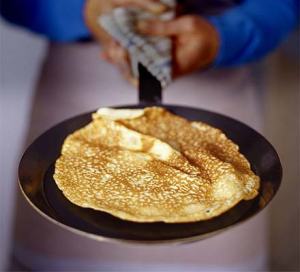
pancake*I can’t let today’s post pass without a nodding acknowledgement that it is, in fact, Shrove Tuesday; the day when many of us enjoy a pancake or two before the start of Lent. I can’t even remember whether we managed to eat pancakes last year as M had only just started to trial foods after his 8 weeks on E028, but there’s a sneaking recollection that maybe my Mum cooked some for G, whilst the rest of us ignored the day to the best of our ability. I’m excited that this year I will once again be able to cook pancakes for the whole family and, just in case you need an allergy-friendly recipe to cook for your loved one, I’ve got the perfect one here. Enjoy!


Day 2: An even more energetic M!


amended

This is one of my favourite images from 2015: our own version of last year’s Feeding Tube Awareness week meme that I adapted using photos of M. Those photos were taken over an 18-months period and by picture 4 you can clearly see the improved colour and fuller cheeks of M’s face now that he was finally getting proper nutrition. After nearly 6 months being fed via his NG-tube, he had gained weight, had improved bowel function and was once again the cheerful, happy-go-lucky child that we had known him to be as a somewhat mischievous toddler.

Over the last 5 years, M’s seemingly unrelenting energy has confounded those surrounding him because M has never given up; has never let his EGID slow him down, even in the darkest moments. He has long since learned the lesson of “grin and bear it” because, quite frankly, the alternatives for him were unthinkable. M is a do-er. yourimageHe loves to run around and be on the go and into everything all of the time. I mean it. M just doesn’t stop, ever. He’s always given 110% to whatever activity he’s doing, even if it meant trying to finish a swimming lesson white as a ghost and with a temperature of 39.5°, or running the magic mile on the first day back at school after a week off vomiting and barely able to move from his bed or the sofa. Whilst you might often find G curled up in a chair or on her bed reading a favourite book, the only time you’re likely to find M doing the same is at 11pm when he’s waiting for me to come to bed before settling down himself, and even then you’re just as likely to find him playing his cello, or perfecting his dance routine, or building with his Lego.

We even managed a trek across Tower Bridge on our travels

We thought we had seen it all, but 2015 showed us just how endless his energy supply could be when he was being fed a balanced, nutritious feed that provided all the calories, vitamins and nutrients his growing body needed. No longer struggling with the anxiety of limited bowel function or working through the relentless chronic pain, M found the energy to achieve so much with his pump pack and feeding tube in place. He walked miles around London on our Shaun the Sheep hunt with no complaint of aching legs; he tackled and beat the challenge of learning to ride his bike unaided; and he continued to participate in the weekly sessions of Stagecoach that he’s loved for years, no longer needing to take regular breaks during the 3 hours training. We’re now 6-weeks into life without a tube once again and none of us knows what the future will bring. His year with the tube might be all that M needs, or we might see the return of it at an as yet undetermined point, but I don’t regret that year, not when I can see the improvements to M’s health and life and energy levels that it brought. His tube was never a barrier to his activity, but rather the boost he needed.

Feeding Tube Awareness Week – Day 1: Choosing to raise awareness

7beb7940ed39bc80ce6cb39710abb740If anyone was going to describe the last decade of my life, the one indisputable conclusion they’d end up reaching is that it’s been anything but boring. Thanks to a pair of children who have thrown more than their fair share of life challenges into the mix, we’ve weathered more storms than I ever believed possible and, for the most-part, we’ve come out the other side still smiling and relatively unscathed. We’ve survived a lot of challenges, met a whole host of amazing people and learned a great deal along the way; and if I had to pick just one lesson that constantly resonates, I’d have to say that we now know to never take things for granted as they can change at the drop of the proverbial hat. Two years ago I wrote about our limited experience with feeding tubes and then, less than a year later, I found myself blogging about my brand new super-tubie. Another year on and the NG-tube has gone for the time-being and the only thing I can say with absolute certainty is that I have no idea if or when it will make a reappearance in M’s life.

The lessons that the last 12 months have taught us all have been huge and I have come to love and hate that feeding tube in equal measure. For the first time in his life, the reality of M’s chronic illness and multiple food allergies was outwardly visible and finally people understood from a glance that there was more to him than initially met the eye. The constant presence of the NG-tube opened up more conversations and opportunities for me than ever before and I’ve been able to share experiences, offer support and educate the wider community about EGID. M and his froggie friendWe all felt the benefits of that visibility to start with and I no longer felt the underlying pressure to defend the true extent of M’s illness and food allergies whilst my outwardly healthy-looking youngster was intent on tearing around practically making a mockery of every problem and pain we said he was suffering.

Of course, the flip-side was that ever-present tube. The one that there was no escaping or avoiding, no matter the event or occasion. Christmas, birthdays, performances and holidays, the tube was M’s constant companion and he became increasingly aware and conscious of the curious glances that were thrown his way by adults and children alike. His wonderful classmates and our village took it in their stride and quickly became so accustomed to it that M was never subjected to a second glance, but the wider world could stare until he disappeared from view. As well as the tube, we had the problems of M’s face reacting to the unavoidable medical tape and it took us several attempts to find a tape that didn’t burn his cheeks. Even when we finally found the best solution for him, at times he was left with red, sore and sensitive skin that only time tube-free could heal.

Looking back, 2015 was a year unlike any other in our family’s life, but I don’t regret a single moment of it. From that difficult decision to place the NG-tube and start M on an elemental diet, we have seen tremendous growth and an improved health that exceeded all our expectations. Most of all, we now have an opportunity to help raise awareness from the standpoint of personal experience and a road well-travelled, something that, believe it or not, I wouldn’t change for the world.

What’s in a word

I’ve long been aware that when it comes to understanding M, it really pays to understand how he interprets and sees the world. As for so many who live with chronic illness, M’s life is coloured by his EGID and multiple food allergies, and his view of “normal” is understandably skewed by his daily experiences. Courtesy of katbiggie.comThe sad reality is that M has been living with the symptoms of EC for so long that he doesn’t always realise when something he’s feeling isn’t usual and we have often discovered a symptom months, or even years after it first started to happen. These problems are frequently something we could have helped resolve sooner and it is never clear just how long M has been coping with it on his own.

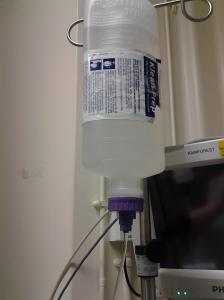
My first experience of this was when M had his second set of scopes done 2 years ago. The nurse had started him on Klean-prep via a NG-tube and told M to tell her if he started to have reflux whilst it was pumping into him. Reflux was something we hadn’t struggled with since he was a baby and so he didn’t know what she meant. My explanation that he might feel nauseous or have some sickness come up into his mouth was met by a puzzled look, “…but Mummy, I get sick in my mouth all the time, why do I need to tell her if that happens?” He was genuinely perplexed by this request and I was made suddenly aware that there was an awful lot more going on with him than we really knew about.

Strangely, during our latest GOSH admission, that issue with reflux once again raised its ugly head and yet again, M more or less accepted it as being back in his life without complaint. When we first learned about the reflux, we worked hard to uncover when it was happening most and started him on a daily medicine to help treat the symptoms. We quickly found that it appeared to be triggered when he ate potatoes and raisins and by cutting those from his diet as well as the new medication, the reflux fortunately seemed to ease. The day after we started the potato food challenge in hospital, M complained that he was struggling with some reflux and explained in extremely graphic details to nurses, dietician and registrar what he felt. Whilst they made note of this problem, disappointingly they didn’t do anything to ease the discomfort he was in and delivered that line of “…he just needs to push through this…” that I quickly came to hate. Their dismissive attitude shown so clearly in front of M and obviously picked up on by him despite the illusion of him being absorbed by the TV whilst plugged into his headphones, meant that he stopped mentioning it and the medics assumed that it was a one-off event only.

It wasn’t until they needed to start adding senna to the klean-prep to clear his system that we learned that M had not been 100% open about what was going on. The conversation had turned to whether he would willingly take the senna by mouth or if it was best pushed down his tube, when M casually commented that it didn’t really matter as he would end up tasting it either way. A little gentle prodding by his nurse soon revealed that the reflux had in fact been ongoing since the food challenges began and during that middle week of our stay, he had been experiencing the vile taste of the bowel prep in his mouth on a very regular basis.

This story for me explains why it is so important for the medical teams to understand that every child is an individual and have very different levels of what they can accept and cope with, particularly when it comes to gastro conditions. In M’s case, this means that knowing how to phrase questions and interpret his answers is key to learning more about how he feels, especially when it comes to his coping strategies. For a number of years, Mike and I have repeatedly told our consultant that we firmly believe M lives with a level of pain that he has come to accept as his “normal”. When you see M running around with his friends or experience the whirlwind force of his personality, this can be difficult to believe and the fact that, between my reluctance to allow either child to stay home from school unless they’re dying and M’s determination to be in the midst of everything as much as possible, he has remarkably good school attendance for a child with a chronic illness, is in stark contrast to the picture we’ve tried to paint.

It’s at times like these that the words used with M, and by M, can reveal the most. At one of the many meetings I had with his consultant during our admission, she and I had talked about what the future holds for M. She told me that we might just have to accept that he would need to live with a level of pain that others might consider unacceptable, so that he has a more varied diet to choose from and my words that he already lived with enough pain seemed to fall on deaf ears. It was only when M met with the lovely GOSH gastro psychologist half-way through our stay that he was finally able to talk about how he feels each and every day. Whats-in-a-wordShe quickly established that M differentiates between a “pain” and an “ache”, which meant that unless he was asked the right question, M would proffer surprising answers.


Of course, the truth of the matter is, as we have repeatedly said, M has an almost constant ache in his tummy and bowels that he has just accepted as part of his reality. He doesn’t call that “pain” and, perhaps because of my unwillingness to unnecessarily dope him up on Calpol at the drop of hat, he doesn’t expect to have anything more than a hot water bottle or wheat bag to treat that discomfort. M calls that an “ache” and when asked to rate how that feels, he cheerily announced it was usually around a 4, the level where they would start to offer pain relief on ward. So when he was asked by the nursing team if he was suffering any “pain”, his answer was almost always a no except when he was experiencing a severe tummy cramp – his definition of what a “pain” was. The nurses had been struggling to understand how he could be rating his pain at an 8 or 9 at one point, only to say less than 5 minutes later that he had no pain at all before they’d even had time to give him any pain relief. This insight into the workings of M’s mind was invaluable as it meant that finally we all – doctors, parents and M himself – were singing from the same hymn sheet and receiving accurate feedback from M about how he was feeling; and all because we now understood the power in a word.

Reflections of an admission

strictly-craig

“I think we can all agree that this admission has been a complete disaster”

Mike and I could have been forgiven for expecting to see Craig Revel Horwood in the room, but in fact those were the opening words of M’s consultant at our meeting on day 13 of his admission. A meeting attended by on-call gastro consultants, ward registrars, dietician, nurses and the gastro psychologist and where not one of them disagreed. When those are the words you hear uttered by one of the senior gastro consultants at Great Ormond Street Hospital, you know that things have gone really badly wrong. To say that Mike and I were surprised to hear them offered as the opening gambit is an understatement: we had gone into this meeting prepared for battle, expecting to have to defend our opinion that M’s current deterioration was due to the food challenges, that same discussion I’d been having for the previous 10 days with that same multitude of medics, and without warning they appeared to have come round to our way of thinking.

Since M’s discharge, lots of people have asked about the admission and what happened whilst we were in London. The plan for the original 2-week admission was to trial 4 foods whilst we were there – potato and egg, which we hadn’t done at home – and banana and salmon, which we had, but he had failed previously. The original expectations as discussed and agreed with both his consultant and dietician were that he’d start to show a reaction within 48 hours of starting each food and so the admission was to look like this: 3 days observation to understand his “normal”, 8 days of food challenges – a new food every 2 days whilst continuing with the previous ones – and then 3 days to assess before sending him home. This approach of challenging with 4 foods in 10 days was ambitious to say the least and left no wriggle room for recovery if he failed at any point. Given we are used to spending at least 5 days slowly introducing a new food to M and then expect to take a week, if not longer, to get back to normal, it quickly becomes evident why things didn’t go according to plan.

3 days observation – these happened, but they hadn’t allowed for just how upset M would be by the short-notice of his admission. As I had packed our case having picked him up from school, I could hear him sobbing in the other room and discovered him lying on G’s bed, wrapped in her arms as he cried about missing her birthday and being away from home in the lead up to Christmas. This traumatised him so much that, as for so many people even without gastro issues, his tummy/bowels/digestion were upset and didn’t behave as the “normal” we’d got used to over the last 12 months. This was to later prove a problem as the ward doctors insisted he was constipated on admission and struggled to accept that these new foods were in fact the issue.

8 days of food challenges – we started with potato at a speed and quantity that I just couldn’t comprehend. There was no go-slow and gently increasing his intake here, instead he was allowed to eat “as much as he wants” and after 2 years without potato,12309588_10153139593761123_4933720941134322006_o believe me he went at it with gusto, even eating 6 roast potatoes at one sitting. Within the first 24 hours he started to show reactions to the potato  – severe reflux, tummy aches, a constant need to wee and he started to soil again, something he really struggled with on an emotional level. The ward doctors refused to believe he could be reacting so quickly and their repeated mantra to me soon became “it’ll take 4-6 weeks for him to show a reaction” and “he just needs to push through this“. As each food was introduced, things got worse and worse as he was now completely incontinent, a position we hadn’t found ourselves in for a year. All the signs of his bowel starting to shut down were there as he was weeing for Britain, his appetite was dropping off and his energy levels started to wane and I kept saying that these indicated he was failing the foods, only to be told that it wasn’t possible. They were palpating his tummy twice a day and insistent it felt fine and every conversation ended with “it’ll take 4-6 weeks..yada yada yada…” – by now you get the picture! By day 8, they finally agreed to x-ray and, lo and behold, he was chronically impacted. This x-ray was apparently one of the clearest they’ve ever seen showing it – solid black throughout his colon due to the blockage.
Then came the heated discussions about why this had happened. They were insistent that he must have come into hospital constipated, though how a child who goes every day can be constipated they’ve still to satisfactorily explain to me, and I was equally insistent that he wasn’t. We ended up agreeing to disagree as neither of us could prove it either way, though it has now been noted that should M be admitted again, they will x-ray at the start of the process to make sure we all know the state of his bowel.

3 days assess/discharge11018900_932190456872138_8699359326763992708_obecame 6 days of powerful bowel prep continuously via M’s NG-tube plus additional senna for the last 3 of those as things simply weren’t shifting as hoped. I have honestly never seen him so ill as he was by the end of that week – bent double from the cramps, crying, refusing to move from bed or engage with anyone, lethargic and rating his pain at an 11 or 12. Throughout this time he was expected to continue all 4 foods, just in case his obvious bowel reactions were actually nothing to do with the challenges and they had introduced a daily dose of senna to keep things moving, something we hadn’t needed at all during the 12-months being tube-fed.

We finally came home after a further 5 days of “recovery” time in hospital and decided to stop banana and salmon straight away as well as the daily laxative. Things slowly started to improve and we made the decision to allow him to have egg and potato in small amounts for a few more days over Christmas. However, since the 27th we’ve stopped those too and gone back to just his 5 safe foods – and he has recovered amazingly. No tummy aches or pains, as much energy as we’re used to, back to regularly using the toilet with no issues and much, much happier in himself. The medics would no doubt argue that it’s difficult to pinpoint when things started going wrong, but to me it seems obvious: the introduction of these 4 foods is undoubtedly the root cause of his bowel problems in GOSH.

That’s the truth behind our December admission and yet to many I’ve no doubt it will seem that it all went incredibly well. You see, the one thing that was achieved during our stay was that M’s NG-tube was removed and my little superstar has proved us all wrong by accepting the challenge of drinking his feed head-on and is drinking a much-reduced volume on a daily basis.IMG_0067 M’s consultant was very determined to get the NG-tube out and at times it felt to us that it was her sole focus for the duration of the admission, which was difficult to cope with when we were needing and hoping for so much more. Achieving that has been amazing, but he hasn’t suddenly started eating a “normal” diet, in fact he’s exactly where he was before we went in, and the need for the elemental feed (E028) is still very much there. The flip-side of losing the tube is that M’s EGID, multiple food allergies and limited diet whilst not diminishing in any respect, have once again become hidden, a set of invisible illnesses, and we have all had to adapt our expectations by keeping that knowledge firmly in the front of our minds. That single small step forward simply does not cancel out the many massive steps backwards that happened whilst we were in hospital and doesn’t acknowledge the harsh reality that very little else in his life has actually changed.