
 Yesterday a social media storm hit the EGID world, especially for those of us who are, or who have been, under the care of Great Ormond Street Hospital over the last few years. The reason? A story published by The Guardian newspaper on Saturday night, which has raised questions about the treatment of patients of GOSH’s gastro department following a huge number of complaints from parents and successive reviews of care carried out by the RCPCH (Royal College of Paediatrics and Child Health) since 2015.
As a parent to a child with an EGID diagnosis and one that was given by GOSH at that, this story is heart-breaking and yet one that I know needs to be told. Whilst M has never been subject to the “aggressive treatment” described in the reports published by The Bureau of Investigative Journalism (see here and here), we have struggled with our own issues rising from some of our experiences during inpatient admissions at GOSH and I have always been open and honest in sharing these via my blog. We have made complaints,  challenged M’s consultants and spent time talking to the Chief Exec to try and make sense of it all and improve the way that, not just M, but other children have been treated whilst they’re there.
Last summer I shared my fears about the huge question marks that have been hovering over the EGID diagnosis for a while and how they could impact on the treatment and care that M receives from the medics in our lives. This week my fears grow even greater as the TBIJ documentary investigating these allegations about GOSH will be aired on ITV1 at 10.40pm this Wednesday, April 18th. Whilst I know that the documentary is seeking to reveal the truth behind some of the treatment decisions made for certain families, there will undoubtedly be concerns raised about the veracity of the diagnosis of EGID itself and with that comes inevitable questions about whether any of those diagnosed with EGID are genuinely living with it, or not. Comfortable viewing it may not be, but I will be watching it – and probably keeping my eye on the resulting social media frenzy too.
At the end of the day, I’m not really that bothered about what the label itself actually is for M – EGID, MCAS, food allergies or something else – as all I want is a better life for him and the others who find themselves in the same boat. As I said last year,
“For us, and for the families we’ve got to know who live with it, EGID is a part of our lives that we have to accept and learn to come to terms with, no matter what discussion is being had in the medical world. It might not be clear whether EGID is in itself the final diagnosis, or if it is simply part and parcel of a larger problem that is, as yet, unknown, but it is our reality and it shapes every step that we take.”
*You can read a more in-depth, first-hand commentary about this GOSH story here
 When you’re growing up with a chronic illness as your one constant companion, it can come as no surprise that that condition begins to
 some progress, albeit very slowly. We last saw M’s GOSH consultant in the middle of March, when it was somewhat reluctantly agreed by us that we would wait until November for his next GOSH appointment with the plan being that we would meet and then have an appointment with our local gastro team during the interim period.
 Dr W had already agreed with GOSH that he was happy to meet with us and look at the potential possibility of taking over some of M’s care during last year’s disastrous
  M would eventually stop drinking the E028 altogether and stressed that we need to find a viable alternative before we reach that point. This has proved to be remarkably insightful as it is now one of the biggest issues that we have had to contend with since that June appointment, with M struggling to drink even half of the required amount and with no new foods in his diet, there are growing concerns about both his weight and his nutritional intake.
 , when what they really mean is that such events have saddened or upset them rather than the total immobilisation that comes when you struggle with depression on a daily basis. I am not devaluing the emotions they may be experiencing when those things happen, but are they really akin to the overwhelming nature of depression? I think not.
 I did eventually come to terms with my diagnosis, though sadly my determination to get my T1D control back on an even keel brought with it an unexpected complication with my eyes, which in turn has led to even more serious implications than I could ever have imagined when I was 13 and feeling very much on my own in a battle against the rest of the outside world.
 That strong support network of family and friends who are constantly surrounding me is invaluable and the knowledge of what is really important – M and G – keeps me getting out from under the duvet every morning and making my way through each day.
 is that he doesn’t feel ashamed or embarrassed by the times when he’s not able to cope emotionally, or mentally, or even physically with the pressures that his diagnoses will have on his life, and that he learns to openly acknowledge them; and that he realises that he’s not on his own in that regard.
 First are
 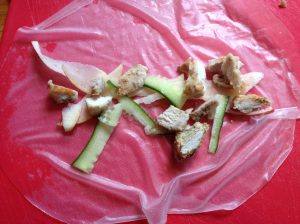 I cooked them in 2 different ways, interested to see which my discerning duo preferred and was very much surprised by the results when they came in. G loved the bigger roll which was just prepared as I described above, whilst M told me he’d opt for the shallow-fried triangles every time. I am thrilled that the wrappers were so well received by both children and can’t wait to see what else I can cook with them as I’m sure that they are versatile enough to be used to create some sweet treats as well as the more traditional savoury dishes.
 The other is a real store cupboard essential and I can’t begin to tell you how excited I was to discover this item when I was perusing the virtual aisles of the fantastic online supermarket that is the
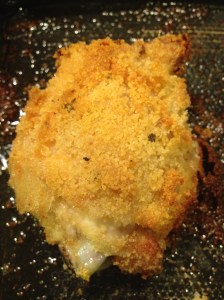
 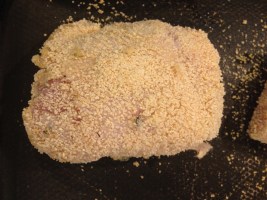 dinner was ready with a golden brown chicken breast tantalising the taste buds with both its look and its smell. They really were delicious and neither child was very willing to sacrifice a mouthful of their meal for Mum to taste-test herself. Now that the summer holidays are over and we’re heading into the autumn, roast dinners will make a more regular appearance in our household and I’m hoping to use these breadcrumbs to create an M-friendly stuffing for us all to enjoy.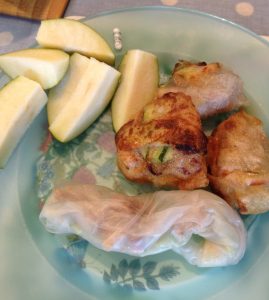

 Our back-up plan is our self-catering apartment, which means that there is always somewhere to prepare a simple meal of M’s safe foods without too much trouble, but I do, perhaps selfishly, want a holiday from that daily grind of cooking and be able to enjoy a family meal as we used to do when the children were small. Our previous holidays to Portugal were challenging, but not impossible as M loves fish and seafood which are always readily available, but I worried that the current restrictions might be a demand too far.
![IMG_0824[1]](https://7yearstodiagnosis.com/wp-content/uploads/2016/08/img_08241-e1470587215827.jpg?w=220&h=300) Thanks to a detailed e-mail conversation with Yellow Cross Director, Jane Harrison, she agreed that it would make far more sense to detail what M can eat, rather than a lengthy list of his many allergens and suggested she spoke to their translator to cost out these personalised cards. We settled on appropriate wording, it was passed to their Portuguese translator and I was quoted a very reasonable £20 for a set of 4
Thanks to a detailed e-mail conversation with Yellow Cross Director, Jane Harrison, she agreed that it would make far more sense to detail what M can eat, rather than a lengthy list of his many allergens and suggested she spoke to their translator to cost out these personalised cards. We settled on appropriate wording, it was passed to their Portuguese translator and I was quoted a very reasonable £20 for a set of 4 ![IMG_0496[1]](https://7yearstodiagnosis.com/wp-content/uploads/2016/05/img_04961.jpg?w=225&h=300) Mike and I decided we would once again support him through what was proving to be an extremely challenging time and agreed to
Mike and I decided we would once again support him through what was proving to be an extremely challenging time and agreed to ![IMG_0469[1]](https://7yearstodiagnosis.com/wp-content/uploads/2016/05/img_04691-e1464720040837.jpg?w=300&h=126) With NEAW16 in mind, I had ordered a couple of boxes from him and knew exactly what masterpiece I’d be whipping up next.
With NEAW16 in mind, I had ordered a couple of boxes from him and knew exactly what masterpiece I’d be whipping up next.![IMG_0477[1]](https://7yearstodiagnosis.com/wp-content/uploads/2016/05/img_04771-e1464720052578.jpg?w=300&h=225)

 If you live in the UK, you can’t help but be aware of the current problems faced by the NHS. The continuing
  I saw it in the frankness awarded to Mike and I during the December debacle, when we asked for an honest opinion about his future health and what we could expect; and it was given.
 Thanks to past experience and my somewhat controlling approach to always having a supply of E028 in the house, I started chasing about when we could expect our next delivery whilst there was still a good amount of stock in my dining room and spent the next 40 minutes being pushed from pillar to post as I tried to track down who I needed to speak to and unpick exactly what had happened. When I finally established what I had to do, it was my wonderful GP’s surgery that I turned to and their fantastically competent staff. With the help of 1 receptionist, 1 member of office staff and the invaluable pharmacist, we eventually got M’s prescription sorted and marked as an ongoing monthly medication. They phoned, researched, ploughed through reams of medical notes and faxed until it was all sorted – and all with the attitude that they wanted to help, were willing to help and were happy to help, and a ready smile that reassured me I wasn’t being too much of a problem in their already busy day.

 your family’s life on a daily basis.
 7 years to diagnosis