Tag Archives: Education

#NEAW2018: E is for Educate

May 20: E is for Educate

When M was finally diagnosed with EGID 5 years ago, it came at the end of a long, relentless and frustrating battle with the medical profession to have our concerns heard and acknowledged; and not simply be dismissed as over-protective parents; or worse. By the time the diagnosis was actually formalised, I had done a lot of my own reading around the subject and already knew as much about the condition as was readily available online. In the 5 years since that hospital appointment, we have found ourselves continually having to educate those around us, including the medics, who know little to nothing about what is becoming an increasingly controversial diagnosis, especially when it affects the lower GI tract as M’s does.
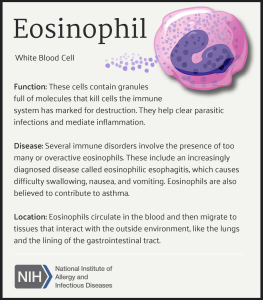
EoE, or Eosinophilic Oesophagitis, is becoming more widely recognised and the diagnostic criteria for this condition are well established, not least thanks to the continued research of Dr Marc Rothenberg and his team at Cincinnati Children’s Hospital. When it comes to the rest of the GI tract however, there opinion is very much divided. There are no clear guidelines as to how any of the other Eosinophilic disorders should be identified and diagnosed; and as the recent documentary about GOSH revealed, there is definitely no consensus on how they are best treated. One of the biggest problems facing children like M is the minimal investment into the research of gastrointestinal disorders and the fact that there is absolutely none into paediatric gastro research. With the credibility of EGID as a “real” chronic illness under debate, consultants all too often veer away from it as a possibility and either move towards a more psychological diagnosis or simply shrug their shoulders and leave these individuals to cope on their own, with little or no regular input.

Whether you want to lay the blame of M’s health issues at the feet of eosinophils, or mast cells, or indeed any other type of white blood cell that could be causing his body to attack itself and react to more foods that you can even begin to imagine, I don’t really mind. I’m not one to hang my hat on labels particularly, especially when that label has no meaning for the greater proportion of the people that M comes into contact with on a day-to-day basis; but I also know that being able to put a name to a problem lends a sense of genuineness to his symptoms as well. As a family we’re not able to walk away from the reality of living with this condition day in and day out because every week we experience the effect of it. I’ve said it before, I’ll say it now and I will no doubt say it many times in the future:

The symptoms that M suffers are very real and can be hugely distressing at times.

M is absolutely your average 12 year-old. He has attitude, he knows it all and he could argue that black is white with the best of them. He loves computer games, fantasy stories and endlessly watching Star Wars or Marvel films. He runs around and is noisy and can drive even a saint up the wall at times. He doesn’t look ill and I’d defy anyone who doesn’t know him to pick him out as the “sick kid” in the line-up. But that’s the face he presents to the outside world and reflects the attitude to his health that Mike and I have worked hard to engender within him.
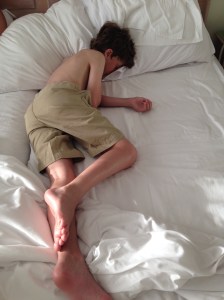
What you don’t see is the worn out child who can’t move from his bed at times because of the pain and lethargy that accompany a flare-up. You don’t hear the quiet heart-to-hearts late at night, when he’s struggling with yet another reaction and doesn’t understand why it’s happening to him again. You don’t feel the despair that hits hard after another food causes soul-destroying disappointment because it’s clear that he just won’t be able to eat it without problem. And you can’t imagine the heartbreak of seeing the quiet acceptance that he won’t be able to go to a friend’s sleepover or away on school camp because of the possibility of suffering an embarrassing symptom that none of his friends really understand.

That is the truth of life with EGID and that’s the reason we will always endeavour to educate those who come into contact with M as well as the rest of the world in whatever way we can.

A Brewing Storm

Yesterday a social media storm hit the EGID world, especially for those of us who are, or who have been, under the care of Great Ormond Street Hospital over the last few years. The reason? A story published by The Guardian newspaper on Saturday night, which has raised questions about the treatment of patients of GOSH’s gastro department following a huge number of complaints from parents and successive reviews of care carried out by the RCPCH (Royal College of Paediatrics and Child Health) since 2015.

As a parent to a child with an EGID diagnosis and one that was given by GOSH at that, this story is heart-breaking and yet one that I know needs to be told. Whilst M has never been subject to the “aggressive treatment” described in the reports published by The Bureau of Investigative Journalism (see here and here), we have struggled with our own issues rising from some of our experiences during inpatient admissions at GOSH and I have always been open and honest in sharing these via my blog. We have made complaints, challenged M’s consultants and spent time talking to the Chief Exec to try and make sense of it all and improve the way that, not just M, but other children have been treated whilst they’re there.

Last summer I shared my fears about the huge question marks that have been hovering over the EGID diagnosis for a while and how they could impact on the treatment and care that M receives from the medics in our lives. This week my fears grow even greater as the TBIJ documentary investigating these allegations about GOSH will be aired on ITV1 at 10.40pm this Wednesday, April 18th. Whilst I know that the documentary is seeking to reveal the truth behind some of the treatment decisions made for certain families, there will undoubtedly be concerns raised about the veracity of the diagnosis of EGID itself and with that comes inevitable questions about whether any of those diagnosed with EGID are genuinely living with it, or not. Comfortable viewing it may not be, but I will be watching it – and probably keeping my eye on the resulting social media frenzy too.

At the end of the day, I’m not really that bothered about what the label itself actually is for M – EGID, MCAS, food allergies or something else – as all I want is a better life for him and the others who find themselves in the same boat. As I said last year,

“For us, and for the families we’ve got to know who live with it, EGID is a part of our lives that we have to accept and learn to come to terms with, no matter what discussion is being had in the medical world. It might not be clear whether EGID is in itself the final diagnosis, or if it is simply part and parcel of a larger problem that is, as yet, unknown, but it is our reality and it shapes every step that we take.”

*You can read a more in-depth, first-hand commentary about this GOSH story here

Taking Over once again

In November 2016, G and M were lucky enough to be invited to participate in the first ever Takeover Challenge at GOSH. They spent the day running the Development and Property services department at the hospital and even managed to somehow convince the staff to take them onto the building site of the new research centre being built opposite nearby Coram Fields. One of the jobs they had undertaken during that Takeover Day was to help design the hoarding to surround the building site and we were delighted to see it in place when we visited GOSH for the Big Youth Forum Meet-Up in mid-October as both children got to see their hard work actually being used in real life.


So it will come as no great surprise that the minute they heard that there would be another opportunity to Takeover at GOSH this year, both G and M leapt at the chance. Unlike last year, when they opted to be part of the same department, this year they determined to do different things and each took on very different roles with G joining the ICT department as an ICT project manager, whilst M became a clinical scientist for the day. We were fortunate that their secondary school recognised the value in them attending this day and were happy to authorise their day off, something that M in particular was delighted about. I was already in London for the week attending the Foodmatters Live conference and so Mike set off from home extremely early on the Wednesday morning to get the children to the GOSH reception area in time for their respective days to start.
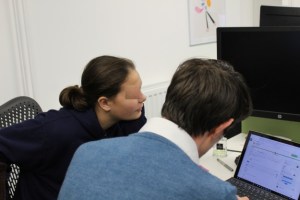
We had arranged that I would meet up with them for tea and over an early supper at Wagamama in Leicester Square, I was regaled with excited tales about the adventures of their day. G’s day was spent learning about how the ICT department is involved in the day-to-day running of GOSH and more specifically understanding how the staff ICT helpdesk is run and looking at solutions to common IT problems. G had an opportunity to visit different hospital departments and help resolve the problems some staff members were experiencing and even managed to successfully close a couple of cases herself. Her final task of the day was to visit the brand new clinical building that has recently opened at GOSH and understand how the decisions around what ICT equipment to provide for patients are made. One of her mentors for the day also took her to visit one of the laboratories in the hospital knowing that M was based there, although she didn’t spot him during her visit.
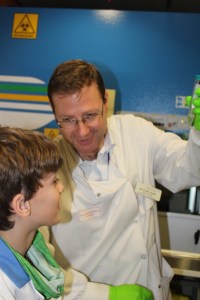
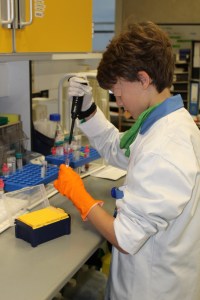
M’s day was focused on understanding the role of the clinical science team at GOSH and in particular learning more about gene and cell therapies as well as the research that is undertaken in the hospital. He was keen to take on this role because of the rare status of his own condition, EGID, as it demonstrated just how important this type of research is. M spent the day  learning how to split blood samples into different cell types, preparing the cells for analysis, generating DNA fingerprints and analysing DNA for mutations. The team also showed him what eosinophils look like when they’re put under the microscope and gave him an insight to what his scopes might have looked like prior to his diagnosis. As usual, M learned a lot from his day and when he and I attended our local hospital a week later for a set of bloods to be taken, he was keen to explain to the nurses there just what would happen next with the samples they were taking from his arm.
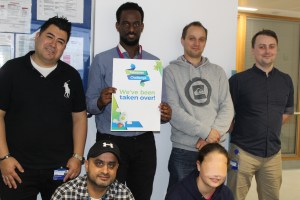
Both G and M had an amazing day at GOSH and we are, as ever, extremely grateful to the YPF and youth liaison team who not only offered them this fantastic opportunity, but also made sure the day was a huge success for them both. I know M already has his sights set on Taking Over yet another department next year, but we will just have to wait and see what happens!

Brave New World

If you’re on any social media platform, be it Facebook, Instagram or Twitter, the chances are that your timeline will have been flooded this week with the ever popular first day photos like this one, on what an old friend humourously terms “National Stand in Front of your Door Day”. The start of every new school year always brings a list of tasks that need to be completed, which includes for us more than just name-labelling the new school uniform and buying huge amounts of school stationery that will potentially have disappeared by the end of the first week, but also making sure that we’ve dotted the “i”s and crossed every single “t” relating to the health needs of both children.

This year felt like even more of a challenge as M moves up into the same secondary school as his big sister and we find ourselves dealing with the reality of different teachers for every subject, a year group that’s bigger than the whole of his junior school and the need to educate the school in the world of M. The good news is that having reached the end of the first week, things have not gone horribly wrong and on the whole, it has all been a huge success. Every evening, M and I have looked through his timetable for the next day to discuss what he might need to do to make sure all his needs are being met as they need to be. I was as delighted as he was to discover that his educational needs have been noted on the tutor group register and so his teachers are aware that he needs extra support in relation to his Dyslexia and Dyspraxia. We still need to iron out the finer details of note-taking in class and how he prepares his homework for each lesson, but our unexpected find of yellow-tinted sunglasses whilst on our summer holiday have been an added bonus to helping him read the worksheets he’s given.

Disappointingly, though not altogether surprisingly, the level of awareness about his EGID and food restrictions has not been what we hoped it might be, but whilst my hopes were high, my expectations were truthfully quite low and we knew there would be work to be done in this area. He went to the Student Services with his medicines on the first day and by day 2 was confident enough to ask for a set of yellow cards, which gives him permission to leave class early to take them, jump to the front of the queue with 2 friends when it comes to lunchtime and go to the toilet whenever he needs to without having to wait and ask permission. Our biggest challenge was the one we feared it might be, that of the Food and Textiles classes that he will be taking this year. His cookery teacher was not aware of his dietary restrictions or just how important avoiding the cross-contamination risk is for M and so I’m waiting to talk to her after school on Friday to discuss just how we go forward with the lessons**. We are all keen for him to take these lessons and learn to cook, but Mike and I are very aware of the need to protect his fragile mental health and so will be working hard to make sure the cookery lessons don’t become a challenge too far for him.

As for G, my big girlie quietly and confidently started in Year 9 and is looking forward to the year ahead. She’s a little anxious already about making her GCSE choices later this year, but we have been spending time reassuring her that she won’t have to make those decisions on her own and that we will help and support her every step of the way, as will the school and her teachers. This year is a little different for G as they are now splitting a number of her classes into sets and her hard work over the last couple of years has stood her in good stead as she has been placed in the top 2 sets for almost all subjects.

It really is a step into a brave new world for the whole family and I can’t wait to see what the year ahead will bring for us all.

** So that conversation has happened today and I’m delighted to say was a really positive one. Mrs J has agreed that M can use ingredients and adapted recipes that are safe for him wherever possible and will work at his own station to help reduce the cross-contamination risks for him. She is as keen as we are to make the lessons a positive experience for him and will be regularly touching base with me to make sure we’re all getting it right.

Perfect Faces for Radio

Looking back this evening at some of the photos taking up the precious memory that’s left on my phone, I’ve realised that there have been so many things that I haven’t quite got round to sharing with my blog. As you’ll have noticed, my foray back into the world of full-time work after being made redundant almost a year ago has meant that I just don’t have the time to dedicate to writing 2 or more blog posts a week, but I still want to share many of our recent experiences and so the updates may take just a little longer to arrive on your screens than before.

The first looks back to May, when every year we mark National Eosinophil Awareness Week and for the last 4 years, a big part of my campaign to raise awareness has involved live appearances on our local BBC radio station, talking all things EGID and answering questions surrounding the inevitable interest about M’s extremely restricted diet. Whilst it is always a challenge to think on my feet and answer questions without any prior warning about what the presenter might ask, I relish the opportunity to spend 20 minutes speaking about EGID and what it means to our family to live with it day in, day out to those listening within our regional broadcast area. I have spent 5 years being extremely grateful to those within the EGID community who have been honest about their experiences and take the time to support those who are newly diagnosed and often looking for an understanding that the medical community jut can’t offer. Sharing our story, both through my blog on a regular basis and through these occasional newspaper articles and radio appearances, are my way of giving something back to our EGID family, new members and old.

This year I wanted to change the dynamics of that radio interview if I could and so asked if I could bring G and M along to our local BBC studio to talk about what living with EGID means to them. The radio presenter and his team were more than happy to agree and so it was that on one rather glorious Monday morning, I found myself heading into town with an excited M and somewhat apprehensive G in tow. They had slight nerves that they didn’t know in advance what questions might be asked, but M had sought advice from his Stagecoach drama teacher the previous week and was confident that he knew how to develop his responses to any closed answer questions to avoid giving one word answers. I’ll be honest, I did have some concerns about both children speaking live on local radio: I wasn’t convinced that G would break from her current monosyllabic, teen state and had absolutely no idea what might come out of M’s mouth at any moment. In both cases, I would be hard pushed to exert any sort of control over them once we were on air, except by thoroughly preparing them on our car journey there and then reminding them of my expectations through meaningful glances and subtle eyebrow raises across the microphones!
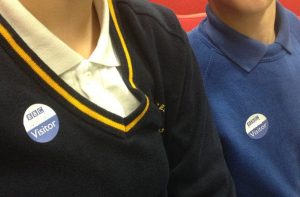
To my delight, both children were absolute stars and whilst, unsurprisingly, M took to the experience like a duck to water, even G found her confidence to answer some of the questions and we had only one awkward silence to contend with during the 20+ minutes of our appearance. The children spoke clearly and slowly to make sure they could be understood and took their time to give well-thought out answers without leaving the listeners waiting for the dead air to be filled. They both loved every moment of it and have expressed an interest in finding out more about possible future careers that would see them working for the BBC, though G was fascinated by the research being done for the different news programmes and M has a yearning to explore the life of a TV camera man. My big thanks go to our local radio station who were prepared to take a chance on interviewing G and M live on air and for giving us, yet again, the opportunity to spread the word about EGID far and wide.

NEAW 2017 – The journey continues

NEAW 2017 is drawing to a close, but for those of us living with EGID the journey doesn’t stop here. Everyday will continue to involve taking a number of medicines, examining food labels, careful food preparation, monitoring symptoms and hoping that the next day will be even better. Small hiccups might become major hurdles to leap, or may pass by almost unnoticed as we breathe a sigh of relief that they didn’t become something more. Parents will continue to find last-minute solutions to unexpected activities at school, plan trips out with military precision and pull together paperwork, photos and lists of symptoms to take to the next hospital appointment. We will comfort our children whatever their battle, be their most ardent cheerleaders and be prepared to tackle anything and everything to get them the very best healthcare and support. Despite the increasing uncertainty about the EGID diagnosis, we will continue to raise awareness and, more importantly, we will never stop believing in our children.

This is the short film G and M made 2 years ago to explain EGID to their classmates. Whilst M does not have his feeding tube any more, the message is as clear now as it was then and I wanted to share it again:

This year we have decided to continue our support of the amazing charity, Over The Wall and their camps. If you’re able to donate even a very small amount, please follow this link to my Virgin Money Giving Page where your donation will help more children living with chronic illness like G and M by giving them and their families a chance to enjoy some much-needed time away from it all.

NEAW2017 – Resilience

Resilience: the ability to become strong, healthy or successful again after something bad happens.

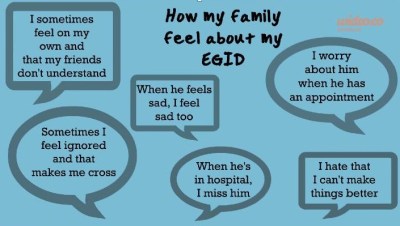
What an amazing quality to possess and one that we’d all to like to develop, especially when times are tougher than we ever imagined they could be. Without a shadow of doubt, the EGID diagnosis has forced us all – and by us, I don’t just mean our family, but all those families living with EGID – to become incredibly resilient, even when we’re dealing with bad situations that have nothing to do with this illness itself. During last year’s NEAW, I wrote about being an EGID Mum and the heartbreak that I had been struggling with because of M’s broken leg and the lost opportunities that resulted from it. This year, the current uncertainty surrounding the validity of the EGID label has once again pushed Mike and me to our limits as we grapple with the challenge of managing the health of our child, physical and mental, whilst also dealing with the unavoidable “elephant in the room” of that unanswerable question mark about his diagnosis whenever we attend gastro appointments that seem to try and avoid using EGID as a valid reason for his current struggles. We are not the only parents who find themselves in this position as conversations amongst our EGID friends and extended family show.
Life has taught me to be resilient, to be a strong woman who’s not afraid to face up to whatever is thrown at me, even if sometimes I need to pause and take breath before I can fully deal with it all. It sometimes feels as if I’ve been put through more than most: my T1D diagnosis on my 9th birthday, losing my Dad before he had a chance to get to know my children and the threat of further sight loss last Christmas; and yet somehow I’ve managed to find my way through it all. As a family we’ve certainly had more than our fair share of chronic illnesses to contend with – T1D, EGID, Cancer, Parkinson’s, MS, Alzheimer’s disease to name a few – but they’ve taught us all one thing: that we can survive. In fact we can do more than survive, we can still have positive, purposeful lives and can definitely live and enjoy life to the full.

As a Mum, I’m proud to see the resilience that my children are building themselves, even though it is heartbreaking to realise the reasons they’ve needed to develop this character trait so early on. But their unquestionable resilience to life’s challenges, doesn’t mean that they are immune to the insensitive, hurtful and thoughtless comments of others as became patently obvious this week. M is going through a tough patch right now and we don’t really know why. We expected the anxiety of his SATS last week to affect his gastro health and returned to his simple 6-food diet to try to reduce the stresses on his body. This week has seen a real relapse in many of his symptoms and we’re struggling to see the light at the end of this immediate tunnel. I know, in that way that Mums do, that this change in events was playing on his mind, but I didn’t realise just how much until yesterday.

Yesterday, we were talking about his school year group and in particular, the jokes and insults currently being traded amongst the Year 6 boys. I reminded him that he needed to ignore those comments as best he could and instead focus on the strengths of his friendships and the fun they’re now having that SATS are finally out of the way. It was then that he paused in reflection before saying:

…I know Mummy, which is why I’m sure X was making it up when he said that his Mum had said that she’s sick of seeing me in the local paper all time because I haven’t been and anyways, I don’t think that his Mum would have said that….would she…?

I had to take a moment to compose my own thoughts before giving a careful and considered reply because I knew that the very fact that he had mentioned it to me meant that he was more bothered by this seemingly throwaway comment that he wanted to admit. In all honesty, I can’t answer why that Mum said that, though I can make some intelligent assumptions behind her reasoning and am certain that she never expected her child to come into school and say it directly to my son. It just shows that we need to be careful about what we say to, and in front of, our children and encourage them to be kind in their words to others.

I reminded M that our intentions are good. We’re actively trying to raise some much-needed awareness about EGID and that the annual fundraising events that he’s held at school have been the result of us proactively asking to organise them. I’m not ashamed to speak out loud about a condition that impacts us every day and I don’t want M to feel that he needs to hide the reality of what he goes through. However, he also knows he can share as much or as little as he chooses about his daily life and that there will never be pressure from us to do more than he’s comfortable with doing.

We’re lucky. Having spoken out loud to me, and then later to Mike, about this comment, M has forgotten all about it and has happily got on with the rest of his week. His ability to bounce back after a ill-considered remark that obviously cut deep is admirable and truly reflects the resilient young man he is growing up to be. Today both children have proudly gone into school wearing an element of pink to raise awareness amongst their friends. M’s “Dress up as your hero or superhero” day for Over The Wall is currently under way and he was excited to see what his friends would be wearing – he has gone as his very own hero, Ryan (the doughnut man) from Borough22. Most of all, we’ve all done our bit this week to show this disease just how resilient we are and I’m proud to acknowledge that many in the global EGID community have done so too.
This year we have decided to continue our support of the amazing charity, Over The Wall and their camps. If you’re able to donate even a very small amount, please follow this link to my Virgin Money Giving Page where your donation will help more children living with chronic illness like G and M by giving them and their families a chance to enjoy some much-needed time away from it all.

NEAW 2017 – No man is an island

Sometimes, when you’re stuck in the midst of the relentless demands and emotional turmoil of a chronic illness, it’s difficult to see beyond your immediate reality and nearly impossible to believe that anyone else can even begin to understand how you’re feeling at that moment in time. It is no surprise that the one with the diagnosis often becomes self-centred and self-absorbed as their illness dictates every facet of their life and it can take a long time to really grasp that there are others out there who can empathise because of their own struggles and experiences. It’s all too easy for the focus of family, friends and the outside world to be focused fully on the individual and often the others affected by the diagnosis are left to struggle on their own by the wayside.

Over the years we have worked hard to try to give G the attention she deserves and it’s heartbreaking to realise that there are more times than I care to admit where we have absolutely failed to get that balance right. M’s ill-timed admissions over G’s birthday for 2 years in row were a bitter pill to swallow for us all and nothing could really make up for the disappointment of spending her 12th birthday too many miles apart. Encouraging G’s involvement with our local Young Carers group and the GOSH YPF as well as applying for her to be a part of the Over The Wall siblings camps have all been important steps in recognising the impact that M’s health challenges have had on her over the last 13 years and supporting her to find her own identity that is completely independent from him. It is an ongoing process for us and Mike and I will continue to strive everyday to support G as much as she needs, especially as the emotional roller-coaster of her teen years starts.

Just as our family is affected by M’s EGID diagnosis, so too is the community that surrounds him. I have mentioned so many times the amazing village school that both G and M have attended and everyday am grateful for their unfaltering support. Since M arrived at their gates nearly 4 years ago, they have willingly taken on the responsibility of dealing with a child with complex additional needs, not just medical but educational too. They have allowed both children, and us, to promote NEAW and their continued support with our fundraising efforts has been fantastic. I regularly read about the problems other parents with EGID children are facing in their schools around the UK and I know that we’re incredibly lucky to found this little gem. M has been able to attend school with a feeding tube, a broken leg and an extremely restricted diet and his attendance is remarkable for a child who has been through so much in so short a time. His Year 6 teacher has been fantastic at encouraging him this year when the prospect of SATS has caused him unbelievable anxiety and she has put up with a plethora of emails as I’ve tried to iron out the biggest wrinkles in a stress-filled few months. His classmates have similarly been an irrefutable source of encouragement and his move up to secondary school in September will be eased by their presence in his life.
We do not live in splendid isolation and every action we take has a ripple effect that can stretch out further than we can ever imagine, especially as a child. We are extremely lucky to have a community that works with us to help both children have the childhood that they are entitled to enjoy, one that is all too often marred by the difficult reality of chronic illness. As G and M grow older, my hope is that the realisation slowly dawns that whilst everyone’s life is unique, there are moments that teach us all lessons that can help us reach out to and empathise with others. Going to Over The Wall camps has shown both children that, despite those times when they feel isolated, there are others in the bigger world that do understand what they’re feeling, what they’re living and who can perhaps help them learn to survive even the darkest of emotions; and that when they have survived their own dark place, they can reach out to others who need to be brought back into the sun.

This year we have decided to continue our support of the amazing charity, Over The Wall and their camps. If you’re able to donate even a very small amount, please follow this link to my Virgin Money Giving Page where your donation will help more children living with chronic illness like G and M by giving them and their families a chance to enjoy some much-needed time away from it all.

NEAW 2017 – Wings to fly

As a parent, one of the biggest challenges you face is helping your child grow in self-confidence, develop independence and to ultimately give them the wings they need to fly away from the security of the family home. There are so many obstacles to overcome along the way and when a chronic illness is thrown into the mix, it can feel almost impossible to let your child take those first steps on their own. Our determination to not let EGID define either child means that every day is an opportunity to let go of our own anxieties and concerns, and encourage them to make their own decisions regardless of the limitations that health, medicine and diet place on them. Of course, much as we work to equip G and M with the skills they’ll need as they grow up, I know that they need to learn so much more than what Mike and I can teach them on our own and so we always look for any opportunity to develop their learning from experiences that are beyond our ability to give.

That’s why once again this year, I completed the application forms for both G and M to attend the fantastic camps offered by charity, Over The Wall, knowing that their respective weeks away from home will be all about friendship and understanding and being amongst equals and building self-esteem and so, so much more. When G came home from the South Siblings Camp last year, she was a different child to the one who had left us just 5 days before. The time spent with others who have a similar home life to her was invaluable as she realised that her life experiences didn’t isolate her in those circumstances; and the focus on her and making sure that she had the best time she could helped G to find a self-worth that she had been struggling to develop at home and at school. Likewise, M had what could only be described as the best week ever as he was able to spend a week away from home without family for the first time in his life. He tried his hand at activities that had terrified him before and he too found great comfort in the realisation that he is not on his own in his health challenges.

We were all delighted when G heard she had a place at this year’s Siblings Camp and we couldn’t wait to hear all about her adventures there as a Green Girl. From the moment I dropped her off with some familiar faces, including the unexpected, but much welcome presence of G’s buddy from the GOSH YPF who was volunteering for the very first time, I knew that she was destined for another great week. Their unfailing attention to detail and care for the young people they were responsible for during the camp was impressive. We received a phone-call on the second night to say that whilst G was having an amazing time, she was struggling with the “fancy” gluten- and dairy-free food that the chefs were lovingly preparing for her and wasn’t really eating as much as they would like.  A quick catch-up to understand G’s food preferences and the reassurance that they would continue to keep an eye on her was all I needed to be certain that their care was absolutely everything I could want it to be.
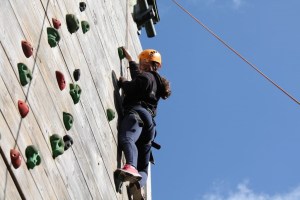
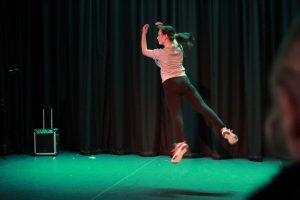
M, Mike and I were all able to make the journey to pick G up at the end of her week away and were all immersed in the joy that is the camp bubble of OTW for the short time that we were there. Our Green Girl had tried her hand at most things, exceeded her own limitations and came away with a much-deserved pride in her achievements. This photo of a beaming G at the top of the climbing wall reflects her determination to overcome her self-proclaimed fear of heights and the pride she felt when she surpassed what she managed last year to achieve: more than she had ever believed herself capable of doing. Unlike the previous year, when she had been reluctant to take part in the Talent show, this time round, she went prepared with a routine she’s been working on during her school dance club and performed with a confidence and grace that reaped an impressive number of compliments as well as moving her YPF buddy to tears with her passion for her dance. G became good friends with several in her team and has been keeping in contact with them in the weeks following camp. She has developed a confidence and willingness to take on new challenges, knowing that, with a little bit of self-belief and perseverance, no mountain is too big for her to conquer.
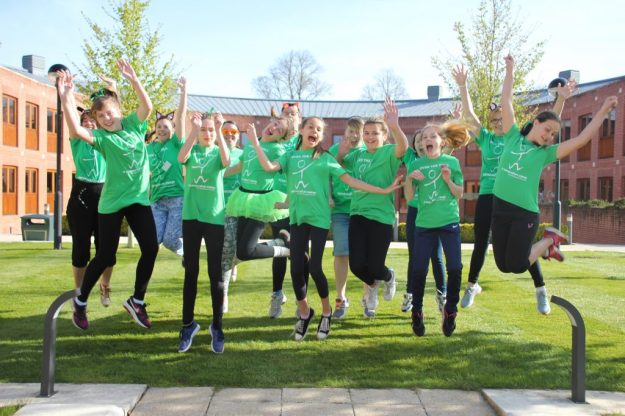
It is thanks to Over The Wall that my children are becoming all that they can be and are learning that chronic illness doesn’t have to be a hurdle to anything they want to do. Over The Wall truly gives both our children wings to fly and our thanks just don’t seem to be enough.

This year we have decided to continue our support of the amazing charity, Over The Wall and their camps. If you’re able to donate even a very small amount, please follow this link to my Virgin Money Giving Page where your donation will help more children living with chronic illness like G and M by giving them and their families a chance to enjoy some much-needed time away from it all.


NEAW 2017 – His illness does not define him

Our life experiences influence our view of the world that surrounds us. Good or bad, everything we do or see or hear or learn will affect our outlook on life, on whether we become individuals who see that hypothetical glass as being half-full or half-empty and how we react to our interpretation of that reality. When you’re growing up with a chronic illness as your one constant companion, it can come as no surprise that that condition begins to shape the person you become and the relationships you have with the rest of the world.

Rightly or wrongly, I have encouraged M to embrace his EGID diagnosis and become an advocate for himself and others living with it. M is, without a doubt, so much more than this disease and yet it is an integral part of the young man he is growing up to be. Our local gastro team are keen that M doesn’t view himself as a “sick kid”, that he doesn’t let his diagnosis stop him doing whatever he wants to do or being what he wants to be and those aims sit well with our approach to helping him cope with it all. However, I can’t and won’t agree to ignoring the reality of his life – the numerous hospital appointments, admissions and procedures; the daily medicines; the restricted diet and 12 months with a NG-tube mean that he is not like his friends, like other kids his age. In the last year alone, M has been seen at our local hospital over a dozen times and that does not make him the same as the rest of his classmates. Despite everyone’s best efforts, 2 and a half years after that first feeding tube was placed, M still only eats 6 safe foods on a regular basis and that makes him stand out from the crowd, not just at school, but at every activity or event he attends. He is, in all truth, a “sick kid”, but that label does not sum up who he is as an individual.

No matter what the medics suggest, I can’t pretend that all those experiences didn’t happen to him, to us as a family, but I will endeavour to make sure that M’s illness is not all that defines him.

Yes, he’s a child who cannot eat the same as his friends; but he can eat out and enjoy food with them.

Yes, he’s a child who lives with constant pain; but he has learned to ignore it and overcome it and achieve despite it.

Yes, he’s a child who spends too much time in hospital at medical appointments; but he is developing a confidence to question and understand and advocate for himself.

Yes, he’s had experiences that most adults I know would struggle with; but he has developed tremendous courage and an increasing self-worth in who he is as an individual.

The truth is that, just as my 30+ years with T1D has shaped the woman I’ve grown up to be, M’s life has been, and will continue to be, affected by his EGID diagnosis. We cannot pretend that the difficult times haven’t happened, we can’t airbrush them out of our family history and it would be doing a disservice to the fortitude and bravery of both my children if we tried to do so. They are so much more than the sum of their parts and whilst EGID has an unquestionable influence on the individuals G and M are becoming, it absolutely does not define either of them in their entirety, and nor will we ever let it.

This year we have decided to continue our support of the amazing charity, Over The Wall and their camps. If you’re able to donate even a very small amount, please follow this link to my Virgin Money Giving Page where your donation will help more children living with chronic illness like G and M by giving them and their families a chance to enjoy some much-needed time away from it all.