
With a blog post a day for the last 7 days as well as daily mini fact updates via my FB page, you’d think that I’d be glad that the EGID awareness week has finally drawn to a close. There is, I admit, a certain relief that the busyness of the week is over and I can at long last pause and take a breath, but just as EGID is a constant presence in M’s life, so raising awareness of it will continue to be an important part of our family’s life. A good friend and fellow EGID Mum has asked me to share her reflections of last week, which I am delighted to do as, as she says in her final line, “Knowledge is important this week and every week.”

National Eosinophil Awareness Week 2016,
A time to share personal experiences,
Taking time to tell others what it’s like to live with or care for someone with an Eosinophilic Gastrointestinal Disorder (EGID)
Inviting those who have never heard of EGIDs to find out more,
One way to help raise awareness,
Not for self but for others as we are,
All in this together, the EGID community, so,
Let me tell you a little bit about what it’s like to be the mum of a child with EGID.
Elevated levels of eosinophils in the gastrointestinal tract are often disorder indicators,
Often this will mean that there will be pain and possibly inflammation,
Sometimes this will mean that there is a need to exclude foods; sometimes many, sometimes all,
Ige or non-IgE mediated food allergies may also be present, but not always!
Naso-gastric tubes and elemental nutrition may be the only way to manage symptoms,
Often the only option for many is a feeding tube as the body struggles with food proteins,
Pain, discomfort, nausea, altered bowel habits are just a few of the symptoms,
Hospital visits, hospital stays, invasive tests, medications and restricted diets become a part of life,
Illness can be socially restrictive; days, weeks or months may be lost to ‘flares’,
Life can be difficult for those diagnosed with EGIDs.
Awareness aids understanding of EGIDs,
Watching what you eat, if you are able to eat, is central to managing symptoms,
Avoiding known triggers, being a food detective, scrutinising labels, are also key skills that need to be developed,
Research is important; finding a cure and raising awareness of what it’s like to live with an EGID,
Education is also key to raising awareness and understanding of the impact of EGIDs,
Networks are central to enabling those with EGIDs to feel supported by those who understand
Eating … when food is the issue, is an issue …,
Support from others; a community of people who understand what it’s like when someone is diagnosed with an EGID is so important,
Societal understanding though will help those with EGIDs to engage more with their communities.
We hope for a future where the disorders are better understood, when we don’t have to fight to be heard,
Enabling those with an EGID to share their experiences with others can help this,
Eventually we hope for a cure or better ways to manage the disorders,
Knowledge is important this week and every week; please take a moment to read some of the stories shared by those living with EGIDs.
 How do we define a hero?
 If you live in the UK, you can’t help but be aware of the current problems faced by the NHS. The continuing
  I saw it in the frankness awarded to Mike and I during the December debacle, when we asked for an honest opinion about his future health and what we could expect; and it was given.
 Thanks to past experience and my somewhat controlling approach to always having a supply of E028 in the house, I started chasing about when we could expect our next delivery whilst there was still a good amount of stock in my dining room and spent the next 40 minutes being pushed from pillar to post as I tried to track down who I needed to speak to and unpick exactly what had happened. When I finally established what I had to do, it was my wonderful GP’s surgery that I turned to and their fantastically competent staff. With the help of 1 receptionist, 1 member of office staff and the invaluable pharmacist, we eventually got M’s prescription sorted and marked as an ongoing monthly medication. They phoned, researched, ploughed through reams of medical notes and faxed until it was all sorted – and all with the attitude that they wanted to help, were willing to help and were happy to help, and a ready smile that reassured me I wasn’t being too much of a problem in their already busy day.
 were fortunate to go to one and the photos and comments about it posted by their Mum, Annie left me determined to find out more and see whether M might similarly qualify for a place.
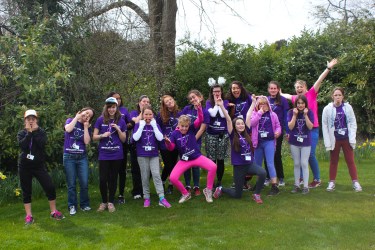 It was a week to be herself, not defined or viewed in her role as M’s big sister, and encouraged to take time to focus on herself without worrying about M and how he would feel.
 Discos, team games, inter-team challenges, morning singsongs, new activities, skills learned, old favourites and even a talent show sum up G’s week away.
 M was reluctant to admit to missing having G around to play with and torment, but his move to sleep in her bed every night she was away revealed the depth of those feelings he didn’t want to show.
 That incomparable insight is what almost makes the challenges of M’s health worthwhile, for whilst I would give anything for him not to have to live with a rare illness like
  My blog has simply been an effective way to put all of our experiences into one place, hopefully with some useful pointers for others in the same shoes and, by doing that, to create my very own, very personal resource.






 your family’s life on a daily basis.

 he same is true when it comes to feeding tubes as sadly misconceptions are rife and the reasons behind a tube can be as complex and individual as there are stars in the sky. Even with children or adults living with the exact same condition, their symptoms and need for additional nutrition can be vastly different.
 7 years to diagnosis