Tag Archives: FABED

Our thanks go to…

The week is winding down and I am definitely looking forward to the start of half-term and the chance to have a sleep-in over the weekend.  One’s thing for certain, being active in raising awareness whilst eating a restricted diet really takes it out of you!thank-you-languages

With T for Thanks being our topic for today, what else could I do, but issue a few heart-felt thank-yous to those who’ve made a difference to us in the 12 months since the last NEAW. It’s tricky to know where to start, but, in no particular order, I’d like to thank:

Our families – well it was a given really, wasn’t it?  But whichever side of the ocean they may live, our families have been there in whatever way they can 澳大利亚孩子-1202242and supported us in the tricky decision to move M to a NG-tube and the elemental diet.   We don’t know exactly what the next 12 months hold in store for us, but we can be certain that our families will be there every step of the way.

Our friends – another obvious lot, but again we couldn’t have survived the past year without them all.  Their help has been invaluable: from text messages to lengthy phone conversations; early morning G-sitting to late night conversations with a cup of tea; and much-needed hugs to unexpected hospital mail, every single gesture has meant more than they can ever imagine and helped keep us strong.

GOSH – our consultant, her great gastro team and, in particular, the fantastic nurses who work with such dedication on Rainforest ward. Their care for M back in December was just amazing and without them looking after us both and giving wise words and training, we’d have struggled even more with the reality of the NG-tube and the feeding pump.  We also owe massive thanks to M’s fabulous dietitian, Colorful solidarity design treewho is always at the end of the phone or the email and has given me lots of helpful recommendations as well as reassuring me that I’m doing things right when it comes to the whole food re-introduction thing.

M’s School – I am very aware of just how lucky we have been with the staff at M and G’s school. They have been so understanding of how life was changing for both children during this school year and have made every effort to look after them and help them feel happy and safe when at school.  5 of the teaching staff bravely took on the role to learn how to manage his feeding pump, which meant that I could return to my job, confident that they were competent in what they needed to do.  This week they were also quick to agree to M’s request to share his presentation to the rest of the school and every teacher made time to make sure their class could see it and ask any questions they had.  This school has done a wonderful job of nurturing both my children and I will be sad when G moves on to “big school” in September.

G – the best big sister that M could ever have had.  She’s loved her little brother through some of his darkest moods and, even if there’s a bit too much squabbling at times for my liking, she’s managed to continue to work on building a strong relationship with him that I hope will only get stronger in time.  She’s survived the challenge of SATs, maybe not without the odd tantrum along the way, and continues to strive to do her best at school and at home.  P1000121And my heart nearly burst with pride the other week when she announced at Stagecoach that M is her hero, because of how bravely he lives and copes with EGID.

Mike – I couldn’t finish without recognising the person who stands alongside me on this, the most challenging of journeys we’ve been on together, and is my strength when I’m feeling weak.  We’ve reached a harmony that enables us to take turns in being the strong one during appointments and I can’t think of anyone I’d rather be facing these decisions with.  He also understands my need to have some time to escape from the day-to-day grind of EGID and puts up with me disappearing off twice a week to choir rehearsals.

And thanks to all of you, who’ve kept reading my blog, put up with somemany…repeated requests on my part and have done an amazing job at sharing my posts on.  Your silent show of support is what helps keep me going, even when times are tough.

Day 5 and finally it’s A for Awareness!

A for Awareness has meant:

This…                                                                    and this…

                                                          …lots of this…

and this…  

This is the amazing video that M made, with help from his big sister, to share his story about life with EGID.  By the time this blog post is published, he will have presented it to every class in his school – that’s 8 classes, approximately 220 children and around 15 members of staff who will now understand his journey a little better.

So come on, you all know the drill by now:  share, share and share some more and help us get M’s message out there.

Changing Attitudes – NEAW 2015

Last week I took part in the Diabetes blog week and looked at my changing attitude to my T1D over the past 3 decades as well as changes I hope will happen in the future.  social-media-treeMy plea for improved education about T1D vs. T2D is closely linked to my longing for increased awareness about EGID and has resulted in my efforts to bring the focus of family, friends and our local community to the subject through local media coverage and social media this week.

During a music break in my recent radio interview, the presenter asked me an interesting question: whether I’m upset when people misunderstand EGID?  We had been discussing off-air the fact that there is often recognition of the food allergies side of the illness, rather than the disease itself and whilst I understand that allergies are something easy for people to understand, I’m frustrated that that’s what gets people interested in finding out more.  I pondered his question for a while and once the session was over was able to give him my honest answer: No.  I’m not upset that people misunderstand EGID because I’m usually impressed that they know something about it. The truth is that they must have heard of EGID in the first place to be capable of misunderstanding this complex disease and therein lies the problem.  Ignorance of EGID and the unseen effects it has on individual and family alike means that those of us living with it are sadly often viewed as making it all up or wildly exaggerating the severity. That attitude can leave a family feeling very alone at a time when emotional and practical support is needed most.

 This is what today’s C is all about – Changing Attitudes.


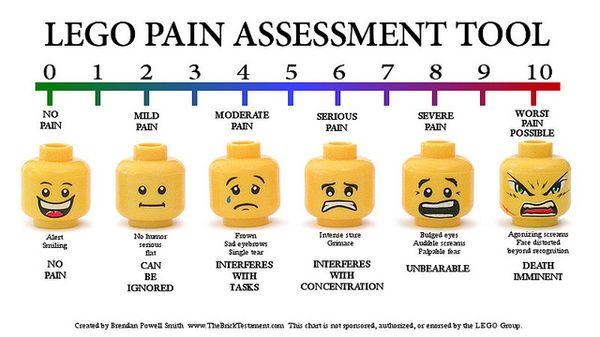
The truth about EGID is this:  It’s not just about the food allergies, that’s the easy bit to understand and, in many ways, the easiest bit to live with.  It’s about much, much more than that.  It’s about the unexplained joint aches, the never-ending tummy cramps, the relentless feelings of nausea or reflux whenever you eat. The dark shadows under the eyes, the manic mood swings, the overwhelming lethargy, or the inability to fall asleep and stay that way.  The damaged bowel, the fear of not being near enough to a toilet whenever you need one, or knowing that you’ll never get there in time anyway.  legoThe fear of your friends making fun of your allergies or finding out that you’re still wearing a pull-up because your bowel can’t be relied on when you most need it to.  The daily medicines, restricted diets and the feeding tubes. The chronic pain that can reduce you to tears, yet you don’t complain because nothing helps, even when it’s at its worst and you’re familiar with just about every pain chart created in the history of man.

It’s about getting used to these things as being normal, or not even realising they’re not. 

And it affects the whole family, not just the one with the diagnosis.  The endless merry-go-round of numerous hospital appointments, medicines to be taken and food to be cooked safely, avoiding cross-contamination at all costs is exhausting.  The keeping of meticulous daily records of food eaten and symptoms experienced to try to find a link and make sense of what’s going on, and dealing with the self-recrimination when you miss a day out because what if that was the one that would give you more answers? Pictures July 06 030Day trips, meals out, holidays all require military precision to organise and every decision is coloured by whether needs can be met or not. The feelings of isolation, for parent and sibling alike, because it’s frequently the case that there is no-one else nearby who has the same experiences or can truly understand. The lack of any conversation that doesn’t revolve around toileting and being too worn out to come up with an alternative subject.  The sense that I, as the parent, know more about the intricacies of my son’s chronic illness than any medical professional we meet along the way and the frightening realisation that my children know infinitely more than them too.

It’s about the heartbreak of holding my sobbing child at 3am, tears streaming down my own cheeks as I struggle to find the words to bring the comfort that nothing else can bring at that moment in time.

At our recent admission at GOSH, one of the gastro consultants told me that it is widely recognised that children with gastro conditions have the worst quality of life of any child living with a chronic illness.  EGID is an invisible illness, one where the individual frequently learns to hide, disguise and survive their struggles and just carries on regardless, accepting this life as their norm.  Families supporting a loved one with EGID often feel isolated – not just from their circle of friends, but from the medical community, who know little about it and may question the integrity of the very people who are fighting to get the best care they possibly can.  It’s not a parental fad about food allergies or an over-anxious Mum fussing about the small things; and it’s definitely not a figment of anyone’s imagination.  The effects of EGID can be cruel to experience and devastating to see.  So a change in attitudes is not only important, but a necessity for all those living with this diagnosis.

Now you know a little more about EGID and just how it impacts, take some time to think about how you can support those you know living with this disease.  Don’t think that there’s nothing you can do to help.  An offer of a cup of tea once the school-run is over, a home-cooked meal for the parent not in hospital or checking to see if there’s anything they need from the shops is more than enough.  No gesture is too small: a smile, a text message or even a FB like or comment on Twitter will let that family know that they’re in your thoughts and that there is hope for change in the future.

United we stand

Yes, you guessed it, today is:

U for Unite-page0001

and signifies perhaps the hardest challenge we’ve taken on for EGID awareness week, ever. This week Mike and I are standing in solidarity with M and with all those other brave souls out there who have to battle with EGID every day and have no chance to opt out when things get tough. For the past 2 years, I’ve documented how we’ve followed M’s diet for the week, restricting our diets as he has to restrict his and even drinking the occasional glass of Neocate Active to get a glimpse into that aspect of his life.

IMG_0940When we first started planning our activities for this year’s awareness week, I briefly considered eating like M again, but dismissed it, thinking that the limitations of 3 ingredients and a litre of E028 on a daily basis might just prove to be too much for both Mike and me.  However, fast forward a few weeks to my preparations for my newspaper interview and I revisited the idea of “eating like M” and wondered if actually this might be something we could achieve.  I chatted it over with Mike, debated whether we could do it and, both being keen to give it a go, decided this would be our diet for the week.  Each day will be filled with 3 meals of rice, chicken and cucumber prepared in a variety of ways and Mike will even be drinking the litre of E028.  I have undertaken this with careful consideration of my own T1D and will be keeping an even tighter eye on my blood sugar management to make sure that I stay fit and healthy during the week.  I have also opted out of the E028, but will be partaking in a pint of Neocate Active everyday to show willing.

We’re not on our own either as there are other parents, family members and friends who will be spending some or all of this week eating like their loved ones. Trust me, it’s not an easy decision to make, but is a great way to raise awareness and get conversations started, which is reason enough to stick to it for a week. I am filled with admiration for just how well M has coped with such a bland diet for so long and have been struck with the harsh reality of how much pain he must have been in for years to be able to cope with these limitations just because it’s helping him feel better. Three_Musketeers_SwordsSo tomorrow when you’re tucking into your bowl of honey nut corn flakes or a bacon roll for breakfast, or sitting with your feet up dunking a chocolate biscuit into your cup of tea, or perhaps even enjoying a plate of fish and chips for tea, spare a thought for M and the others like him who are eating a restricted diet right now or may not be able to eat anything at all.  This week it really is a case of “All for one and one for all“.

Today’s blog post is brought to you by the letter…

D

imagesEver had that feeling that you’re appearing in an episode of Sesame Street?  Sadly my children have absolutely no idea what I’m talking about, observe my poor attempts at impressions of the Count (1…ah ah ah…2…ah ah ah…etc) or Cookie Monster (me want cookie!) with complete and utter disdain, and yet it reduces me to giggles each and every time.  I am, without a doubt, drifting into the realms of “embarrassing Mum” behaviour just in time for G to advance into her teenage crisis years.

But I digress; today’s letter, D, stands for Donate.

This week is primarily about raising awareness of EGID, rather than rattling our buckets asking for money, but the harsh reality for children and adults living with EGID is that there is little promise of finding improved treatments until further research into it is carried out.  At the moment in the UK, there are no research projects listed specifically for EGID and less than 1% of all medical research funding is allocated for gastro research.  Kate, over at The Recipe Resource, talks about the need for increased funding for specialised research, especially for medical research in children, in her recent blog post, “Why we need a culture shift on medical research in children – for Eosinophilic Awareness Week” and it’s definitely worth a read.

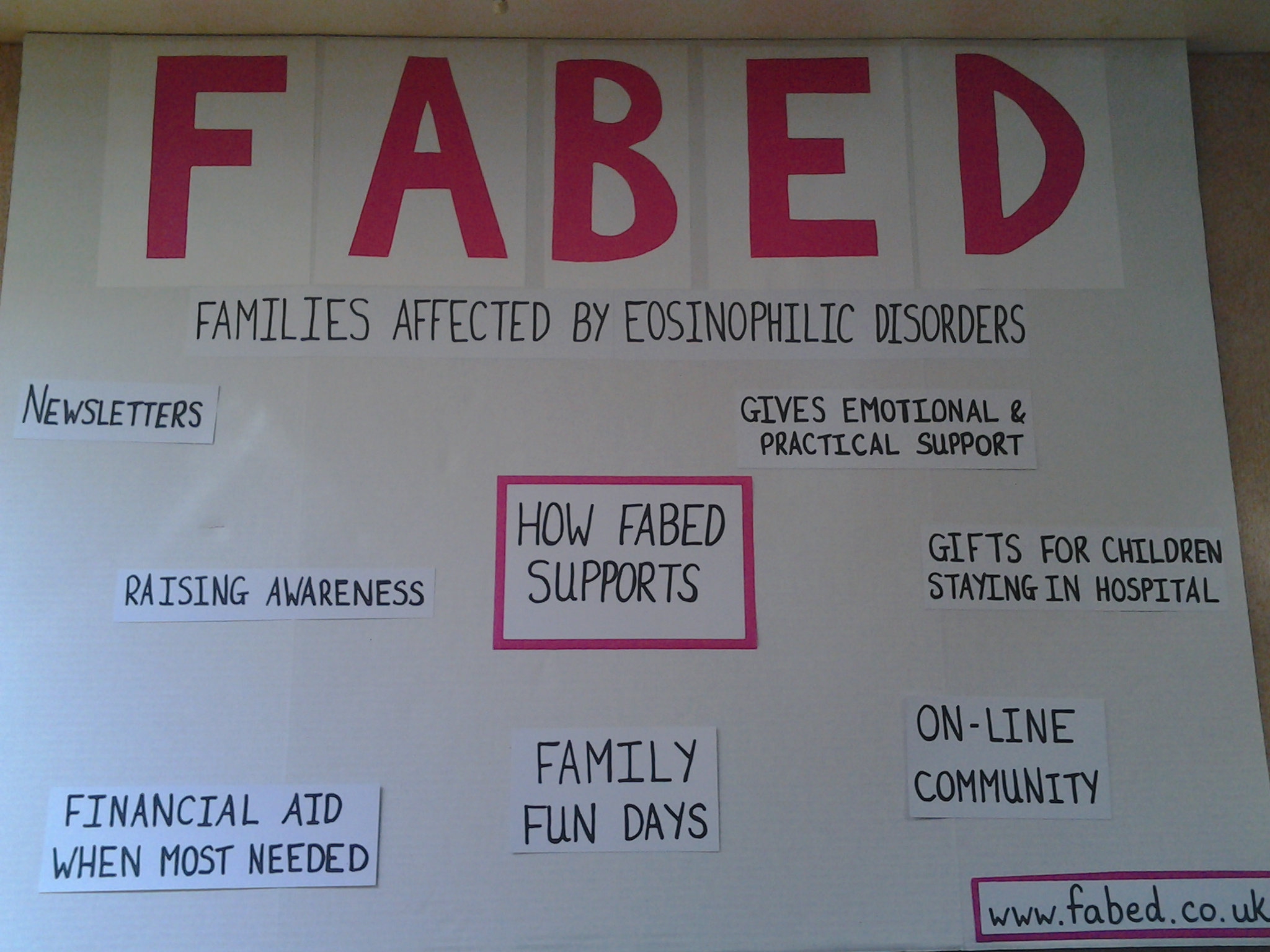
Don’t get me wrong.  I’m not expecting the money we donate to change the face of medical research just yet, that sort of change will have to happen at a much higher level than my meagre pounds can help me access.  However, where these donations can make a difference is to charities such as FABED, who really are small fish in the big pond of the charity world.  20150515_151847I’ve talked many times about how much support is given to individuals and families by FABED and the image opposite, which I also posted on yesterday’s blog post, shows just some of the many ways they support their members. We’ve benefitted from most of them.  Our amazing trip to Legoland 2 years ago was organised by FABED and gave Mike and I the opportunity to talk to other parents living with EGID: some who were further down the line in their journey and full of years of hard-earned expertise to share; and some even newer to it than us, who were overflowing with endless questions.  More importantly, it enabled M and G to meet other EGID children and their siblings. They could compare war wounds and stories; and both came away feeling less isolated in their struggles.

The on-line community is a veritable hive of activity and no question is too stupid or concern too small when it comes to these amazing people.  They have extensive knowledge and experience that they are more than willing to share, and when they don’t know the answers, will send a virtual hug to let you know you’re not on your own.  The support doesn’t stop there and this week members have also been sharing photos, images and videos with each other to help raise awareness for EGID.  The emotional and practical support offered has been a lifeline for us more than once and the emails, text messages and phone-calls received from FABED members when we’ve been going through tough times are worth far more than their weight in gold.  This is one such video, which proved to be all the inspiration M needed to finish his own:

So, what can you do today?

With the help of the fantastic choirs I sing with in our community’s Singing Project, we raised an amazing £180 at Saturday’s concert and if you’re able, any small donation you can give to FABED will make a massive difference and will be gratefully received.  I have set up a JustGiving page for this week and all money will be going to this cause.  You can access it by clicking on the image below:

Fabed needs you

And if you’re not able to help financially, that’s ok too.  Please just keep spreading the word and remember that every single person you tell about EGID is one more person who can help support people like M.

NEAW 2015 – E is for Educate

NEAW

It’s difficult to believe that National Eosinophil Awareness Week (NEAW) is once again with us and we have been, believe it or not, even busier this year than last in spreading our message about life with EGID.  I’m hoping to again post a blog a day to raise awareness and this year have decided to follow the theme of NEAW, which uses the word E-D-U-C-A-T-E to do it:

Today’s letter is E for Educate.

This year we have been focussing our energies on educating those around us and around M about EGID.

How? Well. in the last week I’ve been interviewed on our local BBC radio station, featured on the front page of our local newspaper and last night we had a display and raffle at a local choral concert. During the week ahead, M will be sharing his story at school via a PowerPoint presentation that he and G worked together to produce and later in the week, I’ll be sharing that video with you all.

stats

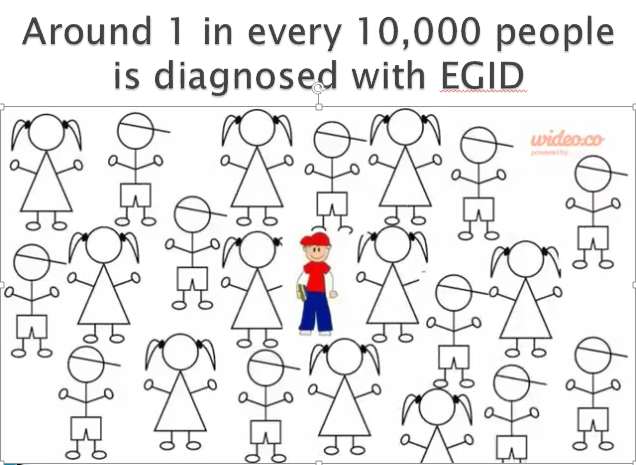
Why? Because awareness is key.  The more people who know about EGID and trust me, the number of medical professionals who have even a passing knowledge of this chronic illness is staggeringly low, let alone the general public, the greater awareness of it there will be, which in turn means better support for children and adults like M and families like ours.  Not only is there little understanding, but there is also an astonishing lack of funding for research into gastrointestinal disorders in the UK.  Without medical research, then it is highly unlikely that approaches to treatments will improve and nor, by default, will the quality of life for these individuals.

20150515_151932

What can you do? Re-read my explanation of EGID and then spread the word by talking to someone about EGID and explaining what it is.  You can share these blog posts this week and ask friends and family to share them on too. Keep an eye on my FB page and Twitter feed to see who else is sharing information for NEAW 2015.  Find out more about those charities supporting families living with EGID:  FABED in the UK, Apfed in the USA and AusEE in Australia. Change your FB or Twitter profile picture to one of those promoted by FABED or Apfed even for just one day.  Be more aware and know that by knowing something about EGID, you are helping support M and others like him.

20150515_151847

“So much time…

...and so little to do. Wait a minute. Strike that. Reverse it…”

                                                          – Willy Wonka, “Charlie and the Chocolate Factory” (Roald Dahl)

This past week has been busy and there’s still lots more to do, not least of which is a proper blog post.  However, the reality that is choir rehearsals,..SATS revision,..sunflower growing,..Anglo-Saxon house building,..SATS revision,..CAMHS appointments,..food-trialling,..SATS revision and May Bank holiday trips to Legoland Windsor for “Star Wars Day” as well as time spent prepping for EGID awareness week with Powerpoint presentations to perfect and conversations with local media to be had, means that this week’s posts have gone by the wayside, so instead here’s a small photo round-up to give you a taster of all the fun we’re having:

E028 – the success story

When we started this new chapter in M’s life 10 weeks ago, we approached it with the attitude of “hope for the best, but prepare for the worst”.  We hoped that the move to an elemental diet, consisting of 1500mls of E028 each day, would bring some much-needed relief to his bowel and body and that, from that recuperation would come a way forward that would improve M’s quality of life.  And whilst we were well prepared that there was a chance it might not work; that it might not bring the recovery M desperately needed and that we might have to look to even more extreme measures to reach our end goal of improved health; that wasn’t a prospect we were prepared to spend too much time on, yet.  It was far more important to be positive about the route we had chosen, which wasn’t an easy choice to make and had its challenges from the start: be they passing the NG-tube at GOSH or figuring out our new routine at home.

Courtesy of nameonline.net

Courtesy of nameonline.net

Despite the roadblocks thrown in our path, we’ve kept plodding on, negotiating our way skilfully around the inevitable melt-downs, tantrums and even those tempers that lead to a tube being pulled out accidentally.  We’ve all learned valuable lessons – don’t storm off in a temper following a sibling argument leaving your pump behind being a key one for M – and we’ve survived as a family and, dare I say it, grown stronger as one too.  We have laughed, cried and got angry together.  We’ve used that laughter to overcome the depths of despair and we’ve focussed on the important things in life.  Mike and I have long been a team, since the disastrous surgery on my left eye for diabetic retinopathy 17 years ago just weeks after Mike had moved to the UK and before we were even married.  We may not always see eye to eye, but we have grown together and take turns in being the strong one when the other is feeling weighed down by the world.  Now we have 2 children who are learning those same lessons and this experience has shown me just how amazingly strong our children are. They’ve coped with all that life has thrown at them and whilst they may have been knocked down occasionally, they’ve learned to pick themselves up, to brush themselves off and to keep going along their paths. The last 10 weeks have seen them grow in their empathy for others and they too have taken turns in being the strong one when faced with adversity.

Courtesy of artiwards.com

Courtesy of artiwards.com

The best news of all is that we now know that every exhausted step has been worth it and I’m thrilled to be able to share that, for M, the E028 has been his success story.  Within days of the switch to a food-free diet, the near constant diarrhoea that has been the bane of the last 9 years of our lives stopped.  Just like that. No magic potions, no magic wands, no tricks and, so far, no looking back.  M has become the fun-loving, caring, well-behaved little boy we all knew was hiding somewhere within himself.  His joie de vivre has returned and his humorous outlook on life is much more evident.   As each day passes, we are slowly and surely making more and more progress and his confidence has grown as evidenced by his abandonment of his daytime reliance on pull-ups for the first time in a year.  It’s not been a perfect cure by any stretch of the imagination and his weight is once again giving us, and the medics, cause for concern, but it’s a massive step, a giant leap in the right direction.  We are lucky that this proved to be the way forward for M and we are truly grateful for that as we know so many other families who have not found it to be the answer to their health problems and are still battling on.

Meanwhile, the next step is the big one for us: food reintroduction.  We need to work on getting food back into M’s diet without upsetting this balance that he has found right now.  There’s a “sort-of” plan from the dietitians about how we go about trialling each food with M, but for the most part it’s going to be driven by us.  Having finally got my lad to the point where “I feel better Mummy, my tummy’s less grumbly and I just feel…well…feel so much better in myself“, I refuse to be hurried and I’m going to protect this new sense of well-being with all my strength and determination.


Pump action

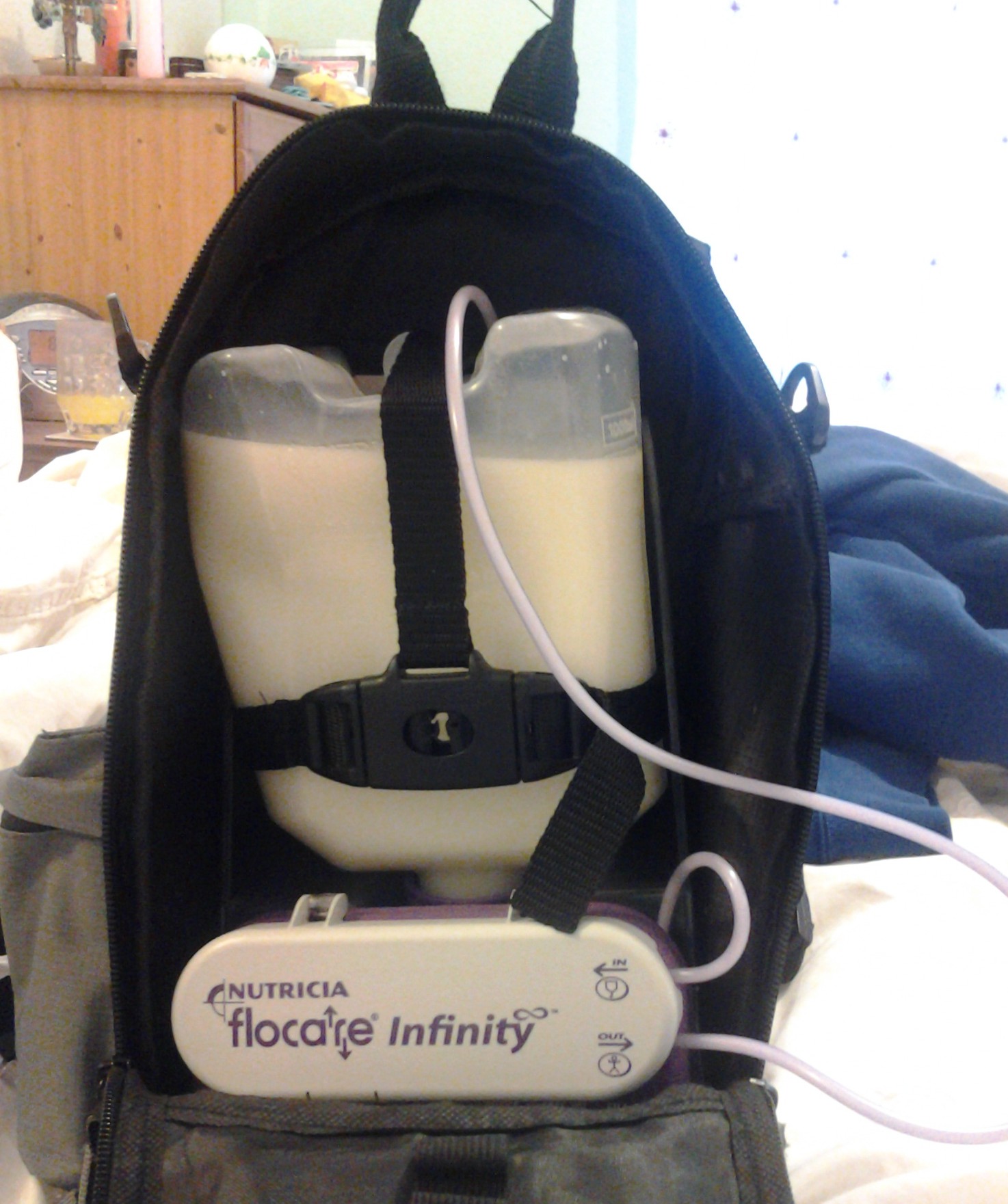
pumpHaving sussed making the elemental feeds, and NGT management having quickly become second nature, our final challenge was to learn all about the small piece of equipment that is going to become a key member of our household for the next few months – the pump.  M has the Flocare Infinity pump from Nutricia, which has proved to be easy to handle and quick to program.  I was trained in just 40 minutes whilst M was still admitted at GOSH and even though it all felt rushed, it was actually all I needed and I was just about confident enough to go home with him 2 days later.  Our excellent Nutricia nurse, from their local community nursing team, came out to train Mike the day after M was discharged and she has also held a training session at school to ensure key members of staff are up to speed with what they need to do during the school day.

The set-up is easy.  The first thing we have to do is set the volume of the feed – either 1000mls or 500mls for M – and the rate in ml/h, which we set to 150 ml/h.   The pump retains the information from the previous feed, so it is important to check that these 2 figures have been set correctly for the feed you’re giving.  I then press the “info” button, which tells me the exact dosage that was given to M in his previous feed and clear this number from the pump’s memory.  This records how much of the required volume has been given since the pump was started, so if you don’t take care to delete the previous information, you could find yourself giving a lot less than the required amount.

The pump is then attached to the feed bottle via a feeding kit, which is a length of tube that joins the bottle to the NGT via the pump itself.  We were provided with a small plastic stand, which holds the pump at the bottom with the bottle hanging upside down above it, firmly strapped in place.  The feeding kit is attached to the top of the bottle, threaded around the pump stand, carefully avoiding getting it trapped between pump and stand, and then looped around the mechanism inside the pump.  Before connecting the loose length of the feeding kit to the NGT. you need to fill the entire length of the feeding kit tube with the feed to make sure you’re not pumping air into your child.  We were shown to do this using the “fill set” button, which runs at the fastest rate possible and takes seconds to fill up.  Once this is done, it’s simply a case of attaching NGT to feeding kit tube and pressing start.  All being well, the feed is now underway and, in an ideal world, you can leave the pump alone until the feed is finished.

20150212_082048

However, reality is very different and you will quickly become attuned to the beeping of the pump alarm.  It can and will beep for any number of reasons: there’s air in the tube, the tube has become kinked or blocked on the way into the pump mechanism,  the tube between the pump and your child’s NGT has been kinked/blocked/sat on/folded tightly between your child’s fingers such that the formula has no place to go or sometimes, just because.  Sometimes the alarm is easy to resolve, simply a case of stopping the pump, removing the air/blockage/kink and restarting; but sometimes no amount of jiggling wires, shaking formula bottles or removing everything from the bag and the stand will stop that alarm sounding every 5 minutes or less.  We’ve even tried that old IT support favourite of switching it off and then on again and have had limited success in silencing the beeping for more than 5 minutes.  Both G and M know how to switch the alarm off, but both are guilty of occasionally forgetting to make note of what fault featured on the digital display, leaving it to my superior Mummy detective skills to work out exactly what might have caused the problem that time round.  Nevertheless, the odd mad beeping episode aside, the pump generally does what it should and copes in an admirable fashion with being bounced around on M’s back for 10 hours a day.

Courtesy of minionlovers.weebly.com

Courtesy of minionlovers.weebly.com

So this little purple pump has become our new best friend.  Just like a favourite fashion accessory, we rarely leave the house without it or the trusty back-pack.  M can do almost everything whilst wearing it and has become adept in the art of adapting to its very presence in his everyday routine.  And whilst it is ever-present, we’ve learnt to have a laugh and have attributed it with its very own personality.  Some of the lovely FABED family shared that naming the pump helped make the whole experience easier and more fun for their child and one Mum even said that the pump reminded them of a minion.  This latter idea made all of us smile because we knew instantly what she was referring to: the incessant beeping of the alarm which is hard to distinguish from the “Bee-do bee-do” heard from the Fireman minion who helps put out Gru’s office fire.  Of course, even though M’s pump bears more resemblance to one of the evil purple minions from Despicable Me 2, bent on a path of destruction, it’s hard work and support in providing M with the means to have the nutrition he needs is far more comparable to their loveable yellow counterparts.

Disclaimer:  I am not a medical expert and this blog does not constitute medical advice. I have detailed how we have been taught to run M’s pump by the professionals involved in his care. Please note that any questions concerning a feeding pump and the associated kit should always be directed to your medical team.

How to survive a hospital stay – the Parents Edition

Courtesy of yoast.com

Courtesy of yoast.com

When M was admitted to GOSH for a week for repeat scopes back in October 2013, I turned to the wonderful support network that is FABED and asked for some tips on the essential things I needed to take to get us both through that week.  The resulting list was my parent’s survival guide, a resource I found myself turning to once again before our most recent admission.  However, the one area I didn’t cover in that survival guide was what I did to get through those endless hours, especially when M was otherwise entertained or busy at hospital school and my lovely friend, F pinged me an email all the way from Canada to make this very point.  She had her own set of questions about what I’d got up to whilst M was in GOSH, telling me what I’d missed from my previous posts and I thought I’d share with you all my curiosity-satisfying answers.

Where did you sleep? – I do so hope you didn’t need a hotel

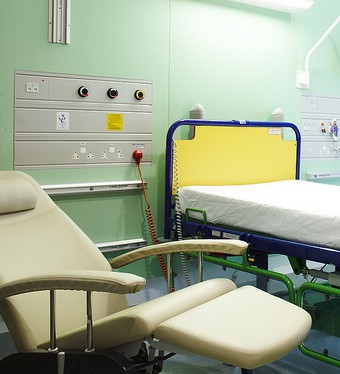
7176037017_45f555b6cc_zNo, no hotel for me, though actually there were times when a hotel room would have been invaluable.  I slept next to M’s bed in a modern version of a medieval torture device: a chair that supposedly converted to a bed, though I think sleeping on a mattress on the floor, or even just the bare floor itself, might have been more comfortable.  There were definitely some mornings when I would have killed for a good night’s sleep or the opportunity for a long soak in a hot bath, but sleeping in “the bay” with 3 other patients including 1 baby meant that my nights were often disturbed.  M’s cubicle contained 1 of the 2 sinks for the 4 beds, which meant that one notable night, I had doctors, nurses and parents trooping through past M’s bed in a steady stream during the early hours as they needed to wash or sanitise hands and access sterile gloves.

The long-term gastro ward is shockingly out-dated and the facilities don’t meet the needs of the patients or their parents.  Unbelievably there is just one bathroom for 16 beds and only 2 other toilet cubicles, so you were constantly having to keep an eye on the bathroom to make sure you could dash in there before it was in use again.  Given this was the location of the height chart too, you can imagine just how in demand that single room was.

What did you eat when you were there? (I can only imagine this expense adding up if you were buying all your own meals)

Courtesy of mirror.co.uk

Courtesy of mirror.co.uk

The expense certainly did add up as I had to provide all food and drink for myself during the admission.  The small kitchen had a fridge which parents were able to keep food in, but I often found myself heading out each day to get some fresh air as well as my meals for the day.  There was also a microwave and crockery and cutlery, so that did make having a hot meal a little easier.  I kept some bread and crackers for breakfast and then would go out to buy sandwiches, ready meals or other snacks for the rest of the day.  There are several supermarkets in the vicinity, so there was reasonable choice, though the largest shop is a Waitrose, which definitely didn’t help with the cost.

I didn’t really eat out too much, though I took G out for meals whilst she and Mike visited and I treated myself to the odd coffee or hot chocolate mid-morning from one of the nearby coffee shops.  I also had a really lovely dinner out with one of my fellow Mums on the ward.  We headed across the road from the hospital to a small Italian restaurant and enjoyed some delicious food, great conversation and a small glass of wine each, whilst the boys were under the watchful care of the nurses!

How did you pass time? – Surely M didn’t need you every second of the day?

The first few days M was reluctant to let me out of his sight for long, especially when he was struggling to cope with the effects of the bowel prep on his system.  He understood that I needed to go out and get something to eat so that I didn’t make myself ill, but I would bring the food back onto the ward to eat at his bedside.  He didn’t necessarily engage with me for most of that time, preferring to be plugged into the TV or playing his tablet or DS, but my presence was very much required.  I took a supply of magazines, books and various puzzle books with me as well as my laptop, so I was able to entertain myself whilst he was absorbed in what he was watching.

teaOnce he started going to school, I spent my time off the hospital ward as much as possible, taking walks in the local area and getting some fresh air or doing the more mundane chores of laundry or tidying up our very small bed area.  I was lucky enough to be able to arrange to meet up with several of the lovely FABED Mums whilst we were there too as their children came in for various appointments or procedures.  It was great to actually meet, sit down and chat with some of these folks who’ve been giving support over the last 4 years and to finally put faces to names.

Did you have opportunities to have ‘a break’?

My only breaks were relatively short ones when M was in school or the evening he went to Scouts.  Some parents lived close enough to be able to go home or even into work during the day, but being over 2 hours away from London made that impossible for me.  The 2 Saturdays when Mike visited, he spent most of his time with M, so G and I could go out and have some quality time together.  We went to a coffee shop for elevenses both weeks, I took her out for lunch the first week and the 3 of us went out for dinner both evenings before they headed home.  We were lucky that there are restaurants nearby that do gluten- and dairy-free food options, so eating out with G proved to be easy to do.  But that was it.  No other breaks for me as it was, all things considered, a relatively short admission and I needed to be advocating M’s needs during our time there, something I just couldn’t take a break from.

How do you stay sane while there?

friendsWho said I did?!  Truthfully, my sanity remained as much in tact as it did thanks to amazing support from family and friends.  The folks who dropped me an email, sent me a text, popped something in the post for M or even arranged for a beautiful bouquet of flowers to turn up completely unexpectedly.  And that’s not even thinking about the wonderful Mums I met on ward, who were all there for varying lengths of stay, for vastly different reasons and who gave me an ear to bend and a shoulder to cry on when I needed them the most.  Believe it or not, we had a lot of fun in the evenings, sitting in the bay, comparing stories, sharing opinions of nurses and consultants, chatting about life and generally putting the world to rights.  Those friendships were made in the hardest of times and the strangest of situations, but are worth more than their weight in gold.  I met amazing parents who are facing much bigger challenges than we have to cope with and yet go about everyday with a smile and a kind word for everyone they meet.  We all had our down days when we needed the support of those around us and I can’t think of a nicer bunch of people to have been through that experience with (Rhys, Lauren, Caroline – you know who you are and thank you!)