Category Archives: Hospital

So, how is your leg now?

“Still broken!”

That question has been directed a lot at both M and me over the last couple of weeks and yes, I’m afraid that is the answer we’ve almost flippantly begun to give in reply. As we head into our 8th week of a left leg in plaster, the initial pain and shock that gradually gave way to the novelty of the cast has all but disappeared and we are now well and truly into the “fed-up of it all and ready to move on” stage of his recuperation. M has borne the last 8 weeks with the fortitude and strength of spirit that we have come to expect of our youngest. They haven’t been the easiest, but he continues to persevere at finding the best in any given situation and whilst there has been the inevitable tears of frustration and angst, there have also been moments full of laughter and jokes and M’s unparalleled sense of humour. IMG_0308[1]With hopefully only another 2 weeks or so to go until the leg might finally reappear from underneath the protective plaster, I thought it about time I give you all a proper update.

After 10 days in the plain white, full-length, backslab cast with squishy top, M was upgraded to a lightweight, rock-hard, full-length cast in camouflage just as he had decided on that very first night in our local A&E. Fortunately, the green camouflage plaster ran out after img_03921M’s leg was finished, rather than before, although that day’s orthopaedic technician did offer him the alternative of pink camouflage with sparkles whilst she was checking that stock levels were enough to cover his entire leg. 6 weeks later, and following regular fortnightly fracture clinic appointments with x-rays, the bone growth was considered enough to move M to a sarmiento cast – something we’d never heard of and instantly googled the moment it was first mentioned to us. This cast reaches up over M’s knee at the front, but below it at the back, enabling him to freely bend his leg without allowing it to twist. This is particularly important for M as he has a spiral fracture of his tibia, which needs time to fully heal correctly. Upon hearing his newest cast would need to be in place for at least 4 weeks,IMG_0479[1] M requested a “70s Disco” theme for reasons that will later become clear, and believe me when I say that the bright orange and neon yellow stripes with added silver glitter certainly meets his somewhat unusual brief.

From a medical viewpoint, the fracture is mending well and in the latest set of x-rays we could clearly see the new bone growth that has formed. The latest orthopaedic consultant was fantastic and not only explained what was going on, but pointed it all out on the x-ray for M and me to see too, which meant that we both had a clear understanding of what he was talking about. M’s GOSH consultant and dietician have raised a concern over M’s bone density and health given the severity of this break and his previously broken arm, and have requested that a DEXA scan is carried out at our local hospital to check that all is as it should be. We are very much aware that the delay in reaching a diagnosis, the initial concerns about malabsorption issues during his early years and the subsequent increasing restrictions to his diet could have compromised the levels of both calcium and vitamin D in his bones. Hopefully this scan will reveal the current situation and indicate what additional steps should now be followed to improve his bone health.

Unsurprisingly, the shock of the break on his body caused an unwelcome flare of his EGID at the most inconvenient of times and the combination of flare and his necessary immobility meant that we took some massive steps backwards in terms of his general and bowel health in those first few weeks following the accident. As a result of this, all food challenges have had to be put on hold for the foreseeable future until we can regain the status quo we had worked so hard to achieve in the last few months. Coming so soon after we had finally recovered from the challenges of his December GOSH admission, this has been something of a bitter pill to swallow for us all, but M remains upbeat about the situation and continues to plan his upcoming hit-list of possible food contenders with gusto. This relapse has reminded us of just how precarious the balance is when it comes to M’s health and just how easily he can be tipped into a downwards spiral.

Naturally, the hardest impact of a broken leg has been the inability to move around freely, which for my very active lad has been absolute torture. Progress has been slow, but M has worked hard at each level meaning that he is finally beginning to master the set of crutches he was given when his cast was changed to a sarmiento one. The first 2 or 3 weeks saw M use almost exclusively a wheelchair to get from place to place, something that was only possible thanks to the British Red Cross, who lend wheelchairs on a 6-week basis for a small voluntary donation. This is an invaluable service, especially as the hospital wasn’t able to give us one and it has made going to school so much easier than it might otherwise have been. We quickly introduced a walker – think miniature Zimmer frame – to him too and the ability to use his walker to travel short distances as well as climb up and down stairs was key to his discharge from our local hospital after the break. Once the initial anxiety about re-hurting his leg disappeared, M has adapted to his one-leg status remarkably well and can move at astonishing speeds both on his walker and shuffling along on his bottom when the occasion demands. IMG_0506[1]The crutches have taken longer to adjust to, not least because M now needs to start putting some weight on to his leg, something he has been very reluctant to do. We finally seem to be breaking through that last mental barrier as he builds his confidence by beginning to stand unaided, though his walker is always close on hand should he need it.

Poor M has been forced to miss out on a number of activities as a result of his leg, though whenever possible, we have worked hard to involve him as much as we can. The first and biggest disappointment was that he was unable to act in a touring stage production at a regional theatre, something he loves to do and had been looking forward to for weeks. However, never one to let life get him down for too long, M insisted on going to watch the play instead as some of his friends were also involved and the production company kindly arranged for him to meet some of the other cast members following the performance. He did spend a lot of time talking about what he should have been doing, but his love for the theatre and the strength of his friendships saw him enjoy the afternoon regardless.

He also had to cope with his school’s Health and Fitness Week, where lessons are more or less put on hold whilst a number of visiting instructors as well as the staff introduce each class to a number of new sports activities. M was nominated “class photographer” and enjoyed spending his time cheering his friends on as well as capturing the week on film. His favourite activity turned out to be wheelchair basketball, booked months before but ironically apt for him and he has expressed an interest to training with the wheelchair basketball squad – once his leg is better! The end of that week culminated with school sports day and sadly, despite refusing to let his tube stop him participating last year, M’s leg made it impossible this. However, his fantastic school made sure he didn’t feel left out and he took charge of ringing the bell between events as well as announcing the scores throughout the morning. I am so grateful yet again that we have such an amazing school that has supported us all through the ups and downs of M’s 3 years with them. IMG_0439[1]He has not missed a single day of school due to his broken leg, other than for necessary appointments and that is due to the willingness of the Headteacher and his teaching team to accommodate M’s needs in a safe way and involve him in the classroom as best they can.

Nor has being confined to a wheelchair stopped M’s extra-curricular activities, even if it might have limited them somewhat. He has continued with his weekly cello lessons at school, again thanks to a fantastic music teacher who has worked around his worries and allowed him to either play his cello or hone his oral skills as he has chosen. We experimented at home until we found the most comfortable position for him to be in to practice his instrument and he has been encouraged to take part in the school music concert in a couple of weeks time. As for the “70s disco” theme plaster, this specific request is because he, G and the rest of their IMG_0499[1]Stagecoach school are performing a 70s tribute routine in a local carnival parade in the middle of June. He has once again been to every Stagecoach session this term, and so have I, and knows both the songs and the dance routine by heart, even though dancing it has been an impossibility. There is every chance that his cast may actually be off his leg by the time the parade happens, but we wanted to show wiling and be prepared “just in case”. Given the length of the parade route, M will unfortunately still be restricted to his wheelchair as his leg won’t be strong enough to walk its length, but we have some other suitably funky 70s ideas in mind to pimp both his costume and his wheelchair to fit the party vibe!

NEAW 2016 – All over for another year

With a blog post a day for the last 7 days as well as daily mini fact updates via my FB page, you’d think that I’d be glad that the EGID awareness week has finally drawn to a close. There is, I admit, a certain relief that the busyness of the week is over and I can at long last pause and take a breath, but just as EGID is a constant presence in M’s life, so raising awareness of it will continue to be an important part of our family’s life. A good friend and fellow EGID Mum has asked me to share her reflections of last week, which I am delighted to do as, as she says in her final line, “Knowledge is important this week and every week.”

13246175_10153457684031123_7113882376126390076_o

National Eosinophil Awareness Week 2016,

A time to share personal experiences,

Taking time to tell others what it’s like to live with or care for someone with an Eosinophilic Gastrointestinal Disorder (EGID)

Inviting those who have never heard of EGIDs to find out more,

One way to help raise awareness,

Not for self but for others as we are,

All in this together, the EGID community, so,

Let me tell you a little bit about what it’s like to be the mum of a child with EGID.


Elevated levels of eosinophils in the gastrointestinal tract are often disorder indicators,

Often this will mean that there will be pain and possibly inflammation,

Sometimes this will mean that there is a need to exclude foods; sometimes many, sometimes all,

Ige or non-IgE mediated food allergies may also be present, but not always!

Naso-gastric tubes and elemental nutrition may be the only way to manage symptoms,

Often the only option for many is a feeding tube as the body struggles with food proteins,

Pain, discomfort, nausea, altered bowel habits are just a few of the symptoms,

Hospital visits, hospital stays, invasive tests, medications and restricted diets become a part of life,

Illness can be socially restrictive; days, weeks or months may be lost to ‘flares’,

Life can be difficult for those diagnosed with EGIDs.


Awareness aids understanding of EGIDs,

Watching what you eat, if you are able to eat, is central to managing symptoms,

Avoiding known triggers, being a food detective, scrutinising labels, are also key skills that need to be developed,

Research is important; finding a cure and raising awareness of what it’s like to live with an EGID,

Education is also key to raising awareness and understanding of the impact of EGIDs,

Networks are central to enabling those with EGIDs to feel supported by those who understand

Eating … when food is the issue, is an issue …,

Support from others; a community of people who understand what it’s like when someone is diagnosed with an EGID is so important,

Societal understanding though will help those with EGIDs to engage more with their communities.


We hope for a future where the disorders are better understood, when we don’t have to fight to be heard,

Enabling those with an EGID to share their experiences with others can help this,

Eventually we hope for a cure or better ways to manage the disorders,

Knowledge is important this week and every week; please take a moment to read some of the stories shared by those living with EGIDs.

NEAW 2016 – Definition of a hero

image17How do we define a hero?

The dictionary definition describes a hero as “…a person, typically a man, who is admired for their courage, outstanding achievements, or noble qualities…“, but personally I prefer the description given by Christopher Reeve. That man, best known for portraying iconic superhero Superman and his unparalleled physical strength, had to learn to develop a mental strength of epic proportions when faced with the devastation of complete paralysis following an accident that changed the direction of his life in the proverbial blink of an eye. He truly became an individual who persevered and endured and succeeded despite the obstacle of his impaired health and he willingly lent his voice to the campaign seeking a cure for spinal cord injury as well as improving the quality of life for those living with paralysis. An amazing and inspirational man.

Last week’s Invictus Games gave us a glimpse of a different set of heroes, who have survived, and continue to survive, against the most unbelievable odds. Their stories bring a tear to the eye and a lump to the throat and are more than enough to inspire you, and their determination to live life to its fullest is simply awesome to witness. These servicemen and women have taken the tragedy of mental and physical injury and turned it into a stepping stone to reach a new goal. Be they athletes or members of the Invictus Choir, their courage in overcoming challenges that most of us can’t even begin to imagine, as well as being prepared to share their struggles in the public eye, makes them a great inspiration for anyone facing their own silent battles.

So, it seems that M’s recent homework came at an opportune time. He was asked to think of a person who inspires him – famous, family member or friend – and come to school prepared with a picture and a 1 minute presentation explaining what makes that person inspirational in his eyes. With so many varied choices out there, I was intrigued to find out who he would choose, fully expecting him to struggle to decide and wanting to see if his final selection would give me an idea for a blog during #NEAW16. I’ve got my blog post, and it turned out that I was wrong as M knew almost immediately the person who inspires him and the reasons why. This is what he wrote:

IMG_0450

Finley, who is nearly 6, is one of M’s #EGID and #GOSH friends and is unable to eat anything. M often talks about Finley: the uniqueness of his chronic illness and his ever-present smile despite the challenges, so it came as no great surprise to me that M finds him inspirational. For M, Finley is the definition of an EGID hero; but he’s not the only one. We have come across hero after hero in our contact with our extended EGID family, including those young people and adults who, in the way they live their lives, are giving my son something to aspire to and showing him that he can achieve the goals he sets for himself. We’ve celebrated with others as their loved ones have achieved exam success, received college or university places and started out on new careers. Sharing these milestones within our EGID community reflects that these are families like ours, who are trying to make the best of the situation they find themselves in and using their own experiences and successes to encourage and help others whenever they can.

For me, the best response to M’s homework came during his last Stagecoach session as he described Finley to his singing teacher. That lovely teacher turned to my boy and gently said, “You are one of the most courageous and kind-hearted children I know. That reason you’ve just given me for why you admire Finley, is the very reason why you inspire me. Despite everything you cope with, every week without fail you turn up here and have a cheeky smile on your face that cheers me up and makes me smile.” And the look of quiet pride that slowly spread across M’s face as he absorbed that compliment told me everything I already knew: that in his own unique way, M also embodies the very definition of an EGID hero.

Just a reminder that as well as raising awareness of EGID this week, we are also fundraising for Over The Wall Serious Fun camps. If you are able to donate, even a small amount, that donation with make a big difference to children like M and G, who benefit massively from these camps. You can donate via my Just Giving page or the link on the side of this page. Thank you!

The right PLACE for an opinion

Finally, it’s happened. Finally, I’ve found a place where my opinion matters. In fact it did more than matter, it was requested, recorded and appreciated too and, what’s more, it wasn’t just my opinion that counted that day, but M’s as well and that meant the world to him, and to me.

5729994426_7fbcf8798aAt the start of 2016, not long after we had returned home from M’s December admission, I spotted an opportunity for M and me to volunteer our time to be assessors for the annual PLACE assessment at GOSH. If you’ve never heard of PLACE before, then you’re not on your own as it was also a completely new thing to me, but I loved the idea of being able to give something back to the hospital that has become the focus of the last 5 years of our life in any way we could. To my delight, M and I were both accepted as volunteers and it was then a case of waiting for the crucial email inviting us to the assessment day to arrive. When that email did eventually appear in my inbox, the day was set for early April, which coincided perfectly with school holidays and my day off work – a real win-win situation for us. M and I chatted about what the day would involve and even the unexpected turn of events that resulted in M’s broken leg didn’t stop us as Tammy, the helpful Facilities Manager and PLACE co-ordinator, reassured me that we could still take part, broken limb and all.
PLACE stands for “Patient Led Assessments of the Care Environment” and, to be honest, does exactly what it says on the tin – invites patients and others closely connected to GOSH to assess different areas of the hospital according to a specific list of criteria. Upon arrival we were well-briefed on what was required, including the 5 key areas we would be focusing on: cleanliness; condition, appearance and maintenance; privacy, dignity and well-being; food; and, ironically, a new area for 2016 and one that M was best suited for, disability. We were split into a number of teams with between 3 and 4 patient assessors and a staff facilitator in each, and each team was allocated 2 wards and either a public (or communal area), an external area or an outpatients department to inspect. M and I had discussed the ward options at length ahead of time and despite M’s initial yearning to visit Rainforest, we agreed that our opinions of Rainforest and Kingfisher wards, both of which we have stayed on in the past, would be coloured by our previous experiences and wouldn’t be as unbiased as the PLACE assessment required. I asked if we could perhaps visit one of the newer wards in the hospital as it would be vastly different from our usual haunts and was delighted when that request was met.

focus-on-the-system-theory-y

Our facilitator was the lovely Mark, who had already promised M that he would try to lead our group and would take him in the biggest lift in the hospital – which we did and saw so much more of the hospital that I’ve ever seen before. Everything settled, we headed into the main Reception, our public area, and started looking at the different things and criteria we needed to consider to complete our assessment, from fire extinguishers to hand-gel dispensers and everything conceivable in-between. Once we had finished there, we headed onto our first ward in one of the newer wings of GOSH, where, having completed our assessment of the ward itself, we observed the lunch service before tasting the food for ourselves. Our final stop was back in the oldest part of the hospital, where Rainforest ward can also be found, and what must be one of the smallest wards at GOSH. The contrast between the 2 wards was hugely noticeable and it was fascinating to learn more about the proposed improvements to the hospital over the next 5 years or so. It didn’t seem like a particularly long or overly active day, but by the time we had finished with everything we needed to do and had headed back to the Lagoon to collate our scores and add any further comments, M was completely exhausted. His enthusiastic participation in giving his own opinions and insights into what he could see so soon after breaking his leg tired him out to the extent that he fell asleep in his wheelchair and was completely oblivious to the activity and hubbub surrounding him for the next hour or so.

We both thoroughly enjoyed our experience on the day and M was delighted to discover once he woke back up that an invitation to attend next year’s assessment had been extended to him and that G had been added to the task-force too. I can’t reveal too much about what our findings were until the results are published, but I will say that we did find a problem with the disabled toilet in the main reception area. We were surprised to discover that it wasn’t really big enough to accommodate M, his wheelchair, his extended leg and me and that we didn’t have the space to manoeuvre him from chair to toilet once we locked the cubicle door. It appears that M’s broken leg came in handy on that day, though I’ve no intention in offering a similar expertise to next year’s PLACE assessment day! Since then, M and I have found ourselves sitting in the fracture clinic at our local hospital assessing what we can see surround3-tips-to-improve-the-way-you-write-Web-Contenting us, just as if we were in the midst of another inspection. What’s more, as often comes of these things, some more opportunities for both children to be involved in an ongoing capacity with developments at GOSH came out of that day which is really exciting, but that, as they say, is another story.

Do you know LimbO?

IMG_0391[1]You might think that the possibility that a full leg cast would prevent regular bathing would bring joy to the heart of any small boy and, as far as my 10 year-old is concerned, you wouldn’t be far wrong. He spent the first night back at home pouring over the “How to look after your cast” leaflet that had been given to us on discharge and, having inwardly digested all the salient facts, made his opinions on the matter quite clear:

Mummy, it says right here that you absolutely must not get the cast wet, so I’m just not going to be able to have a bath or a shower until it comes off!”

before leaning back with a satisfied look on his face. I swiftly pointed out that, given his leg could be encased in plaster for anywhere up to 12 weeks all told, he would soon become very stinky, which caused many giggles before his face got serious once again and he reiterated that the instructions on the leaflet simply had to be followed:

They say I can’t get it wet and how exactly am I going to wash without getting my cast wet?”

Well, you wouldn't want to ruin this rather spectacular cast by *just* having a bath, would you?!

Well, you wouldn’t want to ruin this rather spectacular cast by *just* having a bath, would you?!

I’m not sure if he thought it likely that this Mummy was going to agree to spending 12 weeks in close proximity to a child living in a bath-free zone, especially given we’re currently sharing my bed whilst Mike has been banished to G’s room and G has taken up residence in M’s cabin bed; but I quickly disillusioned him and put him straight. Fortunately, or I suppose unfortunately if you look at it from M’s point of view, there is a fantastic product which solves that very problem for all those clean-freak mothers out there, the LimbO.

Six years ago when we experienced our first broken appendage with M – left arm with 2 breaks to the elbow and 2 to the wrist – we puzzled over how to keep his arm dry when near water. It was not so much that he couldn’t keep his left arm out of the bath water, but more that I doubted my active 4 year-old would remember to do so, let alone the problems of a hot summer and the desire to keep cool by running through the garden sprinklers. I can’t quite remember who it was who first told us about the LimbO, although I’m certain that it wasn’t the hospital, something which hasn’t changed in the time between our broken bones experiences. To put it simply, the LimbO is a little like a plastic bag – made from a thickened and durable plastic, which is latex-free, and with a tight-fitting neoprene seal that means the cover completely encases the cast and protects it from water. IMG_0409[1]What is even better is that the seal means that air is trapped around the leg and it becomes self-supporting, effectively allowing the leg to float in the water without any effort on the part of the child. That was the bit the M liked best!

You can order LimbO products via their website and the step-by-step process ensures that you buy the size that will best fit the person who needs it. I was impressed with the speed of delivery too as M’s full leg protector arrived within 48hours of ordering it, meaning that his normal bath-time routine could quickly be resumed. I do wish I had spent a little more time perusing the site as I noticed after processing my order that they now also sell a range of other products designed to make having a cast that little bit easier. From outdoor weather protectors to toe cozys and Sealskinz outdoor socks, there really is something to protect the cast in every possible situation.

I don’t know why there isn’t more information readily available about this fantastic product through A&E, fracture clinics and hospitals because it is, to be frank, a complete life-saver. Anything that makes the challenges of coping with broken bones even a little bit easier is invaluable and this is one product that is definitely worth the investment.

Mark: 10/10 from us both – though M gave bonus points for the fact his leg floated when in it!

“Barry Broken Bones”*

It’s currently 5.10am and I’ve been sitting awake on the surgical ward of our local hospital since M woke in extreme pain at around 3.15am. He has finally dropped back to sleep, but it looks like I’m going to be surviving the next 24 hours on just 3 hours of unsettled sleep. The last 24 hours have passed in a blur and certainly our day didn’t end as it started out. big-play-barnWe’re halfway through the Easter school holidays and, with my Mum on her travels once again and me committed to work, Mike has taken some time off from his job to be on childcare duties for the duration.

The plan for the day was a popular one with M and G alike – drop me off to my office, back home for a quick breakfast, packed lunch prep and bag pack, and then head off to a nearby play place and farm – one of M’s all-time favourite places to visit when time allows. Day out done, it would be home for a spot of homework and maybe some TV before the return journey at the end of my work day to bring me home just in time for dinner. Timed to perfection, it promised to be a fun, busy and productive day for all concerned. The first I was aware that something untoward had cropped up was the phone-call to my office during lunch-time. A phone-call from G. The type of phone-call no parent wants to receive out of the blue:

Hi Mum, it’s me. Dad just wanted me to call and let you know we’re having to take M to hospital…”

Cue vivid flashbacks to a sunny day in Cornwall when M was 4 and the sounds of G pounding on the car window whilst Mike carried a screaming M in his arms and the ensuing drive in something of a blind panic to the nurse-led unit at Bodmin before an ambulance trip for 2 to Truro.

The partial facts I was able to extract from her at that point told me only a fraction of what I wanted to know, but it was enough to cause my heart to lodge itself in my throat and remain there for the rest of the day. With the news that M’s leg had been hurt and needed to be checked in A&E, the remnants of my lunch were pushed to one side and I worked hard to suppress the anxiety that I could feel creeping up in an attempt to catch me unaware all too frequently. I spent the rest of my afternoon in a state of mild shock, feeling nauseous about what might have happened and watching the minute hand tick slowly by as the tension started to build. It didn’t help that neither my office or our local hospital has great mobile phone signal meaning that it was near impossible for Mike and I to communicate in any effective fashion. I did manage to somehow stay focused enough to complete my day and finish some work during those long waiting hours, though the quality, accuracy and sense of that work will only be revealed once I’m back there. After what felt like hours, I finally gave in to my anxieties and called A&E, where, by complete chance, I managed to catch Mike just as he was about to leave with the children. Despite M’s severe pain, the nurse assessor felt confident that the lack of swelling and no discernible sign of a break on thorough examination indicated it was just badly bruised and some judicial doses of painkillers would soon see him back on his feet.

Now, the fact that I’m currently writing this by the light of my phone on a noisy hospital ward will probably tell you all you need to know and that the story didn’t end there. Not even close. By the time, I had been rescued from my office and we reached home, M was unable to put any weight on his foot and was screaming from the excruciating pain. He was rating his pain levels at approaching a 10 out of 10, which we knew meant this was far more serious than originally thought and his pale, strained face reflected that fact. IMG_0301[1]With very little debate and a hurried phone-call to A&E, we were soon back in the car and heading to the hospital, this time determined not to leave without an x-ray. The nurse assessor admitted on the phone to Mike that she had been reflecting on M and regretting discharging him without an x-ray, so for once we were happy to be visiting our local A&E again.

Within the hour, and obvious from the very first x-ray, we had our answer: M has a nasty spiral fracture to his left tibia. That has led to a full length leg cast from mid-thigh to toe, a considerable amount of tramadol, paracetamol and ibuprofen and an overnight stay for 2 on the surgical ward for observation. It’s been a difficult night as once again G has been sidelined whilst M heads into hospital, though this time the proximity to home has made it so much easier and she has been a superstar throughout. M’s pain has reached new levels of awful, though even then, as he lay sobbing in his hospital bed, he wouldn’t rate it as more than a 9, or possibly a 10, proving once again how accustomed to chronic pain he has become.

IMG_0302[1]The next few weeks are going to be tough and not just because of his broken leg. M is going to have to find a fortitude he’s never had before as he misses out on a much longed-for dream because of it. He is extremely disappointed, but courageously trying to take it in his stride, with the smile on his face we all know and love. I can see the hurt deep in his eyes, but we will hope that something even better comes from this disaster. What saddens me even more is that he really has been the victim in this situation. His broken leg is not due to careless or reckless behaviour on his part, but down to the action of another child. A child who probably has no idea of the physical damage to M’s body, let alone the other far-reaching consequences of his violence towards my child. I’m still reeling from the shock that a child of a similar age could cause such injury; disturbed that a family could leave without checking on his well-being and left hoping that my children don’t lose their beautiful skill of making friends of strangers wherever they are, even though the consequences can unbelievably be so devastating. I fear that this incident will leave an emotional scar on them both that will take a long time to heal.

*M’s leg might be broken, his dream in tatters and his confidence knocked, but at least 1 thing is still in tact – his sense of humour. In the wee small hours, whilst floating on a cloud of entonox, M decided that this needed to be his new name! That and he’s keen to investigate the price of a cow…

Why we should value our NHS

nhs-logoIf you live in the UK, you can’t help but be aware of the current problems faced by the NHS. The continuing debate over contracts for junior doctors has led to 4 strikes in the last 4 months, though the discussion has been raging for much longer, and there are more strikes on the cards if the issues can’t be resolved. Theses issues have been well-documented in the national press and I’ve no doubt that those of us who depend on a very regular basis on the healthcare provided by the NHS have our own opinions about these strikes, especially if we know, or indeed are, one of the 25,000 cancelled operations that have resulted from their action. Whatever your thoughts about these strikes – and believe me when I say that I’ve heard a huge cross-section of opinions from friends and acquaintances – it is impossible to ignore the underlying truth that the NHS is struggling and its future doesn’t necessarily look all that rosy.

Over the last 5 years, our experiences of the NHS have ranged from the outstandingly good to the outrageously awful. We continue to have a very reluctant relationship with our local hospital, who has unquestionably failed M at almost every step of the way and it is only our belief that local support and care is tantamount to his continued health and well-being as well as our peace of mind that has kept us in the battle for a shared care relationship between our local and GOSH. Likewise, whilst we are extremely grateful to M’s GOSH consultant and dietician, who not only gave us that elusive diagnosis 3 years ago, but who continue to advise, support and care for him with the honesty that we requested, the disastrous outcomes of our last admission have tested that “doctor – patient’s parent” relationship to its limits. We have accepted that they don’t have all the answers, nor access to that much longed-for magic wand, but we will keep going back because we have absolute confidence that M’s medical team, at least, will carry on striving to do their best for our medically complex challenge of a child.

Yet, despite all the lows, the high points mean that I can see there is something truly wonderful to be valued about our NHS. I see it in the regular phone-conversations that happen between M’s dietician and me, so that she can keep an eye on what’s going on from a food point of view and monitor how well he’s managing with drinking his E028 now that the NG-tube is gone. I see it when she takes her concerns to M’s consultant and talks them through and agrees a way forward, so that we don’t have to wait months for our next trek to London for an appointment before we act on the problems we’re experiencing now. I saw it in the care given to both M and me during his admission, when the nurses made sure that his best interests were met as far as possible and offered cups of tea when they were otherwise powerless to help. value-620-320I saw it in the frankness awarded to Mike and I during the December debacle, when we asked for an honest opinion about his future health and what we could expect; and it was given.
And I see it at the local level that for most of us is our main contact with the NHS. Not the senior consultants, junior doctors and hospital staff dealing with the chronically ill, but through the GPs surgeries and the doctors, nurses and other staff that work there. I know that we are incredibly lucky with the local medical centre that’s found in our small village and for as long as we have been a part of it, they have gone above and beyond so many times to make things easier and get answers and help whenever we’ve needed it. Recently, I hit an unexpected stumbling block in ordering the E028 formula needed to keep M going, one that had been caused by a lack of communication between the feeding team at our local hospital and just about everyone else. A feeding team nurse had contacted GOSH to confirm whether M still needed regular tube changes and, on being told that he no longer had his tube, she cancelled the monthly orders with the feeding company. Nothing wrong there you may think and I’d agree, except she didn’t advise us that she’d cancelled it, nor did she tell our GP that it was now their responsibility to sort out his monthly prescriptions.

may-arrows-on-a-wooden-post-and-a-white-sign-for-writing-a-message-D6WY0KThanks to past experience and my somewhat controlling approach to always having a supply of E028 in the house, I started chasing about when we could expect our next delivery whilst there was still a good amount of stock in my dining room and spent the next 40 minutes being pushed from pillar to post as I tried to track down who I needed to speak to and unpick exactly what had happened. When I finally established what I had to do, it was my wonderful GP’s surgery that I turned to and their fantastically competent staff. With the help of 1 receptionist, 1 member of office staff and the invaluable pharmacist, we eventually got M’s prescription sorted and marked as an ongoing monthly medication. They phoned, researched, ploughed through reams of medical notes and faxed until it was all sorted – and all with the attitude that they wanted to help, were willing to help and were happy to help, and a ready smile that reassured me I wasn’t being too much of a problem in their already busy day.
That is caring for the patient at its absolute best and that’s why we should value our NHS; for all those staff who get little thanks but make a big difference – or certainly did for this harassed Mum!

Limping towards the Finish line

bucket listDo you remember that long, long list of things that I was facing at the beginning of March? With the month-end in sight, I am, quite literally, limping towards the finish line, just thankful that the long Easter weekend ahead means the opportunity for some much-needed lie-ins and down-time; but how did March go in then end?

World book day and required costume x 1 – M decided on what can only be described as something of a left-field choice for your average 9 year-old and dressed up as Ford Prefect from Douglas Adams’ well-loved trilogy of 5 books, “The Hitchhiker’s Guide to the Galaxy“. It was one of the easiest costumes he’s ever asked me to make and to our delight, he won a £5 book token for the best WBD costume in his class.'Oh yes we're very proud of him. He's in publishing you know!'

Parents evenings x 2 – Both evenings went extremely well and we are so proud of the strides both children have made during this school year. M has been working hard at beating the challenges of his dyslexia and dyspraxia and is developing some beautiful handwriting when he remembers to try. G has settled well into Year 7 and was described to me as a “conscientious, hard-working, empathetic and focused” member of her tutor group. I was delighted to hear that her confidence has grown throughout the year and that she is developing into a well-respected and natural leader amongst her peers too.

School book fairs x 2 – Attended and books bought.

M-friendly croissants – Recipe adapted, croissants baked and hugely enjoyed as part of the school’s French role-play activity. I achieved above and beyond what I thought was possible with so little notice.

Mothers Day – We enjoyed a quiet day together, although sadly my Mum was unwell and not able to come out for lunch with us. We ate at one of our favourite M-friendly restaurants and were once again impressed by the phenomenal memory of the restaurant manager and the care awarded to both children by all the staff. Well done Wagamama!

Riding lessons – G continues to ride every other weekend and her passion for this hobby is growing. Her latest lesson saw her not only trotting and cantering with confidence, but beginning some preparatory steps to get her ready for jumping – scary stuff but she’s loving every moment.

A 10th birthday and a class assembly – These happened on the same day and were both celebrated in style. It’s hard to believe that my little bean has reached the end of his first decade and I can’t begin to imagine what the next one will hold.IMG_1765

Birthday celebrations – M chose a reptile-themed birthday party and I braved holding a tarantula to help encourage G to beat her fears and do it herself. We combined the day into a double celebration and headed out to a local trampoline park in the afternoon with a couple of friends for a belated marking of G’s 12th birthday too.

Dentist and hair appointments – These both happened as planned and really there’s not much more to say.

GOSH appointment – Mike, M and I headed to London for our first appointment at GOSH since the disastrous admission last December. We weren’t quite sure what to expect, not least because the gastro department is currently in a state of great upheaval. M is doing well, even though we haven’t managed to introduce any more foods safely into his diet since last summer and continues to impress us all by drinking the 400mls of E028 necessary to supplement his limited repertoire of food. His weight has dropped on the centile charts and will need some careful monitoring over the next few months as we continue to search for some more safe foods for him. There is, at long last, a chance of some shared care between GOSH and our local gastro team, which would add some much-needed local level support for our family and the next step is really to wait and see when and if that happens.

School play – Thankfully M’s role as Poseidon meant that I could re-use his toga from Stagecoach last year, so that was one costume crisis off my hands. He was only able to take part in one performance as the matinée was on the same day as his GOSH appointment and unfortunately I wasn’t able to see his evening performance as it clashed with G’s parents evening. However, Mike and G went to watch and told me it was great fun and he did really well.

Performing Arts Exams x 2 – Taken by one very-tired G and one determined-to-do-well M. We won’t know just how well they’ve done until mid-April, but I’m told that they both worked hard and performed well on the day. Having watched their performances the week before, I can’t wait to see if all their efforts paid off and are reflected in their marks.index

Spa day – This was a late birthday celebration, a treat that Mike had sorted out for me and my dear friend, and M’s godmother, L. We had a lovely afternoon being pampered, drinking coffee and chatting without interruption by small people, before enjoying a delicious dinner and a few bubbles to mark the day.

Events linked to school topics – This term M’s topic has been India and part of the school experience was to share an Indian meal from a local restaurant. Thanks to previous experience from G’s time in Year 5, I had been anticipating this one for months and a few mini trials of herbs and spices meant that I’ve been able to create a curry-esque meal that’s suitable for M. A mix of cumin, coriander, ginger and rosemary combined with our new discovery of rice cream created the sauce for his staples of chicken and rice. It might not be an authentic dish, but he loves it and it’s meant that he has been able to join in a meal with the rest of his class.

Preparations for G’s sibling camp – I haven’t quite started on this one, but the weekend’s going to be busy as G goes off to camp on Monday. She’s been looking at the list of things she needs and chatting to a friend via e-mail as she prepares for a week filled with fun and activities away from the hustle and bustle of home. She also went to her first Young Carers meeting this week and seemed to settle in really well. There are some other girls the same age as G, including one from her school, who have just started too and she’s looking forward to an afternoon at a local trampoline park during the Easter holidays. Watch this space for more of an update once she’s back and has shared all the news with me!

Easter – Preparations are sorted, food trials are planned, eggs have been bought and I’m looking forward to a peaceful family weekend at home.

8a165f06e3cedd424f2724dc4a5cc6bc

Happy Easter!


What makes them rare

February 29th: a special day, an unusual day, a day so rare that it only comes round once every 4 years and, quite frankly, the perfect day to mark Rare Disease Day 2016. This is the opportunity to raise awareness of rare diseases and the impact they have on the people living with them, not just with the general public, but amongst medical professionals and policy-makers too. It initially launched as a European event in 2008 and is now marked in over 80 countries worldwide.

12801187_788532541290267_734133436349093167_n

What is meant by a rare disease? Definitions of “rare” do differ from country to country, but across Europe a disease is considered rare when fewer than 1 in 2,000 people is diagnosed with it. The threshold in the USA is defined as when fewer than 200,000 Americans are diagnosed with that illness at any given time.

How many rare diseases are there? There are over 6,000 rare diseases known to be in existence and 80% of these have been identified as having genetic origins. Astonishingly, approximately 5 new rare diseases are described in medical literature every week.

Who is affected? Rare diseases can affect everyone, they’re not fussy about who they pick on. Over 3.5million people in the UK are affected by a rare disease, which equates to 1 in every 17 UK nationals. Somewhere between 50% and 75% of rare diseases will affect children and scarily, 30% of rare disease patients will die before they reach their 5th birthday.

Why raise awareness? The symptoms of a rare disease are frequently multiple and varied and not only are they not exclusive to that illness, but neither are they all experienced by all patients, which makes diagnosis a long and drawn out process. All too often the diseases are misdiagnosed and beneficial treatment can be unavoidably delayed. A lack of scientific knowledge and consensus throughout the medical community can add to the complexity of reaching a diagnosis and adds significantly to the burdens placed on the patient and their family.

What does Rare Disease Day mean to us?

Imagine being told that your child has a chronic illness that neither you, nor most of the medical professionals you’ll end up meeting from that point on, can pronounce – or have even heard of until that moment. stats

Imagine finding out that that illness is rare: that around 1 in 10,000 people are diagnosed with the most common form, but that your child has one of the rarest forms and that there is little research into it.

Imagine learning that even the medical community struggles to reach a consensus about this rare disease and whether it really exists or is simply part of a much bigger picture – but nonetheless, having to live with the reality of this rare disease and its effects on 19686_830453950379123_8588932072036308849_nyour family’s life on a daily basis.

(For those who wonder if EGID is real, try living with anyone who is in the midst of an EGID flare up and, bigger picture or not, you’ll understand why we will continue to fight for research into this unquestionably chronic and life-impacting illness.)

Imagine the heartbreak of holding your sobbing child at 3am, with tears streaming down your own face, as you struggle to find some, any words to bring him a little comfort.

Imagine taking one food after another out of his diet in a hope to bring some relief from the chronic pain and poor bowel function, until you are left with the final realisation that perhaps you need to remove everything and feed him via a tube to see if that is the answer you’ve been seeking for the first 9 years of his life.

And then imagine starting to put foods back in, one at a time, only to discover that his body has allergic reactions to more than you ever thought possible.

Does this sound familiar to you?

This is the reality of the last 3 years of our life with a rare disease as the truth of EGID is that symptoms are complex, understanding is limited and medical research funding scarce. M’s diagnosis with EC makes him rare, so please help raise awareness today, not just about EGID, but of other rare diseases and those living with them too.

rdd-logo


My One Constant Companion

HS_Birthdays_30thToday I’m celebrating a very special day, a milestone birthday of a very different kind. Google has revealed that Steve Jobs, Ben Miller and Kristin Davis were all born on this day, but as interesting as that is, I’m not really celebrating their birthdays. Today is my Godmother’s birthday, but it’s much more than that too. Today also happens to be my birthday, but, according to my birth certificate and my Mum, both of whom I trust implicitly, I’ve got another 366 days to wait until I reach my next noteworthy milestone, so my birthday celebrations this year are relatively low-key. Despite all these great reasons to celebrate, today I’m marking 30 years of one of the most significant events in my life:

30 years of living with T1D*

IMG_0138[1]

This is me, the Christmas before I was diagnosed

With a less than auspicious twist of fate, my life changed completely on the day I celebrated my 9th birthday and, believe it or not, 30 years on I can say that it arguably changed for the better. Don’t get me wrong, I would give anything to not be living side-by-side with a chronic illness, but the events of that day enabled me to return to much improved health and, most importantly, haven’t stopped me doing pretty much anything I’ve wanted to since then. After months, and maybe even years, of displaying what are now the well-recognised symptoms of undiagnosed diabetes – think excessive, unquenchable thirst; massive weight loss; increasing and unexplained lethargy and a constant need to wee – an unexpected collapse at school led to an emergency hospital admission, a fear-filled night as my parents had to face the unimaginable possibility of losing me and finally a diagnosis that would shape the way my future unfolded. Without even knowing it, and certainly with little regard for my opinion, this uninvited visitor came and took up permanent residence in my body, where it has lived in varying degrees of co-operation since the mid-1980s.

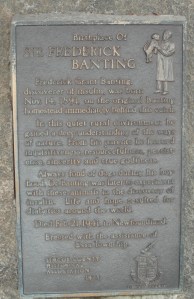
The last 30 years have seen amazing developments in the care of T1D, but the most momentous event actually happened 65 years before my own diagnosis. Before 1921, my parents’ worst fears of that night would have been realised as, until the discovery of insulin at the University of Toronto by Banting and Best, SAM_0827those diagnosed with diabetes mellitus had no chance of survival and could only delay death from the illness itself by starving the body instead. Their discovery followed on from the hard work of  other scientists and medics from around the world such as Oskar Minkowski, Joseph von Mehring and Paul Langerhans, for whom the cells in the pancreas were named, and I doubt that any can deny the life-changing impact that the discovery of insulin has had on those of us living with T1D.

My first decade with T1D was heavily influenced by the incredible mind of my consultant, Professor B, who was compassionate, understanding and impressively forward-thinking in his approach to my care. One great example of his progressiveness is reflected by the DAFNE (Dose Adjustment For Normal Eating) approach to T1D management, which teaches PWD** to “…match their insulin dose to their chosen food intake on a meal by meal basis…“, and which was introduced to mainstream diabetes care in 1998 as a somewhat revolutionary new step. I somewhat nonchalantly shrugged my shoulders at the announcement as I’d been following that regime for around 10 years before it was accepted as being effective by the rest of the diabetes world, all thanks to Professor B and his focus on helping to improve my teen struggles with T1D.

IMG_0139[1]

My collection of Novopens!

Likewise, within 2 or 3 years of diagnosis, my “futuristic” disposable syringes and bottles of insulin, which had replaced the glass syringes and metal hypodermic needles of the 1950s that needed constant sterilising and re-sharpening, had themselves been replaced with one of the first models of the Novopen. This was the first insulin pen injector of its type and combined syringe, needle and insulin bottle in one unit. I worked my way through several upgrades of the Novopen and these days use a combination of a pre-filled disposable pen injector and the last pen injector that I had, a green Novopen 3, which still works in impeccable fashion nearly 20 years on from when I was first given it. Two decades on and I’m so excited to have embarked on another adventure, this time with the relatively new innovation in diabetes care, the Freestyle Libre system for blood glucose monitoring. Whilst I’m not at the forefront of PWDs trialling its use, I have offered to collect data concerning my usage for a research student looking to compare blood glucose monitoring behaviour following the use of the Freestyle Libre, a study that I would hope would encourage some NHS funding for these short-lived sensors which really could revolutionise T1D for many.

To put the last 30 years into context, I worked out some quick statistics of what 3 decades living with T1D has meant for me:

  • An average of 3-4 BGLs measured a day, sometimes a lot more and sometimes considerably less, adds up to around 43,838 blood sugar tests…
  • …and assuming equal use, though the truth is anything but, each of my fingers has been pricked nearly 4,500 times.
  • There’s been in the region of 41,636 injections to keep me healthy…
  • …most of which have in my thighs, bum and upper arms…
  • …although, after 25 years of steadfast refusal to consider anywhere else, I now inject almost exclusively in my stomach and have the bruises to prove it!
  • I’ve been involved in several research projects since almost day 1, including one which resulted in the longer-acting insulin I now use on a daily basis…
  • …and more medical students, visiting foreign doctors and interested consultants than I care to remember…
  • …and the involvement of both G and M in current research to investigate a possible genetic marker for T1D.
  • One amazingly fantastic juvenile T1D consultant, considered to be one of the top men in the diabetes world, around the world
  • …and another who I remember joining my team as a junior doctor at our local hospital and who is now a Professor in this field in that same hospital…
  • ..as well as the care of another unrivalled T1D consultant during both my pregnancies to ensure the safe arrival of my babies and my continued health too.
  • And there have been the inevitable times in hospital, particularly during my emotion-ridden years and fortunately only 1 major complication resulting from my teenage rebellion stage.

A cure may not yet be in sight, but with the amazing developments of the last 100 years, who knows what the next 30 years will bring?jdrf-ndam


*T1D – Type 1 Diabetes                                                                                                                      **PWD – People With Diabetes