
I’ve long been aware that when it comes to understanding M, it really pays to understand how he interprets and sees the world. As for so many who live with chronic illness, M’s life is coloured by his EGID and multiple food allergies, and his view of “normal” is understandably skewed by his daily experiences.  The sad reality is that M has been living with the symptoms of EC for so long that he doesn’t always realise when something he’s feeling isn’t usual and we have often discovered a symptom months, or even years after it first started to happen. These problems are frequently something we could have helped resolve sooner and it is never clear just how long M has been coping with it on his own.
My first experience of this was when M had his second set of scopes done 2 years ago. The nurse had started him on Klean-prep via a NG-tube and told M to tell her if he started to have reflux whilst it was pumping into him. Reflux was something we hadn’t struggled with since he was a baby and so he didn’t know what she meant. My explanation that he might feel nauseous or have some sickness come up into his mouth was met by a puzzled look, “…but Mummy, I get sick in my mouth all the time, why do I need to tell her if that happens?” He was genuinely perplexed by this request and I was made suddenly aware that there was an awful lot more going on with him than we really knew about.
Strangely, during our latest GOSH admission, that issue with reflux once again raised its ugly head and yet again, M more or less accepted it as being back in his life without complaint. When we first learned about the reflux, we worked hard to uncover when it was happening most and started him on a daily medicine to help treat the symptoms. We quickly found that it appeared to be triggered when he ate potatoes and raisins and by cutting those from his diet as well as the new medication, the reflux fortunately seemed to ease. The day after we started the potato food challenge in hospital, M complained that he was struggling with some reflux and explained in extremely graphic details to nurses, dietician and registrar what he felt. Whilst they made note of this problem, disappointingly they didn’t do anything to ease the discomfort he was in and delivered that line of “…he just needs to push through this…” that I quickly came to hate. Their dismissive attitude shown so clearly in front of M and obviously picked up on by him despite the illusion of him being absorbed by the TV whilst plugged into his headphones, meant that he stopped mentioning it and the medics assumed that it was a one-off event only.
 It wasn’t until they needed to start adding senna to the klean-prep to clear his system that we learned that M had not been 100% open about what was going on. The conversation had turned to whether he would willingly take the senna by mouth or if it was best pushed down his tube, when M casually commented that it didn’t really matter as he would end up tasting it either way. A little gentle prodding by his nurse soon revealed that the reflux had in fact been ongoing since the food challenges began and during that middle week of our stay, he had been experiencing the vile taste of the bowel prep in his mouth on a very regular basis.
This story for me explains why it is so important for the medical teams to understand that every child is an individual and have very different levels of what they can accept and cope with, particularly when it comes to gastro conditions. In M’s case, this means that knowing how to phrase questions and interpret his answers is key to learning more about how he feels, especially when it comes to his coping strategies. For a number of years, Mike and I have repeatedly told our consultant that we firmly believe M lives with a level of pain that he has come to accept as his “normal”. When you see M running around with his friends or experience the whirlwind force of his personality, this can be difficult to believe and the fact that, between my reluctance to allow either child to stay home from school unless they’re dying and M’s determination to be in the midst of everything as much as possible, he has remarkably good school attendance for a child with a chronic illness, is in stark contrast to the picture we’ve tried to paint.
It’s at times like these that the words used with M, and by M, can reveal the most. At one of the many meetings I had with his consultant during our admission, she and I had talked about what the future holds for M. She told me that we might just have to accept that he would need to live with a level of pain that others might consider unacceptable, so that he has a more varied diet to choose from and my words that he already lived with enough pain seemed to fall on deaf ears. It was only when M met with the lovely GOSH gastro psychologist half-way through our stay that he was finally able to talk about how he feels each and every day.  She quickly established that M differentiates between a “pain” and an “ache”, which meant that unless he was asked the right question, M would proffer surprising answers.
Of course, the truth of the matter is, as we have repeatedly said, M has an almost constant ache in his tummy and bowels that he has just accepted as part of his reality. He doesn’t call that “pain” and, perhaps because of my unwillingness to unnecessarily dope him up on Calpol at the drop of hat, he doesn’t expect to have anything more than a hot water bottle or wheat bag to treat that discomfort. M calls that an “ache” and when asked to rate how that feels, he cheerily announced it was usually around a 4, the level where they would start to offer pain relief on ward. So when he was asked by the nursing team if he was suffering any “pain”, his answer was almost always a no except when he was experiencing a severe tummy cramp – his definition of what a “pain” was. The nurses had been struggling to understand how he could be rating his pain at an 8 or 9 at one point, only to say less than 5 minutes later that he had no pain at all before they’d even had time to give him any pain relief. This insight into the workings of M’s mind was invaluable as it meant that finally we all – doctors, parents and M himself – were singing from the same hymn sheet and receiving accurate feedback from M about how he was feeling; and all because we now understood the power in a word.

 believe me he went at it with gusto, even eating 6 roast potatoes at one sitting. Within the first 24 hours he started to show reactions to the potato – severe reflux, tummy aches, a constant need to wee and he started to soil again, something he really struggled with on an emotional level. The ward doctors refused to believe he could be reacting so quickly and their repeated mantra to me soon became “it’ll take 4-6 weeks for him to show a reaction” and “he just needs to push through this“. As each food was introduced, things got worse and worse as he was now completely incontinent, a position we hadn’t found ourselves in for a year. All the signs of his bowel starting to shut down were there as he was weeing for Britain, his appetite was dropping off and his energy levels started to wane and I kept saying that these indicated he was failing the foods, only to be told that it wasn’t possible. They were palpating his tummy twice a day and insistent it felt fine and every conversation ended with “it’ll take 4-6 weeks..yada yada yada…” – by now you get the picture! By day 8, they finally agreed to x-ray and, lo and behold, he was chronically impacted. This x-ray was apparently one of the clearest they’ve ever seen showing it – solid black throughout his colon due to the blockage.
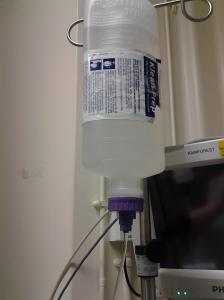 became 6 days of powerful bowel prep continuously via M’s NG-tube plus additional senna for the last 3 of those as things simply weren’t shifting as hoped. I have honestly never seen him so ill as he was by the end of that week – bent double from the cramps, crying, refusing to move from bed or engage with anyone, lethargic and rating his pain at an 11 or 12. Throughout this time he was expected to continue all 4 foods, just in case his obvious bowel reactions were actually nothing to do with the challenges and they had introduced a daily dose of senna to keep things moving, something we hadn’t needed at all during the 12-months being tube-fed.
 M’s consultant was very determined to get the NG-tube out and at times it felt to us that it was her sole focus for the duration of the admission, which was difficult to cope with when we were needing and hoping for so much more. Achieving that has been amazing, but he hasn’t suddenly started eating a “normal” diet, in fact he’s exactly where he was before we went in, and the need for the elemental feed (E028) is still very much there. The flip-side of losing the tube is that M’s
 those “virtual” friends from on-line support groups, who during the length of our admission were also admitted to GOSH. The ability to finally put faces to names, with a reasonably comprehensive background knowledge already in place and be able to spend time chatting, laughing, drinking tea and commiserating was priceless.
 Our first treat was the chance to see the final dress rehearsal of Tchaikovsky’s “Nutcracker” danced by The Royal Ballet at the Royal Opera House, Covent Garden. It came as a complete surprise on that first Monday morning and was one that M and I just couldn’t turn down. Last year, M had been given tickets to see “
 Since this time last year, the school has introduced a family session on a Friday morning, which allowed parents or carers to join their child in the schoolroom for an hour to enjoy an activity together. M and I spent the first week working with
  After one particularly long day on ward and a much-needed break from it all, I wandered back to the hospital to be greeted by the sound of carol-singing from outside the main entrance. I had been missing my weekly choir sessions at home and stopped to listen to the strains of carols that filled the air. This group had come from nearby church, St George’s Holborn to spread a little festive cheer and
  offer mince pies to anxious parents, extended families and harried medical staff as they rushed through the doors of the hospital. As I chatted to some of the members, I was invited to their Carols by Candlelight service on the evening of G’s birthday and was delighted to be able to attend, although sadly M wasn’t allowed to come with me. The service was beautiful – lit by candlelight, with smiling, welcoming faces all around me and filled with a peace that I really needed that evening. I sang every carol, grateful to be able to take part in this simple act of worship that proved to be invaluable therapy to me and which brought healing to my troubled heart.
 read at it, but the necessity of Klean prep made it impossible for him to attend. However, the one activity I put my foot down about and insisted he do was the chance to once again do some cookery with one of London’s head chefs. M loved every minute of that session and came out proudly bearing a box full of goodies from chocolate cupcakes to gingerbread angels and even 2 items he could safely eat – spun sugar and an apple swan!
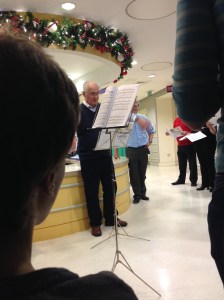 I later discovered that this group was from
  ody respond when food is eaten; a daunting prospect when you have another child to love and nurture at home as well as a job to hold down.
 working hard to bring him back to a healthy position ready for the new school term. We weren’t happy about this situation, but felt there was really no alternative; we had to give their plan a try in order to find some answers.


![IMG_0063[1]](https://i0.wp.com/7yearstodiagnosis.com/wp-content/uploads/2015/12/img_00631-e1449935678682.jpg?w=257&h=240&ssl=1 "IMG_0063[1]")


![IMG_0063[1]](https://7yearstodiagnosis.com/wp-content/uploads/2015/12/img_006311-e1449935827944.jpg?w=300&h=255) making some special cupcakes to celebrate your 12th birthday tomorrow, cakes to make up for you having to celebrate your last birthday at GOSH with M and without a cake. The ingredients are bought and hiding at the back of the cupboard, so maybe I’ll have the chance to bake them for you for Christmas because instead I’m over 100 miles and 3 hours travel time away from you.
making some special cupcakes to celebrate your 12th birthday tomorrow, cakes to make up for you having to celebrate your last birthday at GOSH with M and without a cake. The ingredients are bought and hiding at the back of the cupboard, so maybe I’ll have the chance to bake them for you for Christmas because instead I’m over 100 miles and 3 hours travel time away from you. instead we’ll be watching via FaceTime to see what goodies you’ve received with our fingers crossed that our cards have arrived from London in time.
 déjà vu (noun)
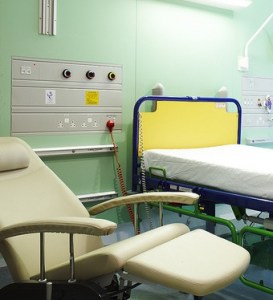 I started contacting those who needed to know – school, work, his GOSH dietician – and somehow managed to put in another couple of hours at work before heading off to pick M up from school and finish the packing job. The 4 of us eventually set off from home and hit London perfectly in time for the tail-end of rush hour traffic, meaning we finally reached our destination at around 8.30pm.
 12 NG-tubes and the accompanying tube changes, which included…
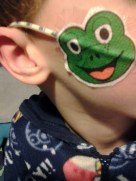 4 pump backpacks worn out and replaced (and number 5 will be needed soon);
 Nearly 1 whole school year achieved with only a few days off;



 the tube is tight enough, taped enough, in the right place enough…and not getting caught on anything
 It took a little longer for him to become confident on his scooter, but his determination to succeed on a 2-wheel one, rather than the 3-wheel “easier” option, paid off and earlier this year he saved up enough money to buy himself the new one he’d been eyeing up in the Argos catalogue since last Christmas.
 When M had his NG-tube placed at the start of this year, he was initially a little more cautious about all things even vaguely adventurous and after a couple of failed attempts on his bike, it was relegated to a dusty corner of the garage to gather cobwebs.
 school for a few bumpy trips around the garden. We always knew that his premature arrival in the world with the dyspraxia added on top would mean he might take a little longer to master certain skills, but that he would get there in the end; and we were proved right that his refusal to be beaten by anything would eventually lead to an even sweeter success when we least expected it.
 7 years to diagnosis