
In a world that is frighteningly open as people regularly share their location, activities and even the contents of their lunch box via social media, there is still a huge reluctance to linger on anything that hints at emotional instability or mental distress; but the sad truth is that matters of mental health are a huge part of living with a chronic illness and not just for the individual concerned. Today is World Mental Health Day, a day that is seeking to raise awareness of mental health conditions in an open and honest way, to encourage individuals to understand more about how these problems can affect just about anyone at one time or another in their lives and how others can support them. There is a tendency to make light of the language used when referring to mental health issues, after all, how many times have we heard someone say that they’re feeling depressed about having to go back to work after a holiday or the break-up of a particular pop group , when what they really mean is that such events have saddened or upset them rather than the total immobilisation that comes when you struggle with depression on a daily basis. I am not devaluing the emotions they may be experiencing when those things happen, but are they really akin to the overwhelming nature of depression? I think not.
I don’t speak lightly as I have been dealing with the constant presence of recurring depression since my teenage years. I know what that “black dog” is like and just how much it can impact on your ability to function on a day-to-day basis in the real world. As a teenager living with T1D, I struggled with accepting that this was a reality that was never going to change for me, that the need for regular injections, sensible eating and facing the risk of serious complications was never going to disappear. I didn’t handle it well. Though few of my peers may have realised it at the time, I refused to do what I needed to do to maintain my health, not because I wanted to cause myself problems, but because I couldn’t see a way to live like my friends and not feel isolated by my T1D diagnosis. I know that I was not alone in my reaction to my chronic illness and my family and I owe a great deal to my fantastic consultant who worked hard to help minimise what often felt like insurmountable differences as I went through those troubled years. With time and support,  I did eventually come to terms with my diagnosis, though sadly my determination to get my T1D control back on an even keel brought with it an unexpected complication with my eyes, which in turn has led to even more serious implications than I could ever have imagined when I was 13 and feeling very much on my own in a battle against the rest of the outside world.
Move forward a few years and I found myself back in the mental health fight when I was diagnosed with post-natal depression following the difficult pregnancy and early arrival of M. This time I was more open to receiving help and my diagnosis, when it came, proved a huge relief as I didn’t have to actively speak out and ask for that support. Having struggled with counselling as a sole answer to my depression as a teenager, I readily accepted the suggestion from my GP that I be prescribed with low-level anti-depressants for the first few months and am not ashamed to say that those helped me through some very dark times indeed. Anti-depressants are not for everyone, just as much as counselling hasn’t always proved to be a success for me. There should be no stigma attached to needing that medicine to survive the battering of a mental health problem. It is a necessity for some, just as insulin keeps me alive or a feeding tube and elemental feed proved to be what M needed to help him regain better health.
I have learned over the years to identify when I start to feel a little low and my ability to cope with the everyday becomes more of a strain. Mike and my Mum have developed their own sixth sense to pick up when I am beginning to struggle and offer me their unfailing support as I try to find my way back out of the pit. Our 7 year journey to get an initial diagnosis for M and the ongoing challenges in keeping him fit and well have taken their toll and there have been times when tempers are frayed and relationships fractured because of it.  That strong support network of family and friends who are constantly surrounding me is invaluable and the knowledge of what is really important – M and G – keeps me getting out from under the duvet every morning and making my way through each day.
Even more importantly, my own experiences with chronic illness mean that I am well-tuned to the impact that his own diagnosis will have on M. It is a frightening reality to face that your own child might end up fighting the same demons that you did at that age, but it also gives me an insight that lends a level of trust and understanding between M and me that is unlike the relationship he has with anyone else. I can fully empathise when life seems unfair and unjust and he can allow his emotions to pour out because he believes that I get it. We have long been arguing for psychological support for M and finally, thanks to a developing shared care relationship with our local hospital, that seems to be being put in place. Our new gastro consultant has fully acknowledged that the EGID diagnosis will have not only shaped the person M has become, but also had an effect on G and on our family dynamics. He wants to adopt a holistic approach to treating M and the next few weeks will tell if that is a solution that will make a significant difference going forward. I know that recognising the signs of mental stress now are really important when it comes to M’s ongoing mental health, especially as there can be no denying that he already struggles with mood swings, anxiety and feelings of isolation, not just due to his EGID, but also because of his dyslexia and dyspraxia. Early recognition of those symptoms will help us and the medical professionals find a way to put into place coping mechanisms that will serve him, not just now, but into his adulthood too. He already has a good cohort of friends surrounding and looking for him, but they are young, only 10 years old. Just as with any other child as they grow up, he will learn to distinguish those who will stand by him through thick and thin and those who are just there for the fun times. Most importantly to me, 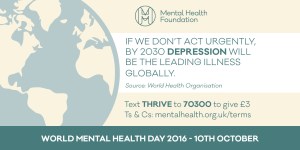 is that he doesn’t feel ashamed or embarrassed by the times when he’s not able to cope emotionally, or mentally, or even physically with the pressures that his diagnoses will have on his life, and that he learns to openly acknowledge them; and that he realises that he’s not on his own in that regard.
Likewise, we can’t ignore the reality that having a chronically ill sibling has a massive impact on G and her mental health too. The Young Carers meetings that she has attended over the last few months have covered the areas of anxiety, facing fears and anger management, which are all inextricably tied up with the role of being a young person caring for another. Those sessions have taught her strategies for dealing with her yo-yoing emotions and provide an outlet for them in a safe and understanding environment. She has made stress balls and relaxation jars to bring home and use as she needs. I hope that the proposed psychology appointments at our local will not only look to support M, but also to help G in her own right as well as us as a family. These are all things you don’t want to even consider that your children might ever need to deal with, but there is no escaping the reality of chronic illness and mental health, and we need to accept our responsibility to help them both. That is the key message of today’s World Mental Health Day – that we all have a role to play in supporting those around us as best we possibly can.
![IMG_0957[1]](https://7yearstodiagnosis.com/wp-content/uploads/2016/08/img_09571.jpg?w=225&h=300) With a list as long as our arm to work our way through, we narrowed down our choices to the top few that appealed the most to us all and set off to see just how much ground we could cover in our 3 full days in the city.
With a list as long as our arm to work our way through, we narrowed down our choices to the top few that appealed the most to us all and set off to see just how much ground we could cover in our 3 full days in the city.![IMG_0914[1]](https://7yearstodiagnosis.com/wp-content/uploads/2016/08/img_09141.jpg?w=225&h=300) Both children enjoyed exploring the different levels of the Tower, honing their photography skills amongst the cannons in the artillery as well as in the dungeons and of the stunning panoramic views of the River Tagus from the top. The tower is climbed via a steep spiral staircase and a series of sequenced traffic lights indicated when it was time to climb up, down, or pause for breath in one of the rooms off the main staircase.
Both children enjoyed exploring the different levels of the Tower, honing their photography skills amongst the cannons in the artillery as well as in the dungeons and of the stunning panoramic views of the River Tagus from the top. The tower is climbed via a steep spiral staircase and a series of sequenced traffic lights indicated when it was time to climb up, down, or pause for breath in one of the rooms off the main staircase.![IMG_1041[1]](https://7yearstodiagnosis.com/wp-content/uploads/2016/08/img_10411-e1472421562148.jpg?w=281&h=300)
 he same is true when it comes to feeding tubes as sadly misconceptions are rife and the reasons behind a tube can be as complex and individual as there are stars in the sky. Even with children or adults living with the exact same condition, their symptoms and need for additional nutrition can be vastly different.
 When you are tube-fed, I think it’s only natural to expect the support of your nearest and dearest, especially in the case of the tube-fed child. In a recent interview about her MS diagnosis, actress
  Young Carers groups try to meet on a regular basis to give the youngsters a much-needed break from the day-to-day, the opportunity to meet other young carers who will truly understand the pressures and strains they are under and the chance to have fun and be a child. Depending on the location, and sadly on the funding available, these organisations may offer evening clubs, weekends away, days out and even holidays as well as friendly advice, information and counselling to both the young carer and their family. In our area, there is also a school worker who runs lunchtime clubs at some of the local secondary schools, hold awareness assemblies and will act as an advocate for the child if needed.
 She and a close friend in a not-too-dissimilar position have since met with this teacher a couple of times and have been given more information about our local young carers group as well as a list of useful contact names and numbers.
 “…to celebrate and recognise the unspoken and often forgotten support that siblings provide to loved ones suffering.” This is just one person’s small step to make a difference to these unfailing supporters, but with the help of projects like The Forgotten Ones and Young Carers, we can all help support our sick children and their unsung heroes.
 going to make me feel better and I was very worried that I would be teased at school about it.
 Last summer, my classmates decided to wear a 2.5kg backpack for the morning so that they could understand exactly what I go through each day. The whole class did it as well as our teacher and the other teaching assistants.
 In addition to virtually every practising dietician in the UK, it is mailed directly to all senior gastroenterologists, all nutrition nurse specialists and all nutrition pharmacists, as well as lecturers, industry professionals, consultant dieticians and students.
For day 3 of
In addition to virtually every practising dietician in the UK, it is mailed directly to all senior gastroenterologists, all nutrition nurse specialists and all nutrition pharmacists, as well as lecturers, industry professionals, consultant dieticians and students.
For day 3 of  We weren’t provided with any information about enteral feeding beforehand from the health professionals involved in M’s care and I found most of our information came from online support groups, such as PINNT and
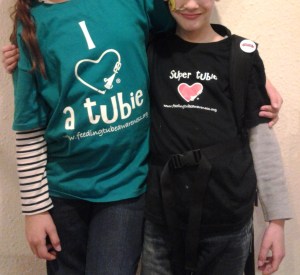 We’ve encouraged her to get involved as much as possible and as much as she wants, and she is now very capable of helping with his feeding pump. She’s recently started horse-riding, which is something M doesn’t do and gives me some time to spend just with her. As for our holidays, in the past we often went abroad, but didn’t feel confident enough to try it this first year with his tube. Instead we went to Cornwall this summer, with our car packed full of all the necessary medical equipment and enjoyed an amazing week away. We’re now feeling much more able to cope and are hoping to go to Portugal next summer.
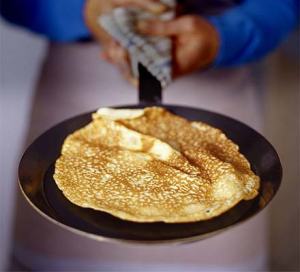 *I can’t let today’s post pass without a nodding acknowledgement that it is, in fact, Shrove Tuesday; the day when many of us enjoy a pancake or two before the start of Lent. I can’t even remember whether we managed to eat pancakes last year as M had only just started to trial foods after his 8 weeks on E028, but there’s a sneaking recollection that maybe my Mum cooked some for G, whilst the rest of us ignored the day to the best of our ability. I’m excited that this year I will once again be able to cook pancakes for the whole family and, just in case you need an allergy-friendly recipe to cook for your loved one, I’ve got the perfect one
 He loves to run around and be on the go and into everything all of the time. I mean it. M just doesn’t stop, ever. He’s always given 110% to whatever activity he’s doing, even if it meant trying to finish a swimming lesson white as a ghost and with a temperature of 39.5°, or running the magic mile on the first day back at school after a week off vomiting and barely able to move from his bed or the sofa. Whilst you might often find G curled up in a chair or on her bed reading a favourite book, the only time you’re likely to find M doing the same is at 11pm when he’s waiting for me to come to bed before settling down himself, and even then you’re just as likely to find him playing his cello, or perfecting his dance routine, or building with his Lego.
 If anyone was going to describe the last decade of my life, the one indisputable conclusion they’d end up reaching is that it’s been anything but boring. Thanks to a pair of children who have thrown more than their fair share of life challenges into the mix, we’ve weathered more storms than I ever believed possible and, for the most-part, we’ve come out the other side still smiling and relatively unscathed. We’ve survived a lot of challenges, met a whole host of amazing people and learned a great deal along the way; and if I had to pick just one lesson that constantly resonates, I’d have to say that we now know to never take things for granted as they can change at the drop of the proverbial hat. Two years ago I
  We all felt the benefits of that visibility to start with and I no longer felt the underlying pressure to defend the true extent of M’s illness and food allergies whilst my outwardly healthy-looking youngster was intent on tearing around practically making a mockery of every problem and pain we said he was suffering.
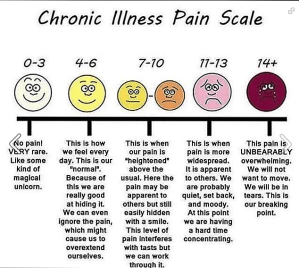 G’s godmother shared this pain scale image with me and I love the wording that is attached to it as it sums up to a tee how M has described his levels of pain over the years. From the magical unicorn of no pain at all which happens occasionally, to the breaking point of inconsolable sobbing and unbearable pain that little can ease, I’ve seen M pass through every stage of this chart on all too regular a basis. I doubt the colours, images or facial expressions would appeal overly to him, but it helps to clearly explain how he copes to those who need to know.
 A fellow
  This third one I discovered through Twitter and was posted up by @2tubies, whose 6-year old son helped make his own pain chart for the school environment with the help of the school SENCo and his Mum. They used Lego figurines to depict how he might be feeling and offered some easy solutions for his symptoms. This solution-based approach is one that I find works well with M and have started using it more and more over the years. I rarely give M the option of staying home from school when he’s feeling unwell, but will instead list out those solutions I think might ease not only his pain, but also the whirlwind of emotions that is so frequently tied into what he’s feeling on a physical level. Whilst he was still being tube-fed, I would always start with the offer to slow down or even stop his pump for a limited amount of time and then followed that up with pain relief or a hot water bottle. My final question has always been what M thinks will help him the most and given he has a clear idea of what I’m suggesting, then we have always been able to find a solution that works for us both. Whilst giving these choices verbally works well at home, I imagine that presenting them in a pictorial fashion would make great sense in the school setting.
 At G’s secondary school, they have included traffic light coloured pages in the back of the pupils’ planners and the children are encouraged to use them by putting the relevant colour facing up on the desk if they need some help during a lesson, but are too worried or nervous to ask. For some children, a “traffic lights” approach using counters or cards can also be effectively used to indicate how they are feeling in any given situation, where red can indicate their sense of losing control or not coping with the environment surrounding them. The opportunity to be tactile with the counters may also help children with sensory issues order their thoughts and be more able to express them when asked. Even if the child is not able to share what’s troubling them, a clear plan of how the teacher or adult in charge should respond to each colour will change that child’s perceptions and experiences away from home. Similarly, M’s school uses a “Fist to 5” approach to their work, where fist indicates a lack of understanding and the need for some help, and 5 means they are confident and happy to carry on on their own.

 7 years to diagnosis