Back in November, I offered my help to PINNT to write an article for a nutritional magazine on the subject of being a parent to a tube-fed child. I wanted to share our experiences of the last 12 months and, upon reading the questions asked, I felt it was a real opportunity to reach out and teach the medical professionals who work with families like ours. The potential impact of this article is huge as the magazine has a UK readership of over 13,000 health professionals and is the only nutrition magazine that reaches across the nutrition profession.
 In addition to virtually every practising dietician in the UK, it is mailed directly to all senior gastroenterologists, all nutrition nurse specialists and all nutrition pharmacists, as well as lecturers, industry professionals, consultant dieticians and students.
For day 3 of Feeding Tube Awareness week, I thought I’d include the transcript of my article here:
In addition to virtually every practising dietician in the UK, it is mailed directly to all senior gastroenterologists, all nutrition nurse specialists and all nutrition pharmacists, as well as lecturers, industry professionals, consultant dieticians and students.
For day 3 of Feeding Tube Awareness week, I thought I’d include the transcript of my article here:
When did you first learn that your child would need to be nutritionally supported by enteral nutrition?
After four years of increasing food exclusions and a raft of daily medicines, M was still massively symptomatic from his EC and the decision was taken in November 2014 to move him to an elemental feed. His NG tube was passed in early December.
Reflecting back to this stage in your life, what thoughts and emotions were going through your head?
The possibility of a move to enteral feeding had been on my radar for over a year and I had become increasingly certain that it was the best way to try to ease the ongoing symptoms and pain that he was experiencing. The heartbreak of holding my sobbing child at 3am, with tears streaming down my own face, as I struggled to find the words to bring him the comfort that nothing else could bring at that moment in time, had left me willing to try anything to ease his pain.
It took Mike longer to come to terms with the prospect of feeding M via a tube, but by the time we agreed with his consultant that we needed to give it a go, we both felt that it was the chance to give M and his body some much-needed relief. The short-term plans we’d been following for the past three years had been all well and good, but we now needed a longer-term care plan put into place as we just couldn’t keep limping from one appointment to the next with different problems constantly cropping up and nothing really being resolved. The consultant warned us that the enteral nutrition might not be the answer we were looking for, but we were desperate enough to still want to try it and stubborn enough to believe it would be what M needed.
At the time of your child commencing on enteral nutrition, what support and information where you provided with from health professionals, and did you feel this support and information was enough?
 We weren’t provided with any information about enteral feeding beforehand from the health professionals involved in M’s care and I found most of our information came from online support groups, such as PINNT and FABED. Disappointingly, we then had very limited support from the hospital as the dietician and consultant were both keen to get him discharged as soon as possible and ignored my concerns that we had no local support from our home hospital. Fortunately the nursing staff helped me fight his corner and made sure that both Mike and I were relatively confident in how to manage his tube and work his feeding pump before we went home. M was discharged just 10 days before Christmas and I was really concerned that we would have difficulties accessing any support over the festive period – it was thanks to the wonderful support group parents, the hospital nursing team (who gave me their direct phone number on the ward) and our community nurse that we not only survived, but managed to enjoy Christmas as a family in our own home.
Since being on enteral nutrition what type of long-term care and support has your child received from hospital/community health professional team?
We have a somewhat complex 3-tiered support system in place:
- The overall plans for his enteral feeding and the slow re-introductions of food into his diet are managed by his consultant and dietician at Great Ormond Street. I speak to his dietician every 3 weeks to review what’s going on and tweak his care; and we see them both every 3-4 months.
- His tube changes are done every 6-8 weeks at the CIU (Clinical Investigations Unit) at our local hospital, who have listened to his needs and help make the appointments run as smoothly as possible with the involvement of play therapists to help distract him.

- Our community nurse has helped provide training as needed and is regularly in touch to help and advise as we need.
It may be a somewhat “clunky” approach, but nearly one year on, it’s close to a well-oiled machine and works for us.
How has having a child being fed via enteral nutrition affected your family unit as a whole (thinking about siblings, time in hospital, holidays, etc.)?
Having a child with a chronic illness affects family dynamics and adding enteral feeding to the mix just meant a few additional, albeit significant tweaks for us. The regular hospital appointments do interrupt our daily routine, so I work hard to make sure that life is as stable and as “normal” as possible the rest of the time. M obviously has to take time off school for his appointments, so I try to make sure that he doesn’t miss more than is necessary. I do worry that G gets side-lined at times as our focus so often has to be on M and managing his feeding needs. 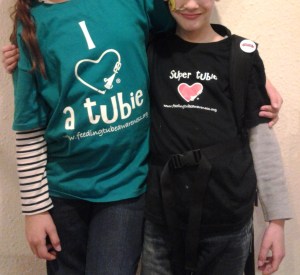 We’ve encouraged her to get involved as much as possible and as much as she wants, and she is now very capable of helping with his feeding pump. She’s recently started horse-riding, which is something M doesn’t do and gives me some time to spend just with her. As for our holidays, in the past we often went abroad, but didn’t feel confident enough to try it this first year with his tube. Instead we went to Cornwall this summer, with our car packed full of all the necessary medical equipment and enjoyed an amazing week away. We’re now feeling much more able to cope and are hoping to go to Portugal next summer.
When thinking about nursery/schooling, have you come up against any barriers or obstacles (if applicable)?
The impact of M’s ever-changing health has been particularly profound over the last couple of years and there is no doubt in my mind that the unfailing support of their school has been a steadying force not just for G and M, but for the family as a whole. They were willing to have M in school as normal within days of coming home from hospital and 5 members of staff were trained on the intricacies of his tube and feeds so that he could take part in every planned activity with confidence. The positive attitude of the teaching and support staff has also rubbed off on the children and his classmates have been brilliant at accepting his tube at face value and now don’t even seem to see it.
How and when did you first hear about PINNT?
I first became aware of PINNT through the EGID support group, FABED, and other parents of children receiving enteral nutrition, who all recommended PINNT as a great source of support. I then had an invitation to our local PINNT group’s next meeting.
How has PINNT supported you?
Whilst we were waiting for M to be started on enteral nutrition, I researched and read as much as I could about elemental feeding and NG tubes – most of that information was on the PINNT website and explained it in a really accessible way. I love getting the newsletters and reading about people on all forms of enteral feeding. Similarly Mike has found huge reassurance in learning that there are people out there who have not only lived on enteral feeding for years, but have thrived on it and that moving M to it could be a positive step. It helps knowing that we’re not on our own and that there is always somewhere to get advice and support from those living on enteral nutrition whenever we need it.
If there was one piece of advice you could provide other parents with, who have a child commencing on enteral nutrition, what would this be?
When you first hear that your child needs to start on enteral nutrition, it’s almost inevitable that you will feel a great sense of failure and a huge fear about what the months ahead will bring. It’s so important to remember that enteral feeding doesn’t mean you failed your child, but that their health needs mean they need that extra boost to get them through each day. After nearly a year on his NG-tube, M has become the fun-loving, caring and somewhat cheeky little boy we all knew was hiding somewhere inside him. Feeding him via his tube has become second nature to us and it hasn’t stopped him, or the family, doing anything we’ve wanted to. The best news is that we’ve just enjoyed the most “normal” year of our lives ever.
If there was one recommendation that you could make to health professionals, involved in the care of patients on enteral nutrition, in order to improve patient care, what would this be?
I wrote this impassioned plea to medical professionals in my blog earlier this year and feel it encapsulates what I want to say to all healthcare providers:
For most of us, you are our firefighters and the people we are forced to depend on in our darkest moments. We need you to be strong, focussed and the experts that we are not, BUT we also need you to be gentle, compassionate and understand that you are holding the future of our most precious possessions in your hands. Don’t dismiss our concerns, but believe that we know our children best and have an insight or opinion that is just as valid as your professional one. Don’t belittle our emotions, but be empathetic when they overcome us and when we need a shoulder to cry on more than anything else in that moment. Be honest, but in the kindest way, knowing that your words have the power to break us when we least expect it. Most of all, understand that we are constantly living in fear about our children’s health and life and future, so they don’t have to.
 *I can’t let today’s post pass without a nodding acknowledgement that it is, in fact, Shrove Tuesday; the day when many of us enjoy a pancake or two before the start of Lent. I can’t even remember whether we managed to eat pancakes last year as M had only just started to trial foods after his 8 weeks on E028, but there’s a sneaking recollection that maybe my Mum cooked some for G, whilst the rest of us ignored the day to the best of our ability. I’m excited that this year I will once again be able to cook pancakes for the whole family and, just in case you need an allergy-friendly recipe to cook for your loved one, I’ve got the perfect one here. Enjoy!


 especially if they would recommend them to others or, indeed, warn other food allergy sufferers against going there. Needless to say, as soon as I first heard about CIET?, I contacted Nicky to find out how I could become involved with her new venture and am proud to be one of the allergy ambassadors and partners delighted to be working with CIET? as much as I can. It really is a 5-star website and I wish them every success for the future.
 When you are tube-fed, I think it’s only natural to expect the support of your nearest and dearest, especially in the case of the tube-fed child. In a recent interview about her MS diagnosis, actress
  Young Carers groups try to meet on a regular basis to give the youngsters a much-needed break from the day-to-day, the opportunity to meet other young carers who will truly understand the pressures and strains they are under and the chance to have fun and be a child. Depending on the location, and sadly on the funding available, these organisations may offer evening clubs, weekends away, days out and even holidays as well as friendly advice, information and counselling to both the young carer and their family. In our area, there is also a school worker who runs lunchtime clubs at some of the local secondary schools, hold awareness assemblies and will act as an advocate for the child if needed.
 She and a close friend in a not-too-dissimilar position have since met with this teacher a couple of times and have been given more information about our local young carers group as well as a list of useful contact names and numbers.
 “…to celebrate and recognise the unspoken and often forgotten support that siblings provide to loved ones suffering.” This is just one person’s small step to make a difference to these unfailing supporters, but with the help of projects like The Forgotten Ones and Young Carers, we can all help support our sick children and their unsung heroes.
 going to make me feel better and I was very worried that I would be teased at school about it.
 Last summer, my classmates decided to wear a 2.5kg backpack for the morning so that they could understand exactly what I go through each day. The whole class did it as well as our teacher and the other teaching assistants.
 He loves to run around and be on the go and into everything all of the time. I mean it. M just doesn’t stop, ever. He’s always given 110% to whatever activity he’s doing, even if it meant trying to finish a swimming lesson white as a ghost and with a temperature of 39.5°, or running the magic mile on the first day back at school after a week off vomiting and barely able to move from his bed or the sofa. Whilst you might often find G curled up in a chair or on her bed reading a favourite book, the only time you’re likely to find M doing the same is at 11pm when he’s waiting for me to come to bed before settling down himself, and even then you’re just as likely to find him playing his cello, or perfecting his dance routine, or building with his Lego.
 If anyone was going to describe the last decade of my life, the one indisputable conclusion they’d end up reaching is that it’s been anything but boring. Thanks to a pair of children who have thrown more than their fair share of life challenges into the mix, we’ve weathered more storms than I ever believed possible and, for the most-part, we’ve come out the other side still smiling and relatively unscathed. We’ve survived a lot of challenges, met a whole host of amazing people and learned a great deal along the way; and if I had to pick just one lesson that constantly resonates, I’d have to say that we now know to never take things for granted as they can change at the drop of the proverbial hat. Two years ago I
  We all felt the benefits of that visibility to start with and I no longer felt the underlying pressure to defend the true extent of M’s illness and food allergies whilst my outwardly healthy-looking youngster was intent on tearing around practically making a mockery of every problem and pain we said he was suffering.
 For those of you who are not in the know, the #FFFA are the brainchild of Michelle Berriedale-Johnson and were launched in 2008 to celebrate excellence and encourage innovation within the free from food industry. Each year a group of judges from across the allergy and free from community are invited to taste a variety of new free from products and rate them on quality, usefulness, innovation and nutritional value. The foods are all tasted “blind” in the first instance, with names and packaging removed so that the products really are assessed on their own individual merits. Then follows an active discussion as each individual judge is asked to help reach a group consensus on the category winner and which other products deserve to be shortlisted, commended or given a highly commended award. Given the judges have a variety of backgrounds from free from food professionals to health professionals and from allergy sufferers to allergy bloggers as well as the occasional “normal” person to compare each item to their non-allergy counterpart, you really do get a rounded point of view about what makes the highest quality free from product. Believe me when I say that any manufacturer who wins a category is producing something that has impressed across the board.
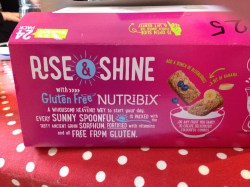 Breakfast:
  Confectionery:
 ![IMG_0094[1]](https://7yearstodiagnosis.com/wp-content/uploads/2016/02/img_00941.jpg?w=225&h=300) I’m so excited for it to hit our shelves in the next couple of months and can’t wait for G to try it. My other choice is something I know G won’t want to try, but it ticked so many boxes for me as it was tasty, free from and could be prepared in the microwave in less than 5 minutes, truly the quintessential ready meal.
I’m so excited for it to hit our shelves in the next couple of months and can’t wait for G to try it. My other choice is something I know G won’t want to try, but it ticked so many boxes for me as it was tasty, free from and could be prepared in the microwave in less than 5 minutes, truly the quintessential ready meal.  The teatime category was again filled with a delicious array of biscuits and cakes, but there was one product that for me stood head and shoulders above the rest: the amazing
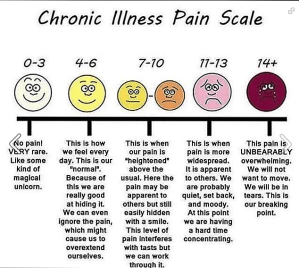 G’s godmother shared this pain scale image with me and I love the wording that is attached to it as it sums up to a tee how M has described his levels of pain over the years. From the magical unicorn of no pain at all which happens occasionally, to the breaking point of inconsolable sobbing and unbearable pain that little can ease, I’ve seen M pass through every stage of this chart on all too regular a basis. I doubt the colours, images or facial expressions would appeal overly to him, but it helps to clearly explain how he copes to those who need to know.
 A fellow
  This third one I discovered through Twitter and was posted up by @2tubies, whose 6-year old son helped make his own pain chart for the school environment with the help of the school SENCo and his Mum. They used Lego figurines to depict how he might be feeling and offered some easy solutions for his symptoms. This solution-based approach is one that I find works well with M and have started using it more and more over the years. I rarely give M the option of staying home from school when he’s feeling unwell, but will instead list out those solutions I think might ease not only his pain, but also the whirlwind of emotions that is so frequently tied into what he’s feeling on a physical level. Whilst he was still being tube-fed, I would always start with the offer to slow down or even stop his pump for a limited amount of time and then followed that up with pain relief or a hot water bottle. My final question has always been what M thinks will help him the most and given he has a clear idea of what I’m suggesting, then we have always been able to find a solution that works for us both. Whilst giving these choices verbally works well at home, I imagine that presenting them in a pictorial fashion would make great sense in the school setting.
 At G’s secondary school, they have included traffic light coloured pages in the back of the pupils’ planners and the children are encouraged to use them by putting the relevant colour facing up on the desk if they need some help during a lesson, but are too worried or nervous to ask. For some children, a “traffic lights” approach using counters or cards can also be effectively used to indicate how they are feeling in any given situation, where red can indicate their sense of losing control or not coping with the environment surrounding them. The opportunity to be tactile with the counters may also help children with sensory issues order their thoughts and be more able to express them when asked. Even if the child is not able to share what’s troubling them, a clear plan of how the teacher or adult in charge should respond to each colour will change that child’s perceptions and experiences away from home. Similarly, M’s school uses a “Fist to 5” approach to their work, where fist indicates a lack of understanding and the need for some help, and 5 means they are confident and happy to carry on on their own.
 The sad reality is that M has been living with the symptoms of EC for so long that he doesn’t always realise when something he’s feeling isn’t usual and we have often discovered a symptom months, or even years after it first started to happen. These problems are frequently something we could have helped resolve sooner and it is never clear just how long M has been coping with it on his own.
 It wasn’t until they needed to start adding senna to the klean-prep to clear his system that we learned that M had not been 100% open about what was going on. The conversation had turned to whether he would willingly take the senna by mouth or if it was best pushed down his tube, when M casually commented that it didn’t really matter as he would end up tasting it either way. A little gentle prodding by his nurse soon revealed that the reflux had in fact been ongoing since the food challenges began and during that middle week of our stay, he had been experiencing the vile taste of the bowel prep in his mouth on a very regular basis.
 She quickly established that M differentiates between a “pain” and an “ache”, which meant that unless he was asked the right question, M would proffer surprising answers.
 7 years to diagnosis