
For the last 6 days Mike has taken to calling me the “bionic woman”. Needless to say, I have not recently had a skydiving accident which has led to bionic modifications to my broken body resulting in amplified hearing, a right arm with the strength of 10 men and the ability to run at speeds over 60mph; in fact, there has been no incident of note and my 1 broken body part, my pancreas, remains well and truly broken. Rather there has been a conscious decision on my part to finally fully embrace a relatively new technological development that I hope will make a significant difference to my diabetes care.
I first became aware of this new bit of kit through M’s school friend, F and his fantastic parents, L and I. I can’t remember quite how we got onto the subject, but I’m reasonably certain that it had something to do with school Sports Day, the challenge of T1D vs. the active child and watching L check his blood sugars simply by waving a black box over his arm. To be fair, M had been wittering on telling me for quite some while about the “white, circular sensor-thingy” attached to F’s arm that enabled him to test his blood glucose levels (BGLs), but the lack of clarity in his description combined with my own lack of relevant knowledge meant that I had absolutely no idea what M was talking about and had dismissed the subject without really giving it a second thought. However, my interest was piqued through that chance encounter on the school field and it led to the opportunity for an enlightening conversation about what this thing was.
The Freestyle Libre (FSL) is marketed as a “flash glucose monitoring system” with a tagline of:

and I was intrigued enough by this to want to find out more and discover whether this might be for me, or not. I read their website, researched on-line for users’ reviews, joined the FB forum for FSL users and wondered if it was too good to be true. I’ll be honest, when I first looked into whether it would be a benefit to me and my T1D care, I loved how easy it appeared to be and, having spoken at length to L and I on more than 1 occasion, could see just how revolutionary it could be, especially for children with T1D.![IMG_0131[1]](https://7yearstodiagnosis.com/wp-content/uploads/2016/02/img_01311-e1455811200839.jpg?w=175&h=202) But, and believe me when I say it was quite a big “but”, the sticking point sadly was the price. This type of technology is not available to anyone through the NHS as yet and funding the sensors alone would cost in the region of £100 a month. I know that you cannot put a price on good health, but as a Mum to 2 children with multiple food allergies and an already increased monthly bill due to the high costs of free from food, the challenge of finding that extra £100 each month (£125 extra earned pre-tax) felt quite daunting and I shelved any thoughts of such an investment for the time being.
But, and believe me when I say it was quite a big “but”, the sticking point sadly was the price. This type of technology is not available to anyone through the NHS as yet and funding the sensors alone would cost in the region of £100 a month. I know that you cannot put a price on good health, but as a Mum to 2 children with multiple food allergies and an already increased monthly bill due to the high costs of free from food, the challenge of finding that extra £100 each month (£125 extra earned pre-tax) felt quite daunting and I shelved any thoughts of such an investment for the time being.
However, even though the price was making me think twice, I was reluctant to dismiss the option out-of-hand and, given the lengthy UK waiting list, decided to add my name and wait to see what happened in the meantime. The daily events of life with M and G quickly overtook everything else and the FSL soon dropped far down my list of priorities, though it was never far from my thoughts. I’m not exaggerating when I say months passed, but at long last, in January 2016, I saw the message I’d been waiting for: the news that monitors and sensors were once again readily available in the UK and I decided to bite the bullet and order a starter pack to finally see if the FSL’s claims were all true.
![IMG_0135[1]](https://7yearstodiagnosis.com/wp-content/uploads/2016/02/img_01351-e1455809989998.jpg?w=175&h=221) The concept is a simple one and reassuringly easy to use. You insert a small sensor with a thin, 5mm needle into the back of your arm and, although the initial instructions for applying it appear quite complex, it really was quick and easy to do. I didn’t find it painful at all and whilst it takes some time to get used to the constant presence of this sensor on my arm, I’ve had no problems with it. The sensor measures what is called the interstitial fluid glucose levels, which are not identical to BGLs as this is the fluid found between the cells, but are considered accurate enough for monitoring what is going on. To find out your BGL, you simply wave the scanner over your arm and it gives you the result almost instantaneously.
The concept is a simple one and reassuringly easy to use. You insert a small sensor with a thin, 5mm needle into the back of your arm and, although the initial instructions for applying it appear quite complex, it really was quick and easy to do. I didn’t find it painful at all and whilst it takes some time to get used to the constant presence of this sensor on my arm, I’ve had no problems with it. The sensor measures what is called the interstitial fluid glucose levels, which are not identical to BGLs as this is the fluid found between the cells, but are considered accurate enough for monitoring what is going on. To find out your BGL, you simply wave the scanner over your arm and it gives you the result almost instantaneously. ![IMG_0129[1]](https://7yearstodiagnosis.com/wp-content/uploads/2016/02/img_01291.jpg?w=175&h=233) The sensor continually reads the changes in the glucose levels and, as long as you scan at least once every 8 hours, the easy-to-read graphs given on the screen indicate what has happened during the times you didn’t test. As with most CGM systems (Continuous Glucose Monitoring), it is recommended that the FSL user occasionally uses a standard glucose monitor to test their blood sugars and check that reading to the one given by the FSL – my tests have shown a difference of less than 0.3 mmol, which is incredible.
The sensor continually reads the changes in the glucose levels and, as long as you scan at least once every 8 hours, the easy-to-read graphs given on the screen indicate what has happened during the times you didn’t test. As with most CGM systems (Continuous Glucose Monitoring), it is recommended that the FSL user occasionally uses a standard glucose monitor to test their blood sugars and check that reading to the one given by the FSL – my tests have shown a difference of less than 0.3 mmol, which is incredible.
I can’t begin to tell you how impressed I am with this small device. It really was easy to understand how to use it and the whole family – Mike, G, M and even my Mum – have taken their turn in testing my BGLs for me. Everyday I sit with the scanner amongst the rest of my accountancy paraphernalia in front of me on my desk ![IMG_0128[1]](https://7yearstodiagnosis.com/wp-content/uploads/2016/02/img_01281-e1455811252823.jpg?w=175&h=246) and am able to discreetly test whenever I want or feel the need. The amount of information available is vast and you can look at enough graphs, bar charts and log books to satisfy even the biggest techno-geek. It has become strangely addictive to do and has already started to give me an even greater understanding of what my T1D is doing than I’ve ever had before. The non-invasive nature of the testing means that it would be easy for a parent to do during the night with no fear of disturbing their child’s sleep, and similarly for Mike to do if he ever feels that my blood sugars are dropping overnight – no need to wake me to ask me if I’m going hypo and then having to survive the often stroppy response his concerns are rewarded with, whether they are or not – yes I am precious about my sleep! I also have no doubt that it would appeal to every tech-savvy under-18 out there, which would no doubt reduce the chances of non-compliance and teen rebellion that so many young T1Ds experience,
and am able to discreetly test whenever I want or feel the need. The amount of information available is vast and you can look at enough graphs, bar charts and log books to satisfy even the biggest techno-geek. It has become strangely addictive to do and has already started to give me an even greater understanding of what my T1D is doing than I’ve ever had before. The non-invasive nature of the testing means that it would be easy for a parent to do during the night with no fear of disturbing their child’s sleep, and similarly for Mike to do if he ever feels that my blood sugars are dropping overnight – no need to wake me to ask me if I’m going hypo and then having to survive the often stroppy response his concerns are rewarded with, whether they are or not – yes I am precious about my sleep! I also have no doubt that it would appeal to every tech-savvy under-18 out there, which would no doubt reduce the chances of non-compliance and teen rebellion that so many young T1Ds experience,![IMG_0130[1]](https://7yearstodiagnosis.com/wp-content/uploads/2016/02/img_01301-e1455811224240.jpg?w=175&h=179) thereby similarly reducing the risk of complications from poor control. I really can’t speak highly enough of my experience so far with the Freestyle Libre and wouldn’t hesitate to recommend it to every T1D out there. It has been a struggle to find a down-side other than the price, which is due to the £50 sensors needing to be replaced every 14 days. My personal solution to that is to fund 1 sensor a month for the time being, or at least until the point I finally win that elusive lottery jackpot!
thereby similarly reducing the risk of complications from poor control. I really can’t speak highly enough of my experience so far with the Freestyle Libre and wouldn’t hesitate to recommend it to every T1D out there. It has been a struggle to find a down-side other than the price, which is due to the £50 sensors needing to be replaced every 14 days. My personal solution to that is to fund 1 sensor a month for the time being, or at least until the point I finally win that elusive lottery jackpot!


 especially if they would recommend them to others or, indeed, warn other food allergy sufferers against going there. Needless to say, as soon as I first heard about CIET?, I contacted Nicky to find out how I could become involved with her new venture and am proud to be one of the allergy ambassadors and partners delighted to be working with CIET? as much as I can. It really is a 5-star website and I wish them every success for the future.
 he same is true when it comes to feeding tubes as sadly misconceptions are rife and the reasons behind a tube can be as complex and individual as there are stars in the sky. Even with children or adults living with the exact same condition, their symptoms and need for additional nutrition can be vastly different.
 When you are tube-fed, I think it’s only natural to expect the support of your nearest and dearest, especially in the case of the tube-fed child. In a recent interview about her MS diagnosis, actress
  Young Carers groups try to meet on a regular basis to give the youngsters a much-needed break from the day-to-day, the opportunity to meet other young carers who will truly understand the pressures and strains they are under and the chance to have fun and be a child. Depending on the location, and sadly on the funding available, these organisations may offer evening clubs, weekends away, days out and even holidays as well as friendly advice, information and counselling to both the young carer and their family. In our area, there is also a school worker who runs lunchtime clubs at some of the local secondary schools, hold awareness assemblies and will act as an advocate for the child if needed.
 She and a close friend in a not-too-dissimilar position have since met with this teacher a couple of times and have been given more information about our local young carers group as well as a list of useful contact names and numbers.
 “…to celebrate and recognise the unspoken and often forgotten support that siblings provide to loved ones suffering.” This is just one person’s small step to make a difference to these unfailing supporters, but with the help of projects like The Forgotten Ones and Young Carers, we can all help support our sick children and their unsung heroes.
 going to make me feel better and I was very worried that I would be teased at school about it.
 Last summer, my classmates decided to wear a 2.5kg backpack for the morning so that they could understand exactly what I go through each day. The whole class did it as well as our teacher and the other teaching assistants.
 In addition to virtually every practising dietician in the UK, it is mailed directly to all senior gastroenterologists, all nutrition nurse specialists and all nutrition pharmacists, as well as lecturers, industry professionals, consultant dieticians and students.
For day 3 of
In addition to virtually every practising dietician in the UK, it is mailed directly to all senior gastroenterologists, all nutrition nurse specialists and all nutrition pharmacists, as well as lecturers, industry professionals, consultant dieticians and students.
For day 3 of  We weren’t provided with any information about enteral feeding beforehand from the health professionals involved in M’s care and I found most of our information came from online support groups, such as PINNT and
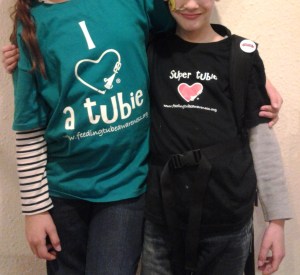 We’ve encouraged her to get involved as much as possible and as much as she wants, and she is now very capable of helping with his feeding pump. She’s recently started horse-riding, which is something M doesn’t do and gives me some time to spend just with her. As for our holidays, in the past we often went abroad, but didn’t feel confident enough to try it this first year with his tube. Instead we went to Cornwall this summer, with our car packed full of all the necessary medical equipment and enjoyed an amazing week away. We’re now feeling much more able to cope and are hoping to go to Portugal next summer.
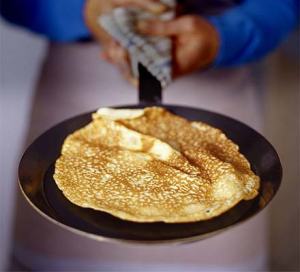 *I can’t let today’s post pass without a nodding acknowledgement that it is, in fact, Shrove Tuesday; the day when many of us enjoy a pancake or two before the start of Lent. I can’t even remember whether we managed to eat pancakes last year as M had only just started to trial foods after his 8 weeks on E028, but there’s a sneaking recollection that maybe my Mum cooked some for G, whilst the rest of us ignored the day to the best of our ability. I’m excited that this year I will once again be able to cook pancakes for the whole family and, just in case you need an allergy-friendly recipe to cook for your loved one, I’ve got the perfect one
 He loves to run around and be on the go and into everything all of the time. I mean it. M just doesn’t stop, ever. He’s always given 110% to whatever activity he’s doing, even if it meant trying to finish a swimming lesson white as a ghost and with a temperature of 39.5°, or running the magic mile on the first day back at school after a week off vomiting and barely able to move from his bed or the sofa. Whilst you might often find G curled up in a chair or on her bed reading a favourite book, the only time you’re likely to find M doing the same is at 11pm when he’s waiting for me to come to bed before settling down himself, and even then you’re just as likely to find him playing his cello, or perfecting his dance routine, or building with his Lego.
 If anyone was going to describe the last decade of my life, the one indisputable conclusion they’d end up reaching is that it’s been anything but boring. Thanks to a pair of children who have thrown more than their fair share of life challenges into the mix, we’ve weathered more storms than I ever believed possible and, for the most-part, we’ve come out the other side still smiling and relatively unscathed. We’ve survived a lot of challenges, met a whole host of amazing people and learned a great deal along the way; and if I had to pick just one lesson that constantly resonates, I’d have to say that we now know to never take things for granted as they can change at the drop of the proverbial hat. Two years ago I
  We all felt the benefits of that visibility to start with and I no longer felt the underlying pressure to defend the true extent of M’s illness and food allergies whilst my outwardly healthy-looking youngster was intent on tearing around practically making a mockery of every problem and pain we said he was suffering.
 For those of you who are not in the know, the #FFFA are the brainchild of Michelle Berriedale-Johnson and were launched in 2008 to celebrate excellence and encourage innovation within the free from food industry. Each year a group of judges from across the allergy and free from community are invited to taste a variety of new free from products and rate them on quality, usefulness, innovation and nutritional value. The foods are all tasted “blind” in the first instance, with names and packaging removed so that the products really are assessed on their own individual merits. Then follows an active discussion as each individual judge is asked to help reach a group consensus on the category winner and which other products deserve to be shortlisted, commended or given a highly commended award. Given the judges have a variety of backgrounds from free from food professionals to health professionals and from allergy sufferers to allergy bloggers as well as the occasional “normal” person to compare each item to their non-allergy counterpart, you really do get a rounded point of view about what makes the highest quality free from product. Believe me when I say that any manufacturer who wins a category is producing something that has impressed across the board.
 Breakfast:
  Confectionery:
 ![IMG_0094[1]](https://7yearstodiagnosis.com/wp-content/uploads/2016/02/img_00941.jpg?w=225&h=300) I’m so excited for it to hit our shelves in the next couple of months and can’t wait for G to try it. My other choice is something I know G won’t want to try, but it ticked so many boxes for me as it was tasty, free from and could be prepared in the microwave in less than 5 minutes, truly the quintessential ready meal.
I’m so excited for it to hit our shelves in the next couple of months and can’t wait for G to try it. My other choice is something I know G won’t want to try, but it ticked so many boxes for me as it was tasty, free from and could be prepared in the microwave in less than 5 minutes, truly the quintessential ready meal.  The teatime category was again filled with a delicious array of biscuits and cakes, but there was one product that for me stood head and shoulders above the rest: the amazing
 7 years to diagnosis