
May 22: U is for Unite
Over the years, our primary focus for “unite” has been on spending the week, or a part thereof, “Eating like M“. Mike and I are embracing it fully again this year, much to M’s delight, but I have to wonder whether following his restricted diet for 7 days really does enough to show him that we’re standing in unity alongside him. 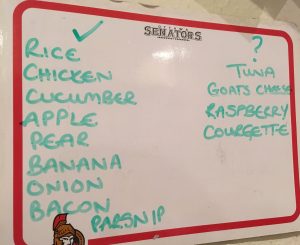 A natural consequence of our choice is that those we work and spend time with during this week will inevitably ask questions, which obviously gives us both a great opportunity to talk about EGID and start to educate the uninitiated, but I keep returning to the question of whether M truly feels a benefit from us standing shoulder to shoulder with him for such a short time.
Of course, the truth is that, for us, every day living with EGID, even though we are not living with the diagnosis and reality of it ourselves, is a day spent supporting M through what has been some of the toughest times he’s had to face in his 12 years. We have lived through and survived the most difficult challenges, but we are still not really living in unison with him. My 30+ years of living with my own chronic illness, Type 1 diabetes, means that I do perhaps have more of an idea of the experiences and angst that he faces each day than others and I know that that truth has brought M some comfort in his darkest moments. I can’t make EGID disappear, or allow him to eat completely normally once again – or, at least, not without some pretty catastrophic reactions that would take their toll and require a huge amount of time to recover from – but I can offer a level of understanding and empathy to him, along with an ever-ready cuddle, kiss and encouraging words from Mum, which may or may not be gratefully received depending on the occasion.
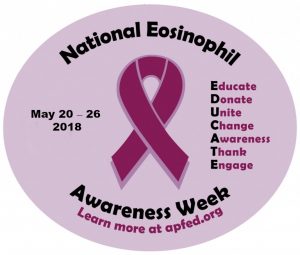
 This week, social media, and Facebook in particular, is swamped with the CURED banner for NEAW, which promotes worldwide unity in the EGID community, with all of those living with EGID holding hands and pulling together to seek a cure. It is an image that has resonated with me, especially given the ongoing tumultuous relationship between EGID and the medical profession here in the UK. Despite M’s objections to the word CURED (which actually stands for the Campaign Urging Research for Eosinophilic Disease) because, as he rightly points out, “…there isn’t a cure yet for EGID and this makes it seem as if there is…“, he too is a fan of the sense of inclusion rather than isolation that is reflected in the words. The realisation that EGID affects others just like him across the world is sinking in and we all find some comfort in the truth that other countries are investing in the area of gastro research, which includes seeking a deeper understanding about EGID and how it works.
Whether its eating like M this week, or sharing the same meals with him at different times throughout the year; supporting M when life isn’t going as smoothly as it could, or cheering him on when he’s talking EGID to those around him; or actively helping both him and G when they’re fundraising for the charities that have worked tirelessly to support them over the years, all of it is standing in unison with M during NEAW and for the rest of the year. Because unity is not just for a day or a week or even a year, but it’s for a lifetime and it’s a commitment I’m willing to make to the EGID community, not just to him.
The question is, are you?
 I hate to say no to people and always end up feeling very disingenuous as well as guilty when I come up with a reason why I don’t want to set up a regular donation on the spot.
 that effort is priceless. At the moment, we seem to be a state of status quo with M’s health which is fantastic, but there is also a sense of overwhelming ennui when it comes to our ongoing relationship with our local hospital and M’s gastro consultant. Taking the time to talk to me about life apart from M’s EGID makes a big difference and should never be seen as inconsequential. We teach M constantly that there is so much more to life than his illness and it’s important that we hold on to that truth and don’t get bogged down in the mundane.
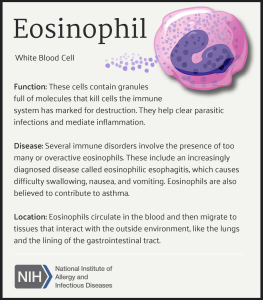 In the 5 years since that hospital appointment, we have found ourselves continually having to educate those around us, including the medics, who know little to nothing about what is becoming an increasingly controversial diagnosis, especially when it affects the lower GI tract as M’s does.
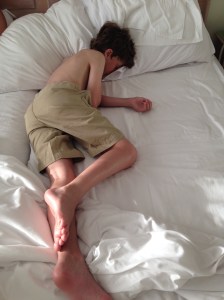 But that’s the face he presents to the outside world and reflects the attitude to his health that Mike and I have worked hard to engender within him.
 Over the last few years since we received M’s diagnosis of an Eosinophilic Gastro-Intestinal Disorder (
 iCafe
iCafe![IMG_2165[1]](https://i0.wp.com/7yearstodiagnosis.com/wp-content/uploads/2018/05/img_21651.jpg?w=232&h=309&ssl=1 "IMG_2165[1]")
![IMG_2186[1]](https://i0.wp.com/7yearstodiagnosis.com/wp-content/uploads/2018/05/img_21861-e1526247919174.jpg?w=385&h=309&ssl=1 "IMG_2186[1]")
 Hard Rock Cafe
 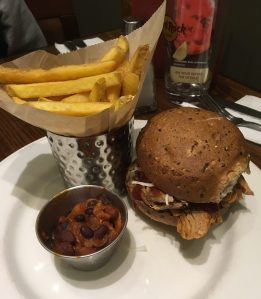 Glaswegian Hard Rock Cafe and G decided to try something a little bit different by ordering the GF pulled pork sandwich with chips for her main course. M agreed to compromise on what he really wanted and played it safer as he had already had the GF bread earlier in the day, finally opting for a plain GF burger accompanied by a chicken breast, bacon and cucumber sticks.

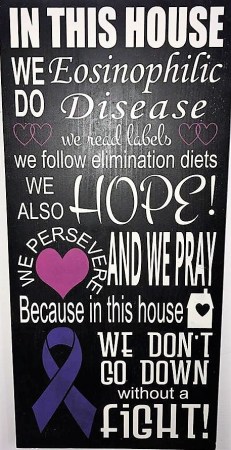 challenged M’s consultants and spent time talking to the Chief Exec to try and make sense of it all and improve the way that, not just M, but other children have been treated whilst they’re there.
 You might have noticed that my blog has been quiet for a few weeks and, in time, I will explain a little more about the need…my need… for an extended silence as life has happened around us. However, we’re home after some family time away from home over the Easter holidays and I’m back with a vengeance with just so many reviews, recipes and photos to share from the last month or so.
 they have definitely taken a step back and are in the background in an advisory capacity only should we want or need to call on them.
 Food-wise, we’re now tentatively up to around the 9 or 10 food mark, having introduced onion, bacon and bananas on a regular basis and allowing the occasional other food creep in when circumstances call for it and we can be reasonably confident we can manage the outcome. These 3 foods have really added to my repertoire of recipes and make cooking so much more interesting and flavourful for M. Holidays continue to be the time when we really stretch our boundaries and whilst there are always consequences to live with – some of which are easier than others – our approach has led to a much happier M.
 Both children are doing well at school with glowing “short” reports and parents’ evenings for them. G has selected her GCSE options with relatively little fuss or argument or discussion and we’re heading with a little trepidation into the wonderful world of humanities combined with dance. She recently took and passed her Grade 3 clarinet exam, a day I wasn’t sure we’d ever see and is also teaching herself to play the keyboard, guitar and ukulele in any spare moments she finds at home. G and M also recently took part in a regional Stagecoach performance celebrating 30 years of Stagecoach and loved every moment of it. It was great to watch them from the wings (I was back in chaperone role once more) as they danced and sang with enthusiasm on stage. As you can see, it’s been a busy few weeks and there’s just so much to share that I’m not entirely certain where I’ll begin!
 known to be in existence and 80% of these have been identified as having genetic origins. Astonishingly, approximately 5 new rare diseases are described in medical literature every week.
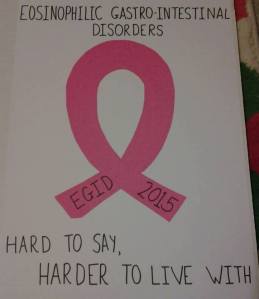 Imagine being told that your child has a chronic illness that neither you, nor most of the medical professionals you’ll end up meeting from that point on, can pronounce – or have even heard of until that moment. Imagine finding out that that illness is rare: that around 1 in 10,000 people are diagnosed with the most common form, but that your child has one of the rarest forms and that there is little research into it. Imagine learning that even the medical community struggles to reach a consensus about this rare disease and whether it really exists or is simply part of a much bigger picture – and having to live with the reality of this rare disease and its effects on your family’s life on a daily basis.


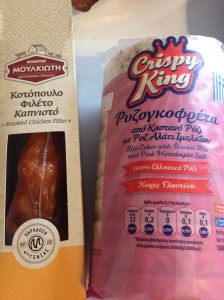


 This tiny treasure trove also stocked a small, but comprehensive selection of gluten-free products including rice cakes for M, gluten-free pasta, bread and biscuits. We bought a couple of different flavours of the allergy-friendly biscuits that quickly became a favourite with G. These were a welcome treat and alternative to dessert for her especially when accompanied by some small slivers of Feta, whilst M enjoyed the opportunity to pick and devour fresh figs from the trees surrounding our villa at the
  7 years to diagnosis