Tag Archives: community

A Survival Guide For School & Allergies

The end of August always seems to be something of a surprise in our household. We arrive home from our holiday feeling relaxed and calm and then almost immediately face a madcap race to reach the finish line of shoes bought, uniform named, PE kits found and bags packed before school starts. In years past I have also had to make sure provisions are packed, discussions had and medical notes updated for M, but, for the first time ever, this year I wasn’t trying to squeeze in a critical meeting alongside my own new start with a new job. img_11331I know that next year when M moves up to our local secondary school it will be a very different picture, but after 3 years of working with the teaching community at our junior school, and with no major changes to contend with, M was able to start in Year 6 without this over-anxious Mum hovering in the background.
Without a doubt we have been incredibly lucky with the amazing support given by the fantastic teaching staff at our local school, but we have also had more than our fair share of bad experiences and teachers who don’t care in the past and I can well remember the anxieties and hours of meticulous planning that heralded the start of every new school year. The novelty of not having to head into the classroom before the end of M’s first week back has still not worn off and I’m certain that it’s thanks to the hard work that’s been put in on all sides to formulate strategies that meet M’s needs and to develop a strong working relationship between home and school that is reliant on open communication that flows both ways.

Over the last few weeks, there’s be a lot of chatter in the online allergy community about the fears that surround the milestone of starting school and, with over 8 years of “parenting-a-school-child-with-allergies” experience under my belt, I’ve been asked what tips I would give to any parent facing this situation for the first time. In all honesty, M’s first few years at school were difficult and certainly not the positive experience we would have liked. We had to deal with a SENCo, who trivialised his allergies because they “…wouldn’t have to call 999 if he ate something he shouldn’t…” and refused to recognise how important it was to communicate his allergies and health issues to any member of staff dealing with him and not just his class teacher, which led to numerous occasions of him being offered food he couldn’t eat. His teachers lost their focus in teaching him because they felt he already had a lot to cope with with his regular appointments at GOSH and his education suffered as speech impediments, dyslexia and dyspraxia were missed by those who worked with him on a day-to-day basis.

Fast-forward to the start of Year 3 and all our negative experiences became a thing of the past. The year actually began at the end of Year 2, when I met with the Head, SENCo and class teacher of his new school to discuss all of M’s health and educational needs and worked with them to put practical solutions into place before the term started. They understood the value of seeing him as more than just his EGID and food allergies, circle-timebut also knew that his health problems were a big part of his everyday life and couldn’t be ignored. At the end of his first week there, M’s teacher held a circle time in class where she shared about M’s ill-health and restricted diet with his classmates. It was done in such a nurturing and non-confrontational manner that by the end of the session M was willing to answer any question that his new friends had about what they had been told himself and has being doing so ever since.
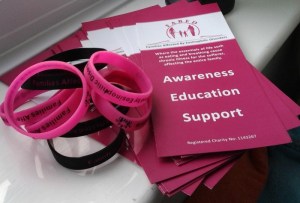
fabed1The information sheets that I had provided were given to the teachers and, combined with the notes they had taken whilst talking with me, used to draw up a healthcare plan for M that covered all possible situations. His on-going bowel control problems were sensitively handled and a contingency plan put in place to ensure that he always has access to a toilet wherever he is in the school. The HCP was written by the school SENCo and then sent home for my review before being published, shared with the whole teaching team and displayed prominently in the staff-room. Even better, every year since then I have been asked to review and amend his HCP to reflect any medical changes that have happened and the school continue to be sympathetic to his needs.
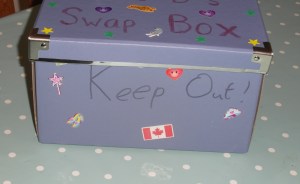
SAM_1175As for his swap box, it has proved to be an invaluable tool in the classroom setting and is something that is really easy to implement. The idea behind the swap box is a simple one – it contains a selection of safe items, be they edible or non-edible, that can be swapped for those unexpected treats that sometimes come into the classroom to celebrate birthdays or other special events. When M’s swap box came into being, it was filled with a mix of Haribo sweets and the odd Lego minifigure and the choice was his as to what he chose to take. Since going elemental 2 years ago, the box now contains Lego, trading cards and other fun small toys and ensures that M never feels that he is missing out when his friends celebrate. What’s more, his teachers have taken inspiration from it for their own purchases of small gifts at Christmas or the end of term and given him something he can enjoy.

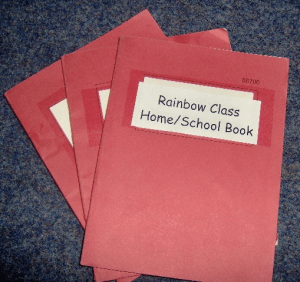
I think the biggest secret to our great experience with our Junior school is communication. The lines of communication are always open and actively work in both directions between home and school through meetings, phone calls, e-mails and the home/school book. The willingness of so many of the school staff to learn to support M to the best of their ability has created a level of trust unlike any other and means that I am ea544311f5697d6334b2df7079ccedf9happy to leave M in their more than capable hands on a daily basis. It is a testament to their dedication to their work that, in the last 3 years, the only things that have caused an extended absence from school have been the annual hospital admissions at GOSH. They have always endeavoured to make sure that M is safe whilst at school and the fact that he was able to attend as normal with both his NG feeding tube and his broken leg is incredible. A truly remarkable relationship has grown over the years between our family and so many of the teachers and is something I really value.
They have also nurtured and encouraged M to talk about his allergies and EGID and have shown continued support as he has become an advocate for educating others about his illness. M has held cake sales, run playground games and created short films explaining the impact his diagnosis has on his life. He has developed a confidence in talking to others and 18 months ago was able to answer the questions asked by members of home-school-connectionevery class in the school. When he left his Infants school, he was a child reluctant to talk about his food allergies or hospital appointments because he was scared of being isolated and bullied because of how different he was to everyone else. These days he has an incredibly strong friendship group who look out for him during school hours and think about him when he’s had to be in hospital, and he never thinks twice to share what’s going on with his friends.

If I had to sum it up, I guess I would say this:

Be open, be honest, be available. Keep communicating and tell them how they can make it better if you need to. Do what you can to help them out and don’t forget to say thank you when they get it right.

Recognising Allergy Heroes

MzQ1QzM3M0E4MzFCNjM4QjYzMUY6YWUxNzkyMGNiZWRkMjJhNGIyYWI2YTNlNDZiNGJjODM6Ojo6OjA=Whilst we’ve been settling back into life at home after our amazing Italian break, it hasn’t escaped my notice that in the last couple of weeks there have been 2 sets of awards launched – both relating to allergies and both looking at vastly different aspects of the allergy world. One is celebrating people who support allergy-sufferers, be it in a professional capacity or a more supporting role at home, and the other looking for restaurants who go that extra mile to make meals out an option when living with food allergies. The one thing they’ve got in common is that they’re both looking to give recognition to those individuals and organisations whose tireless work makes a difference to those living with allergies and to celebrate their efforts. To make sure I focus equally on both awards as they are both incredibly important in my opinion, today’s post will look at just one set of awards and the other I’ll discuss in my next blog post.
Allergy UK Hero Awardshero-awards-(logo)_cropped_200_165 – this year marks 25 years since Allergy UK came into being as a national charity that is now thought to support around 21 million allergy sufferers across the UK. Not only do they provide a comprehensive support network including a dedicated help line and on-line forum, but they also endeavour to educate those health professionals who work with patients living with allergic conditions. To help celebrate this anniversary in style, Allergy UK has asked for nominations for their Hero Awards, which will recognise the efforts of individuals to help, support and encourage friends, family members and any in their local community who are living with allergies.

There are 5 different award categories to choose between and nominations must be made before 1st July 2016:

  • Child Allergy Hero – a child or teenager (up to the age of 18) who has had the courage to help or has saved the life of an allergy sufferer
  • Family/Friend Allergy Hero – a family member or friend (over the age of 18) that has shown courage and commitment to their allergic child/parent/carer/sibling/other
  • Community Allergy Hero – an individual who has gone beyond the call of duty and has helped, improved or saved a life of someone with allergy in their community
  • Healthcare Professional Allergy Hero – a member of the healthcare profession who helps and manages the allergic patient’s condition and who provides on-going care with commitment, compassion and communication
  • Clinical Team Allergy Heroes – a team of clinicians who have shown care, compassion, communication and commitment to help their allergic patients

awardI am delighted to see that the awards are open to just about anyone and not restricted to healthcare professionals. All too often the unsung heroes are the family members and friends who live with allergy sufferers and the ups and downs that life with allergies throws at them on a regular basis. To be able to give much-deserved recognition to these people is fantastic, although it’s good to also have the opportunity to nominate anyone from the medical community who has provided truly exceptional and perhaps personal care. I will be making my own nominations soon and would urge you to do the same if you feel there’s someone out there who has made a real difference to others living with allergies. The allergy world is often surprisingly small and tight-knit, so I’m looking forward to seeing if any familiar faces have been recognised for all that they do for those of us trying to survive the presence of allergies in our everyday lives.

To vote, please click on this link to the Allergy UK website. It’ll only take 10 minutes of your time and could give a real boost to an unsung allergy hero.

NEAW 2016 – All over for another year

With a blog post a day for the last 7 days as well as daily mini fact updates via my FB page, you’d think that I’d be glad that the EGID awareness week has finally drawn to a close. There is, I admit, a certain relief that the busyness of the week is over and I can at long last pause and take a breath, but just as EGID is a constant presence in M’s life, so raising awareness of it will continue to be an important part of our family’s life. A good friend and fellow EGID Mum has asked me to share her reflections of last week, which I am delighted to do as, as she says in her final line, “Knowledge is important this week and every week.”

13246175_10153457684031123_7113882376126390076_o

National Eosinophil Awareness Week 2016,

A time to share personal experiences,

Taking time to tell others what it’s like to live with or care for someone with an Eosinophilic Gastrointestinal Disorder (EGID)

Inviting those who have never heard of EGIDs to find out more,

One way to help raise awareness,

Not for self but for others as we are,

All in this together, the EGID community, so,

Let me tell you a little bit about what it’s like to be the mum of a child with EGID.


Elevated levels of eosinophils in the gastrointestinal tract are often disorder indicators,

Often this will mean that there will be pain and possibly inflammation,

Sometimes this will mean that there is a need to exclude foods; sometimes many, sometimes all,

Ige or non-IgE mediated food allergies may also be present, but not always!

Naso-gastric tubes and elemental nutrition may be the only way to manage symptoms,

Often the only option for many is a feeding tube as the body struggles with food proteins,

Pain, discomfort, nausea, altered bowel habits are just a few of the symptoms,

Hospital visits, hospital stays, invasive tests, medications and restricted diets become a part of life,

Illness can be socially restrictive; days, weeks or months may be lost to ‘flares’,

Life can be difficult for those diagnosed with EGIDs.


Awareness aids understanding of EGIDs,

Watching what you eat, if you are able to eat, is central to managing symptoms,

Avoiding known triggers, being a food detective, scrutinising labels, are also key skills that need to be developed,

Research is important; finding a cure and raising awareness of what it’s like to live with an EGID,

Education is also key to raising awareness and understanding of the impact of EGIDs,

Networks are central to enabling those with EGIDs to feel supported by those who understand

Eating … when food is the issue, is an issue …,

Support from others; a community of people who understand what it’s like when someone is diagnosed with an EGID is so important,

Societal understanding though will help those with EGIDs to engage more with their communities.


We hope for a future where the disorders are better understood, when we don’t have to fight to be heard,

Enabling those with an EGID to share their experiences with others can help this,

Eventually we hope for a cure or better ways to manage the disorders,

Knowledge is important this week and every week; please take a moment to read some of the stories shared by those living with EGIDs.

Reaching out

I am, without a doubt, a firm believer that things happen for a reason and that the lessons I’ve learned, the situations we’ve survived and the successes we’ve fought for and achieved over the last few years have given me an understanding and empathy that nothing else could have done in the same way. I have discovered within myself a strength I didn’t know was lurking, which has seen me through some of the darkest days I’ve ever had to face. My Mum and Aunt love to remind me I come from a line of strong women and these challenges have helped me grow even stronger. The struggles I’ve had to face have enabled me to reach out and bring some comfort and reassurance and offer an ear always ready to listen when others have most needed it. What’s more, not only can I speak from a shared experience and the common bond of parenting a child with a chronic illness, but I want to give support when it’s most needed. you-never-know-how-strong-you-are-until-being-strong-is-the-only-choice-you-haveThat incomparable insight is what almost makes the challenges of M’s health worthwhile, for whilst I would give anything for him not to have to live with a rare illness like EC, it has, without a doubt, given me a compassion and understanding beyond what I would otherwise have known.

When setting up my blog 3 years ago, part of the process was to pen something that would honestly capture who I am and the reasons behind my decision to start it to include in my “About me” page. I won’t deny that this blog has undoubtedly become an inexpensive form of therapy for me, allowing me to explore my innermost thoughts and feelings about the chronic illness that has dominated so much of the last 10 years of our lives as well as sharing our experiences of it; but that wasn’t my raison d’être. What I wanted most was to be able to reach out to others who were facing similar challenges “…if I am able to speak to the heart of even one parent who is going through the same turmoils, then I know the hard work will have been worth it…” In the months since I first wrote down that somewhat ambitious desire, I have received the occasional e-mail telling me that what I’ve written has really resonated with another parent, responses that have meant so much as they acknowledge an achievement of my goal above and beyond what I originally wanted.

Knowing that I have received those messages you could easily assume that I might consider it a job well done and just leave it there, but over the last few weeks I have received more messages of encouragement than I ever anticipated and have found myself in the position of being able to offer support and advice when I least expected it. Those opportunities have drawn on the many facets of my life experiences, from seeking a diagnosis of EC to coping with a new diagnosis of T1D and from facing the daunting reality of tube-feeding to the challenge of switching a child to a gluten-free diet. What is even more amazing is that the people I’ve been talking to have been a mix too: Mums from school, friends met through support groups and those just looking for reassurance from someone who has already walked the path they now find themselves on. I don’t claim to be an expert in any of these things, but I am an expert in my child and our experiences and can offer an insight into how we have coped and the tips I’ve picked up along the way. When we started out on our search for a diagnosis for M, and then again when we made the decision to move to tube-feeding, the information readily available was scant and it took dedicated research and hours of reading, and re-reading, medical journals and the such-like to even begin to understand what we were facing. It was thanks to on-line forums such as FABED and PINNT and their members that we began to truly comprehend the complexities of life with a chronically ill child. social-media-treeMy blog has simply been an effective way to put all of our experiences into one place, hopefully with some useful pointers for others in the same shoes and, by doing that, to create my very own, very personal resource.
What’s even better in my opinion is that my passion to reach out and help others has been adopted by both children too. G has developed an empathy and understanding that extends out from the home into the classroom and wider world, and which has been commented on in recent weeks by her teachers and the volunteers at camp. She shows an amazing amount of tolerance towards the challenging behaviours and differing views of her peers and is always prepared to listen and respect what they have to say, whilst standing her ground with her own opinions. G is also sympathetic to those who are in the same position of having a sibling with a chronic illness and can fully understand the frustrations that the sometimes difficult behaviours of those siblings can cause. Whilst sometimes reluctant to deal with M at home, she never hesitates to offer help to those around her when it’s needed.

In similar fashion, M has developed a compassion that I can only attribute to the reality of a life altered beyond recognition by EC and multiple food allergies. At a recent birthday party, one of his friends was confined to a wheelchair due to an ankle injury and M immediately stepped in to make sure this friend could be as involved as possible, despite the constraints of the wheelchair. He took the time to push his friend around the garden so he could join in the activities and toasted marshmallows on the camp-fire for him, even though he wasn’t able to eat them himself. Likewise, another good friend has just been switched to a gluten-free diet and M has made sure he sits with him during lunchtimes at school to discuss the different foods that C has been trying. The parent of this friend rocked my world nearly 3 years ago by inviting M home for tea and being willing to cook to suit his complicated needs, not just that one time, but numerous times since. It feels rather wonderful to know that my boy is now returning that favour and giving this friend the chance to vent about his new diet.

I don’t know what the next few months will bring and the opportunities to offer support may start to dwindle, but there’s one thing I know for sure, as a family we will all continue to reach out and help out whenever we can.

reach-out

More than a smile

It all started with a simple compliment that was probably given without too much thought, almost a throw-away comment, but the words, planned or not, had a profound effect months ago and still do. I had walked M and G to school after a particularly difficult night with M,  following on from a couple of really tough days and I was tired and emotional as I left the school grounds. Passing their Head at the gates, I gave a small smile, a nod of my head and a quick reply to his question about how M was feeling. His next words stopped me in my tracks and even now continue to resonate in my memory, especially when things are feeling a little more challenging or tiring than normal:

“I just wanted to say that I admire your constant smile and upbeat attitude about everything. Your positivity is reflected in the way both children deal with whatever’s thrown at them in the classroom and in life.”

My garbled response was a variation of my stock answer:

“What else can I do, but smile? If I didn’t I might end up crying, but that won’t help M or G or me; and it won’t change the way things are…” (I shrugged) “…besides, if I don’t smile and get on with things, who else will? That’s my job as Mum.”

That might be true. but I know a lot of people who wouldn’t be able to smile about it. They’d feel hard done by and resentful of the hand they’ve been dealt, their response would be focussed on complaining – that simply isn’t you or the children.”

I don’t know if the exhaustion of a failed food trial and a bad night’s sleep had made me more sensitive to the world around me, but his words had an impact that I felt resonating deep in my soul and gave a lightness to my step that certainly hadn’t been there 10 minutes earlier. All the way home, with unexpected tears in my eyes, 11987081_10153905230214523_3086822525667980358_nI pondered what he had said to me. After all, am I really that unusual in my response? I don’t feel particularly unique in my attitude and, believe me, I can certainly have a moan with the best of them. I suddenly had reason to reflect on how I present our situation to the outside world and why I smile, even at the most difficult of times.

I smile because, despite everything – the difficult pregnancy, the premature birth, the EGID diagnosis and the decision to tube-feed – I have a lot to celebrate. I have 2 amazing, beautiful, cheeky, intelligent children, my children with super powers, who astound me regularly with their unexpected insights into the world and make me smile. Whilst I might not be able to say truthfully that they are both “happy and healthy”, the wish of every new parent as they await the arrival of their latest addition, they are growing into young people I am proud to say are mine and fascinating individuals in their own right. They might have their struggles to manage, but they are here with me and every day with them is one more opportunity to cuddle, to kiss and to share their lives. As a family we have a lot of fun and there’s always a reason to have a giggle, laugh out loud and just smile together, even at the darkest moments.

Of course the truth is that, in many ways, my smile is also much, much more than a reflection of the joy I feel when spending time with my nearest and dearest. It is also my most effective disguise. If you look hard enough, there will be times when you might notice that the smile doesn’t quite reach my eyes or that my smile is perhaps a little bittersweet. Those are the days when it’s been hard to fight the urge to crawl back under the covers and pull the duvet over my head. The days when getting up, getting dressed and just being is a massive success.12049331_865332913546071_5149015929277272601_n The days when it’s been hard work to put one foot in front of the other and not just get started, but keep going too.

And I’m not alone. Out there in the real world are a huge number of parents who are facing the same struggles, fighting similar battles and often surviving a reality that is far harder than the one we face each day. I have been privileged to meet and get to know some of these superhero parents through our shared experiences and I see that same positive and undeniably brave approach to life reflected in each and every one of them. They are often the parents who just a tiny bit more weary at the school gates, a little more contemplative at the end of each day and a lot more determined to make the most of every moment they have because they know just how precious those minutes are. They will be the ones who will shrug off your questions about their well-being and turn the focus firmly back to you and yours. Not because they don’t want to answer, but because they know that if their emotional floodgates are opened, it will cause a tidal wave that will engulf them and make keeping their heads above water just a smidgen harder to do. And they will be the parents that tell you they don’t consider themselves particularly special or outstanding or unique because this is their life, they know they can’t change it or their children and nor would they want to. M might end up being the cause of many more grey hairs than I’m ever going to admit to, but I wouldn’t have him any other way; he wouldn’t be him any other way; and those parents’ love for their children transcends the unexpected difficulties they’ve been presented with.

I want to finish with a beautiful thought that a friend shared on FB when we were reflecting on this thought-provoking blog post and our own life experiences as special needs parents:

“That’s the thing…we weren’t given these special children because we are special, they make us that way with how amazing they are.”

superhero

It takes a village

village

Do you know that quote?  There’s a chance you might associate it with American presidential hopeful, Hillary Clinton and her 1996 book of the same title, but in fact it comes from an Igbo and Yoruba (Nigeria) proverb and has a sentiment that is echoed by numerous other African sayings.  It recognises the great value of having community involvement in a child’s upbringing, not just for the child and immediate family, but for the extended family and local community too.  As I have mentioned so many times before, we are incredibly fortunate to have an amazing community surrounding us, who are unbelievably supportive, and none more so than our fantastic village school.

Since day one, when G first headed in through their gates, we knew that this was a place that would offer our children not just a great education, but also a safe and secure place to grow and develop, all within walking distance of our home.  The children have had the opportunity to build strong friendships with others living nearby that will hopefully continue into their teenage years and beyond.  In the 2 years that M has been there, we’ve seen time and time again just how invaluable the school community is, not just to M, but to G and to Mike and me too. The impact of M’s ever-changing health has been particularly profound in the last couple of years and there is no doubt in my mind that the unfailing support of their school has been a steadying force for us all.

Without the readiness of the Head and other key members of staff to accommodate M and all his needs, we would have struggled to keep his education a priority this year and I doubt I would have been able to continue working.  Their willingness to have M in school as normal and to learn the intricacies of his NG-tube and feeding regime has allowed me to stay in my job, confident in the fact that this is a group of people dedicated to including M in every planned activity and who have taken on that intense in loco parentis responsibility without a second thought. This year in particular has tested their mettle with the demands of not just feeding tubes and complex allergy requirements, but of occupational therapy, dyspraxia and dyslexia added to the mix too.  His teacher, Mrs M, has been amazing and she approaches every new challenge with great positivity and an unparalleled sense of humour. www.amazon.comEven the minor hiccups encountered along the way – non-stop beeping, blocked tubes, leaking pumps and soaking wet clothes to name but a few – haven’t derailed her and that attitude has helped M cope remarkably well with all the changes this year has thrown at him.  I cannot thank her enough for being the rock that M has needed during school hours.

Equally, Miss K, G’s lovely Year 6 teacher has been a real blessing to us as a family and to G in particular.  She has encouraged G every step of the way and helped build her confidence throughout the year.  M’s hospital stay in December was difficult for G as he and I disappeared off to London for 2 weeks and couldn’t be around to help celebrate her 11th birthday or enjoy the end of term build-up to Christmas.  What made a big difference was Miss K, who was fully aware of all that was going on, made herself available to G whenever necessary, understood that emotions were high and made allowances when needed, and stayed in regular e-mail contact with me during our stay and also during the Christmas holidays, so she was as prepared for where things stood with M as the rest of us.  She is moving on from the school at the end of this term and I, for one, will miss her, especially as I was hoping she would be M’s teacher for his Year 6 year.

It’s not just the teaching staff who have done their utmost to give us the support we depend on, but the parents and children too and this past week I was left speechless by the thoughtfulness and compassion of M’s class.  Following his presentation during EGID awareness week, this group of enthusiastic 9 year-olds discussed different ways they could support him and focused their attention on the fact that he has to wear a backpack all morning, which contains his pump and his “food”. This is what happened next:

“We decided, as a class, that we would all wear a backpack for a morning so that we are able to understand a little of what M has to go through each day. Therefore, on Friday 10th July, it would be great if all of 4M could wear their backpack to school and keep it on for the whole morning!  If you can make it weigh about 2 and a half kilograms that will be amazing as that is the weight that M carries around each day.”

20150710_111650On Friday I had the privilege of going into school to see this amazing group plus teacher and teaching assistants with their backpacks on and to express my thanks, not just to the children, but to Mrs M and the school for encouraging and allowing them to show their support in this tangible way. His classmates have adapted well to M’s tube and accept it as an essential part of him.  They’ve asked questions and been interested in the whys and wherefores about it and then just forgotten all about it and carried on with day-to-day life, which is exactly what M has needed.

There have also been shows of support from parents, including one from a Mum I’d never met before and doubt I’d recognise again.  We were travelling back home late from our last GOSH appointment after a long, hot day in London and arrived back at our local train station.  As we reached the stairs of the railway bridge, I became aware of a fellow passenger catching up with us and smiled with her as she chuckled at the inane chatterings of my night-owl.  I paused to let her go past, but she slowed her pace to match mine and started an unexpected conversation:

“I just wanted to tell you that my children are at the same school as your son and came home and told us all about his presentation. They both raved about how amazing it was and how much they had learned from watching it and asking him questions.  I just wanted to tell you how impressed they both were, especially as they now understand a little more of what he’s having to cope with and we all think he’s incredibly brave.”

The conversation carried on until we reached our cars and said a quiet good-night. This for me is the advantage of having not just a child who stands out from the crowd because of his tube,Colorful solidarity design tree but also a community who is brave enough to have the confidence to speak out words of encouragement to a near-stranger because of a shared experience and the desire to add their voice to offer support.

From helping take G to school early in the morning to having my tubie home for tea; and from working hard with M to improve his handwriting to encouraging G to reach her potential and aim for the stars, our school, its outstanding teachers and the families who go there have helped us out along the way. This academic year has been a tough one, but we’ve survived all the bumps in the road with the loving support of the truly exceptional community that we live in.

NEAW 2015 – The final day

letter_eThis has been the hardest day’s blog to write.  Inspiration has been lacking and I just couldn’t think of what to write about on the subject of “Engage“.  In an attempt to stir my creative juices, I looked again at the many daily updates, photos, videos and statistics I’ve been seeing, reading and “liking” all week, posted by many fellow EGID families on their FB pages, all in an attempt to raise awareness of the illness.  It was as I was browsing that I started to notice that many of them began, almost apologetically, with words to the effect that they were sorry to be bombarding their FB friends with these regular informational posts on the subject, but that it would be for this one week only.

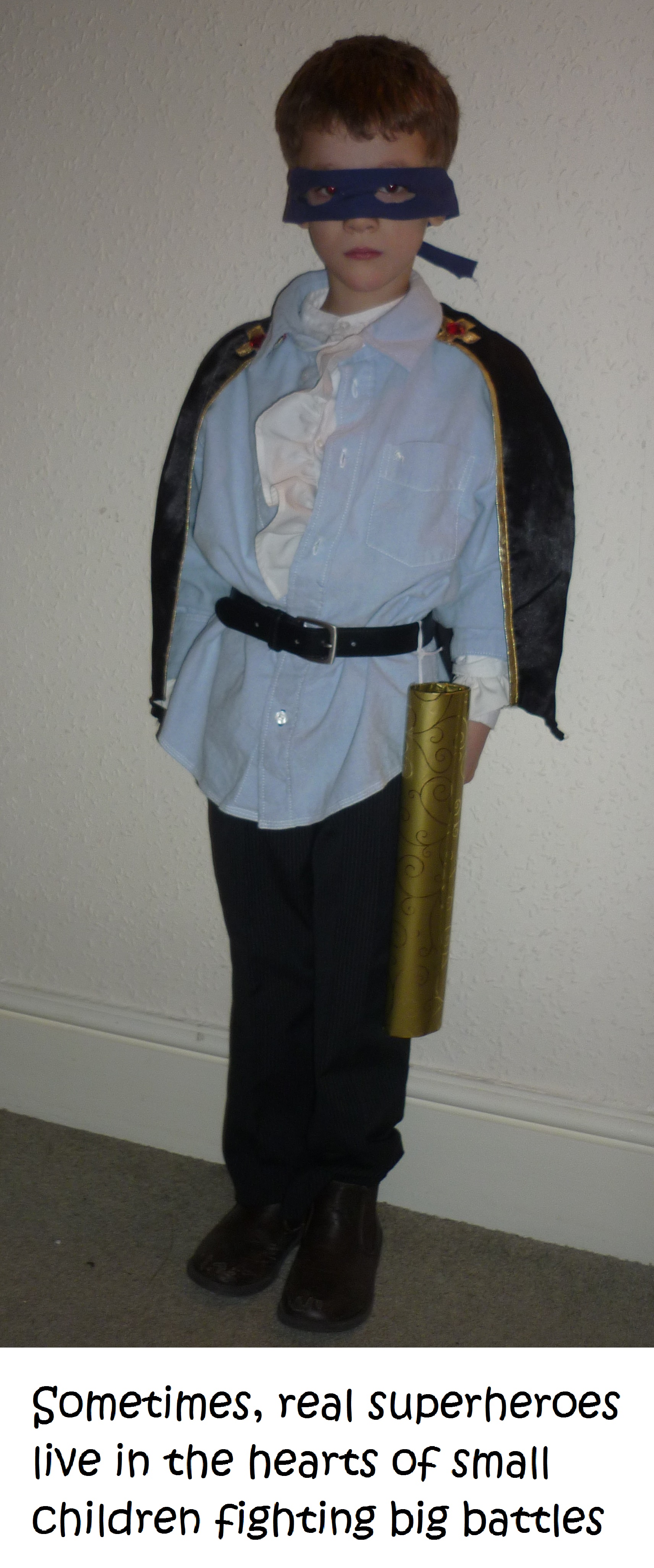
superheroThat’s when it struck me.  This week, 7 days from May 17th to 23rd, I and tens of other EGID families here in the UK and across the world have been fighting hard to raise awareness of this illness that impacts our lives; and we’ve been apologising for it.  We’ve been grateful that we have been able to engage with our audience this week and we’ve almost promised to give it a rest until NEAW 2016 rolls around.  BUT the reality of EGID for us is that we don’t get that break.  We don’t get the chance to focus on it for one week only and then go back to the daily grind of school runs, workloads and running the home.  This is it.  It’s not even just a year-long commitment, but a life-long one and there’s no escape.  I can’t shut down my computer and ignore the posts. I can’t groan inwardly, grit my teeth and ride the week out, thankful that the 24th will soon be here and then breathe a huge sigh of relief that that’s it done for another year.  I don’t have that privilege.

The reason the EGID community has been trying so hard to engage with you this week is the people in our lives who struggle with this rare condition on a daily basis: our superheroes.  Their strength and courage in facing adversity is awesome and their brave smiles bring inspiration at the most difficult of times.

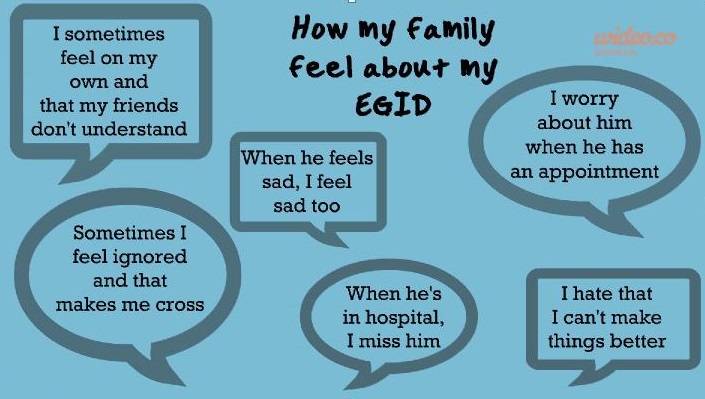
My reasons for engagement are summed up beautifully here by my 2 amazing children:

myfeelins familyfeelings

and with that, there really is nothing more to say.

Our thanks go to…

The week is winding down and I am definitely looking forward to the start of half-term and the chance to have a sleep-in over the weekend.  One’s thing for certain, being active in raising awareness whilst eating a restricted diet really takes it out of you!thank-you-languages

With T for Thanks being our topic for today, what else could I do, but issue a few heart-felt thank-yous to those who’ve made a difference to us in the 12 months since the last NEAW. It’s tricky to know where to start, but, in no particular order, I’d like to thank:

Our families – well it was a given really, wasn’t it?  But whichever side of the ocean they may live, our families have been there in whatever way they can 澳大利亚孩子-1202242and supported us in the tricky decision to move M to a NG-tube and the elemental diet.   We don’t know exactly what the next 12 months hold in store for us, but we can be certain that our families will be there every step of the way.

Our friends – another obvious lot, but again we couldn’t have survived the past year without them all.  Their help has been invaluable: from text messages to lengthy phone conversations; early morning G-sitting to late night conversations with a cup of tea; and much-needed hugs to unexpected hospital mail, every single gesture has meant more than they can ever imagine and helped keep us strong.

GOSH – our consultant, her great gastro team and, in particular, the fantastic nurses who work with such dedication on Rainforest ward. Their care for M back in December was just amazing and without them looking after us both and giving wise words and training, we’d have struggled even more with the reality of the NG-tube and the feeding pump.  We also owe massive thanks to M’s fabulous dietitian, Colorful solidarity design treewho is always at the end of the phone or the email and has given me lots of helpful recommendations as well as reassuring me that I’m doing things right when it comes to the whole food re-introduction thing.

M’s School – I am very aware of just how lucky we have been with the staff at M and G’s school. They have been so understanding of how life was changing for both children during this school year and have made every effort to look after them and help them feel happy and safe when at school.  5 of the teaching staff bravely took on the role to learn how to manage his feeding pump, which meant that I could return to my job, confident that they were competent in what they needed to do.  This week they were also quick to agree to M’s request to share his presentation to the rest of the school and every teacher made time to make sure their class could see it and ask any questions they had.  This school has done a wonderful job of nurturing both my children and I will be sad when G moves on to “big school” in September.

G – the best big sister that M could ever have had.  She’s loved her little brother through some of his darkest moods and, even if there’s a bit too much squabbling at times for my liking, she’s managed to continue to work on building a strong relationship with him that I hope will only get stronger in time.  She’s survived the challenge of SATs, maybe not without the odd tantrum along the way, and continues to strive to do her best at school and at home.  P1000121And my heart nearly burst with pride the other week when she announced at Stagecoach that M is her hero, because of how bravely he lives and copes with EGID.

Mike – I couldn’t finish without recognising the person who stands alongside me on this, the most challenging of journeys we’ve been on together, and is my strength when I’m feeling weak.  We’ve reached a harmony that enables us to take turns in being the strong one during appointments and I can’t think of anyone I’d rather be facing these decisions with.  He also understands my need to have some time to escape from the day-to-day grind of EGID and puts up with me disappearing off twice a week to choir rehearsals.

And thanks to all of you, who’ve kept reading my blog, put up with somemany…repeated requests on my part and have done an amazing job at sharing my posts on.  Your silent show of support is what helps keep me going, even when times are tough.