Tag Archives: allergic reaction

Managing a NG-tube

Formula made, it’s time to move on to what was, to me, the most daunting part of our NG-tube (NGT) journey and the bit that scares other people the most – the NGT itself.  Whilst it now feels like second nature, this was the biggest hurdle I had to overcome in my quest to become confident in managing M’s enteral feeding at home.  Let’s start with the very basics of what a NGT is and the job that it does.

The tube is a length of flexible material, which is inserted through the nose and travels down the oesophagus into the stomach with the purpose of allowing food and medicine to be placed directly there.  There are a myriad of medical reasons for a NGT to be passed and in M’s case, it was because he wasn’t able to drink the quantity of E028 needed each day due to being a reluctant drinker and the very unpalatable taste of the feed.  The NGT is measured against the child’s body before it’s inserted to make sure enough length is passed for its tip to sit comfortably within the stomach.  There are varying types and sizes of tube that can be used to allow for the age and size of the child, differing situations and the various medical needs.  M has a long-use “10 silk”, which he found to be the most comfortable to have in and can be left in place for up to 8 weeks before it needs to be changed.  Other tubes are more rigid and require changing on a weekly basis, something that just wouldn’t be practical given his current anxiety about having the tube passed and his allergic reactions to anaesthetic.

Once the tube has been passed and is in place, it is secured to the cheek using dressings and tape.  There are a number of these available and it really is a case of trying them out to see which works best for your child.  We quickly discovered that M has an allergic reaction to Duoderm and Micropore, two of the most commonly used dressings and so we’ve had to work out a method of fixing the tube to his cheek that won’t cause his face to become red and inflamed.  For us that proved to be a small strip of Tegaderm, which I then decorate using an amazing product I found on an US website called Feeding Friends.  These stickers are printed on medical tape and add some fun to the prospect of having a NGT on permanent show.  By sticking one over the top of the Tegaderm strip, M’s skin doesn’t react and he loves nothing more than choosing which friend will grace his cheek each time.  I change his tape approximately every 3 days, though we find that if it gets too wet in the bath or shower, then we need to replace it more often.

So far, so good and nothing too scary you may think, but now comes the most difficult bit, making sure that the NGT is still in the right place before starting a feed.  This is known as “aspirating” the tube and requires you to draw an amount of liquid up the tube to check that its tip is still sitting in the stomach and hasn’t become dislodged or moved during the time off the pump.  We were told to use nothing smaller than a 20mls syringe to aspirate the tube and are provided with 60mls syringes by our home delivery team.  Remembering to “kink”, or create a block in, the NGT before you start – this ensures that no air can go down the tube whilst you fiddle around with it – carefully attach the syringe to the end of the NGT and pull back on the plunger with – in my experience – your fingers tightly crossed that you can draw some of the liquid out from the stomach.  Depending on the time of day and what your child has been up to beforehand or even what, if anything, they’ve had to drink, this can prove to be something of a challenge.  It is possible for the tip to become stuck to the stomach wall, which creates a vacuum when you try to pull upon the syringe. I’ve found that sometimes it will “pop” free and a sudden flood of liquid will rush into the syringe and at other times, your gentle tugging will be met with nothing but stubborn resistance and a failure to draw even a millilitre out from the stomach.

The key thing to remember at this point is NOT TO PANIC. The first time it happened, I desperately scrabbled around in the depths of my memory to recall what advice the GOSH nurses had given, all the time attempting to resemble an oasis of calm and to impart none of my increasing anxiety to an unaware M.  There are 3 easy ways to try to resolve the problem:

  1. Give your child a glass of water to drink, wait around 15-20 minutes and then try again
  2. If the drink hasn’t helped, take a deep breath, lean your child at an angle of approximately 45° for 20 minutes before your next attempt
  3. If you still can’t aspirate the tube, get your child to lie on their left-hand side as this is where the stomach is positioned and may encourage that stubborn NGT to finally drift away from the stomach wall and allow you to test exactly where it is

If none of these has worked, or if your attempts to aspirate are causing your child discomfort, then you need to get the tube medically checked.  In our case, this meant a trip into our local A&E department, but could simply mean a phone-call to your local community nursing team or feeding team, who will be best placed to advise you on where to go and what to do next.

Courtesy of jamali4u.net

Courtesy of jamali4u.net

However, assuming you are able to aspirate the NGT with relative ease, you now need to check the pH of the liquid you’ve drawn from the tube to make sure that all is where it needs to be.  You will have been provided with pH strips as part of your enteral feeding “kit” and testing couldn’t be easier.  Simply drop some of the stomach juices on to the pads at the end of the strip and watch them change colour.  Memories of secondary school chemistry lessons come flooding back at this point and testing substances to see whether they were alkaline or acidic.  In M’s case, we are looking for a pH of 5.5 or less, indicating that the liquid drawn is acidic and therefore likely to have come from his stomach.  Always check with your nursing team what pH level is safe for your child as certain medicines are known to affect the results and an adjustment to the recommended results may be made.

Although aspirating the tube is a scary prospect, the risks associated with a misplaced tube are great.  I was lucky to be trained on all aspects of M’s NGT whilst we were in GOSH, but even then found the first few attempts a frightening prospect.  The most important lesson I learned was to “kink” his tube every time I did anything with it and now I don’t even think twice about doing it – it’s just another step in the process of starting his pump feeds. Once it’s confirmed that the NGT is correctly positioned, tube feeding can now begin, but that, I fear, is a lesson for another day!
The 3rd and final step

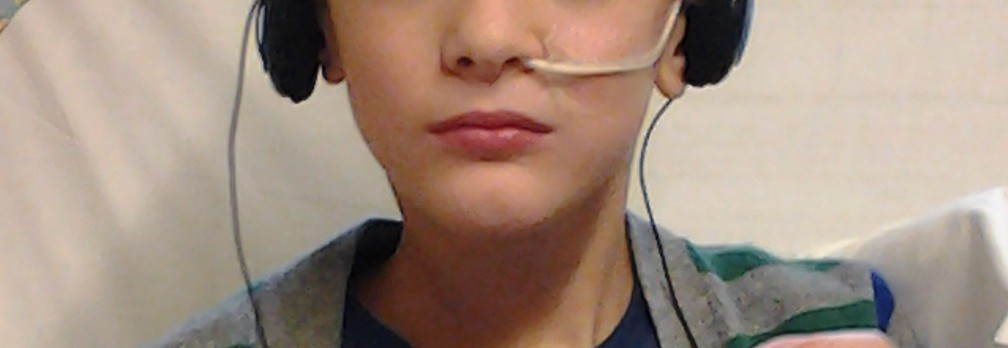
M and his tube at GOSH

M and his tube at GOSH

With steps 1 and 2 complete, we were now onto the third step, the one which is going to have the biggest impact on M’s life for the next few months.  NG-tube in place, dis-impaction done and pellet study under way, it was now time to move M to an “elemental” diet, one which sees all foods removed from his diet and replaced by a nutritionally complete feed that consists of amino acids, carbohydrates, fats, vitamins and minerals.  The ideal would be for M to drink the 1.8 litres of this feed that he needs each day to have the right amount of calories and nutrients for his age, weight and height, but I knew we had no chance of getting him to do that.  Not only is he a reluctant drinker at the best of times, meaning it would be nigh impossible to get nearly 2 litres of liquid into him on a daily basis, but the feed is truly revolting to taste and even adding generous quantities of approved flavouring was never going to be enough to convince him to let more than a minimal amount pass his lips.  The only alternative was to feed him via his NG-tube, which meant an intensive few days in hospital for us as we worked out how best to give the feeds, the timings and rates that he could tolerate and I was trained on how to manage his tube.

The original plan proposed by the dietitians was that M receive six 300mls feeds a day via the gravity-feeding method, which meant that we would attach a large syringe to the end of his tube and gradually add the 300mls over the duration of the feed to ensure he took the full amount.  The principle of gravity feeding is that you can adjust the speed of the feed as the flow of the liquid is driven by the height of the syringe and the effect of gravity:  the higher the syringe, the faster the flow. The dietitian was keen that the feed be given over around 20 minutes, but it quickly became obvious that this just wasn’t going to be a method that would suit M.  Within 5 minutes of his very first feed starting, he turned pale and grey and complained that his stomach was hurting. The nurse giving the feed adjusted how high the syringe was held, but no matter how the syringe was positioned, things didn’t get better and by feed number 2, the nurses were adamant that this just wasn’t going to work for him, something I wholeheartedly agreed with.  At this point, we were only giving him 200mls instead of the full 300mls, but even that was proving too much for M’s sensitive digestion, so the dietitian finally had to agree to what the nurses were telling her and everything was changed yet again.

M's rather snazzy new pump

M’s rather snazzy new pump

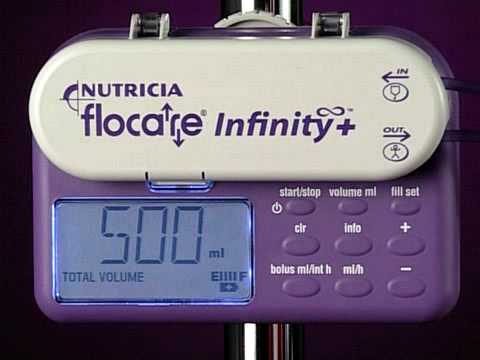
Our new routine saw the feed mixed to a higher concentration, meaning that we only needed to get 1.5 litres into him a day and we were introduced to the wonders of a pump.  The pump means that the rate of giving the feed can be at a speed that best suits M and can easily be tweaked as each individual situation requires.  There was a lot to learn in the few days we had as I needed to know and be confident in how to check that his tube was correctly positioned, what to do if it appeared to have moved, how to prepare the elemental feeds and how to attach and properly operate the pump.  There was also the added complexity that the pumps used on ward by GOSH were not the same as the one approved in our community and whilst the principle was the same, the processes were slightly different.  However, by the time discharge finally happened, I was as au fait with this new part of our life as I could hope to be, felt that we could cope at home and, more crucially, had enough medical supplies to see us through the next few days.

M and his tube at home

M and his tube at home

Since that first day, now over a month ago, that original regime has been changed and tweaked more times that I care to imagine.  The suggestion of 6 feeds being administered at separate 30 minutes periods throughout the day were impossible for M to manage as he wasn’t able to tolerate the 250mls over either the initial proposed 30 minutes, nor our second attempt of an hour.  It also quickly proved impractical as any issues with the placement of the tube would take at least 20 minutes to resolve and that was time that we couldn’t expect the school to give him as he doesn’t get any individual support.  We soon realised that M wasn’t coping either physically or emotionally with the constant feeding and we have now settled on a routine that seems to work for everyone concerned.  His first feed is a 1 litre one starting at around 6.30am, which is given slowly enough to avoid too many tummy aches or occurrences of reflux and which lasts until the end of lunch-time.  The pump is disconnected at that point and M is able to enjoy an afternoon free of the encumbrance of his pump whilst at school.  The final 500mls feed begins between 4pm and 4.30pm and takes us all the way through to bedtime.

This is the routine that we will be living with for the next month or so and then the task of food reintroduction will begin.  As our local dietetics team has refused to be involved in M’s care, we will be working with the dietitians from GOSH to work out a detailed approach to trialling foods and the order we try them in.  The elemental feeding via NG-tube will continue alongside these food challenges until we have identified enough safe foods for M to eat and get all the calories and nutrients he needs to be healthy.  It’s not going to be an easy or quick task to complete, indeed there is a long and arduous road ahead, but it should be one that leads to more answers for M’s health than we’ve ever had before.

Round Two: the Pellet study and other adventures

Courtesy of 123opendata.com

Courtesy of 123opendata.com

Once the NG-tube was finally in place, M and I then had 5 long days to survive the copious amounts of Klean-prep, senna and picolax that were pumped into his system to clear his troublesome bowel.  Although we appeared to be off to a slow start, these powerful laxatives finally did their job and by late Monday afternoon, the gastro registrar was confident that we were ready to start the pellet study and a x-ray confirmed his opinion.  I had already met with one of the gastro investigation nurses, so knew that the 3 pellets, containing different shaped plastic markers, were ready and waiting on the ward for M and all we needed to work out was how best to get him to swallow them.

Over the last year, we have made huge strides in getting M to swallow tablets whole and no longer need a spoonful of Grandma’s jam to help the medicine go down as he has conquered his struggles and now merrily swallows them with just a mouthful of water to help.  However, there were 2 problems we now had to overcome:  M’s new-found fear of swallowing capsules with the NG-tube in place and the fact that these pellets are of a size that even I would struggle to take easily, let alone a small child.  The nurse suggested we resorted to mixing the markers into a couple of spoonfuls of jam and that was our first attempt.  For reasons that will remain forever unclear, M found even this method difficult to manage and instead resorted to swallowing the pellets one tiny marker at a time.  It may have taken considerably longer than anyone expected, but the pellets were taken and so round 2 of our admission was well underway.

The week should have been an easy one, as it was supposed to require nothing more of us than completing the pellet study, but unfortunately it was at this point that I had to brace myself and find the strength to weather an unexpected and turbulent storm.  Despite both Mike and I having repeatedly made clear that we have almost no support from our local hospital and their paediatric gastro team, this information appeared to have got lost along the way and I found myself embroiled in a battle to keep M in hospital once the pellet study had started.  GOSH felt sure that we would receive all the care and advice we would need from our local and nothing I said would convince them otherwise. battle I spent more hours than I care to remember fighting M’s corner and insisting that the consultants didn’t discharge him before the study was complete and the NG feeding started.  The pressure was huge, both on me – as I talked, discussed and cried my way through numerous meetings with nurses, doctors, dietitians, psychologists, PALs workers and indeed anyone else who would listen – and on Mike – as he sought to juggle the challenges of working, looking after G at home and supporting M and me whilst we were several hours away and only contactable by phone.

It quickly became evident that GOSH simply could not conceive that we could be as lacking local support as I was asserting we were and I have no doubt that they were beginning to view me as something of an overwrought, overtired, over-emotional and somewhat neurotic mother, who was unbelievably arguing to keep her child in hospital, when most other parents were trying desperately to get their children discharged before Christmas.  By the end of the week, it had all come to a head and I was at my wits’ end, but was finally vindicated late Friday afternoon, when our local dietetics team refused in no uncertain terms to take on M on a shared care basis with the GOSH dietitians – an entirely new experience for GOSH, though sadly an all too familiar one for us.

lighttunnelDespite all the heartache and distress this unnecessary battling caused, there was some really positive light at the end of the transit study tunnel.  The final x-ray on Friday indicated that M’s bowel is working more or less as it should.  It may be a little slower than ideal, but the markers had moved through M’s system and the consultant was delighted with this result, which means that the bowel is currently doing its job.  We really couldn’t ask for anything more.  So, the conclusion drawn is that it is the complex and multiple food allergies that have been causing M’s diarrhoea and other symptoms because of his underlying condition, EGID and the final step is to identify these as accurately as possible.

The First Hurdle

Our GOSH admission had three key stages, the first of which was to dis-impact M’s bowel and prepare him for a repeat pellet study.  We knew that when the original transit study was done at our local hospital 18 months ago, he was chronically impacted and there was some debate over whether the results, that suggested his transit was relatively normal, were accurate or not. My honest opinion was that he was not struggling with a slow transit colon, but the gastro team at GOSH wanted to be certain and were more than happy to admit him for this test due to the issues we’ve experienced with our unsympathetic local hospital over the last 12 months. My instinct was that nearly 9 years of unrelenting diarrhoea meant that there had to be another root cause for his problems that was still waiting to be discovered and it would just take some persistent looking to find it.

Courtesy of ebsta.com

Courtesy of ebsta.com

Unfortunately, the first hurdle – after the resolution of the whole missing bed saga – proved to be far tougher than any of us had anticipated.  After his amazing courage in facing all the health and medical challenges of the past year, and despite knowing that he needed to have a NG-tube, M showed just how stubborn he can be and steadfastly refused to co-operate with the nurses who were trying to pass the tube.  Wednesday evening saw 5 different nurses, 4 attempts, a flurry of unsuccessful negotiations and 1 small boy, who pulled the last 2 attempts out himself because, according to him, the nurses weren’t listening when he asked them to stop and then told them to go.  Having kept the other occupants of the 4-bed bay awake until past midnight with his cries and screams, we all finally admitted defeat and decided to leave it to the next day’s nursing team to remedy the situation.

Thursday morning arrived far too quickly, with a disturbed night’s sleep for M and an uncomfortable one for me.  We talked about the tube and the need to have it in place as soon as possible so that we could start on the first round of treatment, the dreaded Klean prep – a highly effective laxative that would start the process of clearing his system.  M knew and accepted all the reasons for the tube, but at the heart of the matter was the fact I had a small, scared 8 year old, who had endured a great deal since his scopes last October and was evidently close to saturation point.

Courtesy of The Royal Ballet/ROH Johan Persson

Courtesy of The Royal Ballet/ROH Johan Persson

Even the lure of tickets to go to see “Alice in Wonderland” performed by the Royal Ballet at the Royal Opera House, Covent Garden that very afternoon looked unlikely to be sufficient draw, but my boy’s love for all things theatrical combined with my own enthusiasm for going to see anything at the Royal Opera House eventually overcame his worst fears and won the day.  He agreed to let one of the doctors pass the tube and with 4 of us holding his head, arms and legs, another distracting him whilst it happened and the doctor doing the deed itself, we finally got the tube in place.  With that hurdle tackled, M and I rushed to get ourselves ready and a bag packed for our trip to the theatre.  We went by taxi with another little girl from the ward and a nurse and arrived just in time to take our complimentary seats in a box before the ballet began.  The performance was an amazing visual feast and proved to be a more than adequate distraction from all the tears and trauma of the morning.  M loved the outlandish costumes of the Mad Hatter and we had a lot of fun trying to work out which of Alice’s family and friends were depicted by each of the fantastic characters we met throughout the rest of the ballet.

Courtesy of The Royal Ballet/ROH

Courtesy of The Royal Ballet/ROH

Naturally, as I’ve come to expect when dealing with anything to do with M, nothing was as straight-forward as we might have hoped as we headed into that all important first full day of admission.  The stress of the tube placement led to him being violently sick within 10 minutes and he spent the rest of the day retching and bringing up bile, meaning the Klean prep couldn’t be started until much later in the day.  He reacted to the Duoderm, a dressing usually used to protect the fragile skin of the face by forming a barrier between the cheek and the tube and tape, which meant there was no alternative but to tape the NG-tube directly to his face.  The final straw came in the middle of the night, when after I’d finally got my tired chap to sleep, the quantity of the Klean prep being pumped in at the speed it was upset his system and he woke to be sick for the second time in less than 24 hours.

By the time Friday morning came around, we were both feeling emotionally fragile and physically exhausted and M refused point-blank to move from his bed.  We sat quietly on ward, with M plugged into the television via his headphones and I immersed myself in the escapism of a good book.  It had been a bumpy start, but finally we were on our way.


Busy days

Now that Halloween and Bonfire night are behind us and Christmas is fast approaching, there’s finally a little time to look back and reflect on the start of the new academic year.  September seems like a lifetime ago and yet was a busy month with appointments right, left and centre that have had a lasting impact on decisions about M’s long-term care.  We had appointments with GOSH, a new community paediatrician, M’s OT and with CAMHS; and I needed to be the thread that linked them all to ensure that M remained at the centre of their focus and that all agencies were working together to provide the best support they could.

Courtesy of travaasa.com

Courtesy of travaasa.com

The OT’s review was everything we needed it to be and she has already started going into school once a week to work with M on his handwriting skills.  The clinical psychologist he meets with fortnightly through CAMHS is slowly building a relationship with him and gently pushing him to talk about how he feels about life with EGID and the frustrations he experiences.  As for the new community paediatrician, who was recommended by our local hospital, well, lets just say we won’t be rushing to meet with her again.  Her complete lack of understanding of his condition was glaringly evident as she suggested that regular toileting and a sticker chart were the answers to all our problems.  How I refrained from saying something very rude is nothing short of a miracle!

The most important of all these, for us, was our regular appointment at GOSH with the gastro team charged with M’s care.  The restricted diet and increased medications over the last 3 years have not brought about the results we’ve been aiming for and M continues to be symptomatic a lot of the time.  We have become increasingly concerned about his emotional well-being as he struggles with the impact of EGID and multiple food allergies on his daily routines and I was determined to come away from that appointment with a tangible plan in place.  Despite our best efforts with the challenging treatment suggested by the local consultant leading into the summer, our worst fears were realised when the registrar told us that M appeared to be impacted again and we would need another course of fairly heavy-duty laxatives to empty his bowel.

planningThat led into a lengthy discussion about where we’re headed and what the most sensible next steps for M’s care are.  Short-term plans are all well and good, but we now need a long-term care plan put in place.  He agreed that we can’t keep limping from one appointment to the next and promised to discuss M’s current situation with our consultant.  Medical terms such as “pellet study“, “elemental diet” and “manometry” were bandied around and I am glad that, thanks to the support from other FABED families, I have a reasonable layman’s understanding of what all these terms actually mean.

We left the hospital feeling that we were beginning to making some progress in dealing with the problems that continue to dog M’s every step and a short-term plan that would start to deal with the current impaction issue.  The longer term decisions would be discussed both internally and with us before anything was settled on for definite.  A follow-up appointment with the consultant herself was made and our step was just a teeny bit lighter as we felt our concerns were being heard and addressed.

Courtesy of abercrombierealestate.com

Courtesy of abercrombierealestate.com

However, since that day, over 7 weeks ago, I have spoken to GOSH at least once a week and almost daily over the past 10 days.  The improvements expected haven’t happened and so the decision has been made to admit M into the hospital for further testing.  We need to understand whether his bowel is working as it should or not as that will give us a clue as to the direction we need to head.  We have also agreed with his consultant that the diet and medicines just aren’t helping his hugely allergic colon and so have made the decision to remove all food from his diet and follow the elemental diet via NG-tube for a while.  This should give his bowel and body some much-needed time to rest and recuperate, something I believe it so desperately needs.

Just when you thought it was going to be easy…

…something happens that shows you that it really doesn’t pay to be complacent, especially when it comes to children with complex medical needs.  The reason for my most recent angst? The whole ‘flu vaccination thing! Yes, you probably read my blog post over a month ago, where I discussed the decision process we were going through regarding M and the ‘flu jab, and almost definitely concluded by the end that everything was set firmly in place.  Having visited our new GP, I certainly felt that we had agreed what was best suited to M’s needs and was now just waiting for the confirmation phone-call and a date for my diary.

You’ll have guessed by now that it hasn’t been that easy and whilst that doesn’t come as any surprise to me when it concerns my youngest, the complexities of getting the situation sorted came at a time when, to be perfectly honest, I really didn’t need the added aggravation.  It all started when I phoned the surgery to book the appointment.  The receptionist needed to discuss which clinic to book M into because he was having the injection and not the nasal spray and so referred him on to the practice nurse, with a promise she’d call me back.  10 days and 3 phone-calls later, I was still waiting for the practice nurse to confirm which clinic M needed to attend.  Oh, and there was the added problem – or so I was told – that there wasn’t enough child vaccines in our health centre, so we would have to wait for those to arrive before I could make a definite appointment.

This is definitely a t-shirt us #EGID parents need!

This is definitely a t-shirt us #EGID parents need!

The string of events that followed are like the plot of a bad 1980s sitcom as we got bounced from one local medical establishment to the next.  The first problem was that the no egg vaccine is not licensed for use in under-18s and so the nurse wasn’t happy to give it to M, especially as he’s never had the vaccination before.  She was keen to discuss the situation further with one of our local hospitals and so I agreed to wait.  Next, I had a message telling me that the hospital would give M the injection, so that he could be monitored and could I confirm that I was happy for my contact details to be passed onto the appropriate administrator to arrange that appointment.  Needless to say, I confirmed as soon as I could and then sat waiting for the next installment in this latest saga.

Three days later, a copy letter arrived in the post from the community paediatrician, who has met M once, knows very little about him and just confirmed that he could have the ‘flu vaccination unless Mike and I knew of any reasons why he shouldn’t have it.  Er, no – after all, we’re the ones requesting he be given the damned thing.  A week after that, another phone-call from our local health centre, advising me that the local hospital won’t give M the injection because his 2009 blood tests didn’t show any sign of an egg allergy.  WHAT?!

Now, don’t get me wrong, M does not suffer an anaphylactic reaction to egg, rather a delayed non-IGE one, so I can understand that they don’t think it necessary to be monitoring him on the ward; but blood tests from 5 years ago are hardly a good basis for any medical decisions made in my opinion.  In the 5 years since those blood tests were carried out, he has been treated by GOSH, had a diagnosis of EGID and we have established that he struggles with several food allergies that, because of the very nature of his reactions, will never show up in the standard blood tests.

The next part of the conversation however, really took the biscuit for me, though I don’t blame the poor receptionist tasked with phoning me to make the relevant arrangements:


As his blood tests were negative, the hospital have said he can have the ‘flu vaccine here, so I can book him into this Saturday’s clinic for the nasal spray.”

“Um, no he can’t have the nasal spray because of his egg allergy and the nature of his underlying chronic illness.”

“Oh, well the hospital said he could have it as he doesn’t suffer an anaphylactic reaction, so they want him to have the nasal spray here.”

“Well,” – (a somewhat hysterical tone starts to creep into my voice) – “Great Ormond Street have said he needs to have the injection, so I think we’ll follow their advice as they understand his medical needs.”

“Right, so you want him to have the injection?” – (she’s now slightly perplexed) – “Well, I’ll have to check which clinic I need to book him into.  I’ll call you back.”

womenonthebusinessstage.co.uk

womenonthebusinessstage.co.uk

Have you ever felt like you’re going in circles?  Five weeks on from my original GP appointment and I was right back where I started and M still hadn’t had the ‘flu vaccine. I was even beginning to question just how important it is for him to have it, given he hasn’t had it before, but GOSH had recommended it as a good idea for him and I wasn’t prepared to give up at the first hurdle.  Fortunately, the receptionist was as good as her word, has booked him in for appointment after school one day next week and has left a note on the system for the nurse at that clinic to review his medical history before he has the injection.  Of course, I’m trying not to panic that she might take one look at his notes and refuse to give it to him, but at least we’re making steps in the right direction at long last.

A Birthday Treat – Lemon Meringue cupcakes

This time last year, M was admitted into GOSH for scopes and he and I spent Mike’s birthday away from the birthday boy himself, leaving him to celebrate at home with the rest of the family.  There was a point this year when I thought history was about to repeat itself as we’re once again waiting for an admission date for M, who needs further testing to try to sort out the games his body is currently playing.  However, Mike’s birthday came, and went, with no sign of a phone-call from GOSH and I finally had a chance to make a long-awaited attempt at the Lemon Meringue cake I’d been dreaming of making last year. lemonmeringue

Lemon Meringue pie is Mike’s favourite dessert and there was a time, many eons ago, when I’d actually make him one from scratch for his birthday treat.  With the arrival of G and M, the general busyness of work and juggling the school-run alongside business meetings and the general day-to-day running of the household, I don’t think I’ve turned my hand to such a dish for at least a decade.  Add into the mix, the newer challenges of egg-free meringues and MEWS-free pastry and it’s not been the easiest pudding to make.  I attempted a cheesecake version for Fathers’ Day this year, but that didn’t quite go as planned, so I put my thinking cap on to see if I could figure out an alternative format for this popular dessert.

I settled on lemon drizzle cupcakes topped with vanilla butter-cream icing and small meringues.  I’ve made Lemon drizzle cake before, but found that the rice flour made the sponge taste very granular and I was keen to see if I could improve the texture.  I found a lovely recipe for vegan lemon drizzle cake and read around the options for replacing the flour to make the cake both gluten- and potato-flour-free. 20141015_194117 My final recipe included gram flour – an ingredient that’s been lurking in my cupboard for a while, but which I had yet to brave using – rice flour and tapioca flour and the end result was infinitely better than the last time, though some further tweaking to create the perfect lemon drizzle cupcake is needed.

I whipped up a small batch of my vanilla butter-cream icing and used it to secure the mini egg-free meringues to the top of each cupcake.  I was delighted with how these cakes looked and M spent most of the day, and evening, before Mike got home from work, begging to try one to “just check it’s okay for Daddy!”  I am assured by the family that the cupcakes were a huge success and so that’s another recipe added to my ever-increasing repertoire.


National Chocolate Week – Part 2

Despite arriving late to the delight that is National Chocolate Week, we have been lucky enough to receive another fantastically M-friendly chocolate product to try and then review.  As I mentioned in my last post, Moo-free chocolate bars are a staple in the fridge at 7yearstodiagnosis HQ and this latest find might soon become another permanent fixture in our store cupboards.

chocshotI had never even heard of Sweet Freedom foods until I came across a stray comment on Twitter last month that pointed me in the direction of their allergy-friendly product, Choc Shot.  This chocolate syrup is made in the UK from “Sweet Freedom® (natural fruit extracts; apples, grapes & carob), water, cocoa, rapeseed oil, natural chocolate flavour” and promises to deliver great taste for a low calorie and GI content.  The website includes a wealth of recipe suggestions for using Choc Shot and I couldn’t wait to see whether it could do all that it promised.  M tried it first, opting to have it spread sparingly on a piece of toast, a rare treat in our household.  He liked the flavour, but didn’t love it, finding it quite rich and not overly sweet.  I could quickly tell that it didn’t quite hit the mark here as he hasn’t asked for a second helping at all.

Mark:  A tentative 7/10

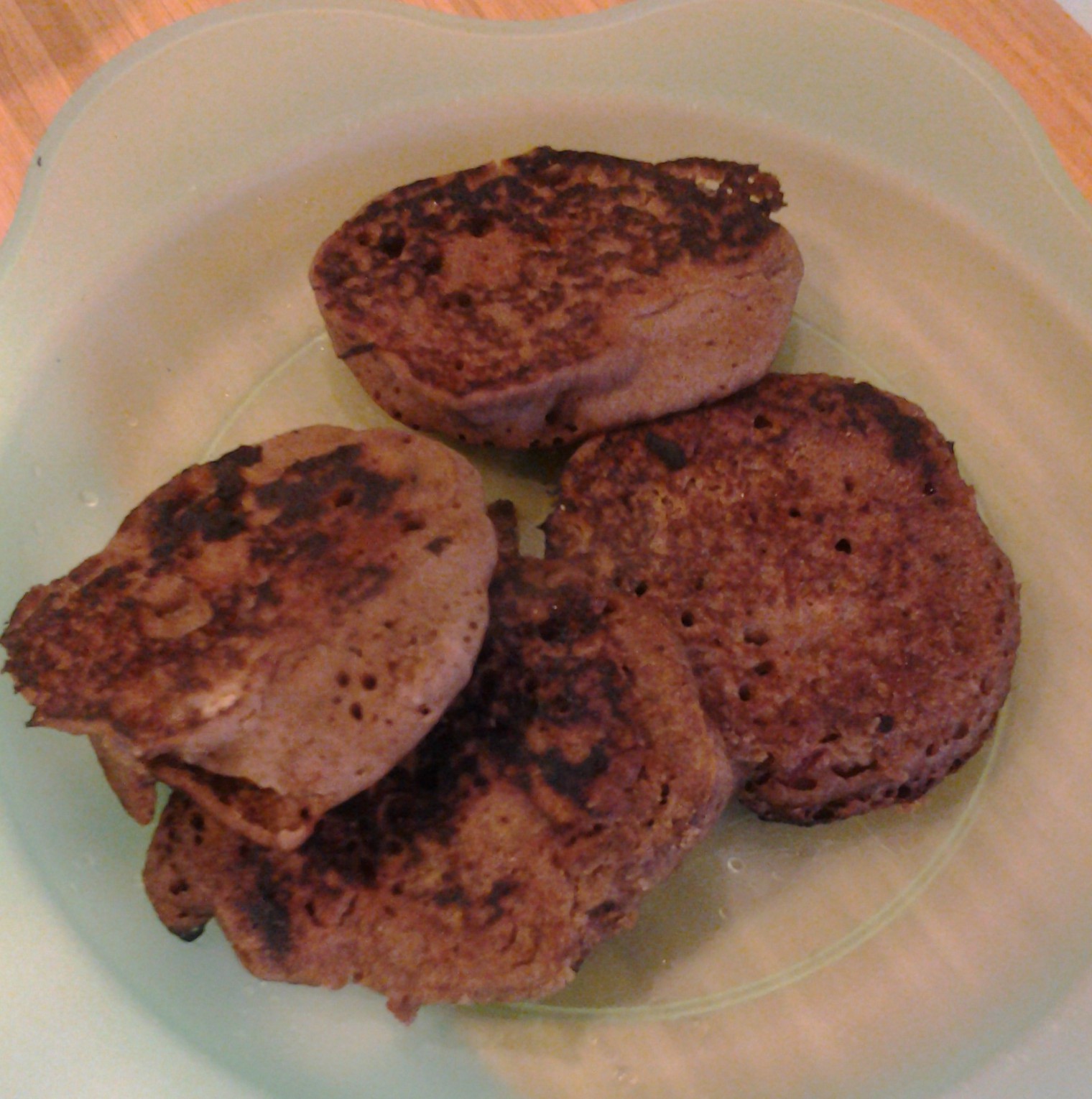
20141007_182950However, I was keen to see whether we would fare any better if I used the Choc Shot to cook with and here is where this product really comes into its own.  I decided to whip up a batch of my Canadian-style pancakes for pudding and chose to deploy the Choc Shot in 2 ways to see which worked best to satisfy my hungry hoards.  The first lot was pancakes made with a generous helping of frozen forest fruits  – think cherries, blackcurrants, grapes and blackberries, all the things G wouldn’t usually touch with a barge-pole – mixed into the batter and drizzled with Choc Shot to serve; the second round saw me incorporating both the fruit selection and the Choc Shot into the mixture to produce delicious-looking Chocolate and fruit pancakes.  I dished them up and waited nervously for the reports of my discerning children.  Two rapidly emptied bowls soon appeared on the table, accompanied by requests for more pancakes, even from G, who barely blinked when I told her what fruits were included in her dessert.  I was delighted with this result, not least because the Choc Shot added a delightful chocolate flavour to the pancakes without making them overly sweet.

Mark: A resounding 10/10

20141017_122336The final test was to try the Choc Shot as suggested on the bottle itself – to make Hot Chocolate.  I heated mugs of rice milk in the microwave, added a generous squirt of the Choc Shot and topped it off with some boiling water.  The end result was fantastic – rich enough to feel indulgent, but not too sweet.  It was quick to make and was, by far and away, the best M-friendly hot chocolate I’ve been able to make since diagnosis.

Mark:  10/10

I was impressed with Choc Shot and wouldn’t hesitate to recommend it to anyone looking for an allergy-friendly alternative for chocolate to use in cooking.  It is readily available from most supermarket chains and is reasonably priced at around £3.50 a bottle.


*Disclaimer – We were sent bottles of Choc Shot and Sweet Freedom for the purpose of an independent review and the views expressed are entirely my own and those of G and M.

National Chocolate Week – Part 1

I’ve rather belatedly discovered that this week is National Chocolate Week and what better way to enjoy this amazing celebration, than to review 2 fantastic AND M-friendly chocolate products in my blog?

20140916_170227Tonight’s offering are the wonderful creations from Moo-free.  I discovered this chocolate 2 or 3 Christmases ago, when I spotted it on the shelves of one of my local health food shops. The chocolate is vegan and soya free and is made using sunflower lecithin, instead of soya lecithin, which my hyper-sensitive boy reacts to, even in the tiniest of trace amounts.

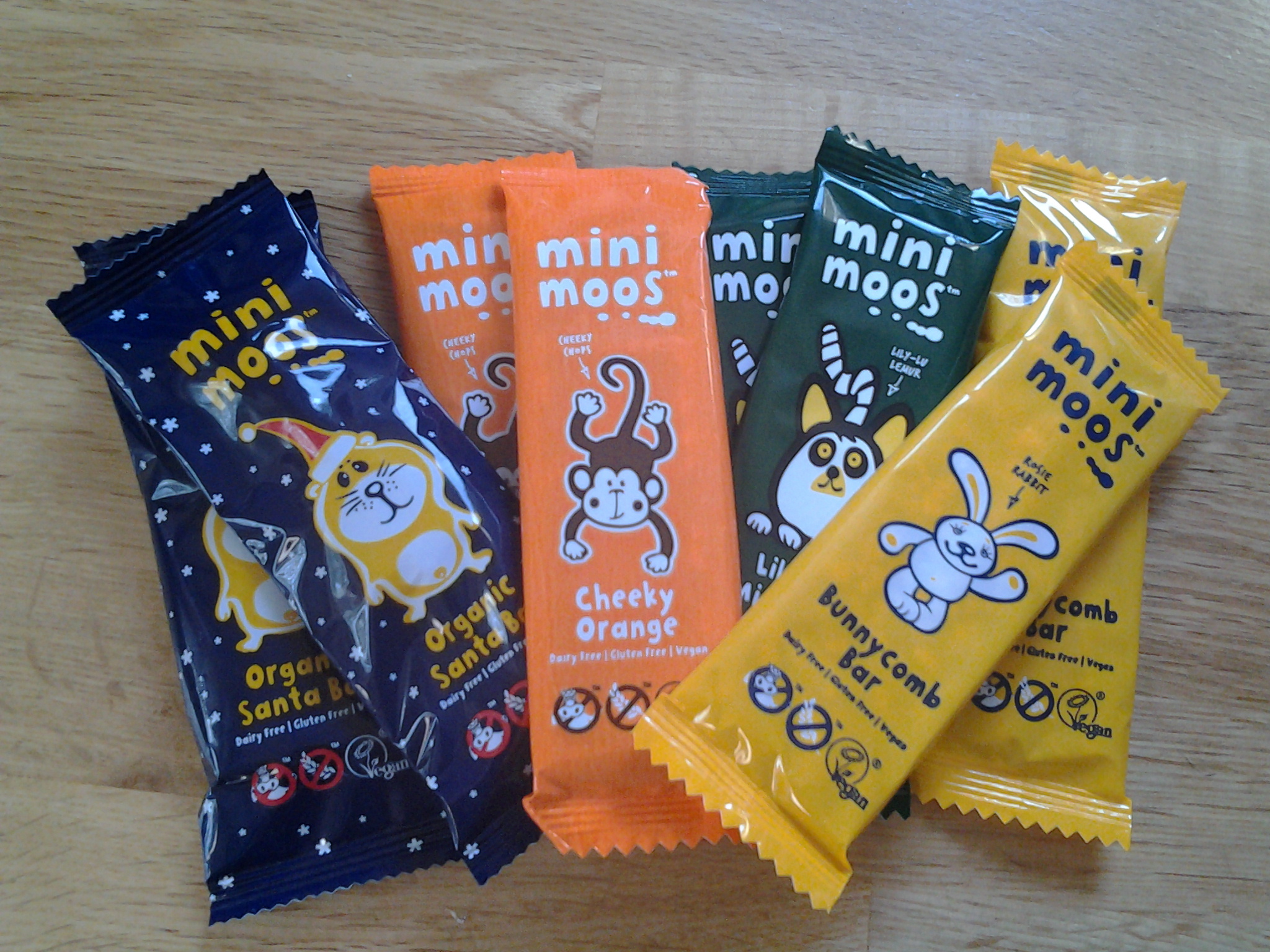
The chocolate is rich and delicious and has become a staple of our fridge at home.  They have developed their range over the last couple of years, which now includes the likes of Cheeky Orange, Minty Moo, Bunnycomb, Chocolate Drops and Cranberry and Hazelnuts bars to name but a few.  Their seasonal offerings are equally impressive with Chocolate Santas, Chocolate Advent Calendars and a brand new Chocolate Selection box as well as Easter Eggs on offer at appropriate times in the year.

Moo-free were kind enough to send us the individual bars included in their Christmas Selection box and, needless to say, G and M were more than willing to taste-test each bar and give their marks out of 10:

G M
Cheeky Orange A lovely crunch and just the right amount of flavour


Mark:   10/10

Nice, but the orange flavour reminds me of medicine


Mark:   9/10

Minty Moo Delicious, the right amount of crunch & an awesome flavour


Mark:   10/10

Not quite 10/10 as it tastes a little like toothpaste & I don’t like seeing the mint pieces

Mark:   9/10

Bunnycomb Perfect crunch!  I love it


Mark:   10/10

I loved it, great flavour and the perfect crunch


Mark:   10/10

Chocolate Santa Nice, but I liked the flavoured ones more 

Mark:   9.5/10

The flavour’s good and the shape is fantastic 

Mark:   10/10

Overall family rating:  10/10

20140916_170326

Both children enjoyed them all and are more than happy to nibble on whichever one is available.  If they’re able to choose, then M would always go for the Bunnycomb as his favourite flavour, whilst G’s top pick is the Minty Moo.  They are readily available in most of the big supermarket chains now, are reasonably priced and the choice is brilliant especially as it is all safe for M.  I’m thrilled by the offer of a selection box this Christmas, the first time either of my children will have been able to enjoy this festive treat.  You can buy these from some supermarkets or can find them on-line at Freefromforkids or other on-line stockists.


 *Disclaimer – We were sent this selection of Moo-free chocolate bars for the purpose of an independent review and the views expressed are entirely my own and those of G and M.

EGID – the real story

I am still reeling from the astounding response to my last blog post, Dear BBC Controller.  When I asked you, my wonderful readers, to share what I had written in a hope of raising some much-needed awareness about EGID, I have to admit to only expecting the odd person to possibly share the link on Facebook with a few of their friends and nothing prepared me for what happened next. From the 20 shares that I know about, that post gathered momentum and I experienced a fantastic demonstration of exactly what social media can do.  Within 48 hours of publication, that blog was viewed by over an amazing 1,800 people across 33 countries and the statistics are still creeping up on a daily basis.  I have been humbled by this response to my plea and I can do nothing more than extend my heartfelt thanks to you all.

One of the things I realised, however, is that I have never given a comprehensive explanation of EGID and that my last blog post may have left new readers wondering what on earth all the fuss was about. Those of you who follow my blog will have an understanding of how this chronic illness impacts our lives and for those who know our family personally, you have probably had a brief explanation of the disease along the way.  In that last blog post I didn’t want to go into the finer details of what exactly EGID is, so now I want to set the record straight, so to speak, and explain in a little more detail M’s condition.

17348-custom-ribbon-magnet-sticker-Eosinophilic+Disorders+++AwarenessEGID, or Eosinophilic Gastro-Intestinal Disorders, are a complex and chronic group of digestive system disorders caused by an abnormally raised level of eosinophils within the gastro-intestinal tract.  Eosinophils are an important type of white blood cell, which normally help the body fight off certain infections and parasites and are typically involved in attacking the causes of allergic reactions, thus protecting the body.  In some individuals, the body produces too many eosinophils in a particular part of the GI tract, which leads to chronic inflammation and can cause extensive tissue damage in that area.  It is currently thought that there is both auto-immune and genetic involvement in EGID, but further research will be needed to confirm these links.  Like many inflammatory bowel diseases, EGID is a classic waxing and waning condition, meaning that the symptoms and their severity can change on a daily basis.

This family of rare diseases is diagnosed depending on where in the GI tract the elevated eosinophilic count has been found:

  • Eosinophilc Oesophagits (EE or EoE) – in the oesophagus and is the most commonly diagnosed form of EGID
  • Eosinophilic Gastroenteritis (EG) – in the stomach and/or small intestine
  • Eosinophilic Enteritis (EGE) – in the small intestine
  • Eosinophilic Colitis (EC) – in the large intestine (colon)

This last one is the type that M has been diagnosed with, which means he has, in typical M-fashion, a relatively rare type of a rare chronic illness.  Statistics are not readily available as it was only first recognised during the first half of the 20th century, but over the last 20 years, cases have been recorded in the UK and there are currently in the region of 700 cases looked after at Great Ormond Street Hospital.  This suggests around 2,000 diagnosed cases across the UK as a whole and there are also known cases of EGID in other countries, including Australia and Canada, with a starting point of 3,000 people diagnosed in the USA.

Symptoms of EGID include:

  • Diarrhoea
  • Constipation
  • Blood and/or mucous in the stools
  • Stomach pains
  • Lethargy
  • Mouth Ulcers
  • Rash
  • Asthma attacks
  • Sore throat
  • Joint Pains
  • Headaches
  • Vomiting
  • Nausea
  • Reflux
  • Failure to thrive
  • Sudden weight loss
  • Loss of appetite
  • Mood swings
  • Excessive sweating/body odour
  • Loss of colour in the skin
  • Dark rings under the eyes

None of these symptoms is exclusive to EGID and not all are experienced by all patients.  We had noticed a number of these with M in the years leading up to his diagnosis and it was the odd combination of them – diarrhoea, poor weight gain, joint pains, mood swings, excessive sweating, body odour and dark shadows under his eyes – that led to our conclusion that this could well be what he had.

As eosinophils are part of the body’s response to allergic reactions, it comes as no surprise that many people with EGID also struggle with a varying level of food and environmental allergies. What makes it even harder is that these allergies can also wax and wane and therefore can change over the years.  allergiesWhen M was diagnosed we were asked to put him on a MEWS (Milk, Egg, Wheat, Soya) free diet, which is a common starting point for those with EGID.  Over the years, we have also had to remove gluten, potatoes, raisins and raspberries from his diet to try and alleviate his symptoms and we still don’t seem to have the answer to whether this list is complete or not.  Some of the lovely families we have met through FABED have had to go a step further and remove all foods from their child’s diet due to a constant flare-up of their EGID. These brave children are now tube-fed an elemental diet in an attempt to help them feel better and grow stronger.

These families have to cope with numerous hospital visits, regular hospital stays, invasive diagnostic procedures such as colonoscopies and endoscopies, tube-feeding, colostomies, huge amounts of medicines daily and the unavoidable emotional fall-out from children who long to be just like their peers.  All of this is why it’s important that the media realises that EGID is not about “Mr Allergies” and why such factually inaccurate portrayals of chronic illnesses are problematic for this EGID Mum.


If you are interested in finding out more about EGID, you can also look at these sites: 

FABED   CURED    Apfed   ausEE

***Breaking news – today I received an e-mail response to my complaint from the Holby City series producer.  He has offered to look into the research done for this story-line and will discuss it with me, over the phone, later this week***