

The headline in our local paper for this year’s #NEAW focuses once again on the allergies
I share a frustration with Michelle, one of the lovely co-founders of the FABED, that all too often people living outside of the EGID world get drawn into the food allergies side of this illness and don’t really understand that that is just a small part of a much bigger picture. I can understand why the focus so often falls on it as it’s the bit that people think they understand and can relate to the most. After all, just about everyone knows someone, be it their next-door neighbour, the family down the street or Great Aunt Joan in Australia, who has an allergy. They often feel that that acquaintance, however remote, gives them an insight into what life must be like when your every waking moment is ruled by their presence and I’m all for that belief encouraging them to engage me in conversation about it. Added to that, so much of our social life revolves around food, a fact that isn’t a revelation to me as I’ve discussed it before on my blog. In the last week alone we’ve had to survive the “Second Sunday” breakfast held at our church, sweets brought into school to celebrate birthdays and M’s class cake sale to raise funds for classroom resources. We managed them all in our own way, from arriving late and avoiding the table of food in the church hall, to M’s trusty swap box, which has finally been refilled and returned to his teacher and the gentle request to the TA that the class cakes be moved to somewhere other than next to M’s stationary wheelchair for the day.
 Of course, I obviously can’t ignore the fact that my blog focuses a lot on the impact M’s complex food allergies has on our everyday life. So much of my time and energy is spent researching, adapting and learning more about how to feed him varied meals whilst coping with such a restricted diet that food allergies undeniably rule my kitchen. As a fellow EGID Mum recently posted, every single aspect of our children’s lives are affected by food, no matter how many food allergies they are dealing with. Everything has to be planned and thought about, there can be no leaving things to chance and there’s rarely an opportunity to be completely spontaneous. At home, at school, going out for meals, tea at a friend’s house, family gatherings, holidays, hospital admissions, trick or treating, birthday parties, Christmas, Easter, the list is endless and all-consuming. There’s also unquestionable irony in the fact that we as a family will be “eating like M” to draw attention to the eosinophil awareness week. The reason? I know our restricted diets will allow us to engage with others who will be intrigued by the limitations and in turn that will enable us to share the EGID story too.
However, despite the truths above, it’s really important to get the message out there than EGID is about more than food allergies, a whole lot more. Whilst it’s common for people with EGID to have food allergies, those with allergies do not always develop EGID. At the risk of repeating myself, EGID is, as I wrote for last year’s #NEAW, about “…the unexplained joint aches, the never-ending tummy cramps, the relentless feelings of nausea or reflux whenever you eat. The dark shadows under the eyes, the manic mood swings, the overwhelming lethargy, or the inability to fall asleep and stay that way. The damaged bowel, the fear of not being near enough to a toilet whenever you need one, or knowing that you’ll never get there in time anyway. The fear of your friends making fun of your allergies or finding out that you’re still wearing a pull-up because your bowel can’t be relied on when you most need it to. The daily medicines, restricted diets and the feeding tubes. The chronic pain that can reduce you to tears, yet you don’t complain because nothing helps, even when it’s at its worst.
It’s about getting used to these things as being normal, or not even realising they’re not.”
 We’re marking our 4th National Eosinophil Awareness Week and despite all our best efforts, I still find myself spending a lot of time explaining that there is more to M than his food allergies. This year is a particularly tough one as there is a lot of uncertainty and discussion in the medical community about the validity of EGID as a diagnosis. Hospitals and their consultants are questioning whether EGID is really anything more than complicated food allergies, but they are failing to talk, and more importantly to listen, to the families who are living with it on a daily basis, who are surviving those symptoms I’ve mentioned above and who are having to battle to get their voices heard. Some parents have found themselves in a situation where treatment has been removed suddenly because the veracity of their child’s EGID diagnosis is under review and are left watching their loved ones spiralling back into chronic ill-health whilst the medics argue over whether EGID exists. I can’t predict what the next 12 months will bring for those of us living with the presence of EGID in our families, but I do know, without a shadow of a doubt, that we will all continue to fight for ongoing good health and that every battle won is a huge success.
EGID is about #morethanfoodallergies and that’s a message the world needs to hear.
Just a reminder that as well as raising awareness of EGID this week, we are also fundraising for Over The Wall Serious Fun camps. If you are able to donate, even a small amount, that donation will make a big difference to children like M and G, who benefit massively from these camps. You can donate via my Just Giving page or the link on the side of this page. Thank you!
 Today I’m celebrating a very special day, a milestone birthday of a very different kind. Google has revealed that
 ![IMG_0138[1]](https://7yearstodiagnosis.com/wp-content/uploads/2016/02/img_01381-e1456250298723.jpg?w=144&h=300)
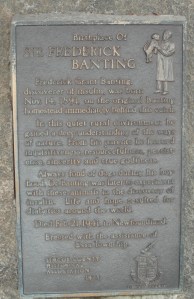 those diagnosed with diabetes mellitus had no chance of survival and could only delay death from the illness itself by starving the body instead. Their discovery followed on from the hard work of other scientists and medics from around the world such as
 ![IMG_0139[1]](https://7yearstodiagnosis.com/wp-content/uploads/2016/02/img_01391.jpg?w=300&h=225)


 believe me he went at it with gusto, even eating 6 roast potatoes at one sitting. Within the first 24 hours he started to show reactions to the potato – severe reflux, tummy aches, a constant need to wee and he started to soil again, something he really struggled with on an emotional level. The ward doctors refused to believe he could be reacting so quickly and their repeated mantra to me soon became “it’ll take 4-6 weeks for him to show a reaction” and “he just needs to push through this“. As each food was introduced, things got worse and worse as he was now completely incontinent, a position we hadn’t found ourselves in for a year. All the signs of his bowel starting to shut down were there as he was weeing for Britain, his appetite was dropping off and his energy levels started to wane and I kept saying that these indicated he was failing the foods, only to be told that it wasn’t possible. They were palpating his tummy twice a day and insistent it felt fine and every conversation ended with “it’ll take 4-6 weeks..yada yada yada…” – by now you get the picture! By day 8, they finally agreed to x-ray and, lo and behold, he was chronically impacted. This x-ray was apparently one of the clearest they’ve ever seen showing it – solid black throughout his colon due to the blockage.
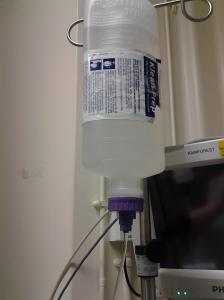 became 6 days of powerful bowel prep continuously via M’s NG-tube plus additional senna for the last 3 of those as things simply weren’t shifting as hoped. I have honestly never seen him so ill as he was by the end of that week – bent double from the cramps, crying, refusing to move from bed or engage with anyone, lethargic and rating his pain at an 11 or 12. Throughout this time he was expected to continue all 4 foods, just in case his obvious bowel reactions were actually nothing to do with the challenges and they had introduced a daily dose of senna to keep things moving, something we hadn’t needed at all during the 12-months being tube-fed.
 M’s consultant was very determined to get the NG-tube out and at times it felt to us that it was her sole focus for the duration of the admission, which was difficult to cope with when we were needing and hoping for so much more. Achieving that has been amazing, but he hasn’t suddenly started eating a “normal” diet, in fact he’s exactly where he was before we went in, and the need for the elemental feed (E028) is still very much there. The flip-side of losing the tube is that M’s
 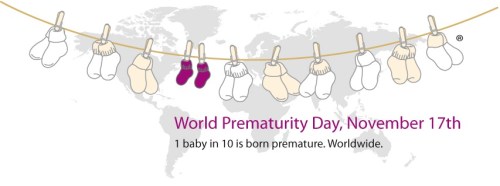 Today, November 17th, is
 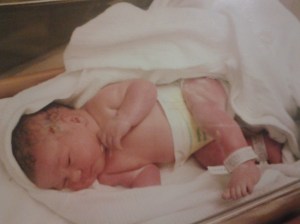 Of course, you’ve already met the first one: G just crept into the premature category, arriving at 36+6 nearly 12 years ago and weighing an extremely respectable 8lbs. Her delivery was the result of fears about my T1D and the signs that my placenta was beginning to fail, so the doctors made the decision to deliver her to ensure she had the best start in life. Even though she had an initial problem with plummeting blood sugars, G’s stay in SCBU (Special Care Baby Unit) was short at just 3 days and thanks to the wonderfully supportive nurses on the High Dependency ward who looked after us both, Mike, G and I were able to come home a week after she was born and spent our first family Christmas together at home.
 M was even more impatient to arrive than his big sister, although his birth weight of 5lbs 12.5oz at 33+1 gestation was equally impressive. M spent his first few days on NICU (Neonatal Intensive Care Unit), although there were times we felt something of a fraud, especially compared to the tiny 26-weeker 2 cribs along, who had been born at exactly 5lbs less than him. We had been warned from the moment I was first admitted at 26 weeks pregnant that once he arrived, M would almost inevitably need to stay in hospital until he reached his due date. It is of great credit to the dedicated doctors and nurses who looked after him that we were, in fact, able to bring him home after just 3.5 weeks and in perfect time for Mothers’ Day.
 And this tiny, but beautiful fighter is B, the second son of our close friends and M’s godparents, L and C. Due to fetal distress resulting from pre-eclampsia, B was born at 27+2, weighing just 1lb 9oz and has had a very different battle so far than either G or M. He had suspected NEC (
 These 3 precious bundles may not have had the easiest start in their lives, but we are lucky that they have each survived and become an irreplaceable part of our families. With a national health service that is in crisis, the neonatal units where G, M and B and thousands like them are cared for on a daily basis are seriously overstretched and understaffed. These children need an incredible level of specialist care to help them make it through those critical first few days and weeks of life and the doctors and nurses who give it are simply amazing as they offer not just medical care to the babies, but emotional support to the whole family. That is a gift that cannot be easily replaced and we know that we were extremely fortunate to be able to receive it.
 7 years to diagnosis