Tag Archives: elemental diet

“I like rice…

..Rice is great if you’re hungry and want 2000 of something.”

– Mich Ehrenborg

I never realised just how daunting food could be until we embarked on our dietary journeys with our children.  It might sound ridiculous, but having achieved such a resounding success from M’s move to the elemental diet, the prospect of food reintroductions caused my heart to beat a little faster, my palms to grow a little sweatier and several middle-of-the-night awakenings to contemplate just how the whole process would work.  A big part of the problem was the lack of useful any information from the dietetics team about…well about anything I wanted to know.  I like to have a clear plan to follow and needed to understand how we would choose which foods to start with, how each food should be prepared, how much to give and how often.  The vagaries of sweeping statements such as serve M “a portion”, with no hard and fast details of the specifics drove me insane, but with lots of discussion, frantic e-mailing and a move back to our old and trusted dietitian rather than the one I’d had run-ins with during M’s admission, we finally got the answers we were after.

Courtesy of alternative-doctor.com

Courtesy of alternative-doctor.com

The decision was to begin with rice, commonly considered to be hypoallergenic and therefore a great starting place for M.  Whilst many children reintroducing foods following the elemental diet might trial potato first, this was one of the known triggers for M’s allergic reactions and so we needed to find a basic food that was likely to be safe.  Despite being told that we could comfortably start with a “portion” of rice, I chose instead to take things slow and M had just 1 tablespoon of plain, boiled rice on that first night.  He enjoyed his mouthful and, looking forward to having more the next day, carried on somewhat oblivious to the anxious monitoring I was trying desperately to hide.  The evening passed without event and we all went to bed happily – well, the rest of the family went to bed happily, I went battling the usual Mummy-paranoia that accompanies anything and everything that involves my children and their welfare.

Courtesy of smartwebsite.ru

Courtesy of smartwebsite.ru

Since that day, around 4 weeks ago now, we have been able to gradually increase the amounts of rice M eats each day and have branched out to include rice milk, rice cakes and gluten-free rice cereal – a veritable feast!  This week I even managed a rice batter, using rice flour and sparkling water and made some deep-fried rice balls to tantalise his taste buds.  M has shown an occasional atopic reaction to the rice as it triggered a rash across his shoulders and back, although the hives have now calmed down as his body has become accustomed to eating once again.  Despite this rash, we have seen no reaction in his bowels and are able to count rice as a “safe” food for him.  Even better, we have also been able to add chicken to the mix and this week have been trialling pineapple, though the jury is still out as to whether this may be causing a mild behavioural reaction akin to the one we’ve seen him experience before to soya.  Assuming all is well with the pineapple, we have plans to trial pork, cucumber and carrot over the coming weeks and may even have time to squeeze in another carbohydrate before we head back to GOSH in April.

E028 – the success story

When we started this new chapter in M’s life 10 weeks ago, we approached it with the attitude of “hope for the best, but prepare for the worst”.  We hoped that the move to an elemental diet, consisting of 1500mls of E028 each day, would bring some much-needed relief to his bowel and body and that, from that recuperation would come a way forward that would improve M’s quality of life.  And whilst we were well prepared that there was a chance it might not work; that it might not bring the recovery M desperately needed and that we might have to look to even more extreme measures to reach our end goal of improved health; that wasn’t a prospect we were prepared to spend too much time on, yet.  It was far more important to be positive about the route we had chosen, which wasn’t an easy choice to make and had its challenges from the start: be they passing the NG-tube at GOSH or figuring out our new routine at home.

Courtesy of nameonline.net

Courtesy of nameonline.net

Despite the roadblocks thrown in our path, we’ve kept plodding on, negotiating our way skilfully around the inevitable melt-downs, tantrums and even those tempers that lead to a tube being pulled out accidentally.  We’ve all learned valuable lessons – don’t storm off in a temper following a sibling argument leaving your pump behind being a key one for M – and we’ve survived as a family and, dare I say it, grown stronger as one too.  We have laughed, cried and got angry together.  We’ve used that laughter to overcome the depths of despair and we’ve focussed on the important things in life.  Mike and I have long been a team, since the disastrous surgery on my left eye for diabetic retinopathy 17 years ago just weeks after Mike had moved to the UK and before we were even married.  We may not always see eye to eye, but we have grown together and take turns in being the strong one when the other is feeling weighed down by the world.  Now we have 2 children who are learning those same lessons and this experience has shown me just how amazingly strong our children are. They’ve coped with all that life has thrown at them and whilst they may have been knocked down occasionally, they’ve learned to pick themselves up, to brush themselves off and to keep going along their paths. The last 10 weeks have seen them grow in their empathy for others and they too have taken turns in being the strong one when faced with adversity.

Courtesy of artiwards.com

Courtesy of artiwards.com

The best news of all is that we now know that every exhausted step has been worth it and I’m thrilled to be able to share that, for M, the E028 has been his success story.  Within days of the switch to a food-free diet, the near constant diarrhoea that has been the bane of the last 9 years of our lives stopped.  Just like that. No magic potions, no magic wands, no tricks and, so far, no looking back.  M has become the fun-loving, caring, well-behaved little boy we all knew was hiding somewhere within himself.  His joie de vivre has returned and his humorous outlook on life is much more evident.   As each day passes, we are slowly and surely making more and more progress and his confidence has grown as evidenced by his abandonment of his daytime reliance on pull-ups for the first time in a year.  It’s not been a perfect cure by any stretch of the imagination and his weight is once again giving us, and the medics, cause for concern, but it’s a massive step, a giant leap in the right direction.  We are lucky that this proved to be the way forward for M and we are truly grateful for that as we know so many other families who have not found it to be the answer to their health problems and are still battling on.

Meanwhile, the next step is the big one for us: food reintroduction.  We need to work on getting food back into M’s diet without upsetting this balance that he has found right now.  There’s a “sort-of” plan from the dietitians about how we go about trialling each food with M, but for the most part it’s going to be driven by us.  Having finally got my lad to the point where “I feel better Mummy, my tummy’s less grumbly and I just feel…well…feel so much better in myself“, I refuse to be hurried and I’m going to protect this new sense of well-being with all my strength and determination.


Managing a NG-tube

Formula made, it’s time to move on to what was, to me, the most daunting part of our NG-tube (NGT) journey and the bit that scares other people the most – the NGT itself.  Whilst it now feels like second nature, this was the biggest hurdle I had to overcome in my quest to become confident in managing M’s enteral feeding at home.  Let’s start with the very basics of what a NGT is and the job that it does.

The tube is a length of flexible material, which is inserted through the nose and travels down the oesophagus into the stomach with the purpose of allowing food and medicine to be placed directly there.  There are a myriad of medical reasons for a NGT to be passed and in M’s case, it was because he wasn’t able to drink the quantity of E028 needed each day due to being a reluctant drinker and the very unpalatable taste of the feed.  The NGT is measured against the child’s body before it’s inserted to make sure enough length is passed for its tip to sit comfortably within the stomach.  There are varying types and sizes of tube that can be used to allow for the age and size of the child, differing situations and the various medical needs.  M has a long-use “10 silk”, which he found to be the most comfortable to have in and can be left in place for up to 8 weeks before it needs to be changed.  Other tubes are more rigid and require changing on a weekly basis, something that just wouldn’t be practical given his current anxiety about having the tube passed and his allergic reactions to anaesthetic.

Once the tube has been passed and is in place, it is secured to the cheek using dressings and tape.  There are a number of these available and it really is a case of trying them out to see which works best for your child.  We quickly discovered that M has an allergic reaction to Duoderm and Micropore, two of the most commonly used dressings and so we’ve had to work out a method of fixing the tube to his cheek that won’t cause his face to become red and inflamed.  For us that proved to be a small strip of Tegaderm, which I then decorate using an amazing product I found on an US website called Feeding Friends.  These stickers are printed on medical tape and add some fun to the prospect of having a NGT on permanent show.  By sticking one over the top of the Tegaderm strip, M’s skin doesn’t react and he loves nothing more than choosing which friend will grace his cheek each time.  I change his tape approximately every 3 days, though we find that if it gets too wet in the bath or shower, then we need to replace it more often.

So far, so good and nothing too scary you may think, but now comes the most difficult bit, making sure that the NGT is still in the right place before starting a feed.  This is known as “aspirating” the tube and requires you to draw an amount of liquid up the tube to check that its tip is still sitting in the stomach and hasn’t become dislodged or moved during the time off the pump.  We were told to use nothing smaller than a 20mls syringe to aspirate the tube and are provided with 60mls syringes by our home delivery team.  Remembering to “kink”, or create a block in, the NGT before you start – this ensures that no air can go down the tube whilst you fiddle around with it – carefully attach the syringe to the end of the NGT and pull back on the plunger with – in my experience – your fingers tightly crossed that you can draw some of the liquid out from the stomach.  Depending on the time of day and what your child has been up to beforehand or even what, if anything, they’ve had to drink, this can prove to be something of a challenge.  It is possible for the tip to become stuck to the stomach wall, which creates a vacuum when you try to pull upon the syringe. I’ve found that sometimes it will “pop” free and a sudden flood of liquid will rush into the syringe and at other times, your gentle tugging will be met with nothing but stubborn resistance and a failure to draw even a millilitre out from the stomach.

The key thing to remember at this point is NOT TO PANIC. The first time it happened, I desperately scrabbled around in the depths of my memory to recall what advice the GOSH nurses had given, all the time attempting to resemble an oasis of calm and to impart none of my increasing anxiety to an unaware M.  There are 3 easy ways to try to resolve the problem:

  1. Give your child a glass of water to drink, wait around 15-20 minutes and then try again
  2. If the drink hasn’t helped, take a deep breath, lean your child at an angle of approximately 45° for 20 minutes before your next attempt
  3. If you still can’t aspirate the tube, get your child to lie on their left-hand side as this is where the stomach is positioned and may encourage that stubborn NGT to finally drift away from the stomach wall and allow you to test exactly where it is

If none of these has worked, or if your attempts to aspirate are causing your child discomfort, then you need to get the tube medically checked.  In our case, this meant a trip into our local A&E department, but could simply mean a phone-call to your local community nursing team or feeding team, who will be best placed to advise you on where to go and what to do next.

Courtesy of jamali4u.net

Courtesy of jamali4u.net

However, assuming you are able to aspirate the NGT with relative ease, you now need to check the pH of the liquid you’ve drawn from the tube to make sure that all is where it needs to be.  You will have been provided with pH strips as part of your enteral feeding “kit” and testing couldn’t be easier.  Simply drop some of the stomach juices on to the pads at the end of the strip and watch them change colour.  Memories of secondary school chemistry lessons come flooding back at this point and testing substances to see whether they were alkaline or acidic.  In M’s case, we are looking for a pH of 5.5 or less, indicating that the liquid drawn is acidic and therefore likely to have come from his stomach.  Always check with your nursing team what pH level is safe for your child as certain medicines are known to affect the results and an adjustment to the recommended results may be made.

Although aspirating the tube is a scary prospect, the risks associated with a misplaced tube are great.  I was lucky to be trained on all aspects of M’s NGT whilst we were in GOSH, but even then found the first few attempts a frightening prospect.  The most important lesson I learned was to “kink” his tube every time I did anything with it and now I don’t even think twice about doing it – it’s just another step in the process of starting his pump feeds. Once it’s confirmed that the NGT is correctly positioned, tube feeding can now begin, but that, I fear, is a lesson for another day!

Our first lesson in Elemental feeding

Courtesy of shutterstock.com

Courtesy of shutterstock.com

The last 11 years have been filled with one parenthood-survival lesson after another and it has to be said that the majority of those can be attributed to M.  I’ve now honed my parenting techniques to become, not just referee, cheer-leader, taxi-driver and chief bottle-washer, but also self-made expert in rare gastro conditions, skilled negotiator with both small children and medical professionals alike and ardent advocate for (my) children’s rights.  Our latest, and steepest, learning curve carries an uncanny echo of the challenges my own parents had to conquer nearly 30 years ago when faced with the diagnosis of my Type 1 Diabetes (T1D).  They had to learn fast all about blood sugar monitoring, counting carbohydrates and, perhaps most daunting of all, how to give insulin injections.  There could be no question of whether they felt comfortable in doing these things because they knew that their new role in my life was not just as parents, but as the front-line defenders of my everyday health.  I have hazy memories of learning to inject on an orange and know that those oranges were subject to the first faltering attempts of my whole family.

Courtesy of soteriapublishinghouse.com

Courtesy of soteriapublishinghouse.com

We’ve had to learn how to feed our child via NG-tube, a process known as enteral feeding and similarly there’s be no time to stop and question whether we were ready, willing and able to do this because M’s health demanded it of us.  Each step is not particularly complicated in itself, but the anxiety of remembering what we had to do and when was overwhelming in the first couple of weeks and I was scared of getting it wrong.  Due to a desperate need for M’s bed in the long-term gastro ward at GOSH, I had no choice but to learn as much as I could as fast as I could, so as not to be left struggling once we were back in our own home.  We have the support of an excellent nursing team from Nutricia, the company who provide M’s pump, feed and medical supplies, but that’s it.  Mike and I have quickly had to become experts in this new part of M’s journey and the extraordinary has now morphed into the routine.

For those of you who have never had to do enteral feeding, or who are learning about it for the very first time, my next couple of blog posts will cover the process in a “step-by-step” approach, which will hopefully give some useful tips on managing tube feeding.  I would also highly recommend reading this blog post by fellow blogger, MumAnnie123 – it was my “go-to” article when we were incarcerated at GOSH and gave me lots of tips and advice about maintaining my sanity as we ride the NG-tube feeding roller-coaster.  The one thing I’ve quickly learned is that everyone will have a slightly different approach, be they parents or medical staff, so make sure you follow the basic rules, adopt recommendations that meet your family’s needs and adapt to a routine that suits you and your child the best.  At the end of the day, you are the people living with the elemental feeding and need to have a system that works for you – alter the feeding routine to work with and around your life at home.

20150203_082342Following a timetable that is hugely reminiscent of our days with a baby, each day actually begins the night before, when I have to make up the bottles of M’s feed alongside the preparation of G’s packed lunch for the next day.  Each evening as I boil the kettle, I gather everything needed to make his feed – packets of the Elemental E028 powder, scoops (1 blue, 1 yellow), a 1 litre plastic measuring jug, hand whisk and 2 sterile packs containing the 500mls and 1000mls plastic feeding containers, also more glamorously named “reservoirs”.

We have a detailed “recipe” for M’s E028 feeds, which was calculated by the GOSH dietetics team to provide the calories and nutrients he requires daily based on his age, height and weight and I carefully measure the required scoops of the formula into the measuring jug.  Next comes adding the boiled water, which was surprisingly trickier than it sounds as Mike and I both made mistakes on our first weekend at home.  What hadn’t been made clear to us in the hospital was that the water added is enough to make the required amount , in M’s case 550mls, and NOT, as we both first read it, add 550mls of water to the mix.  Whilst this sounds a fairly inconsequential error, the nuance was important and the outcome was that we ended up with a lot more formula that M could drink and at a lower concentrate that he needs to remain healthy.  I add the boiled water whilst it’s still warm as I’ve found this dissolves the powder more thoroughly and a good whisk ensures that there are no lumps poured into the feed bottles.  This is important as those miniscule lumps can be enough to block the tube and cause the pump to alarm.

20150203_160111Feed mixed and bottles filled, we then store them in the fridge for up to 24 hours, following the advice of both our dietitian and the community nurse, who reassured us that this was safe to do and is a shortcut that makes my life a whole lot easier.  M hates having his E028 cold, so I make sure that the bottle is taken out of the fridge at least 30 minutes before his feed is due to start and warm it in a bowl of hot water – a great tip shared by the nurses at GOSH.  The first few days felt chaotic as I rushed around making up feed, storing bottles and trying to make sure that we were doing everything we were supposed to do.  Now I’ve found we’ve fallen into a steady rhythm as I’ve found my feet in making this process work for me and that was the key to our success.

Christmas without food

foodIt’s not until you find yourself in a situation where you need to avoid food that you realise just how much of our everyday lives and how many social occasions revolve around meals or other food-based activities.  Just think about it: birthdays are celebrated with a mix of party food, cake, treats for your friends and – when you’re turning 9 – party bags filled with sweets; Easter inevitably includes the requisite chocolate egg plus Easter biscuits and Simnel cake; a catch-up with old friends often starts with coffee and cake and may well move on to drinks and dinner; and Christmas is, quite simply, the time when we all over-indulge and go mad, filling our cupboards and fridge with chocolates, biscuits, mince pies and brandy butter in a manner that suggests there’s a genuine risk that we might run out at any minute.

Our plans for this Christmas itself were relatively simple.  My Mum had suggested that we served a buffet over the festive period, rather than having the traditional mid-afternoon sit-down feast that we’ve all become accustomed to, which seemed a great alternative and allowed us to cater for everyone’s needs.  Much to my surprise, M was keen for the rest of us to sit at the table for supper on Christmas Eve, whilst he sat in the other room watching some Christmas TV and sipped his glass of full-sugar 7-up, one of the few treats he’s allowed alongside his elemental feed.  By Christmas Day, he wanted to have company in front of the TV and Boxing Day saw us eating in shifts, whilst the others played board games or watched films with M. We quickly learned to let M decide where he was happiest being at meal-times and included him in as many traditions as we could – pulling Christmas crackers, sharing the jokes, wearing paper crowns and making the time as normal as possible without focussing all our attention, and his, on the food.

Courtesy of abcnews.go.com

Courtesy of abcnews.go.com

We thought we had covered all the bases this Christmas, or at least, all those we considered to be the biggies, but it was the little things that crept up and caught us unawares.  Our Christmas stockings always include chocolate treats (dairy- and soya-free naturally), a box of tic-tacs, a handful of nuts and a satsuma pushed down to the toe, but none of those could find its way into M’s stocking this year.  I had bought Moo-free chocolate advent calendars and selection boxes for both children before we knew he’d be going into hospital and whilst M had managed to have 4 advent chocolates before his admission and G enjoyed the rest whilst he was in, I had to work out how to give G the selection boxes without rocking M’s world too much.  This was one of those small things that needed a lot of late night planning on Christmas Eve. slices

In stark contrast, Mike and I had considered beforehand the treats that usually adorn the coffee table at home and deliberately didn’t leave out the boxes of Turkish delight or the dates or the orange and lemon slices in their normal home.  Instead, we stored them in a safe corner to be pulled out once both children were in bed as we didn’t want them to be a constant reminder of what M couldn’t eat and yet he objected more to us hiding these goodies away than leaving them on display. “It just isn’t Christmas, Mummy” was his feeling on the matter, without these seasonal delights out for all to share and enjoy.

I’m not sure I know that we didn’t get everything 100% right, but given that we were very much thrown in the deep end with little advice on how to survive the day, I think we did okay.  The biggest lesson learnt was to be flexible on a daily basis and not to expect one day to be like the next, both at home and at school.  Some days M sits and chats with G at the dinner table, enjoying a Foxes glacier mint (another small treat allowed) and a glass of 7-up whilst she eats her meal and yet the next will find him close to tears and hidden away in another room for the duration.  There is no pressure for him to constantly be a part of every meal-time and as long as he spends some quality time with the rest of the family, I’m happy to give him the time-out he sometimes so desperately needs.

The 3rd and final step

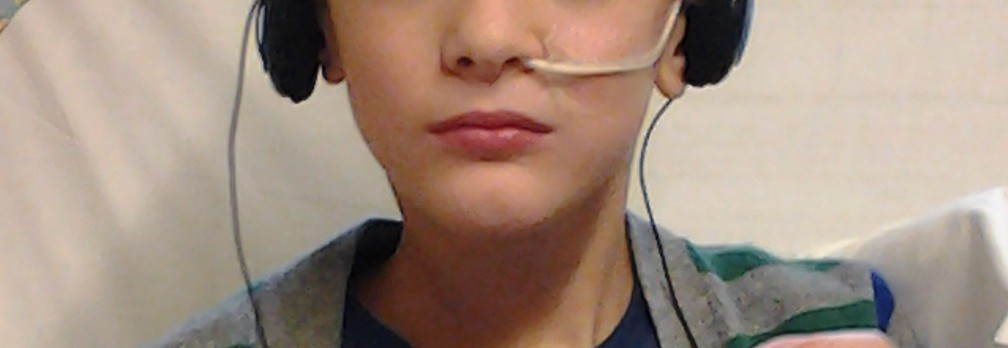
M and his tube at GOSH

M and his tube at GOSH

With steps 1 and 2 complete, we were now onto the third step, the one which is going to have the biggest impact on M’s life for the next few months.  NG-tube in place, dis-impaction done and pellet study under way, it was now time to move M to an “elemental” diet, one which sees all foods removed from his diet and replaced by a nutritionally complete feed that consists of amino acids, carbohydrates, fats, vitamins and minerals.  The ideal would be for M to drink the 1.8 litres of this feed that he needs each day to have the right amount of calories and nutrients for his age, weight and height, but I knew we had no chance of getting him to do that.  Not only is he a reluctant drinker at the best of times, meaning it would be nigh impossible to get nearly 2 litres of liquid into him on a daily basis, but the feed is truly revolting to taste and even adding generous quantities of approved flavouring was never going to be enough to convince him to let more than a minimal amount pass his lips.  The only alternative was to feed him via his NG-tube, which meant an intensive few days in hospital for us as we worked out how best to give the feeds, the timings and rates that he could tolerate and I was trained on how to manage his tube.

The original plan proposed by the dietitians was that M receive six 300mls feeds a day via the gravity-feeding method, which meant that we would attach a large syringe to the end of his tube and gradually add the 300mls over the duration of the feed to ensure he took the full amount.  The principle of gravity feeding is that you can adjust the speed of the feed as the flow of the liquid is driven by the height of the syringe and the effect of gravity:  the higher the syringe, the faster the flow. The dietitian was keen that the feed be given over around 20 minutes, but it quickly became obvious that this just wasn’t going to be a method that would suit M.  Within 5 minutes of his very first feed starting, he turned pale and grey and complained that his stomach was hurting. The nurse giving the feed adjusted how high the syringe was held, but no matter how the syringe was positioned, things didn’t get better and by feed number 2, the nurses were adamant that this just wasn’t going to work for him, something I wholeheartedly agreed with.  At this point, we were only giving him 200mls instead of the full 300mls, but even that was proving too much for M’s sensitive digestion, so the dietitian finally had to agree to what the nurses were telling her and everything was changed yet again.

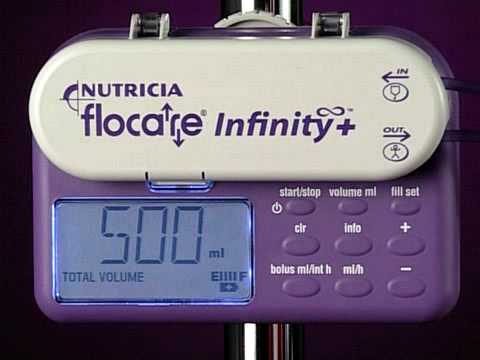
M's rather snazzy new pump

M’s rather snazzy new pump

Our new routine saw the feed mixed to a higher concentration, meaning that we only needed to get 1.5 litres into him a day and we were introduced to the wonders of a pump.  The pump means that the rate of giving the feed can be at a speed that best suits M and can easily be tweaked as each individual situation requires.  There was a lot to learn in the few days we had as I needed to know and be confident in how to check that his tube was correctly positioned, what to do if it appeared to have moved, how to prepare the elemental feeds and how to attach and properly operate the pump.  There was also the added complexity that the pumps used on ward by GOSH were not the same as the one approved in our community and whilst the principle was the same, the processes were slightly different.  However, by the time discharge finally happened, I was as au fait with this new part of our life as I could hope to be, felt that we could cope at home and, more crucially, had enough medical supplies to see us through the next few days.

M and his tube at home

M and his tube at home

Since that first day, now over a month ago, that original regime has been changed and tweaked more times that I care to imagine.  The suggestion of 6 feeds being administered at separate 30 minutes periods throughout the day were impossible for M to manage as he wasn’t able to tolerate the 250mls over either the initial proposed 30 minutes, nor our second attempt of an hour.  It also quickly proved impractical as any issues with the placement of the tube would take at least 20 minutes to resolve and that was time that we couldn’t expect the school to give him as he doesn’t get any individual support.  We soon realised that M wasn’t coping either physically or emotionally with the constant feeding and we have now settled on a routine that seems to work for everyone concerned.  His first feed is a 1 litre one starting at around 6.30am, which is given slowly enough to avoid too many tummy aches or occurrences of reflux and which lasts until the end of lunch-time.  The pump is disconnected at that point and M is able to enjoy an afternoon free of the encumbrance of his pump whilst at school.  The final 500mls feed begins between 4pm and 4.30pm and takes us all the way through to bedtime.

This is the routine that we will be living with for the next month or so and then the task of food reintroduction will begin.  As our local dietetics team has refused to be involved in M’s care, we will be working with the dietitians from GOSH to work out a detailed approach to trialling foods and the order we try them in.  The elemental feeding via NG-tube will continue alongside these food challenges until we have identified enough safe foods for M to eat and get all the calories and nutrients he needs to be healthy.  It’s not going to be an easy or quick task to complete, indeed there is a long and arduous road ahead, but it should be one that leads to more answers for M’s health than we’ve ever had before.