
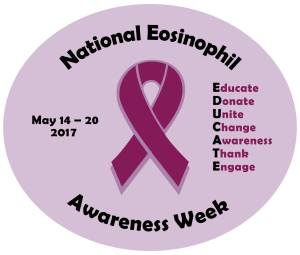
 2017 marks our 5th National Eosinophil Awareness Week and yet, in many ways and for many reasons, this year may be one of our quietest yet. One of those reasons is that over the last 12 months, we have experienced a significant shift in the way that M’s doctors view his diagnosis and that change, along with the inevitable amount of growing up that is going on in our household at the moment, means that life has become about a lot more than just the label we’ve been handed to explain his medical condition. I’ll be honest, that transitioning medical opinion has been difficult to live with because it has challenged the very way we’ve coped with the last 11 years of our life and has demanded that we examine closely all of those decisions we’ve made believing them to be in the best interests of both our children and not just M. It has made us sit back and question whether we’ve been choosing and doing the right thing.
This seismic shift that we’ve been experiencing is not isolated to our experiences or even to our part of the world, but rather appears to be part of a nationwide change in the understanding, and even the diagnosis, of Eosinophilic disorders themselves. As a parent to a child with this diagnosis, the prospect of moving away from recognising Eosinophilic Disease as a genuine medical condition is a daunting one. Whatever title you want to attach to this little-recognised health issue, the hard facts are that those diagnosed with it are struggling and suffering on a daily basis and removing the validity of its name does not, and will not, remove the reality of the problem itself. The steps we have taken over the last 4 years since diagnosis have not always been easy ones, but without a shadow of a doubt, they have been ones that have seen much improved health for M at times when we have had to make what are unquestionably the toughest of choices.
Similarly, we are not the only family who has found itself moving away from the care provided by GOSH over the last couple of years – some have moved by choice, whilst others have had little or no say in the matter. In our case, our GOSH consultant and dietitian recommended we sought local input into his care because they had reached a point where they could find no explanation for why his body reacts as it does and felt that a fresh pair of eyes might be able to give us different insight into how to go on from here. The last 8 months have been extremely challenging for us all as our local consultant has made suggestions that we are not always 100% on board with and it has taken unbelievable courage on the part of all in our family to even agree to try new things  that no-one really knows will succeed in the long run. The jury is still out on whether we are currently heading in the right direction with his care and truthfully only time will tell whether the decisions we are making this time round are the right ones or not.
Without any funded research into the complexities of gastrointestinal disorders, individuals like M will always be at the mercy of what can only be seen as an experimental approach, as diet, medicines and psychology are discussed and considered and tweaked to produce the best possible outcome on very much a “trial and error” basis. In our experience, we know that food plays a huge part in the way that M’s body behaves and the medicines he’s currently on appear to be doing their job of dampening down the body’s reactions to everything he eats. Likewise, we agree that there is a psychological element to it all and have had our concerns about the psychological impact of a chronic illness on his mental well-being. Sadly, where we have currently agreed to disagree with the medics is whether the psychology plays a bigger part than the physiology when it comes to M’s day-to-day health and responses. Yes, we know that stress can wreak havoc on the digestive system of just about everyone, but we will not be swayed in our belief that it is more than that for M. The hard facts of our 11 years with M show us that his health challenge is unquestionably a physical one and we will continue to fight for greater understanding of Eosinophilic disorders and how they affect everyday living for those diagnosed with them.
This week is about raising awareness of EGID and sharing our experiences – the good, the bad and the ugly – of living with it. For us, and for the families we’ve got to know who live with it, EGID is a part of our lives that we have to accept and learn to come to terms with, no matter what discussion is being had in the medical world. It might not be clear whether EGID is in itself the final diagnosis, or if it is simply part and parcel of a larger problem that is, as yet, unknown, but it is our reality and it shapes every step that we take.
This year we have decided to continue our support of the amazing charity, Over The Wall and their camps. If you’re able to donate even a very small amount, please follow this link to my Virgin Money Giving Page where your donation will help more children living with chronic illness like G and M by giving them and their families a chance to enjoy some much-needed time away from it all.
 If there’s one thing the last few years have taught me, it’s that it is truly worth
  Today is the start of National Eosinophil Awareness Week 2017 (#NEAW2017), our fifth year of finding new ways to talk about EGID and telling those in our community, and beyond, about this disease.
 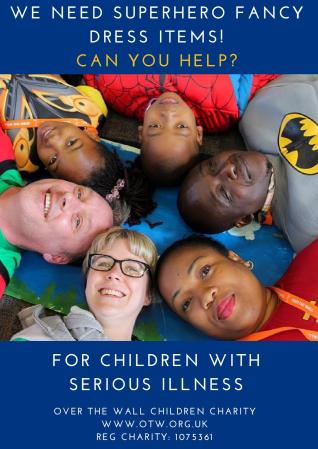 Junior school draws to an end, the Headteacher has agreed to support our awareness-raising campaign for the final time and is helping M to host “Dress as your Hero/SuperHero” for the day on Friday May 19th.


![IMG_0151[1]](https://i0.wp.com/7yearstodiagnosis.com/wp-content/uploads/2016/03/img_01511.jpg?w=380&h=380&crop=1&ssl=1 "IMG_0151[1]")
![IMG_0301[1]](https://i0.wp.com/7yearstodiagnosis.com/wp-content/uploads/2016/04/img_03011-e1461243747370.jpg?w=237&h=380&ssl=1 "IMG_0301[1]")


![IMG_0635[1]](https://i0.wp.com/7yearstodiagnosis.com/wp-content/uploads/2016/06/img_06351.jpg?w=158&h=211&ssl=1 "IMG_0635[1]")
![IMG_0850[1]](https://i0.wp.com/7yearstodiagnosis.com/wp-content/uploads/2016/07/img_08501-e1468346986785.jpg?w=82&h=211&ssl=1 "IMG_0850[1]")
![IMG_0802[1]](https://i0.wp.com/7yearstodiagnosis.com/wp-content/uploads/2016/08/img_08021.jpg?w=158&h=211&ssl=1 "IMG_0802[1]")
![IMG_0817[1]](https://i0.wp.com/7yearstodiagnosis.com/wp-content/uploads/2016/08/img_08171.jpg?w=289&h=217&ssl=1 "IMG_0817[1]")
![IMG_0980[1]](https://i0.wp.com/7yearstodiagnosis.com/wp-content/uploads/2016/09/img_09801.jpg?w=289&h=216&ssl=1 "IMG_0980[1]")


 When it comes to thinking they know it all and can do it all better than the adults in their life, my kids are world champions. The frequency with which Mike is told that “Daddy, you just don’t understand..” is high and he often finds himself trying to defend his position to an irate 10 year-old, even on matters where he quite obviously has far more expertise than anyone else in the room – think anything building-related given his career as a chartered surveyor. There is a certain level of deference awarded to me, after all I’ve proved over and over again that Mummy knows everything there is to know and, besides which, she really isn’t someone you want to get on the wrong side of ever; but the opinion of just about every other adult is scrutinised carefully and often rejected on the basis that they just don’t understand either. M has some very strong opinions and would, and sometimes has, happily argued the case that the sky is green for hours, often with a reluctant truce having to be declared before World War III breaks out across the dinner table. As for G, well she has perfected the teenage eye-roll ahead of hitting her 13th birthday and it’s often accompanied by a surly shrug of her shoulders and a mumbled “Whatever” as she heads upstairs to the seclusion of her bedroom.
 So, you can imagine my thoughts when G and M were invited to be a part of this year’s
  ent and Property Services department as Director and Deputy Director for the day. The information they received in advance told them that they would have a “behind the scenes” tour of the hospital with opportunities to learn about the systems that help the hospital to run efficiently, including visiting the plant room with engineers, learning about the food ordering system and how the meals get to the children on ward and understanding more about how the hospital plans and designs spaces to be fun and interesting for the patients, their families and the staff. Ahead of the day itself, both G and M were asked to complete a profile to be shared with the Development team, explaining a little about why they were interested in this role as well as what their involvement with GOSH is. G had 2 key areas of interest – finding out how the kitchens cater for patients with food allergies and how new spaces and redevelopment work is done – whilst M was eager to see the plant and machinery that makes the hospital run and find out more about the technology in place.
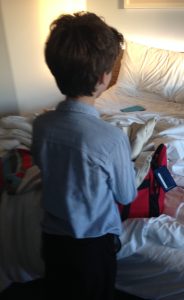 Determined to dress for the occasion, M’s clothes were chosen the weekend before to make sure that everything he needed was washed and ironed, unlike his sister, who typically left everything to the last-minute and was then put out when her first couple of outfits were deemed unsuitable by me. Taking the challenge very seriously indeed, M solemnly told me that I needed to make sure he was in bed early on the Monday and Tuesday so that he could be well-rested and ready for a busy day. Our decision to head to London on the Tuesday night after a Year 6 meeting at his school slightly scuppered those plans and his night’s rest was then further disrupted by a 5am fire alarm in the hotel, something none of us appreciated. The further stress of the drive across London to make sure that we reached GOSH in time whilst being questioned constantly as to when we would arrive, tested my nerves thoroughly, though we did make it – by the skin of our teeth. The hurried unloading of G, M and me just around the corner so that we could dash to the main entrance by 10am as Mike went off to the park the car, was an unexpected drama I could really have done without.
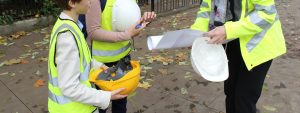 and we are still hearing snippets about it a week on. Whilst both children took over the same department, their mornings were filled with different activities to meet the interests they had already expressed in their completed profiles. M spent the morning with Development Director, Matthew Tulley, the highlights being exploring the roof of the hospital and learning more about CAD. That second activity earned the accolade that “CAD is rad!”, something I suspect will stick with the Development team for a long time. G headed in a different direction to learn more about different aspects of what this department does. She went with Deputy Director Stephanie Williamson and spent the morning planning and designing a new orthopaedic therapy space, which she really enjoyed, though it proved to be a challenge to fit all the requirements into the space available. She then headed to the kitchen to find out a little more about how patient meals are prepared, before meeting up with M and Matthew for their lunch. A big thank you has to be given at this point to Stephanie and the rest of the catering team who did a sterling job at providing safe meals for both children to enjoy. Both had been able to choose their menus before the day itself and the team had taken on board M’s request for either rice pudding or a rice krispy cake for pudding, which he was delighted to see.
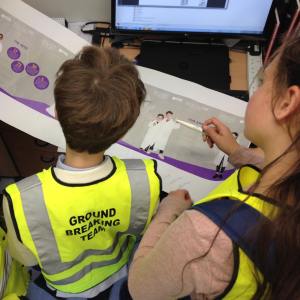 There was then enough time to head off to Coram Fields and chair a meeting about the new research centre being built and discuss the hoarding that will be used to surround the site. They even managed to find their way on to the building site, where M’s enthusiasm in particular has earned him the offer of a return visit to see the completed building in a couple of years’ time.
 Mum, a retired Year 6 teacher, to fine-tune those skills that were proving a little elusive to my school-loving child. Her hard work and focus throughout the year stood her in good stead and we were all proud of her year-end results, most of all because they rebuilt her belief in herself. Despite that previous experience, I knew that M’s start in Year 6 would herald a very different set of experiences and that’s absolutely proved to be the case.
 and interactive games and challenges. He has access to this both at home and at the Dyslexia centre and will soon be able to use it during some of his intervention group sessions at school. I have also just invested in the Nessy Fingers course, which will teach him to touch-type, a skill we are all agreed will be of huge benefit to him, especially when he moves on to secondary school next September. The ability to make notes on a laptop or tablet will ease some of the angst he already feels about the workload he will face in Year 7 and we are hoping to investigate some dictation programs that will also make his life just that little bit easier.
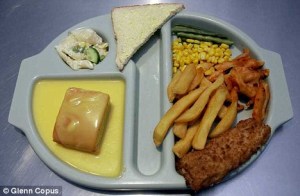 from the independent sector to a school with external caterers. We did manage for a couple of years once M had started at school by making sure that G and her teachers knew to pick the safe option from the choices given, but once M went MEWS-free in 2011, school dinners became a thing of the past and packed lunches were the way forward.
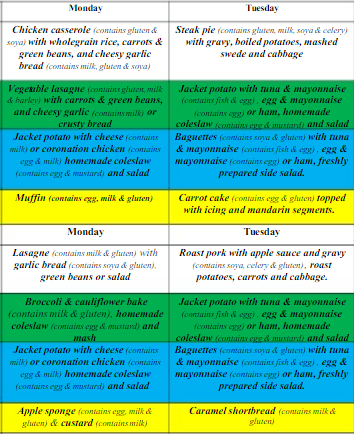 so that they can work together to provide a healthy and nutritious alternative menu customised for that child. I’m sure that they cannot be the only school to make such efforts, but they are certainly the first I’ve heard about from someone in the know and I was impressed by what she told me they offer.

 7 years to diagnosis