Tag Archives: health issues

Our first lesson in Elemental feeding

Courtesy of shutterstock.com

Courtesy of shutterstock.com

The last 11 years have been filled with one parenthood-survival lesson after another and it has to be said that the majority of those can be attributed to M.  I’ve now honed my parenting techniques to become, not just referee, cheer-leader, taxi-driver and chief bottle-washer, but also self-made expert in rare gastro conditions, skilled negotiator with both small children and medical professionals alike and ardent advocate for (my) children’s rights.  Our latest, and steepest, learning curve carries an uncanny echo of the challenges my own parents had to conquer nearly 30 years ago when faced with the diagnosis of my Type 1 Diabetes (T1D).  They had to learn fast all about blood sugar monitoring, counting carbohydrates and, perhaps most daunting of all, how to give insulin injections.  There could be no question of whether they felt comfortable in doing these things because they knew that their new role in my life was not just as parents, but as the front-line defenders of my everyday health.  I have hazy memories of learning to inject on an orange and know that those oranges were subject to the first faltering attempts of my whole family.

Courtesy of soteriapublishinghouse.com

Courtesy of soteriapublishinghouse.com

We’ve had to learn how to feed our child via NG-tube, a process known as enteral feeding and similarly there’s be no time to stop and question whether we were ready, willing and able to do this because M’s health demanded it of us.  Each step is not particularly complicated in itself, but the anxiety of remembering what we had to do and when was overwhelming in the first couple of weeks and I was scared of getting it wrong.  Due to a desperate need for M’s bed in the long-term gastro ward at GOSH, I had no choice but to learn as much as I could as fast as I could, so as not to be left struggling once we were back in our own home.  We have the support of an excellent nursing team from Nutricia, the company who provide M’s pump, feed and medical supplies, but that’s it.  Mike and I have quickly had to become experts in this new part of M’s journey and the extraordinary has now morphed into the routine.

For those of you who have never had to do enteral feeding, or who are learning about it for the very first time, my next couple of blog posts will cover the process in a “step-by-step” approach, which will hopefully give some useful tips on managing tube feeding.  I would also highly recommend reading this blog post by fellow blogger, MumAnnie123 – it was my “go-to” article when we were incarcerated at GOSH and gave me lots of tips and advice about maintaining my sanity as we ride the NG-tube feeding roller-coaster.  The one thing I’ve quickly learned is that everyone will have a slightly different approach, be they parents or medical staff, so make sure you follow the basic rules, adopt recommendations that meet your family’s needs and adapt to a routine that suits you and your child the best.  At the end of the day, you are the people living with the elemental feeding and need to have a system that works for you – alter the feeding routine to work with and around your life at home.

20150203_082342Following a timetable that is hugely reminiscent of our days with a baby, each day actually begins the night before, when I have to make up the bottles of M’s feed alongside the preparation of G’s packed lunch for the next day.  Each evening as I boil the kettle, I gather everything needed to make his feed – packets of the Elemental E028 powder, scoops (1 blue, 1 yellow), a 1 litre plastic measuring jug, hand whisk and 2 sterile packs containing the 500mls and 1000mls plastic feeding containers, also more glamorously named “reservoirs”.

We have a detailed “recipe” for M’s E028 feeds, which was calculated by the GOSH dietetics team to provide the calories and nutrients he requires daily based on his age, height and weight and I carefully measure the required scoops of the formula into the measuring jug.  Next comes adding the boiled water, which was surprisingly trickier than it sounds as Mike and I both made mistakes on our first weekend at home.  What hadn’t been made clear to us in the hospital was that the water added is enough to make the required amount , in M’s case 550mls, and NOT, as we both first read it, add 550mls of water to the mix.  Whilst this sounds a fairly inconsequential error, the nuance was important and the outcome was that we ended up with a lot more formula that M could drink and at a lower concentrate that he needs to remain healthy.  I add the boiled water whilst it’s still warm as I’ve found this dissolves the powder more thoroughly and a good whisk ensures that there are no lumps poured into the feed bottles.  This is important as those miniscule lumps can be enough to block the tube and cause the pump to alarm.

20150203_160111Feed mixed and bottles filled, we then store them in the fridge for up to 24 hours, following the advice of both our dietitian and the community nurse, who reassured us that this was safe to do and is a shortcut that makes my life a whole lot easier.  M hates having his E028 cold, so I make sure that the bottle is taken out of the fridge at least 30 minutes before his feed is due to start and warm it in a bowl of hot water – a great tip shared by the nurses at GOSH.  The first few days felt chaotic as I rushed around making up feed, storing bottles and trying to make sure that we were doing everything we were supposed to do.  Now I’ve found we’ve fallen into a steady rhythm as I’ve found my feet in making this process work for me and that was the key to our success.

Christmas without food

foodIt’s not until you find yourself in a situation where you need to avoid food that you realise just how much of our everyday lives and how many social occasions revolve around meals or other food-based activities.  Just think about it: birthdays are celebrated with a mix of party food, cake, treats for your friends and – when you’re turning 9 – party bags filled with sweets; Easter inevitably includes the requisite chocolate egg plus Easter biscuits and Simnel cake; a catch-up with old friends often starts with coffee and cake and may well move on to drinks and dinner; and Christmas is, quite simply, the time when we all over-indulge and go mad, filling our cupboards and fridge with chocolates, biscuits, mince pies and brandy butter in a manner that suggests there’s a genuine risk that we might run out at any minute.

Our plans for this Christmas itself were relatively simple.  My Mum had suggested that we served a buffet over the festive period, rather than having the traditional mid-afternoon sit-down feast that we’ve all become accustomed to, which seemed a great alternative and allowed us to cater for everyone’s needs.  Much to my surprise, M was keen for the rest of us to sit at the table for supper on Christmas Eve, whilst he sat in the other room watching some Christmas TV and sipped his glass of full-sugar 7-up, one of the few treats he’s allowed alongside his elemental feed.  By Christmas Day, he wanted to have company in front of the TV and Boxing Day saw us eating in shifts, whilst the others played board games or watched films with M. We quickly learned to let M decide where he was happiest being at meal-times and included him in as many traditions as we could – pulling Christmas crackers, sharing the jokes, wearing paper crowns and making the time as normal as possible without focussing all our attention, and his, on the food.

Courtesy of abcnews.go.com

Courtesy of abcnews.go.com

We thought we had covered all the bases this Christmas, or at least, all those we considered to be the biggies, but it was the little things that crept up and caught us unawares.  Our Christmas stockings always include chocolate treats (dairy- and soya-free naturally), a box of tic-tacs, a handful of nuts and a satsuma pushed down to the toe, but none of those could find its way into M’s stocking this year.  I had bought Moo-free chocolate advent calendars and selection boxes for both children before we knew he’d be going into hospital and whilst M had managed to have 4 advent chocolates before his admission and G enjoyed the rest whilst he was in, I had to work out how to give G the selection boxes without rocking M’s world too much.  This was one of those small things that needed a lot of late night planning on Christmas Eve. slices

In stark contrast, Mike and I had considered beforehand the treats that usually adorn the coffee table at home and deliberately didn’t leave out the boxes of Turkish delight or the dates or the orange and lemon slices in their normal home.  Instead, we stored them in a safe corner to be pulled out once both children were in bed as we didn’t want them to be a constant reminder of what M couldn’t eat and yet he objected more to us hiding these goodies away than leaving them on display. “It just isn’t Christmas, Mummy” was his feeling on the matter, without these seasonal delights out for all to share and enjoy.

I’m not sure I know that we didn’t get everything 100% right, but given that we were very much thrown in the deep end with little advice on how to survive the day, I think we did okay.  The biggest lesson learnt was to be flexible on a daily basis and not to expect one day to be like the next, both at home and at school.  Some days M sits and chats with G at the dinner table, enjoying a Foxes glacier mint (another small treat allowed) and a glass of 7-up whilst she eats her meal and yet the next will find him close to tears and hidden away in another room for the duration.  There is no pressure for him to constantly be a part of every meal-time and as long as he spends some quality time with the rest of the family, I’m happy to give him the time-out he sometimes so desperately needs.

7 things to do in hospital when you’re 8 (& 3/4)

Two weeks in hospital is long enough to challenge the sanity of any adult, let alone that of an 8-year-old who is used to being on the go all the time.  As well as his daily visits to the hospital school, M was fortunate enough to have a number of other activities to take part in, which helped wile away the ever-lengthening hours.  I don’t know how many of these same opportunities, or others like them, are available at children’s hospitals across the country, but this is a selection of some of those M chose to do during his stay at GOSH:

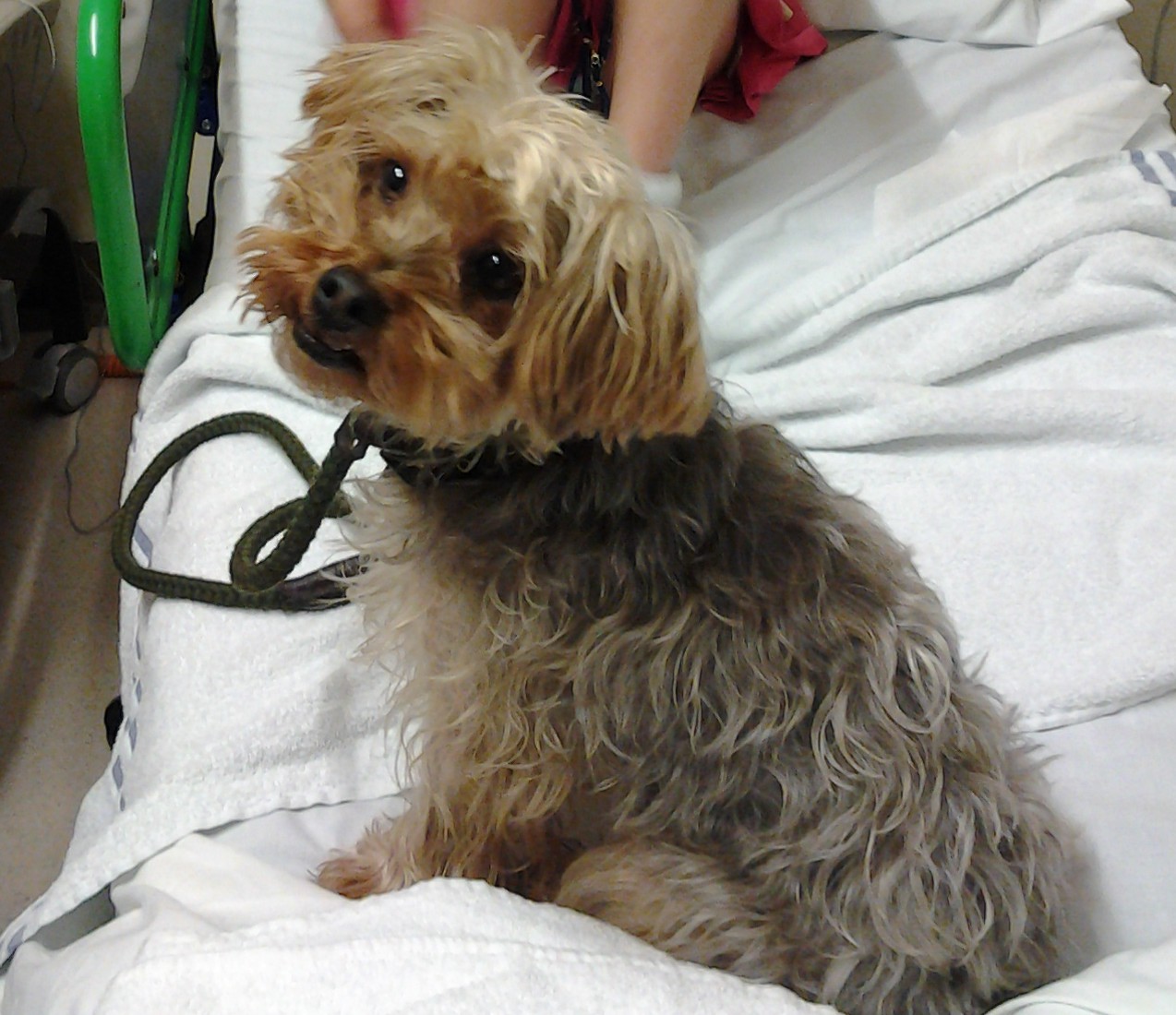
Pets as Therapy20141209_131336We were lucky enough to have 3 separate visits from 2 of the amazing “Pets as Therapy” dogs, Molly and Woof.  These charming animals are specially chosen for their gentle manner and make regular visits into hospitals, care homes and special needs schools to bring a great deal of comfort and love to those in the greatest of need.  I wrote a blog post not so long ago about just how much calm and comfort M draws from our cats at home and I saw the same things happening as he was able to pet and cuddle both dogs in his own space in hospital.  G was lucky enough to also have the chance to meet and fuss Molly as she visited on both Saturdays whilst Mike and G were visiting, and both children were encouraged to offer her treats for her patient behaviour when she was with them.


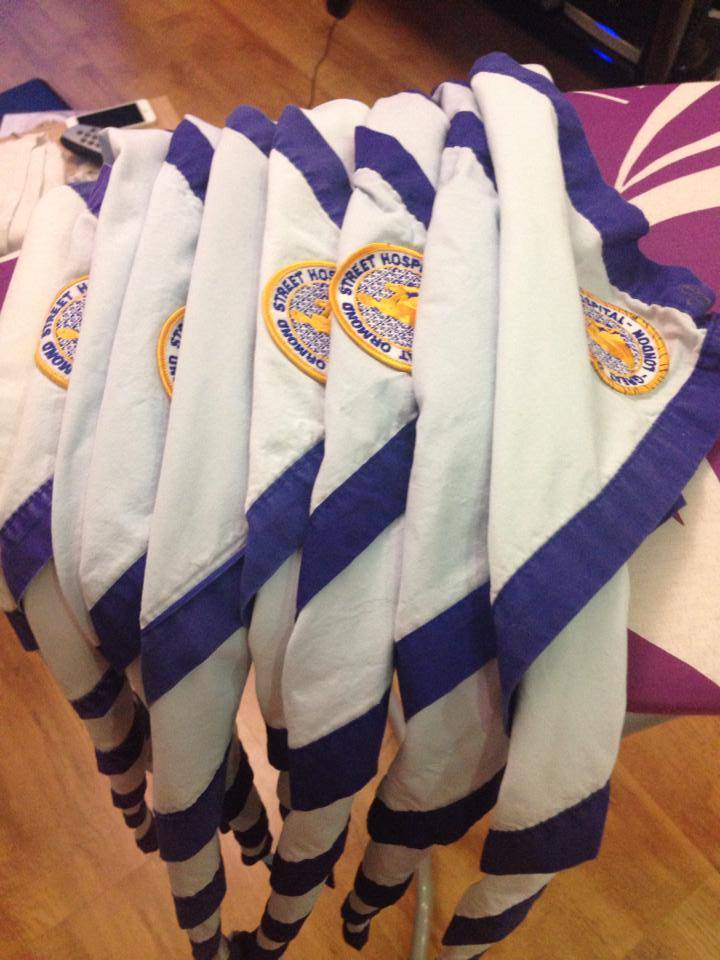
ScoutsscoutsThe visit to the 17th Holborn Scouts and Guides at Great Ormond Street Hospital was one of the highlights of M’s last hospital stay in 2013 and since finding out he was due another admission, he had talked of little else.  His biggest disappointment was that he was admitted on a Wednesday as Scouts meet every Tuesday evening and he had to wait a whole week before he could go again. During the evening, they provide a range of different crafts and games which are tailored for the differing ages and needs of the children attending that week and even reward regular attendance, an important boost for those children who are there on long-term admissions.  Sadly, M only managed to make one meeting again this year, but is already asking when he can go to Scouts again!


Courtesy of gosh.nhs.uk

Courtesy of gosh.nhs.uk

Saturday Club – Every Saturday afternoon, the activity centre (located next door to the school) is opened to patients and their siblings and friends for a couple of hours of crafts, games and some much-needed time together, away from the constraints of the ward.  On our first Saturday in hospital, M wasn’t keen on venturing too far from his bed, but the arrival of 2 of the Saturday club play volunteers, who engaged him and G in some riotous games of “Extreme Uno” as well as giant snakes and ladders, convinced him to change his mind.  By week 2, both G and M were chomping at the bit to join in the fun and whilst the staff there helped my 2 celebrate G’s 11th birthday with some rather nifty face-painting, an elegant birthday crown and Christmas crafts galore, Mike and I were able to escape for a sneaky 45 minute catch-up over coffee and cake in the hospital restaurant.


Courtesy of scholastic.co.uk

Courtesy of scholastic.co.uk

ReadWell book trolley – This was a treat we almost missed during our first week as the trolley came round as we were enjoying the ballet at the Royal Opera House, but thanks to some near-perfect timing, we stepped out of the lift just as the trolley was about to leave the ward.  M was able to choose from the wide selection of books displayed on the trolley and took great pleasure in being able to spend some time before deciding on an author we had not come across before.  To his absolute delight, not only did he have a free choice of books, but he also got to keep the books he picked out and he has enjoyed reading them since we got back home.  M also had the chance to create his own story with one of the ReadWell workers, who came into the school and acted as scribe as he weaved his adventurous tale of aliens visiting earth.


20141214_105928Ward Playroom – Whilst this was not the biggest room in the world, it held a vast array of games and activities to entertain the most particular of children.  M played on the Wii, found new board games to master and was able to borrow a DVD player and DVDs to watch over the weekends.  We made Christmas decorations, painted pictures, experimented with creating circuits with a science kit and M even decorated a ceramic money-box as part of his Christmas present to G.  20141214_105916


Courtesy of magicfree,net

Courtesy of magicfree,net

Magic – As well as a fleeting hello to the Clown doctors as we passed them in the ward corridor, one afternoon was brightened by the promise of a visiting magician.  M sat enthralled with a small group of his new hospital friends as this talented gentleman performed one awe-inspiring illusion after another.  He invited both children and parents alike to participate in some of the tricks and wowed us with his skills.  He listened as the children asked him questions about what he was doing and even watched M perform a rope trick of his very own.  My Dynamo-wannabee loved every moment of the show and dissected the tricks at length afterwards, trying to work out the secret of how they’d be done.


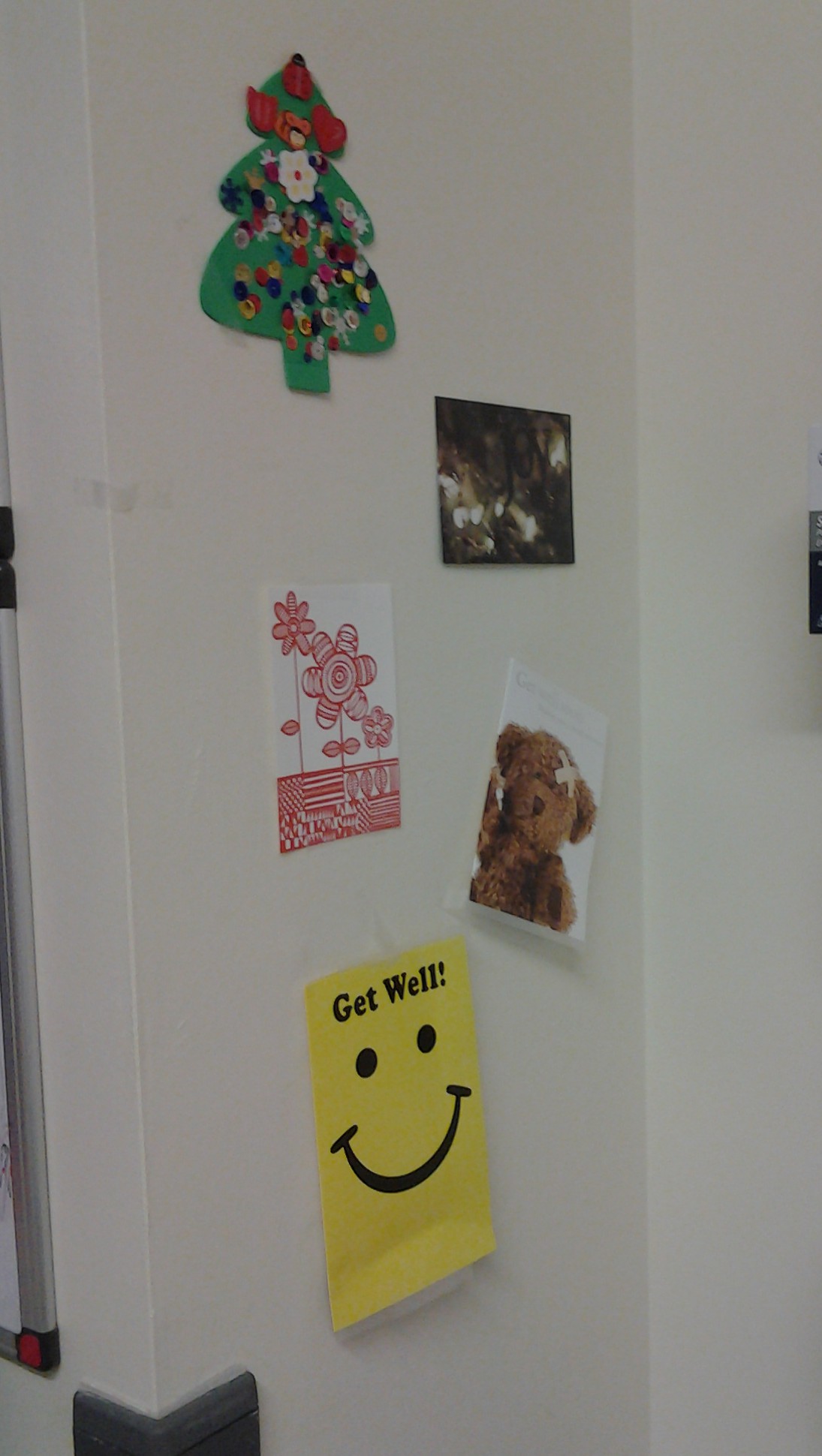
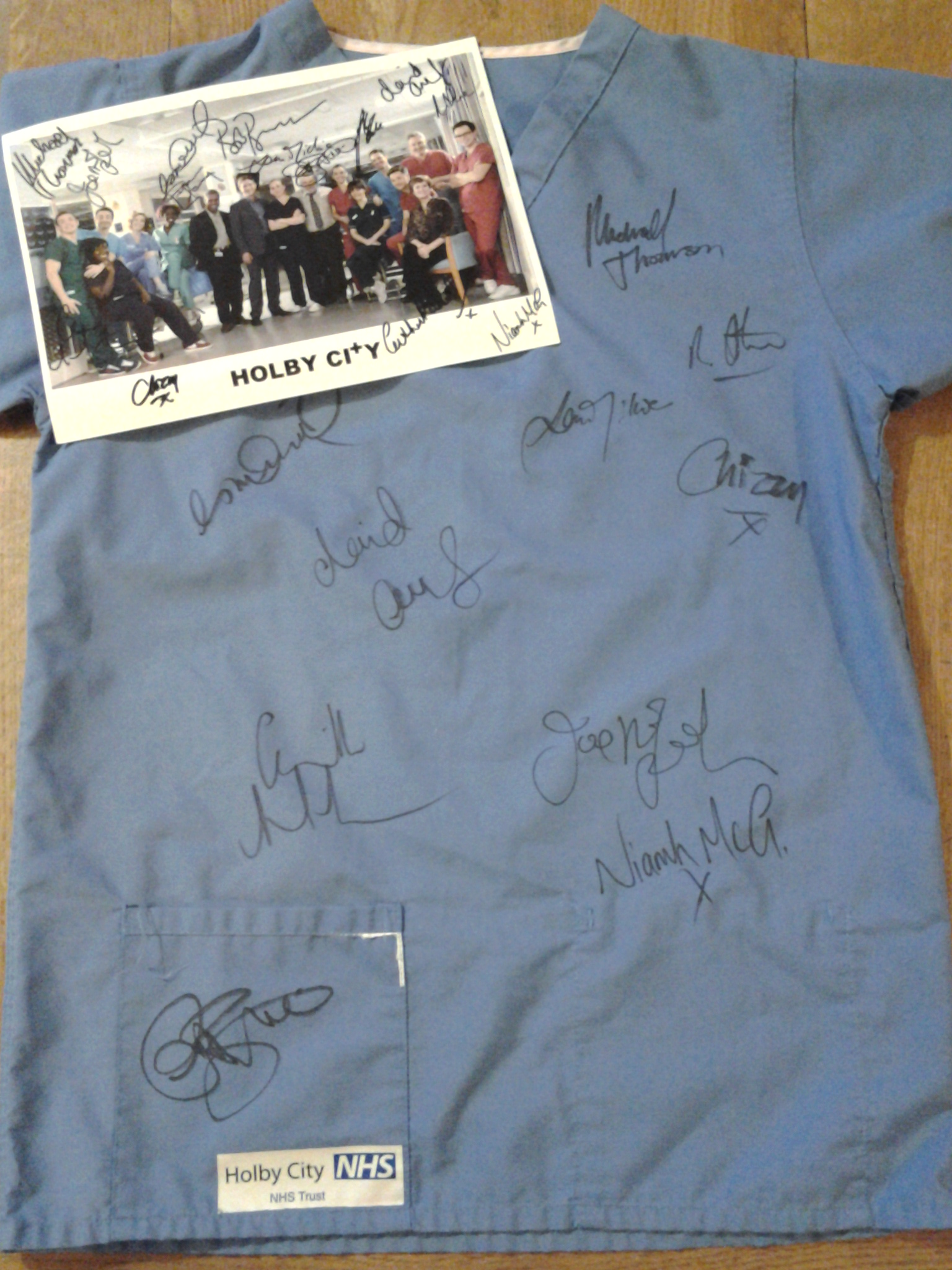
20141219_184138Post – Last, but not least is an activity that had nothing to do with GOSH itself, but everything to do with the amazingly thoughtful family and friends who were determined to bring a little cheer to our dreary corner of the long-term gastro ward.  Messages came from around the world – Canada, Madeira and across the UK – and each was special in its own way.  M received get well cards, postcards, books, stickers, games and other gifts that were guaranteed to entertain him day or night.  We decorated his bed space with the cards and added a Christmasy feel with the decorations that we had made in the playroom.  Knowing that people were thinking of us, loving us and sending us get well wishes and prayers sustained us both during the most difficult moments of the admission and brought some much-needed sunshine on the darkest days.   From the Christmas card from M’s class at school, to 2 pages of messages from Mike’s cousin and her friends and colleagues in Calgary; from cards and presents from our friends at church, to a card from the lovely members of my choir; and the 2 extra-special gifts of Angry Birds Jenga from our fabulous FABED family and signed photos and scrubs for both G and M from Holby City, courtesy of Simon Harper, my man at the BBC; all the mail was gratefully received and enjoyed hugely by us both.

                        20141220_193939

The 3rd and final step

M and his tube at GOSH

M and his tube at GOSH

With steps 1 and 2 complete, we were now onto the third step, the one which is going to have the biggest impact on M’s life for the next few months.  NG-tube in place, dis-impaction done and pellet study under way, it was now time to move M to an “elemental” diet, one which sees all foods removed from his diet and replaced by a nutritionally complete feed that consists of amino acids, carbohydrates, fats, vitamins and minerals.  The ideal would be for M to drink the 1.8 litres of this feed that he needs each day to have the right amount of calories and nutrients for his age, weight and height, but I knew we had no chance of getting him to do that.  Not only is he a reluctant drinker at the best of times, meaning it would be nigh impossible to get nearly 2 litres of liquid into him on a daily basis, but the feed is truly revolting to taste and even adding generous quantities of approved flavouring was never going to be enough to convince him to let more than a minimal amount pass his lips.  The only alternative was to feed him via his NG-tube, which meant an intensive few days in hospital for us as we worked out how best to give the feeds, the timings and rates that he could tolerate and I was trained on how to manage his tube.

The original plan proposed by the dietitians was that M receive six 300mls feeds a day via the gravity-feeding method, which meant that we would attach a large syringe to the end of his tube and gradually add the 300mls over the duration of the feed to ensure he took the full amount.  The principle of gravity feeding is that you can adjust the speed of the feed as the flow of the liquid is driven by the height of the syringe and the effect of gravity:  the higher the syringe, the faster the flow. The dietitian was keen that the feed be given over around 20 minutes, but it quickly became obvious that this just wasn’t going to be a method that would suit M.  Within 5 minutes of his very first feed starting, he turned pale and grey and complained that his stomach was hurting. The nurse giving the feed adjusted how high the syringe was held, but no matter how the syringe was positioned, things didn’t get better and by feed number 2, the nurses were adamant that this just wasn’t going to work for him, something I wholeheartedly agreed with.  At this point, we were only giving him 200mls instead of the full 300mls, but even that was proving too much for M’s sensitive digestion, so the dietitian finally had to agree to what the nurses were telling her and everything was changed yet again.

M's rather snazzy new pump

M’s rather snazzy new pump

Our new routine saw the feed mixed to a higher concentration, meaning that we only needed to get 1.5 litres into him a day and we were introduced to the wonders of a pump.  The pump means that the rate of giving the feed can be at a speed that best suits M and can easily be tweaked as each individual situation requires.  There was a lot to learn in the few days we had as I needed to know and be confident in how to check that his tube was correctly positioned, what to do if it appeared to have moved, how to prepare the elemental feeds and how to attach and properly operate the pump.  There was also the added complexity that the pumps used on ward by GOSH were not the same as the one approved in our community and whilst the principle was the same, the processes were slightly different.  However, by the time discharge finally happened, I was as au fait with this new part of our life as I could hope to be, felt that we could cope at home and, more crucially, had enough medical supplies to see us through the next few days.

M and his tube at home

M and his tube at home

Since that first day, now over a month ago, that original regime has been changed and tweaked more times that I care to imagine.  The suggestion of 6 feeds being administered at separate 30 minutes periods throughout the day were impossible for M to manage as he wasn’t able to tolerate the 250mls over either the initial proposed 30 minutes, nor our second attempt of an hour.  It also quickly proved impractical as any issues with the placement of the tube would take at least 20 minutes to resolve and that was time that we couldn’t expect the school to give him as he doesn’t get any individual support.  We soon realised that M wasn’t coping either physically or emotionally with the constant feeding and we have now settled on a routine that seems to work for everyone concerned.  His first feed is a 1 litre one starting at around 6.30am, which is given slowly enough to avoid too many tummy aches or occurrences of reflux and which lasts until the end of lunch-time.  The pump is disconnected at that point and M is able to enjoy an afternoon free of the encumbrance of his pump whilst at school.  The final 500mls feed begins between 4pm and 4.30pm and takes us all the way through to bedtime.

This is the routine that we will be living with for the next month or so and then the task of food reintroduction will begin.  As our local dietetics team has refused to be involved in M’s care, we will be working with the dietitians from GOSH to work out a detailed approach to trialling foods and the order we try them in.  The elemental feeding via NG-tube will continue alongside these food challenges until we have identified enough safe foods for M to eat and get all the calories and nutrients he needs to be healthy.  It’s not going to be an easy or quick task to complete, indeed there is a long and arduous road ahead, but it should be one that leads to more answers for M’s health than we’ve ever had before.

Round Two: the Pellet study and other adventures

Courtesy of 123opendata.com

Courtesy of 123opendata.com

Once the NG-tube was finally in place, M and I then had 5 long days to survive the copious amounts of Klean-prep, senna and picolax that were pumped into his system to clear his troublesome bowel.  Although we appeared to be off to a slow start, these powerful laxatives finally did their job and by late Monday afternoon, the gastro registrar was confident that we were ready to start the pellet study and a x-ray confirmed his opinion.  I had already met with one of the gastro investigation nurses, so knew that the 3 pellets, containing different shaped plastic markers, were ready and waiting on the ward for M and all we needed to work out was how best to get him to swallow them.

Over the last year, we have made huge strides in getting M to swallow tablets whole and no longer need a spoonful of Grandma’s jam to help the medicine go down as he has conquered his struggles and now merrily swallows them with just a mouthful of water to help.  However, there were 2 problems we now had to overcome:  M’s new-found fear of swallowing capsules with the NG-tube in place and the fact that these pellets are of a size that even I would struggle to take easily, let alone a small child.  The nurse suggested we resorted to mixing the markers into a couple of spoonfuls of jam and that was our first attempt.  For reasons that will remain forever unclear, M found even this method difficult to manage and instead resorted to swallowing the pellets one tiny marker at a time.  It may have taken considerably longer than anyone expected, but the pellets were taken and so round 2 of our admission was well underway.

The week should have been an easy one, as it was supposed to require nothing more of us than completing the pellet study, but unfortunately it was at this point that I had to brace myself and find the strength to weather an unexpected and turbulent storm.  Despite both Mike and I having repeatedly made clear that we have almost no support from our local hospital and their paediatric gastro team, this information appeared to have got lost along the way and I found myself embroiled in a battle to keep M in hospital once the pellet study had started.  GOSH felt sure that we would receive all the care and advice we would need from our local and nothing I said would convince them otherwise. battle I spent more hours than I care to remember fighting M’s corner and insisting that the consultants didn’t discharge him before the study was complete and the NG feeding started.  The pressure was huge, both on me – as I talked, discussed and cried my way through numerous meetings with nurses, doctors, dietitians, psychologists, PALs workers and indeed anyone else who would listen – and on Mike – as he sought to juggle the challenges of working, looking after G at home and supporting M and me whilst we were several hours away and only contactable by phone.

It quickly became evident that GOSH simply could not conceive that we could be as lacking local support as I was asserting we were and I have no doubt that they were beginning to view me as something of an overwrought, overtired, over-emotional and somewhat neurotic mother, who was unbelievably arguing to keep her child in hospital, when most other parents were trying desperately to get their children discharged before Christmas.  By the end of the week, it had all come to a head and I was at my wits’ end, but was finally vindicated late Friday afternoon, when our local dietetics team refused in no uncertain terms to take on M on a shared care basis with the GOSH dietitians – an entirely new experience for GOSH, though sadly an all too familiar one for us.

lighttunnelDespite all the heartache and distress this unnecessary battling caused, there was some really positive light at the end of the transit study tunnel.  The final x-ray on Friday indicated that M’s bowel is working more or less as it should.  It may be a little slower than ideal, but the markers had moved through M’s system and the consultant was delighted with this result, which means that the bowel is currently doing its job.  We really couldn’t ask for anything more.  So, the conclusion drawn is that it is the complex and multiple food allergies that have been causing M’s diarrhoea and other symptoms because of his underlying condition, EGID and the final step is to identify these as accurately as possible.

Here’s to 2015

That’s another year done, more adventures experienced and new lessons learned.  We’re starting 2015 with a positive outlook – the switch to NG-tube and elemental feeding has already started to see some health improvements for M and we finally have a plan for moving forward that will be looking for the root cause for some of his health problems.  Both children are happy and settled at school and G is looking ahead to moving into secondary school in September. We’ve met and made friends with several of the lovely FABED families and have been able to help raise funds and awareness for this charity and the condition it supports.  I’m not sure what 2015 holds for us all, but, if nothing else, I’ve learned to hold tightly to my hat as it’s certain to be a bumpy ride!

Wishing you all a happy, ssuccessful and peaceful 2015.  May your wishes and dreams be fulfilled. 


The First Hurdle

Our GOSH admission had three key stages, the first of which was to dis-impact M’s bowel and prepare him for a repeat pellet study.  We knew that when the original transit study was done at our local hospital 18 months ago, he was chronically impacted and there was some debate over whether the results, that suggested his transit was relatively normal, were accurate or not. My honest opinion was that he was not struggling with a slow transit colon, but the gastro team at GOSH wanted to be certain and were more than happy to admit him for this test due to the issues we’ve experienced with our unsympathetic local hospital over the last 12 months. My instinct was that nearly 9 years of unrelenting diarrhoea meant that there had to be another root cause for his problems that was still waiting to be discovered and it would just take some persistent looking to find it.

Courtesy of ebsta.com

Courtesy of ebsta.com

Unfortunately, the first hurdle – after the resolution of the whole missing bed saga – proved to be far tougher than any of us had anticipated.  After his amazing courage in facing all the health and medical challenges of the past year, and despite knowing that he needed to have a NG-tube, M showed just how stubborn he can be and steadfastly refused to co-operate with the nurses who were trying to pass the tube.  Wednesday evening saw 5 different nurses, 4 attempts, a flurry of unsuccessful negotiations and 1 small boy, who pulled the last 2 attempts out himself because, according to him, the nurses weren’t listening when he asked them to stop and then told them to go.  Having kept the other occupants of the 4-bed bay awake until past midnight with his cries and screams, we all finally admitted defeat and decided to leave it to the next day’s nursing team to remedy the situation.

Thursday morning arrived far too quickly, with a disturbed night’s sleep for M and an uncomfortable one for me.  We talked about the tube and the need to have it in place as soon as possible so that we could start on the first round of treatment, the dreaded Klean prep – a highly effective laxative that would start the process of clearing his system.  M knew and accepted all the reasons for the tube, but at the heart of the matter was the fact I had a small, scared 8 year old, who had endured a great deal since his scopes last October and was evidently close to saturation point.

Courtesy of The Royal Ballet/ROH Johan Persson

Courtesy of The Royal Ballet/ROH Johan Persson

Even the lure of tickets to go to see “Alice in Wonderland” performed by the Royal Ballet at the Royal Opera House, Covent Garden that very afternoon looked unlikely to be sufficient draw, but my boy’s love for all things theatrical combined with my own enthusiasm for going to see anything at the Royal Opera House eventually overcame his worst fears and won the day.  He agreed to let one of the doctors pass the tube and with 4 of us holding his head, arms and legs, another distracting him whilst it happened and the doctor doing the deed itself, we finally got the tube in place.  With that hurdle tackled, M and I rushed to get ourselves ready and a bag packed for our trip to the theatre.  We went by taxi with another little girl from the ward and a nurse and arrived just in time to take our complimentary seats in a box before the ballet began.  The performance was an amazing visual feast and proved to be a more than adequate distraction from all the tears and trauma of the morning.  M loved the outlandish costumes of the Mad Hatter and we had a lot of fun trying to work out which of Alice’s family and friends were depicted by each of the fantastic characters we met throughout the rest of the ballet.

Courtesy of The Royal Ballet/ROH

Courtesy of The Royal Ballet/ROH

Naturally, as I’ve come to expect when dealing with anything to do with M, nothing was as straight-forward as we might have hoped as we headed into that all important first full day of admission.  The stress of the tube placement led to him being violently sick within 10 minutes and he spent the rest of the day retching and bringing up bile, meaning the Klean prep couldn’t be started until much later in the day.  He reacted to the Duoderm, a dressing usually used to protect the fragile skin of the face by forming a barrier between the cheek and the tube and tape, which meant there was no alternative but to tape the NG-tube directly to his face.  The final straw came in the middle of the night, when after I’d finally got my tired chap to sleep, the quantity of the Klean prep being pumped in at the speed it was upset his system and he woke to be sick for the second time in less than 24 hours.

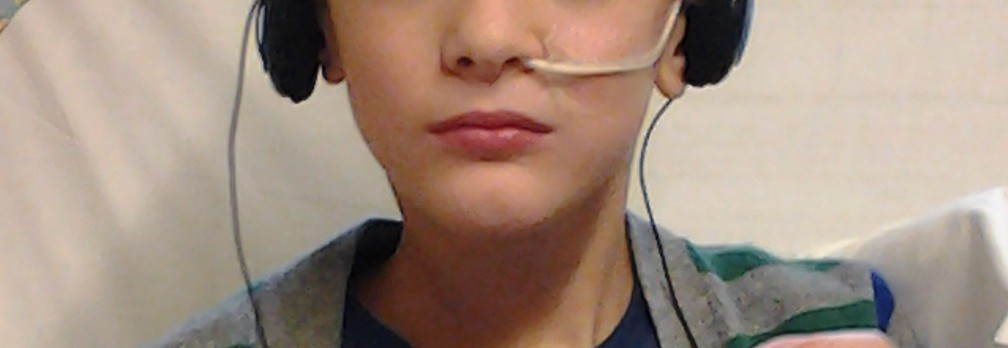
By the time Friday morning came around, we were both feeling emotionally fragile and physically exhausted and M refused point-blank to move from his bed.  We sat quietly on ward, with M plugged into the television via his headphones and I immersed myself in the escapism of a good book.  It had been a bumpy start, but finally we were on our way.


The Mystery of the Missing Bed

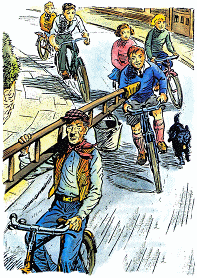
It sounds like one of the Enid Blyton stories that my children have been listening to at bedtime recently.  M and G have been loving the adventures of Fatty, Buster and the rest of the Five Find-outers gang, but this was a mystery set to challenge even the hardiest of intrepid adventurers.

Having received our summons to GOSH less than 24 hours earlier, and laden down with suitcase, backpacks, Lego advent calendar and the ever-present Cat, M and I found our way across London, through those infamous front doors and up to the long-term gastro ward.  We approached the nurses station and were greeted by a bemused looking senior staff nurse, who seemed uncertain as to who we were and why we were there.  I gave her M’s name and that’s when a look of complete panic swept across her face.  His name wasn’t on her master list, she hadn’t been expecting him and at that precise moment of time, there was no empty bed ready and waiting for him.

With profuse apologies and a promise to get hold of the ward administrator, the nurse in charge and the bed manager, M and I were left, with our bags, in the somewhat small and cramped playroom, whilst the mystery of M’s missing bed was investigated.  After the early start to our day and an emotional goodbye to G, I barely held it together as I called Mike with a slight hysterical edge to my voice. The play co-ordinator found a circuit board kit to entertain M and I got chatting to another patient and her Mum, who had just been turfed out their room and were waiting to hear where they were being moved to.  We all sat there for nearly 2 hours, whilst those in charge negotiated, discussed and settled the bed situation for all involved.

Courtesy of en.wikipedia.org

Courtesy of en.wikipedia.org

I might never know why the mystery of the missing bed happened or how it was resolved to everybody’s satisfaction, but I’m delighted that, thanks to the hard work of the nurses and the obviously determined look on my face that meant I wasn’t going to take no for an answer, M’s bed miraculously appeared in the “bay” and we could finally get ourselves settled in for the duration.

Waiting

Patience is a virtue, or so the saying goes.   I’d always thought of myself as a relatively patient person, but maybe not.  And definitely not when it comes to waiting for a hospital bed to become available and for testing and treatment to start.  Another week of waiting is over and a new one is about to begin.


#awatchedphoneneverrings

#awatchedphoneneverrings

Beating the Bullies – Anti-bullying Week 2014

November’s proving to be a busy month, what with Armistice Day (11th), Children in Need (14th), World Prematurity Day (17th) and this week it’s the turn of Anti-bullying week (17th-21st).  The aim of the week is to raise awareness of bullying and encourages children, young people, schools, parents and carers to come together and work towards stopping bullying for all.  There are no official statistics about the prevalence of bullying across the UK, but recent reports state that almost 45,000 children spoke to ChildLine about bullying during 2013, a worryingly high number and one that’s unlikely to scratch the surface of the problem.

Bullying is defined as Repeated incidents of physical or mental abuse (teasing, taunting, name calling, threatening, isolating) of a weaker person by a stronger person.”  Stronger is not necessarily defined by size, but also includes those who are more confident or more able to pinpoint a weakness in the person they are victimising. The sad reality is that this naturally makes disabled children or those with special educational needs a prime target for bullies and they are more likely to experience bullying in school and in the wider community that other groups.  The focus of this year’s campaign is to eradicate bullying for these vulnerable individuals in particular.

This focus has struck a particular chord with me this week as M has been dealing with some bullying over the last few weeks at school.  Some of the boys in his class have been teasing him about his allergies by saying that they are allergic to him and then pretending to be physically sick. This has had a knock-on impact in the playground, where the same children have then been avoiding playing with him, leaving him feeling isolated and on his own.  He has some good friends, who have stuck by his side and defended him when he’s felt unable to do it himself; and his big sister has lent her support too by watching out for him whenever she can and inviting him, and his friends, to join in games that she’s playing with hers.

Unfortunately, M’s complicated needs – dyspraxia, dyslexia, EGID and food allergies – make him an obvious candidate for attention from bullies, who only need the smallest difference to focus in on and attack. We’ve taught him to stand up for himself without being aggressive or rude, to ignore whenever possible the comments made and to walk away when the going gets tough; but it’s not an easy issue to tackle.  Right now, he’s anxious about their response when he finally has his tube fitted and is even worrying about how things will go next year, once G has moved on to secondary school.  Don’t get me wrong, his teacher and the school have been proactive in dealing with the bullies, but they can’t take away his fears or his belief that he’s not being heard.

Sadly he’s not on his own.  Children with complex medical needs can feel isolated by their illness as they struggle with feeling different and the questions of why they can’t be like their friends or why they are so frequently absent from school.  Even those with better known conditions, such as T1D or asthma, may have limited contact with others of the same age who are dealing with the same issues and I can only imagine how much harder it is for those with rare illnesses, who may know no-one else with the same diagnosis in their area.  A lack of true understanding about their medical needs and the impact on their everyday life can add to their frustration and the sense of being on their own.  Adding bullying to that already tumultuous mix is often a burden too many and these children may head into a downwards spiral that can result in poor self-confidence, depression and even self-harm.

What can we do?  I don’t have an easy answer to that difficult question.  As a parent I can educate my children to respect the differences of their peers and not to belittle those who don’t conform to society’s notion of “normal”.  I can encourage them to enjoy friendships with everyone and not just those who have similar interests or hobbies.  I can teach them that sometimes they won’t see eye to eye with their classmates and that those differences of opinion is what will challenge and shape their own beliefs.

And as a parent to children who stand out from the crowd, I can help them find their feet in our world, to stand strong when challenged and to see the value in their very uniqueness.