Tag Archives: big sister

Day 5: But who supports the supporters?

Family on Blackboard-webWhen you are tube-fed, I think it’s only natural to expect the support of your nearest and dearest, especially in the case of the tube-fed child. In a recent interview about her MS diagnosis, actress Jamie-Lynn Sigler from the US TV show “The Sopranos” said that “when one person in the family has a chronic illness, the whole family has it.” and this really resonated with me. M, I hope, has never needed to question the unfailing and unconditional support that Mike and I will give him along every step of his journey, but it’s not just us who have walked that way with him over the last 12 months. Without any say in the matter, G has been dragged along for the ride too and has been a great comfort and support to M when it matters most, arguments and fallings-out aside. I have talked before about the amazing community that surrounds our family, but G has been something of an unsung hero in the story. Over the last few years we have seen her struggle to cope with the reality of having a chronically ill brother, which has manifested itself in behaviour and attitudes that are less than ideal and which need love and understanding in the most testing of times. We work hard to try to give G as much time as we can, but sometimes that can’t be as much as we’d want, especially when going through a particularly tough time with M. Sometimes siblings need more time than the parents can find, so who is it that can help parents support these young supporters?

Many people will have heard of Young Carers projects, but perhaps will not realise how massive and vital a role these groups can play in families dealing with chronic illness. Young carers are defined as “children and young people who often take on practical and/or emotional caring responsibilities that would normally be expected of an adult.” Being a young carer is an isolating experience as the child may be reluctant to discuss their home life with friends at school for fear of bullying and will often feel that they are in a unique situation. imagesYoung Carers groups try to meet on a regular basis to give the youngsters a much-needed break from the day-to-day, the opportunity to meet other young carers who will truly understand the pressures and strains they are under and the chance to have fun and be a child. Depending on the location, and sadly on the funding available, these organisations may offer evening clubs, weekends away, days out and even holidays as well as friendly advice, information and counselling to both the young carer and their family. In our area, there is also a school worker who runs lunchtime clubs at some of the local secondary schools, hold awareness assemblies and will act as an advocate for the child if needed.

Frequently these youngsters don’t identify themselves in the role of a young carer and it came as no surprise to me that G didn’t as I certainly had never really thought about her in terms of being a young carer until fairly recently. Thanks to a well-placed poster, a stray comment at school and some gentle prodding from a fab EGID friend, I contacted our local Young Carers group, filled in their referral document and sent it off with my fingers tightly crossed that something helpful would come from it. With the most amazing coincidental timing, at almost the same time that I was waiting for a reply, G had spotted a poster in the Year 7 canteen, took a photo on her phone and showed it to me, asking if I thought this was something that she could find out more about. Delighted that she was interested in this support and wanting to encourage her to investigate the opportunity under her own steam too, I agreed that she should contact the teacher named and see what further information she would be given from within school. P1000101She and a close friend in a not-too-dissimilar position have since met with this teacher a couple of times and have been given more information about our local young carers group as well as a list of useful contact names and numbers.

We also had a positive response from my referral form and last week G and I met with Hannah, one of the Young Carers team. She was with us for about an hour and talked to G about all things Young Carers. Having established that G understood what was meant by the term “young carer”, Hannah then took the time to explain how G fit into that role and then they discussed at length just how G helps M and the rest of the family and how she feels about it. I stayed in the kitchen the whole time, but switched between sitting at the table with them and carrying on with preparing feeds, meds, packed lunches and dinner in order to give G the chance to open up about her feelings. I reassured her that we wanted her to be 100% honest about the emotional impact that M’s illness has on her and was pleased to hear her being just that. Nothing she said surprised me in the slightest and I found it a relief to see her open to the idea of the Young Carers groups and all they can offer. She is keen to get started as soon as possible and is just waiting for the paperwork to be processed and the invitation to drop onto the doormat Hogwarts-style!

I am fascinated and pleased to see that there is an increasing awareness worldwide of the lasting impact of chronically ill siblings on children and the need to seek ways to effectively support them as they grow up, often in the shadow of the sick child. Last year I became aware of another fantastic project, this time by Australian photographer, Alexandrena Parker and Rare Voices Australia, entitled The Forgotten Ones, which sought to highlight this aspect of the rare disease community and unsung-hero-greport…to celebrate and recognise the unspoken and often forgotten support that siblings provide to loved ones suffering.” This is just one person’s small step to make a difference to these unfailing supporters, but with the help of projects like The Forgotten Ones and Young Carers, we can all help support our sick children and their unsung heroes.

 

*The wonderful charity, Over the Wall, also provides respite camps for sick children, their siblings and their families, either all together or separately. You can find out more here.

To my darling daughter,

To my darling daughter on the eve of your 12th birthday:

This wasn’t quite what I had planned.

Today I was supposed to be baking up a storm in the kitchen, IMG_0063[1]making some special cupcakes to celebrate your 12th birthday tomorrow, cakes to make up for you having to celebrate your last birthday at GOSH with M and without a cake. The ingredients are bought and hiding at the back of the cupboard, so maybe I’ll have the chance to bake them for you for Christmas because instead I’m over 100 miles and 3 hours travel time away from you.

Today we were supposed to be enjoying time together as a family as well as with your beloved Godfather, Uncle A and his family; instead you and Daddy are at home with them all, whilst M and I while away our hours within the confines of GOSH on our own.

Tomorrow M and I had planned to serenade you awake with a rendition of “Happy Birthday” before watching you open your presents and cards and sharing the excitement of each new gift with you; 20151018_133210instead we’ll be watching via FaceTime to see what goodies you’ve received with our fingers crossed that our cards have arrived from London in time.
Tomorrow was going to be a busy day: first to watch you both in our church Nativity, then head off for a special birthday riding lesson before a late lunch at Wagamama to celebrate your big day; instead you’ll be doing those things with Daddy, Uncle A and the rest of the gang, whilst M and I share a quiet day and hope to be able to get to the Carols by Candlelight service at the church around the corner from GOSH.

However, it doesn’t really matter what was planned or what’s going to happen. The most important thing is that even though we’re all these miles apart for your special day, M and I will be thinking of you and celebrating with you and loving you as always. I’m so sorry that we can’t be there with you this year, that we can’t spend your birthday in the way that we all wanted to, but I’m glad that Daddy, Gu and Uncle A are all there to help you enjoy it as much as possible. The last 10 days have been hard, especially knowing that we wouldn’t be home in time and I hope that next year will be very different. In the meantime, know that Mummy loves you very much; that, as I tell you so many times, you will always be my baby, no matter how old you get; and be warned that, when I see you next, I’ll be wrapping my arms tight around you and hugging you close for an awfully long time. B128

Happy 12th Birthday Floss xxx

A Girl’s Best Friend

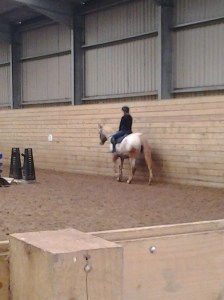
For as long as I can remember – and trust me, my long-term memory is legendary in our household – G has been passionate about learning to ride. Both she and M did a brief stint at a nearby riding stable when she was about 5, but school, hospital appointments and other hobbies soon absorbed a lot of our time and riding somehow fell by the wayside. G frequently talks of her plans to own horses when she’s older and 20151018_131727has declared on more than one occasion that she has no plans to learn to drive when she reaches 17, but will instead ride her horse wherever she needs to go. Over the last 18 months or so, she started asking about the possibility of riding lessons again and it was then that my Mum came up with the idea of rewarding all her hard work for her SATs with a short course of lessons.

It took careful planning, the odd bit of rearranging and some tentative pencilling-in, but finally everything was sorted and G started her lessons. Her first lesson was a group one, but it quickly became obvious that she would learn more and progress quicker with some more focussed teaching and so we switched to a 30-minute individual lesson every other weekend. To say she is delighted to be fulfilling this long-held dream is an understatement and she has taken to it like the proverbial duck to water. With just 3 lessons under her belt, she is already cantering around the indoor arena 20151018_133210with confidence and impressed not just her riding instructor, but me too, with her sense of balance and ability to trot round with her hands and arms in every position imaginable except where you’d expect them to be.
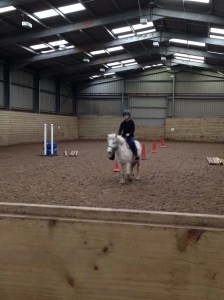
Needless to say, horse-riding has become her favourite pastime and we have been inundated with requests for lessons as a gift from anyone and everyone prepared to contribute for both her birthday and Christmas. It has been fantastic to see her enthusiasm grow and the wait between lessons proves almost unbearable for her at times. What is even better is that this is something just for G, there is no irritating little brother to steal her thunder, although he has come along to watch her ride once or twice. The consequences of having a brother with a chronic illness mean that all-too-often G has been relegated to the sidelines as we’ve worried about M’s health or agonised over decisions regarding his treatment and diet; but in horse-riding, the focus is all on her: her teachers know nothing about M and his health and those 30 minutes are spent doing something she really, really loves. The lessons have also become an opportunity for G and me to spend some much-needed and precious time together, to chat about school, friends and life in general without the constant demands of M dragging my attention away from her; something I think we both have come to value.

IMG_0053

Our thanks go to…

The week is winding down and I am definitely looking forward to the start of half-term and the chance to have a sleep-in over the weekend.  One’s thing for certain, being active in raising awareness whilst eating a restricted diet really takes it out of you!thank-you-languages

With T for Thanks being our topic for today, what else could I do, but issue a few heart-felt thank-yous to those who’ve made a difference to us in the 12 months since the last NEAW. It’s tricky to know where to start, but, in no particular order, I’d like to thank:

Our families – well it was a given really, wasn’t it?  But whichever side of the ocean they may live, our families have been there in whatever way they can 澳大利亚孩子-1202242and supported us in the tricky decision to move M to a NG-tube and the elemental diet.   We don’t know exactly what the next 12 months hold in store for us, but we can be certain that our families will be there every step of the way.

Our friends – another obvious lot, but again we couldn’t have survived the past year without them all.  Their help has been invaluable: from text messages to lengthy phone conversations; early morning G-sitting to late night conversations with a cup of tea; and much-needed hugs to unexpected hospital mail, every single gesture has meant more than they can ever imagine and helped keep us strong.

GOSH – our consultant, her great gastro team and, in particular, the fantastic nurses who work with such dedication on Rainforest ward. Their care for M back in December was just amazing and without them looking after us both and giving wise words and training, we’d have struggled even more with the reality of the NG-tube and the feeding pump.  We also owe massive thanks to M’s fabulous dietitian, Colorful solidarity design treewho is always at the end of the phone or the email and has given me lots of helpful recommendations as well as reassuring me that I’m doing things right when it comes to the whole food re-introduction thing.

M’s School – I am very aware of just how lucky we have been with the staff at M and G’s school. They have been so understanding of how life was changing for both children during this school year and have made every effort to look after them and help them feel happy and safe when at school.  5 of the teaching staff bravely took on the role to learn how to manage his feeding pump, which meant that I could return to my job, confident that they were competent in what they needed to do.  This week they were also quick to agree to M’s request to share his presentation to the rest of the school and every teacher made time to make sure their class could see it and ask any questions they had.  This school has done a wonderful job of nurturing both my children and I will be sad when G moves on to “big school” in September.

G – the best big sister that M could ever have had.  She’s loved her little brother through some of his darkest moods and, even if there’s a bit too much squabbling at times for my liking, she’s managed to continue to work on building a strong relationship with him that I hope will only get stronger in time.  She’s survived the challenge of SATs, maybe not without the odd tantrum along the way, and continues to strive to do her best at school and at home.  P1000121And my heart nearly burst with pride the other week when she announced at Stagecoach that M is her hero, because of how bravely he lives and copes with EGID.

Mike – I couldn’t finish without recognising the person who stands alongside me on this, the most challenging of journeys we’ve been on together, and is my strength when I’m feeling weak.  We’ve reached a harmony that enables us to take turns in being the strong one during appointments and I can’t think of anyone I’d rather be facing these decisions with.  He also understands my need to have some time to escape from the day-to-day grind of EGID and puts up with me disappearing off twice a week to choir rehearsals.

And thanks to all of you, who’ve kept reading my blog, put up with somemany…repeated requests on my part and have done an amazing job at sharing my posts on.  Your silent show of support is what helps keep me going, even when times are tough.

Christmas without food

foodIt’s not until you find yourself in a situation where you need to avoid food that you realise just how much of our everyday lives and how many social occasions revolve around meals or other food-based activities.  Just think about it: birthdays are celebrated with a mix of party food, cake, treats for your friends and – when you’re turning 9 – party bags filled with sweets; Easter inevitably includes the requisite chocolate egg plus Easter biscuits and Simnel cake; a catch-up with old friends often starts with coffee and cake and may well move on to drinks and dinner; and Christmas is, quite simply, the time when we all over-indulge and go mad, filling our cupboards and fridge with chocolates, biscuits, mince pies and brandy butter in a manner that suggests there’s a genuine risk that we might run out at any minute.

Our plans for this Christmas itself were relatively simple.  My Mum had suggested that we served a buffet over the festive period, rather than having the traditional mid-afternoon sit-down feast that we’ve all become accustomed to, which seemed a great alternative and allowed us to cater for everyone’s needs.  Much to my surprise, M was keen for the rest of us to sit at the table for supper on Christmas Eve, whilst he sat in the other room watching some Christmas TV and sipped his glass of full-sugar 7-up, one of the few treats he’s allowed alongside his elemental feed.  By Christmas Day, he wanted to have company in front of the TV and Boxing Day saw us eating in shifts, whilst the others played board games or watched films with M. We quickly learned to let M decide where he was happiest being at meal-times and included him in as many traditions as we could – pulling Christmas crackers, sharing the jokes, wearing paper crowns and making the time as normal as possible without focussing all our attention, and his, on the food.

Courtesy of abcnews.go.com

Courtesy of abcnews.go.com

We thought we had covered all the bases this Christmas, or at least, all those we considered to be the biggies, but it was the little things that crept up and caught us unawares.  Our Christmas stockings always include chocolate treats (dairy- and soya-free naturally), a box of tic-tacs, a handful of nuts and a satsuma pushed down to the toe, but none of those could find its way into M’s stocking this year.  I had bought Moo-free chocolate advent calendars and selection boxes for both children before we knew he’d be going into hospital and whilst M had managed to have 4 advent chocolates before his admission and G enjoyed the rest whilst he was in, I had to work out how to give G the selection boxes without rocking M’s world too much.  This was one of those small things that needed a lot of late night planning on Christmas Eve. slices

In stark contrast, Mike and I had considered beforehand the treats that usually adorn the coffee table at home and deliberately didn’t leave out the boxes of Turkish delight or the dates or the orange and lemon slices in their normal home.  Instead, we stored them in a safe corner to be pulled out once both children were in bed as we didn’t want them to be a constant reminder of what M couldn’t eat and yet he objected more to us hiding these goodies away than leaving them on display. “It just isn’t Christmas, Mummy” was his feeling on the matter, without these seasonal delights out for all to share and enjoy.

I’m not sure I know that we didn’t get everything 100% right, but given that we were very much thrown in the deep end with little advice on how to survive the day, I think we did okay.  The biggest lesson learnt was to be flexible on a daily basis and not to expect one day to be like the next, both at home and at school.  Some days M sits and chats with G at the dinner table, enjoying a Foxes glacier mint (another small treat allowed) and a glass of 7-up whilst she eats her meal and yet the next will find him close to tears and hidden away in another room for the duration.  There is no pressure for him to constantly be a part of every meal-time and as long as he spends some quality time with the rest of the family, I’m happy to give him the time-out he sometimes so desperately needs.

Beating the Bullies – Anti-bullying Week 2014

November’s proving to be a busy month, what with Armistice Day (11th), Children in Need (14th), World Prematurity Day (17th) and this week it’s the turn of Anti-bullying week (17th-21st).  The aim of the week is to raise awareness of bullying and encourages children, young people, schools, parents and carers to come together and work towards stopping bullying for all.  There are no official statistics about the prevalence of bullying across the UK, but recent reports state that almost 45,000 children spoke to ChildLine about bullying during 2013, a worryingly high number and one that’s unlikely to scratch the surface of the problem.

Bullying is defined as Repeated incidents of physical or mental abuse (teasing, taunting, name calling, threatening, isolating) of a weaker person by a stronger person.”  Stronger is not necessarily defined by size, but also includes those who are more confident or more able to pinpoint a weakness in the person they are victimising. The sad reality is that this naturally makes disabled children or those with special educational needs a prime target for bullies and they are more likely to experience bullying in school and in the wider community that other groups.  The focus of this year’s campaign is to eradicate bullying for these vulnerable individuals in particular.

This focus has struck a particular chord with me this week as M has been dealing with some bullying over the last few weeks at school.  Some of the boys in his class have been teasing him about his allergies by saying that they are allergic to him and then pretending to be physically sick. This has had a knock-on impact in the playground, where the same children have then been avoiding playing with him, leaving him feeling isolated and on his own.  He has some good friends, who have stuck by his side and defended him when he’s felt unable to do it himself; and his big sister has lent her support too by watching out for him whenever she can and inviting him, and his friends, to join in games that she’s playing with hers.

Unfortunately, M’s complicated needs – dyspraxia, dyslexia, EGID and food allergies – make him an obvious candidate for attention from bullies, who only need the smallest difference to focus in on and attack. We’ve taught him to stand up for himself without being aggressive or rude, to ignore whenever possible the comments made and to walk away when the going gets tough; but it’s not an easy issue to tackle.  Right now, he’s anxious about their response when he finally has his tube fitted and is even worrying about how things will go next year, once G has moved on to secondary school.  Don’t get me wrong, his teacher and the school have been proactive in dealing with the bullies, but they can’t take away his fears or his belief that he’s not being heard.

Sadly he’s not on his own.  Children with complex medical needs can feel isolated by their illness as they struggle with feeling different and the questions of why they can’t be like their friends or why they are so frequently absent from school.  Even those with better known conditions, such as T1D or asthma, may have limited contact with others of the same age who are dealing with the same issues and I can only imagine how much harder it is for those with rare illnesses, who may know no-one else with the same diagnosis in their area.  A lack of true understanding about their medical needs and the impact on their everyday life can add to their frustration and the sense of being on their own.  Adding bullying to that already tumultuous mix is often a burden too many and these children may head into a downwards spiral that can result in poor self-confidence, depression and even self-harm.

What can we do?  I don’t have an easy answer to that difficult question.  As a parent I can educate my children to respect the differences of their peers and not to belittle those who don’t conform to society’s notion of “normal”.  I can encourage them to enjoy friendships with everyone and not just those who have similar interests or hobbies.  I can teach them that sometimes they won’t see eye to eye with their classmates and that those differences of opinion is what will challenge and shape their own beliefs.

And as a parent to children who stand out from the crowd, I can help them find their feet in our world, to stand strong when challenged and to see the value in their very uniqueness.