Tag Archives: Social media

Changing Attitudes – NEAW 2015

Last week I took part in the Diabetes blog week and looked at my changing attitude to my T1D over the past 3 decades as well as changes I hope will happen in the future.  social-media-treeMy plea for improved education about T1D vs. T2D is closely linked to my longing for increased awareness about EGID and has resulted in my efforts to bring the focus of family, friends and our local community to the subject through local media coverage and social media this week.

During a music break in my recent radio interview, the presenter asked me an interesting question: whether I’m upset when people misunderstand EGID?  We had been discussing off-air the fact that there is often recognition of the food allergies side of the illness, rather than the disease itself and whilst I understand that allergies are something easy for people to understand, I’m frustrated that that’s what gets people interested in finding out more.  I pondered his question for a while and once the session was over was able to give him my honest answer: No.  I’m not upset that people misunderstand EGID because I’m usually impressed that they know something about it. The truth is that they must have heard of EGID in the first place to be capable of misunderstanding this complex disease and therein lies the problem.  Ignorance of EGID and the unseen effects it has on individual and family alike means that those of us living with it are sadly often viewed as making it all up or wildly exaggerating the severity. That attitude can leave a family feeling very alone at a time when emotional and practical support is needed most.

 This is what today’s C is all about – Changing Attitudes.


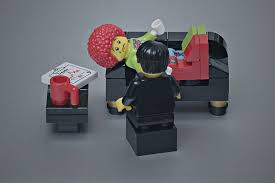
The truth about EGID is this:  It’s not just about the food allergies, that’s the easy bit to understand and, in many ways, the easiest bit to live with.  It’s about much, much more than that.  It’s about the unexplained joint aches, the never-ending tummy cramps, the relentless feelings of nausea or reflux whenever you eat. The dark shadows under the eyes, the manic mood swings, the overwhelming lethargy, or the inability to fall asleep and stay that way.  The damaged bowel, the fear of not being near enough to a toilet whenever you need one, or knowing that you’ll never get there in time anyway.  legoThe fear of your friends making fun of your allergies or finding out that you’re still wearing a pull-up because your bowel can’t be relied on when you most need it to.  The daily medicines, restricted diets and the feeding tubes. The chronic pain that can reduce you to tears, yet you don’t complain because nothing helps, even when it’s at its worst and you’re familiar with just about every pain chart created in the history of man.
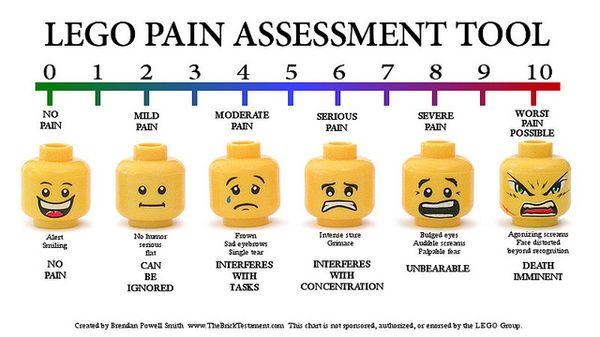
It’s about getting used to these things as being normal, or not even realising they’re not. 

And it affects the whole family, not just the one with the diagnosis.  The endless merry-go-round of numerous hospital appointments, medicines to be taken and food to be cooked safely, avoiding cross-contamination at all costs is exhausting.  The keeping of meticulous daily records of food eaten and symptoms experienced to try to find a link and make sense of what’s going on, and dealing with the self-recrimination when you miss a day out because what if that was the one that would give you more answers? Pictures July 06 030Day trips, meals out, holidays all require military precision to organise and every decision is coloured by whether needs can be met or not. The feelings of isolation, for parent and sibling alike, because it’s frequently the case that there is no-one else nearby who has the same experiences or can truly understand. The lack of any conversation that doesn’t revolve around toileting and being too worn out to come up with an alternative subject.  The sense that I, as the parent, know more about the intricacies of my son’s chronic illness than any medical professional we meet along the way and the frightening realisation that my children know infinitely more than them too.

It’s about the heartbreak of holding my sobbing child at 3am, tears streaming down my own cheeks as I struggle to find the words to bring the comfort that nothing else can bring at that moment in time.

At our recent admission at GOSH, one of the gastro consultants told me that it is widely recognised that children with gastro conditions have the worst quality of life of any child living with a chronic illness.  EGID is an invisible illness, one where the individual frequently learns to hide, disguise and survive their struggles and just carries on regardless, accepting this life as their norm.  Families supporting a loved one with EGID often feel isolated – not just from their circle of friends, but from the medical community, who know little about it and may question the integrity of the very people who are fighting to get the best care they possibly can.  It’s not a parental fad about food allergies or an over-anxious Mum fussing about the small things; and it’s definitely not a figment of anyone’s imagination.  The effects of EGID can be cruel to experience and devastating to see.  So a change in attitudes is not only important, but a necessity for all those living with this diagnosis.

Now you know a little more about EGID and just how it impacts, take some time to think about how you can support those you know living with this disease.  Don’t think that there’s nothing you can do to help.  An offer of a cup of tea once the school-run is over, a home-cooked meal for the parent not in hospital or checking to see if there’s anything they need from the shops is more than enough.  No gesture is too small: a smile, a text message or even a FB like or comment on Twitter will let that family know that they’re in your thoughts and that there is hope for change in the future.

The Message from “My Man” at the BBC

Three weeks on from that episode of the BBC’s hospital drama, Holby City and I’m still reeling from the amazing response to my blog post and the unexpected bonus of two phone-calls with series producer, Simon Harper.  When I penned my heartfelt response to what Mike and I had watched on-screen, I expected to reach a few more than my usual readership and dared to hope that I might beat my previous “top score” of 186 readers in a 24-hour period with my letter to our local hospital.  I never dreamed that over 2,000 people across the world would read, comment on and share that plea for responsible portrayal of chronic illness in the mainstream media.  As well as sharing my thoughts through my blog, I made a formal complaint to the BBC and, through the wonder of Google, managed to track down Simon Harper and sent him an e-mail, expressing my concerns about the inaccuracies about EGID portrayed in that episode.

Courtesy of bbc.co.uk

Courtesy of bbc.co.uk

I didn’t expect to hear anything back, so you can only imagine my surprise and absolute delight when Simon not only replied to my e-mail, but also offered to pick up the phone and discuss the matter with me.  We agreed a day and time to talk and I spent the week making notes and talking to fellow EGID parents through FABED and other on-line forums to get their points of view on what I needed to raise in my conversation.  That first phone-call lasted for around 30 minutes and at no point did I feel that Simon was keen to close down the conversation and finish the call,  He was genuinely interested in learning more about EGID and understanding why this episode had caused such distress in the on-line community. We spent a long time discussing the difference between “intention” – what the program was trying to portray – and “perception” – what the viewing public understood – when it comes to producing a drama for television viewing and here Simon explains it in his own words:

The intention: “the guest character’s general allergies were a dramatic smoke screen to the actual underlying cause of his pain, neuralgia – but that in no way were those allergies supposed to suggest a condition as specific and, as I now know from talking to you, severe as EGID.  In no way was the story supposed to say that EGID was in fact just neuralgia!“.

The perception:I think it comes down to one scene where Zosia (the doctor) mentions that Nigel’s eosinophils are up –  due to his general allergies – and she then goes on to mention “his eosinophilic gastro-enteritis”.  What I can see maybe wasn’t clear was that Zosia, excitedly bandying round theories and possible prognoses at this stage of the story, is in fact supposed only to be raising EGID at a possibility at that moment.  perceptionA possibility that, in fact, turns out not to be the case.  But I can see that the phrasing “his” – combined with the fact that dramatically speaking, we never see Zosia rule out EGID (a moment we assume happens off-screen) – could have given the wrong impression.  It’s a tough call with medical drama – you never play on-screen every single beat of medical treatment that would happen in real life, choosing the moments which best serve the story,  and sometimes rely on the audience’s imagination to assume and deduce. It’s a delicate balance, and there is definitely a lesson to be learned here, because evidently, missing out that moment has in this case given the wrong impression.

I also mentioned my concerns that a range of inflammatory bowel diseases had appeared to be ruled out through a simple ultrasound, whilst those of us living with this family of illnesses know, from our first-hand experiences, that endoscopies, colonoscopies and biopsies are the only reliable ways to confirm a final diagnosis.  The conversation ended with an agreement that Simon would spend time investigating what research was done, talking to the consultant concerned and checking out the ultrasound situation before phoning me back a week later to talk some more.  I was struck by his commitment to unpicking where and how things went so wrong and have to confess to being cheeky enough to send another e-mail, thanking him for his honest discussion with me and pointing him in the direction of various EGID websites, so that he could truly understand what our families deal with on a daily basis.

A week later and that second phone-call happened.  Another 30 minutes valuably spent clearing up those outstanding points, including his agreement that the discussion regarding the ultrasound came across as far more definitive than was their intention.  I have to say I’m impressed with the research into EGID he had done during that week and appreciate that he took the time to properly review the research done originally for the program.  Finally, and definitely most importantly, he has sent a huge apology to our EGID family and I truly believe it is a heartfelt one.

apology

Courtesy of psmag.com

I repeat,  I  am absolutely aware that despite all this, an upsetting impression was given due to the way EGID was referenced and never ruled out on-screen and there is absolutely a lesson to be learned there for the future.  I can’t undo any upset caused, I realise, but do so hope I have been able to reassure you that we take the medical research aspect of HOLBY with the utmost seriousness and that in this instance, it truly was not an instance of inaccuracy, but, I think, a point of clarity that had an unforeseen impact on how the story came across.

 I truly have enjoyed our conversations, as not only did I get an education on the condition that  your son,  you, your family and many others are so courageously living with, but, as a producer, it is always absolutely invaluable to get insights on how our story intentions actually translate to an audience member –  that gives us great help in the way we tell our stories for the better to make HOLBY an entertaining but hopefully also stress-free hour!  And I do hope that you will continue to watch and enjoy the show.

A big thank you to Simon Harper for his willingness to be open and honest about the research done for this storyline, the errors of judgement made in the production, to talk to me not just once, but twice and his apology for the upset unintentionally caused.  As one of my fellow EGID Mums asked (and I wholeheartedly agree):

Any chance they’ll get Mr Allergy (grrrrrr) back and do a proper episode on EGID?

Simon, I wait for your answer!

Dear BBC Controller

Sometimes something happens that leaves me lost for words.

Having heard the furore on Facebook from fellow EGID parents, Mike and I sat down last night to watch Tuesday’s episode of “Holby City” on the I-player.  To say that I was speechless as the drama unfolded would be an under-statement; to say that by the end I was fuming would be a gross denial of the feelings that it had caused.  My hackles started to rise from the moment we were introduced to the character later described acerbically as “Mr Allergies” and we both sat in stunned disbelief as the storyline ended with everything being cured by a rapid diagnosis and a special injection.

For those of you who aren’t Holby City fans, or who didn’t have the misfortune to catch it when it aired on Tuesday night, let me give you a quick precis.  A young man, portrayed from the start as little more than a time-waster and with a list of allergies as long as your arm, is admitted into the hospital.  Nobody can pinpoint what’s wrong, but the doctor in charge of his care recognises that his symptoms fit with EGID.  She performs that little-known-as-highly-reliable diagnosing tool of an ultrasound (!) to rule out Crohns disease and Diverticulitis and comes to the conclusion that it could possibly be EGID, but is more likely to be a mental health issue due to him craving being a “rare” individual and the attention that obviously affords him.  On the basis of all this, and having given him leaflets about planning his own funeral, she tells him it’s a previously unidentified trapped nerve, gives him an injection and within minutes he’s up on his feet, completely cured and feeling better than he has in years.

If only M’s life were that simple.  If only a simple injection could take away the pain and acute discomfort that M struggles with on a daily basis.  If only I could tell him that the magic wand we both are longing for has finally appeared and all his hurt and frustration and despair will be gone, just like that.  If only it was likely that since he was small, my distraught 8 year-old has been craving nothing more than extra attention by being a medical rarity.  If only I’d known that it was all in his mind, or, more likely, all in mine as I’ve known from babyhood that there was something very wrong.

It has taken 7 years for us to reach a diagnosis, bypassing multiple doctors who thought it nothing more than a bad case of toddler diarrhoea and a somewhat neurotic mother.  Even though we now know his chronic illness by name, lack of funding and research means that we still don’t have any answers and every step taken with GOSH is a step of faith that something will help at some point. Every day I meet with people who have no idea what EGID is and the impact it can have on the family as a whole, let alone on my 8 year old himself.  Most of the medical staff we see have never heard of the illness, do not understand the subtle nuances of this hidden disease and have no idea how much we all need their help.  And we’re not on our own.  There are over 300 other families who look to FABED for support and share the highs and lows of this illness with each other, as we can understand like no outsider can; and that’s just in the UK.

 I’ve done my bit:

I’ve made my complaint known – via Twitter, via Facebook and via the BBC online complaints system – and I’ve written this blog.  BUT the damage is done.  Nothing is going to be able to take away their careless portrayal of EGID to the 5 million who watched Holby City on Tuesday night.  I would love to meet the researchers and writer for Tuesday’s episode to understand who they spoke to and where their information was sourced.  The daily battle that M and other EGID children struggle with bears no ressemblance to what was shown, but sadly that is the viewpoint the public will now hold.  I would love for them to spend time living life in the shoes of an EGID family, even for a day, so they could experience a fraction of the living hell that that life can be at times.  To comprehend the heartbreaking decisions we EGID parents have to make and the challenges of restricted foods, bowel problems, chronic pain and a multitude of daily medicines our babies deal with.  This type of inaccurate and frankly irresponsible representation of a serious illness is not what I associate with the BBC and it is left to parents like me, who have enough daily battles to fight, to raise awareness and voice our concerns.

You can do your bit too:  Just share this blog.  Make your family; friends; colleagues; strangers in the street aware of it and the rare illness that affects children like M and families like mine.  I don’t mind how you do it – RT it; link it to your Facebook page; send it out to your email address list; print it out and pin on noticeboards around your town; or get it emblazoned across the sky – but please do it and help us get our voice heard.

The psychiatrist’s couch

The thing about blogging is that, as well as sharing our experiences with others and maybe helping those who are facing similar journeys, it has become a form of cheap therapy for me.  I can pour my heart out into my words, delete those that needed to be said, but not shared and publish the rest for the world to see and comment on.  For those of you who know me well, you will understand that I’m not very good at sharing when I’m struggling with life, even to my nearest and dearest, and yet I can express my emotions through a few deft strokes on the keyboard almost without pause.

blogging

My Mum, who I know will be reading this and rolling her eyes (and yes, the phone-call will come later), frequently says she doesn’t understand the need to share everything with the world at large which so many of us do these days, be it through blogging or social media such as Facebook or Twitter.  Is there an easy or obvious answer to that why?  I can’t comment on why others share the most intimate details of their mundane lives, but I know why I do it.  I have a story to tell and life experiences to share.  When I started my blog I couldn’t anticipate how many people would read and follow my musings, but as I approach the 2,000th view of my blog, I am flattered that people have read something that has resonated with them.  I know that some posts will be far more therapeutic for me than interesting for you, my reader, and I thank you that you’re prepared to bear with me and keep on reading.

The rest of today’s post is very much in that vein as life with M is proving difficult right now and I need to lie down and share from the psychiatrist’s couch.

Couch

Since M’s relapse back in April, we have been waiting for his system to settle and for things to improve and return us to where we had been at the start of the year.  Our GOSH appointment in May had reassured us that his gut would repair and they spoke positively about the possibility of trialling one of his forbidden foods and even reducing his medication over the next 6 months.

Unfortunately, life hasn’t turned out that way and instead we are caught in a downward spiral and seem to be sinking fast.  Our weekend at Legoland was a real step back to where we had been and much nearer the beginning of our journey then we were happy to be. As well as the return of multiple soiling accidents with chronic diarrhoea, M has suffered from stomach cramps, overwhelming tiredness, fluctuating appetite and blood in his stools.  He is obviously struggling with his emotions and frustrations and is just generally out-of-sorts.

My conversation with our ever-wonderful dietician last week confirmed my inclination to speak to M’s gastro team as we really need to get him back on track.  I was worried that we would be asked to remove something further from his already restricted diet, but the registrar told me that that wasn’t the way forward right now.  Instead, we are introducing another medicine into the mix to try and suppress the reactions he’s experiencing and are being sent to our local hospital for an abdominal x-ray.

There are no easy answers to this problem for the time being.  We don’t know why his small body has  gone back into hyper-drive in response to the food allergies and we are feeling helpless in our inability to regain some semblance of control.  If the x-ray is clear, which we’re expecting it to be, then the next logical step is another set of scopes, but that isn’t an easy decision to make because of M’s problems with anaesthetic.  We also know that we still haven’t removed the possibility of moving M to the elemental diet from the table either and that seems like a daunting prospect.

The one thing I have learned from the wonderful families we met through FABED is that we’re not on our own and that however hard the next step might seem to us, there will be somebody else out there who has walked that path before us and will hold our hands along the way.

tea

What’s more, a cup of tea or coffee and a chance to escape the EGID world, even for half an hour, is great therapy too.