Tag Archives: Local hospital

The 3rd and final step

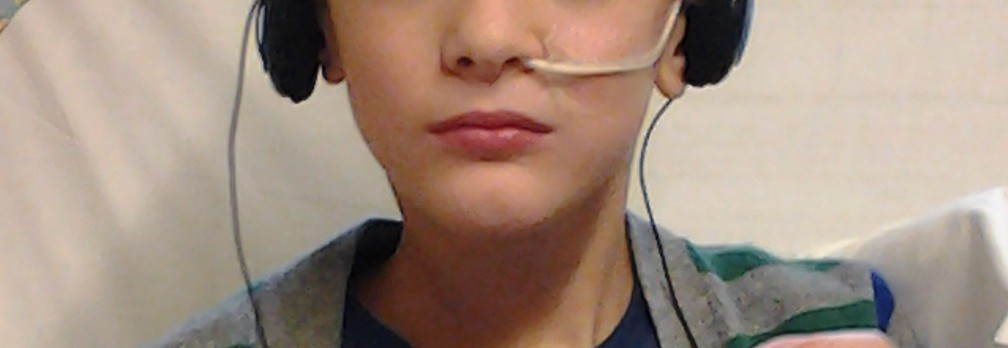
M and his tube at GOSH

M and his tube at GOSH

With steps 1 and 2 complete, we were now onto the third step, the one which is going to have the biggest impact on M’s life for the next few months.  NG-tube in place, dis-impaction done and pellet study under way, it was now time to move M to an “elemental” diet, one which sees all foods removed from his diet and replaced by a nutritionally complete feed that consists of amino acids, carbohydrates, fats, vitamins and minerals.  The ideal would be for M to drink the 1.8 litres of this feed that he needs each day to have the right amount of calories and nutrients for his age, weight and height, but I knew we had no chance of getting him to do that.  Not only is he a reluctant drinker at the best of times, meaning it would be nigh impossible to get nearly 2 litres of liquid into him on a daily basis, but the feed is truly revolting to taste and even adding generous quantities of approved flavouring was never going to be enough to convince him to let more than a minimal amount pass his lips.  The only alternative was to feed him via his NG-tube, which meant an intensive few days in hospital for us as we worked out how best to give the feeds, the timings and rates that he could tolerate and I was trained on how to manage his tube.

The original plan proposed by the dietitians was that M receive six 300mls feeds a day via the gravity-feeding method, which meant that we would attach a large syringe to the end of his tube and gradually add the 300mls over the duration of the feed to ensure he took the full amount.  The principle of gravity feeding is that you can adjust the speed of the feed as the flow of the liquid is driven by the height of the syringe and the effect of gravity:  the higher the syringe, the faster the flow. The dietitian was keen that the feed be given over around 20 minutes, but it quickly became obvious that this just wasn’t going to be a method that would suit M.  Within 5 minutes of his very first feed starting, he turned pale and grey and complained that his stomach was hurting. The nurse giving the feed adjusted how high the syringe was held, but no matter how the syringe was positioned, things didn’t get better and by feed number 2, the nurses were adamant that this just wasn’t going to work for him, something I wholeheartedly agreed with.  At this point, we were only giving him 200mls instead of the full 300mls, but even that was proving too much for M’s sensitive digestion, so the dietitian finally had to agree to what the nurses were telling her and everything was changed yet again.

M's rather snazzy new pump

M’s rather snazzy new pump

Our new routine saw the feed mixed to a higher concentration, meaning that we only needed to get 1.5 litres into him a day and we were introduced to the wonders of a pump.  The pump means that the rate of giving the feed can be at a speed that best suits M and can easily be tweaked as each individual situation requires.  There was a lot to learn in the few days we had as I needed to know and be confident in how to check that his tube was correctly positioned, what to do if it appeared to have moved, how to prepare the elemental feeds and how to attach and properly operate the pump.  There was also the added complexity that the pumps used on ward by GOSH were not the same as the one approved in our community and whilst the principle was the same, the processes were slightly different.  However, by the time discharge finally happened, I was as au fait with this new part of our life as I could hope to be, felt that we could cope at home and, more crucially, had enough medical supplies to see us through the next few days.

M and his tube at home

M and his tube at home

Since that first day, now over a month ago, that original regime has been changed and tweaked more times that I care to imagine.  The suggestion of 6 feeds being administered at separate 30 minutes periods throughout the day were impossible for M to manage as he wasn’t able to tolerate the 250mls over either the initial proposed 30 minutes, nor our second attempt of an hour.  It also quickly proved impractical as any issues with the placement of the tube would take at least 20 minutes to resolve and that was time that we couldn’t expect the school to give him as he doesn’t get any individual support.  We soon realised that M wasn’t coping either physically or emotionally with the constant feeding and we have now settled on a routine that seems to work for everyone concerned.  His first feed is a 1 litre one starting at around 6.30am, which is given slowly enough to avoid too many tummy aches or occurrences of reflux and which lasts until the end of lunch-time.  The pump is disconnected at that point and M is able to enjoy an afternoon free of the encumbrance of his pump whilst at school.  The final 500mls feed begins between 4pm and 4.30pm and takes us all the way through to bedtime.

This is the routine that we will be living with for the next month or so and then the task of food reintroduction will begin.  As our local dietetics team has refused to be involved in M’s care, we will be working with the dietitians from GOSH to work out a detailed approach to trialling foods and the order we try them in.  The elemental feeding via NG-tube will continue alongside these food challenges until we have identified enough safe foods for M to eat and get all the calories and nutrients he needs to be healthy.  It’s not going to be an easy or quick task to complete, indeed there is a long and arduous road ahead, but it should be one that leads to more answers for M’s health than we’ve ever had before.

Round Two: the Pellet study and other adventures

Courtesy of 123opendata.com

Courtesy of 123opendata.com

Once the NG-tube was finally in place, M and I then had 5 long days to survive the copious amounts of Klean-prep, senna and picolax that were pumped into his system to clear his troublesome bowel.  Although we appeared to be off to a slow start, these powerful laxatives finally did their job and by late Monday afternoon, the gastro registrar was confident that we were ready to start the pellet study and a x-ray confirmed his opinion.  I had already met with one of the gastro investigation nurses, so knew that the 3 pellets, containing different shaped plastic markers, were ready and waiting on the ward for M and all we needed to work out was how best to get him to swallow them.

Over the last year, we have made huge strides in getting M to swallow tablets whole and no longer need a spoonful of Grandma’s jam to help the medicine go down as he has conquered his struggles and now merrily swallows them with just a mouthful of water to help.  However, there were 2 problems we now had to overcome:  M’s new-found fear of swallowing capsules with the NG-tube in place and the fact that these pellets are of a size that even I would struggle to take easily, let alone a small child.  The nurse suggested we resorted to mixing the markers into a couple of spoonfuls of jam and that was our first attempt.  For reasons that will remain forever unclear, M found even this method difficult to manage and instead resorted to swallowing the pellets one tiny marker at a time.  It may have taken considerably longer than anyone expected, but the pellets were taken and so round 2 of our admission was well underway.

The week should have been an easy one, as it was supposed to require nothing more of us than completing the pellet study, but unfortunately it was at this point that I had to brace myself and find the strength to weather an unexpected and turbulent storm.  Despite both Mike and I having repeatedly made clear that we have almost no support from our local hospital and their paediatric gastro team, this information appeared to have got lost along the way and I found myself embroiled in a battle to keep M in hospital once the pellet study had started.  GOSH felt sure that we would receive all the care and advice we would need from our local and nothing I said would convince them otherwise. battle I spent more hours than I care to remember fighting M’s corner and insisting that the consultants didn’t discharge him before the study was complete and the NG feeding started.  The pressure was huge, both on me – as I talked, discussed and cried my way through numerous meetings with nurses, doctors, dietitians, psychologists, PALs workers and indeed anyone else who would listen – and on Mike – as he sought to juggle the challenges of working, looking after G at home and supporting M and me whilst we were several hours away and only contactable by phone.

It quickly became evident that GOSH simply could not conceive that we could be as lacking local support as I was asserting we were and I have no doubt that they were beginning to view me as something of an overwrought, overtired, over-emotional and somewhat neurotic mother, who was unbelievably arguing to keep her child in hospital, when most other parents were trying desperately to get their children discharged before Christmas.  By the end of the week, it had all come to a head and I was at my wits’ end, but was finally vindicated late Friday afternoon, when our local dietetics team refused in no uncertain terms to take on M on a shared care basis with the GOSH dietitians – an entirely new experience for GOSH, though sadly an all too familiar one for us.

lighttunnelDespite all the heartache and distress this unnecessary battling caused, there was some really positive light at the end of the transit study tunnel.  The final x-ray on Friday indicated that M’s bowel is working more or less as it should.  It may be a little slower than ideal, but the markers had moved through M’s system and the consultant was delighted with this result, which means that the bowel is currently doing its job.  We really couldn’t ask for anything more.  So, the conclusion drawn is that it is the complex and multiple food allergies that have been causing M’s diarrhoea and other symptoms because of his underlying condition, EGID and the final step is to identify these as accurately as possible.

World Prematurity Day 2014

premdayHow time flies.  A year ago I discovered – a day late – that November 17th marks World Prematurity Day; this year I’ve contributed to an event that will help bring awareness to this occasion.  During the year I have joined a FB group that is dedicated to those babies who spent time in our local NICU and the stories of their survival against all odds are amazing to read.  This morning, the support network run there for NICU parents, held a coffee morning for those currently living on the unit, which was accompanied by a board displaying photos of past NICU graduates, including G and M.  The request was for “Then and Now” photos to share on the corridors of the unit to celebrate how far they have come and to give hope to those starting their journey.

20131118_191352

The statistics are staggering.  Around 15 million babies will be born prematurely around the world this year, 60,000 of those in the UK.  In your average classroom of 30, there are likely to be 3 young people who arrived earlier than expected, some of whom will have slipped into a different year group and are now amongst the youngest in their year, rather than one of the oldest.  In one way or another, these youngsters will have challenged the doctors and nursing staff who dedicate their lives to caring for preemies, continued to strive to grow and succeed and will go on to do much bigger and better things than was ever imagined at the start.

Mike and I will be forever grateful for the amazing care that was given to both G and M during their time on NICU and feel privileged to have met such wonderful, caring medical staff whilst we were there.

20140809_222723

They’ve come so far since their NICU days


Busy days

Now that Halloween and Bonfire night are behind us and Christmas is fast approaching, there’s finally a little time to look back and reflect on the start of the new academic year.  September seems like a lifetime ago and yet was a busy month with appointments right, left and centre that have had a lasting impact on decisions about M’s long-term care.  We had appointments with GOSH, a new community paediatrician, M’s OT and with CAMHS; and I needed to be the thread that linked them all to ensure that M remained at the centre of their focus and that all agencies were working together to provide the best support they could.

Courtesy of travaasa.com

Courtesy of travaasa.com

The OT’s review was everything we needed it to be and she has already started going into school once a week to work with M on his handwriting skills.  The clinical psychologist he meets with fortnightly through CAMHS is slowly building a relationship with him and gently pushing him to talk about how he feels about life with EGID and the frustrations he experiences.  As for the new community paediatrician, who was recommended by our local hospital, well, lets just say we won’t be rushing to meet with her again.  Her complete lack of understanding of his condition was glaringly evident as she suggested that regular toileting and a sticker chart were the answers to all our problems.  How I refrained from saying something very rude is nothing short of a miracle!

The most important of all these, for us, was our regular appointment at GOSH with the gastro team charged with M’s care.  The restricted diet and increased medications over the last 3 years have not brought about the results we’ve been aiming for and M continues to be symptomatic a lot of the time.  We have become increasingly concerned about his emotional well-being as he struggles with the impact of EGID and multiple food allergies on his daily routines and I was determined to come away from that appointment with a tangible plan in place.  Despite our best efforts with the challenging treatment suggested by the local consultant leading into the summer, our worst fears were realised when the registrar told us that M appeared to be impacted again and we would need another course of fairly heavy-duty laxatives to empty his bowel.

planningThat led into a lengthy discussion about where we’re headed and what the most sensible next steps for M’s care are.  Short-term plans are all well and good, but we now need a long-term care plan put in place.  He agreed that we can’t keep limping from one appointment to the next and promised to discuss M’s current situation with our consultant.  Medical terms such as “pellet study“, “elemental diet” and “manometry” were bandied around and I am glad that, thanks to the support from other FABED families, I have a reasonable layman’s understanding of what all these terms actually mean.

We left the hospital feeling that we were beginning to making some progress in dealing with the problems that continue to dog M’s every step and a short-term plan that would start to deal with the current impaction issue.  The longer term decisions would be discussed both internally and with us before anything was settled on for definite.  A follow-up appointment with the consultant herself was made and our step was just a teeny bit lighter as we felt our concerns were being heard and addressed.

Courtesy of abercrombierealestate.com

Courtesy of abercrombierealestate.com

However, since that day, over 7 weeks ago, I have spoken to GOSH at least once a week and almost daily over the past 10 days.  The improvements expected haven’t happened and so the decision has been made to admit M into the hospital for further testing.  We need to understand whether his bowel is working as it should or not as that will give us a clue as to the direction we need to head.  We have also agreed with his consultant that the diet and medicines just aren’t helping his hugely allergic colon and so have made the decision to remove all food from his diet and follow the elemental diet via NG-tube for a while.  This should give his bowel and body some much-needed time to rest and recuperate, something I believe it so desperately needs.

“Out of difficulties grow miracles” – Jean de La Breyere

stormyThese last few months have been, well, interesting; and yes, that’s one of those euphemisms you use when you really don’t know how else to explain what’s been going on.  In many ways life was reduced to a whole new level of hell in our household; one that I’ve hesitated to discuss because of the nature of our experience.  Sometimes I need to delay publishing my posts to give us all time to process what we were dealing with before revealing it to the outside world, to allow the storm to pass and to let those memories start to fade.  Now, I’m – we’re – finally ready.

The reason for it all has been M’s ongoing issues with his bowel.  When the pellet study was done a year ago at our local hospital, the x-rays indicated that he had developed what is termed “mega-rectum” and “mega-colon“, caused in all likelihood by ongoing and previously undiagnosed impaction.  The priority at the time was to clear out his system and keep it clear, but unfortunately, for reasons still unknown, M has limped from one bout of constipation to another over the last 15 months.  The constant flow of problems has taken its toll on the whole family, but most noticeably on M, who is finding it tough to be positive when he feels that nothing is making a difference.

Our first meeting with our local consultant led to a long discussion about what, if anything, we could do to try and ease this problem and how we could help M’s bowel to recover.  He suggested a course of treatment that sounded extreme, but which he felt would encourage this troublesome body part to start to repair and would therefore hopefully alleviate some of the issues.  He proposed starting M on yet another laxative, called Bisacodyl, which would be administered by a daily suppository each evening.  This would cause an immediate response, thus reducing the likelihood of ongoing impaction and hopefully M’s bowel muscles would eventually recover some of their elasticity.  This treatment was not to be a long-term one and we would start doing it daily for just 4-5 weeks before being assessed in clinic again.

willowtreeOf all the medicines that M has endured over the last 3 years, this is, by far and away, the worst one we’ve had to put him through.  Day 1 was tricky as he was incredibly nervous and had no idea what to expect.  The subsequent week was hell and the nightly battles as I gave my boy this medicine accompanied by his incessant crying and pleading took an almighty toll on the family.  Job being done, a nightly cuddle was needed to reassure and comfort us all.  Due to unexpected problems during that first week, M experienced a heavy bleed and we were advised to take a week’s rest before restarting and finishing the course of treatment.  Unsurprisingly that was even more difficult to do, in fact almost impossible, but we persevered and carried on until our next appointment.

Mike and M had their hopes pinned on the medicine stopping then, I was slightly more sceptical and sadly I was proved right.  There had not been sufficient progress in that 5 week period for our new consultant to be satisfied and he wanted us to keep going until the start of the school holidays.  At that point, he asked us to double the dosage, administering the medicine both morning and evening until we flew to Florida.  I think that everybody’s heart sank at that point, although M cheerfully focused on his idea of a silver lining – he got to stop taking the Senakot, which was his least favourite medicine and that it would all stop as soon as we got to Florida.  How we got through those 8 weeks, I really don’t know and I hate knowing that we might be told to restart the medicine again in the future.  Worst of all, we won’t know whether this treatment has been of any help for a while yet, which is discouraging, but we will continue to keep our fingers crossed and hope that out of that difficult time, we really will start to see small miracles grow.

hope

Eye adventures

Have you ever even heard of a chalazion?  No?  Me neither, but after last weekend’s events, I now consider myself to be an expert.  It all started with what I thought was an innocent stye in G’s right eye a week ago.  Her eye was a little swollen, but I’ve suffered with styes myself over the years and simply set to bathing it regularly with cooled down boiled water and bicarbonate of soda.  I had my fingers crossed that this treatment plus a trip to our GP on Monday would do the trick – why do children always get ill on the weekend? – but luck wasn’t with any of us last weekend.

Courtesy of medypal.com

Courtesy of medypal.com

Whilst Mike and M enjoyed a fast-paced weekend of adrenalin-filled 8th birthday parties, G and I were subjected to 7 hours visiting 3 of our local hospitals.  By the time G woke up on Sunday morning, it became abundantly clear that a trip to A&E was going to be necessary.  Poor G looked like someone had whacked her in both eyes, which were heavily swollen, red, weeping and extremely tender to the touch.  The single stye appeared to have multiplied and she now had a row of them across the bottom of both eyes.  We started at our local children’s hospital, a place I’ve visited more in the last 3 months than in the past 3 years due to our bad experience with their previous care of M.  The doctor there identified that G had had an allergic reaction to something unknown and gave her an anti-histamine to start to reduce the swelling around her eyes.  However, she was concerned about the number of small lumps along G’s lower lid and referred us on to the local eye hospital, who could see G just after lunch.

Fortunately, the hospitals are within walking distance of each other and we were able to pick up the prescribed anti-histamine from the main hospital (the only hospital pharmacy open on a Sunday), grab some lunch from a coffee shop and make our way in plenty of time for G’s appointment.  Once at the eye hospital, G was diagnosed as having a series of styes as well as a chalazion, which has resulted in preseptal cellulitis, a severe inflammation and infection in her lower eyelids.  Another prescription written, this time for antibiotics, eye drops and eye ointment and a mad dash back to the hospital pharmacy to get the medicines before it closed at 3pm ended our day and G and I were finally back home by 4pm, a full 7 hours after we left it that morning.

10359040_265190260333785_8817047899935492808_oThe great news is that a few days on, the medicines and continued regular bathing and massaging of her eyes has started to work and the swelling and redness is starting to subside.  This morning her left eye looked almost back to normal and her right eye has improved hugely, though the chalazion will take a little longer to disappear and return my girl to her full beauty.  G sadly missed her last days of Year 5 due to the infection, but I’m hoping for a great summer holiday now she’s well on the road to recovery.

The Battle is won

battleThis has been a surprisingly difficult post to write.  I’ve found it challenging to give the details of our progress over the last 4 months following my formal complaint to our local hospital about the poor treatment we received when we were there earlier in the year, without it sounding either overly clinical or emotional beyond belief.  I’ve finally resorted to bullet-point format as the steps we’ve taken have been an important part of our journey with M that I want to share, but they don’t need any unnecessary waffle in the re-telling.

  • 24-Feb-2014: Write a formal letter of complaint to the Patient Advice and Liaison Service (PALS) based at our local hospital, giving details of our appointment, what happened whilst we were there and our areas of concern regarding the care they’re refusing to offer to M.
  • Mar-2014: I also write to our local MP asking for his help in getting local hospital support for M and giving brief details of our poor experiences to date, including a copy of our formal complaint and my blog-posts, so that he has all the relevant facts to hand.
  • Mar-2014: Receive an acknowledgement of my complaint from the hospital, who advise they are looking into the matter and will send a formal response by the end of April 2014.
  • Mar-2014: Our MP’s secretary calls from Westminster to express their dismay at learning about our experience and to offer an appointment at his next local surgery to discuss the matter further and to see how he can usefully support us in our quest to get local input for M.
  • Mar-2014: Receive a copy letter from the General Paediatrician we saw in February giving details of the appointment and what next steps they suggest are followed to help M.  Given the date of the letter and the way it is written, it is blatantly obvious that it has been written with my complaint in mind and does little to reassure me that this medic will be fighting M’s corner going forward.  The letter stresses that they are concerned about our request for shared care, but that they will refer M to one of the gastro consultants based at our local hospital to see if he will help.
  • Mar-2014: Same day that we receive the letter from the last doctor, I meet with our MP to seek his advice.  He listens with a sympathetic ear and immediately offers to do whatever necessary to ensure M is given the chance to receive local support as well as the care from GOSH.  In the light of the letter received, he proposes that we wait to see what the formal response from the local hospital is and whether the referral is successful or not. He also asks that I keep in touch with his secretary and let her know how things progress.
  • April-2014: A month passes without much movement on either the complaint or the referral front.  I contact our GP to ask him to also refer M to the gastro consultant as I am still lacking confidence that the hospital doctor will do a favourable referral given the nature of my complaint.  During this wait, we have a planned appointment at GOSH and I am able to discuss with them whether they would support our request for shared care. The gastro team is very supportive of our request and advises that they usually recommend that a general paediatrician is the point of contact locally to avoid any unnecessary conflicts concerning M’s treatment.  However, given our local’s apparent reluctance, GOSH agree they will discuss M’s care with anyone in the local hospital.
  • April-2014: We finally receive a reply from the Chief Exec, offering his apologies for our poor experience as well as giving me their findings about the complaint.  He also offers a meeting with both the gastro consultant and a member of the Senior management team at the hospital to see how we can take M’s care forward.  There is some confusion as to who will schedule this appointment, but a series of phone-calls on my part and a very helpful admin assistant at their end means that the appointment is finally organised for June.
  • May-2014: I receive a follow-up email from our MP asking how things are going and reminding me to keep him informed of any changes in our situation.  I’m delighted to be able to inform him that we’ll be meeting our local hospital at the beginning of June and agree to let him know how that meeting goes.
  • June-2014: The day finally arrives and Mike and I head off to our local hospital to meet with members of staff to discuss M’s needs, having left a poorly M with Mum for the duration.  Our aim is to get our local to agree to having “shared care” with GOSH, so that we don’t have a repeat episode of our Christmas hell with a M who desperately needed admitting for treatment and nowhere that would take him.  The consultant we meet is delightful and we’re thrilled to learn he worked at GOSH for a number of years and, even better, has worked alongside M’s consultant there.  He instantly agrees to look after M on a secondary care basis, dealing with our existing issues with recurring constipation/impaction and any emergency situations which may arise.  The management team has no choice but to go along with his suggestions and we agree on a system that should work well for us all and will ensure that M gets the very best care at all times.  The meeting ends with a follow-up appointment with the consultant 5 days later to deal with the current bout of impaction that M is suffering.

champagneIt has not been an easy road to follow and the number of letters, emails, phone-calls and late night discussions that have been flying around is huge – BUT we did it.  We’ve got secondary care for M at a local level and a positive way forward for the next few years, which is everything we wanted and which I hadn’t dared to believe was possible.  Of course, we still need to see how it all works outs in practice, but the first signs seem positive and we know we’ve got at least one consultant on our, and M’s side.


Local update

update-timeYou may remember that back in December, M was referred on an urgent referral to our local hospital based on the advice of GOSH.  He was suffering from chronic constipation, was in considerable pain and was losing weight as his appetite decreased.  Sadly, our local hospital felt it was unable to admit or treat M and instead our only option was to treat him at home, using a strong laxative and bucket-loads of patience as he struggled to recover his health. Our urgent referral resulted in the offer of an appointment with a general paediatrician in February, nearly 12 weeks after the referral was originally made.  We thought long and hard about whether we wanted to take up this appointment or not, given our previous experience with our local hospital, but we knew that local input could make a big difference to all our lives and felt that this could be our way into the local system.

apptFebruary’s appointment arrived quicker than we could have imagined and we went along with an attitude of “hoping for the best, but expecting the worst”.  The symptoms that M was suffering back before Christmas have disappeared and we have had the challenge of changing his diet and his medicines again in an attempt to reach a status quo with the EGID. What we hoped for was a local doctor who would listen to our concerns and who would offer us the helping hand we so desperately need.  We wanted a local doctor who could point us in the right direction at the hospital and would support our search for shared care between our local hospital and GOSH for M.

Instead we got a doctor who, through their less-than-professional manner, vocal criticisms of both our GP and GOSH and obvious impatience, left us feeling let down once again.  They belittled our decision to seek a second opinion when the local hospital had let us down 3 years ago and were unimpressed that we had our own point of view concerning the care given to M.  They reluctantly agreed to refer us on to the gastro team at the hospital, but made it clear that they believed it highly unlikely any of the gastro consultants would willingly take M on a shared care basis with GOSH.  Mike and I weren’t surprised, but we were disappointed that this consultant chose to make their opinions known so clearly in front of our impressionable and sensitive 7 year old.

complaintNeedless to say, we are not letting things drop there.  We have written a letter of complaint to our local hospital and are now waiting for their response to our concerns.  I am writing to our MP to make him aware of how badly M is being let down health-wise locally, to see if he will get involved on our behalf.  We will persist with the onward referral to one of the gastro consultants because we remain strong in our belief that shared care between our local hospital and GOSH is something M needs;  AND we will continue to fight M’s corner to make sure that he is put first and gets the support he needs.