Tag Archives: Google

The Message from “My Man” at the BBC

Three weeks on from that episode of the BBC’s hospital drama, Holby City and I’m still reeling from the amazing response to my blog post and the unexpected bonus of two phone-calls with series producer, Simon Harper.  When I penned my heartfelt response to what Mike and I had watched on-screen, I expected to reach a few more than my usual readership and dared to hope that I might beat my previous “top score” of 186 readers in a 24-hour period with my letter to our local hospital.  I never dreamed that over 2,000 people across the world would read, comment on and share that plea for responsible portrayal of chronic illness in the mainstream media.  As well as sharing my thoughts through my blog, I made a formal complaint to the BBC and, through the wonder of Google, managed to track down Simon Harper and sent him an e-mail, expressing my concerns about the inaccuracies about EGID portrayed in that episode.

Courtesy of bbc.co.uk

Courtesy of bbc.co.uk

I didn’t expect to hear anything back, so you can only imagine my surprise and absolute delight when Simon not only replied to my e-mail, but also offered to pick up the phone and discuss the matter with me.  We agreed a day and time to talk and I spent the week making notes and talking to fellow EGID parents through FABED and other on-line forums to get their points of view on what I needed to raise in my conversation.  That first phone-call lasted for around 30 minutes and at no point did I feel that Simon was keen to close down the conversation and finish the call,  He was genuinely interested in learning more about EGID and understanding why this episode had caused such distress in the on-line community. We spent a long time discussing the difference between “intention” – what the program was trying to portray – and “perception” – what the viewing public understood – when it comes to producing a drama for television viewing and here Simon explains it in his own words:

The intention: “the guest character’s general allergies were a dramatic smoke screen to the actual underlying cause of his pain, neuralgia – but that in no way were those allergies supposed to suggest a condition as specific and, as I now know from talking to you, severe as EGID.  In no way was the story supposed to say that EGID was in fact just neuralgia!“.

The perception:I think it comes down to one scene where Zosia (the doctor) mentions that Nigel’s eosinophils are up –  due to his general allergies – and she then goes on to mention “his eosinophilic gastro-enteritis”.  What I can see maybe wasn’t clear was that Zosia, excitedly bandying round theories and possible prognoses at this stage of the story, is in fact supposed only to be raising EGID at a possibility at that moment.  perceptionA possibility that, in fact, turns out not to be the case.  But I can see that the phrasing “his” – combined with the fact that dramatically speaking, we never see Zosia rule out EGID (a moment we assume happens off-screen) – could have given the wrong impression.  It’s a tough call with medical drama – you never play on-screen every single beat of medical treatment that would happen in real life, choosing the moments which best serve the story,  and sometimes rely on the audience’s imagination to assume and deduce. It’s a delicate balance, and there is definitely a lesson to be learned here, because evidently, missing out that moment has in this case given the wrong impression.

I also mentioned my concerns that a range of inflammatory bowel diseases had appeared to be ruled out through a simple ultrasound, whilst those of us living with this family of illnesses know, from our first-hand experiences, that endoscopies, colonoscopies and biopsies are the only reliable ways to confirm a final diagnosis.  The conversation ended with an agreement that Simon would spend time investigating what research was done, talking to the consultant concerned and checking out the ultrasound situation before phoning me back a week later to talk some more.  I was struck by his commitment to unpicking where and how things went so wrong and have to confess to being cheeky enough to send another e-mail, thanking him for his honest discussion with me and pointing him in the direction of various EGID websites, so that he could truly understand what our families deal with on a daily basis.

A week later and that second phone-call happened.  Another 30 minutes valuably spent clearing up those outstanding points, including his agreement that the discussion regarding the ultrasound came across as far more definitive than was their intention.  I have to say I’m impressed with the research into EGID he had done during that week and appreciate that he took the time to properly review the research done originally for the program.  Finally, and definitely most importantly, he has sent a huge apology to our EGID family and I truly believe it is a heartfelt one.

apology

Courtesy of psmag.com

I repeat,  I  am absolutely aware that despite all this, an upsetting impression was given due to the way EGID was referenced and never ruled out on-screen and there is absolutely a lesson to be learned there for the future.  I can’t undo any upset caused, I realise, but do so hope I have been able to reassure you that we take the medical research aspect of HOLBY with the utmost seriousness and that in this instance, it truly was not an instance of inaccuracy, but, I think, a point of clarity that had an unforeseen impact on how the story came across.

 I truly have enjoyed our conversations, as not only did I get an education on the condition that  your son,  you, your family and many others are so courageously living with, but, as a producer, it is always absolutely invaluable to get insights on how our story intentions actually translate to an audience member –  that gives us great help in the way we tell our stories for the better to make HOLBY an entertaining but hopefully also stress-free hour!  And I do hope that you will continue to watch and enjoy the show.

A big thank you to Simon Harper for his willingness to be open and honest about the research done for this storyline, the errors of judgement made in the production, to talk to me not just once, but twice and his apology for the upset unintentionally caused.  As one of my fellow EGID Mums asked (and I wholeheartedly agree):

Any chance they’ll get Mr Allergy (grrrrrr) back and do a proper episode on EGID?

Simon, I wait for your answer!

Last minute checks

Courtesy of bbc.co.uk

Courtesy of bbc.co.uk

With the countdown started and just days to go, it’s all come down to those last minute checks and the final packing for our holidays.  I am the queen of lists when it comes to going on holiday, especially when travelling with M and G and this year was no exception, though I have to confess that four pages of lists is a whole new record! The clothes were quickly sorted and I got to my main challenge: the suitcase of M-friendly foods and all his medicines.

My biggest concern was ensuring we have enough safe snacks with us for at least a few days as I’m not certain about what will be easily available once we get to the “House of the Mouse”.  I don’t want to over-cater as I have no intention of bringing a suitcase of food back home with us, but I did need to be reassured that M would have enough to eat.  I spoke to our lovely GOSH dietitian to seek her advice about the availability of free-from foods in the USA and she advised consulting the UK Coeliac Society website as a starting point as to where we might be able to buy them.

onlineshopI also did some on-line research and discovered that an option I hadn’t even considered might be a great place to start – an on-line grocery shop.  This is still a fairly new phenomenon in North America as I know from our Canadian family and friends, but I found that I could arrange for a food order to be delivered directly to our hotel on the day of our arrival,  which would instantly reduce the need for Mike and me to find a supermarket straight away.  I investigated a couple of options and settled on the Garden Grocer delivery service. This is not affiliated to one particular supermarket chain and for a little extra cost, they will visit more than one shop to find everything you need.

The website is not as slick as the ones I’m used to using at home – I am a big advocate of on-line grocery shopping as it saves so much time – but I have been able to find most things I think we’ll need whilst away.  There was a much better selection of M-friendly cookies and cereal bars than in the UK and at a much better price too.  As I’ve said before,  it’s hard to be both frugal and allergy-friendly in the UK.  Shop done and delivery slot booked, all I can do now is sit back and wait with my fingers tightly crossed.

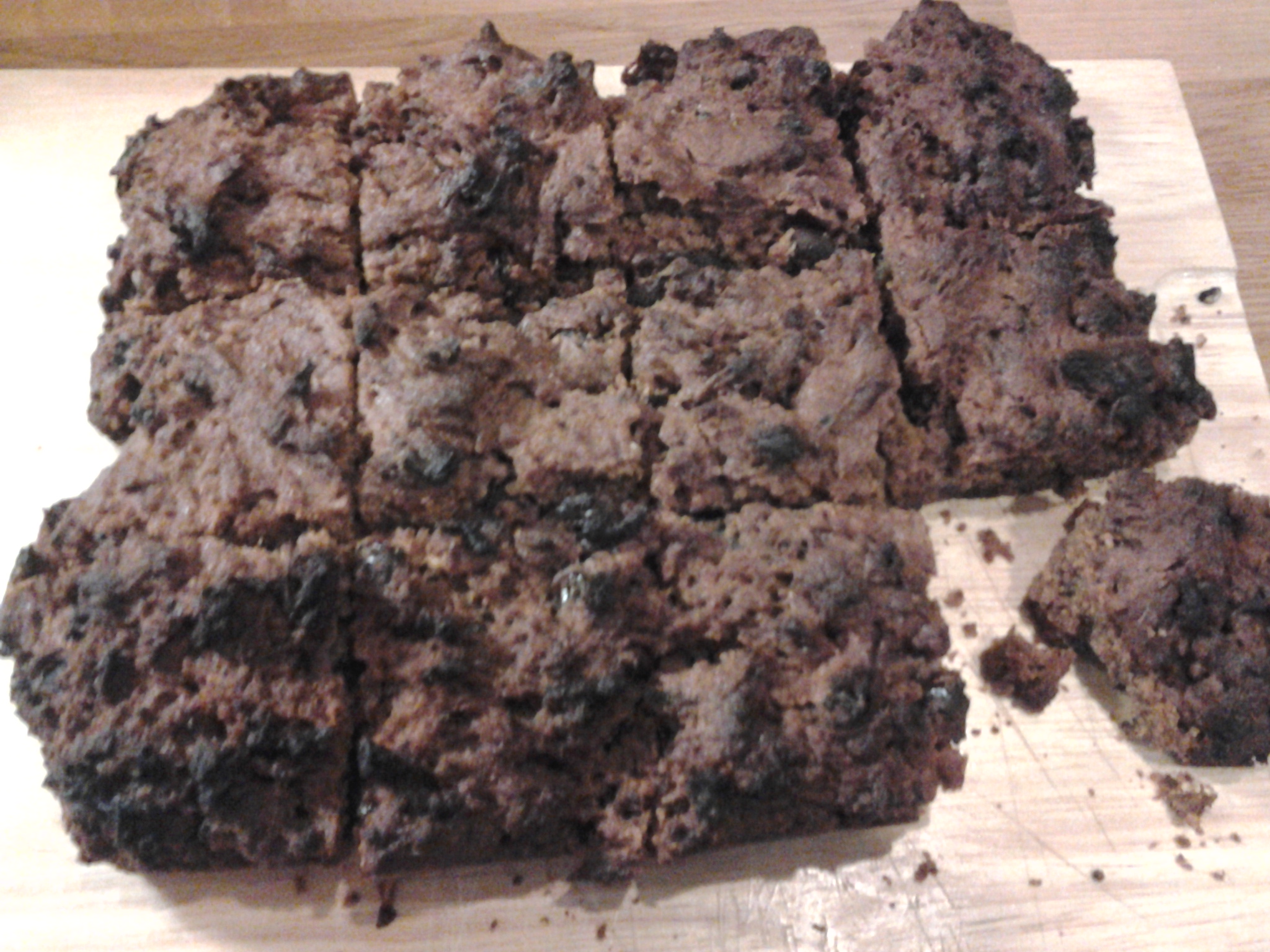
Delicious date and ginger cake

I hadn’t been planning on yet another bake, but I remembered at the last minute that the children needed cake for the following afternoon at their holiday club.  Once again I needed to work with whatever was hiding in the cupboards and although G was keen for me to make my chocolate cake, I wanted to head in a new direction.  We’ve only just finished the frozen chocolate cupcakes leftover from our fundraising at the end of May, so I relished the idea of something different.  I’d recently bought a packet of dates and decided to investigate a date and ginger concoction instead.

SAM_1364I couldn’t find a good allergy-friendly recipe to use, but settled on this recipe and adapted it to make it M-friendly.  These days I try to find recipes that have not only already done some of the work for me, be they gluten-free, vegan or otherwise allergy-friendly, but that also look relatively easy to bake.  Fortunately, given my ever-growing experience in the kitchen, I was able to work out my substitutes fairly quickly and, once the children were in bed, started in the kitchen.  My biggest challenge to date then faced me.  My electronic scales had given up the ghost – I’m guessing the repeated falling out of the cupboard really hadn’t helped – and I had to revert to using my Nigella cups for measuring the ingredients instead.  I’ve never baked using just cup measurements before as I usually convert them into grams and millilitres, but needs must and all, so I rolled up my sleeves and got on with it.

20140728_223632I needn’t have worried as the final cake was delicious, though perhaps a little overdone from 5 minutes too long in the oven.  The ginger was a bit strong, though M insists that won’t hinder him eating the cake.  G is less sure, but is happy to eat it in small pieces and certainly didn’t refuse the slice offered to her for holiday club.

Gnocchi

With the end of the school year just around the corner and G preparing to start her final year of Juniors in September, I’ve recently been reminiscing about her baby years and in particular, when we first found out I was pregnant with her.  I had just qualified as an accountant, was about to move to my first job in industry and Mike and I were on holiday in Florida.  My main recollection, other than the overwhelming joy of discovering we were expecting our first child, is eating Gnocchi at the Via Napoli restaurant at Epcot.  For those not in the know, gnocchi are mouth-watering Italian potato dumplings and, quite obviously, this experience was in the days before my own potato intolerance was identified. Via Napoli

As I recalled the delicious flavours that literally melted in my mouth during that holiday, I wondered whether this was a food experience that I would ever be able to enjoy again or one that I could introduce to my multiple allergy-suffering children.  I did some research on-line and found two recipes that almost fit the bill.  Whilst neither was perfect by itself, I could combine and adapt them to create both M-friendly and G-friendly gnocchi.  Due to the pernickety nature of my eldest, who won’t touch sweet potato with a 10-foot barge-pole, I had to use this allergy-friendly recipe, whilst I needed the expertise of this sweet potato alternative for M.  I decided it would be worth the time and hard work required to cook both recipes if I could find a new meal that both would ultimately enjoy.

20140701_173743I will warn you now that this is not a recipe for the faint-hearted as it is relatively labour-intensive, but the delightful end result was, in my opinion, well worth the effort.  I invested in a potato ricer, which produced the most wonderfully smooth mashed potato I’ve ever seen.  I have since learned that you can achieve the same result using a bog standard food blender, but I’m thrilled with my shiny new kitchen gadget and wouldn’t swap it for the world.

20140701_182848


I almost come unstuck over the weighty decision of a sauce, but decided to err on the side of caution and prepare the one suggested with the sweet potato gnocchi recipe, keeping my fingers crossed it might pass muster with G and M alike.  I am astounded and delighted to announce that neither child turned their noses up at my home-made gnocchi and they were an unexpected resounding success.  Unbelievably both children cleared their plates and G was so enthusiastic about the dish that she asked if I could make it again the following day!

The batches of the gnocchi dough I had made with my adapted recipe were enough to not only feed the 4 of us a hearty dinner, but also allowed me to batch up 3 more dinners for G and M and pop them into the freezer for future occasions.  As the Italians would say, “molto delizioso!

Lemon Meringue Pie with a twist

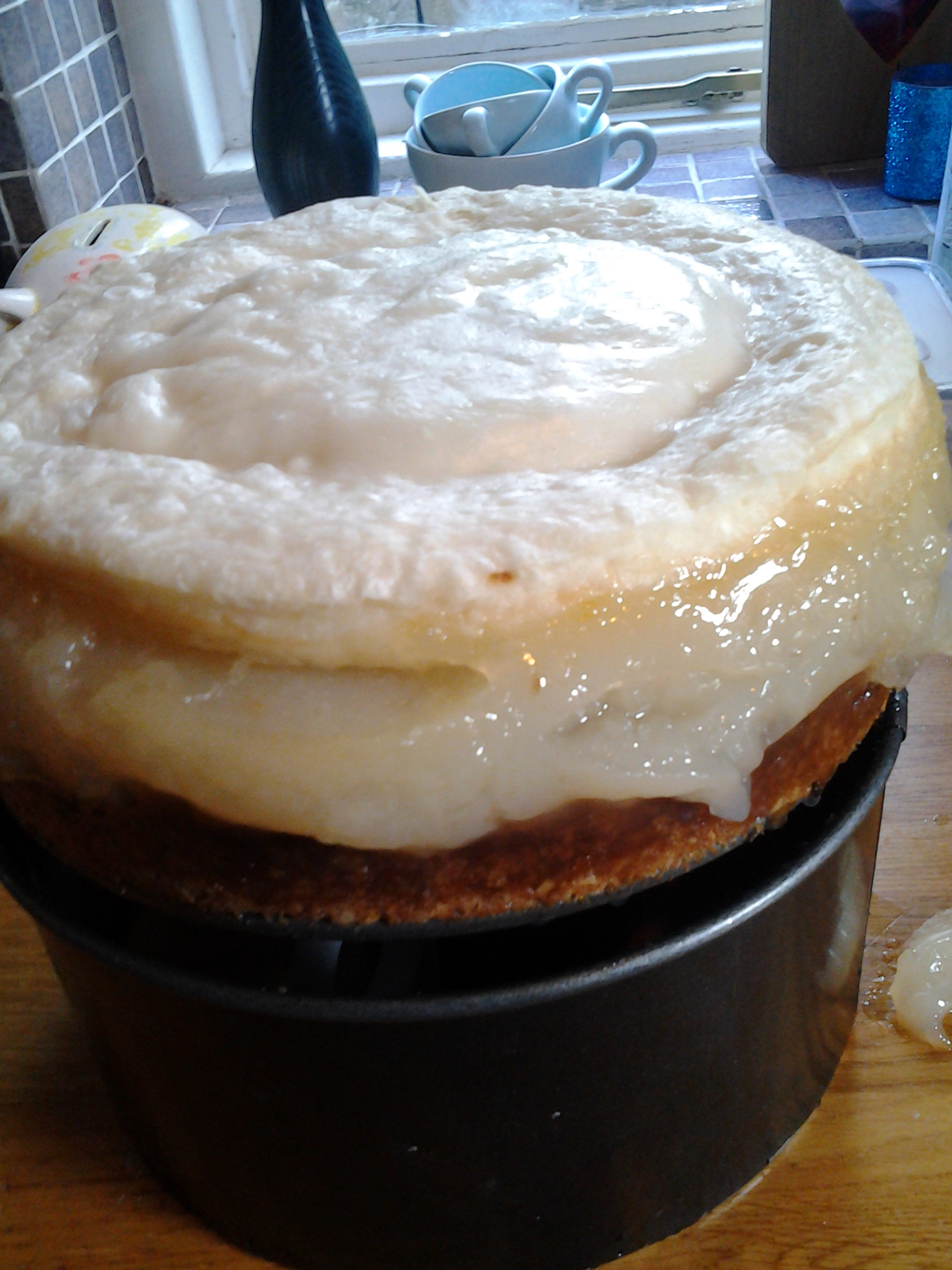
fathers dayCelebrating Fathers’ Day last weekend meant attempting to create Mike’s all-time favourite dessert, Lemon Meringue Pie.  I’ve found it difficult to make a good M-friendly pastry in the past and I wasn’t sure I wanted to struggle with it again, so instead I took inspiration from Mike’s other favourite pudding, cheesecake and decided to create my “pie” with a biscuit base.  I whipped up a double batch of my digestive biscuits recipe, pressed it into a greased springform cake tin and popped it into the oven for about 25 minutes.

Once this was in the oven, I scoured the internet looking for an allergy-friendly lemon meringue recipe that I could adapt, if necessary, to suit us all.  I found this great vegan recipe, which needed only the smallest of tweaks and set to making the lemon filling to put on top of the biscuit base.  I was lucky to have nearly all of the ingredients in my cupboard, though I had to use gelatin instead of agar to set the filling and here I nearly failed.  I had no idea of how much gelatin to add, so I added an amount that seemed reasonable for what I was making and kept my fingers crossed that it would all work out.  The good news is that 2 (and a bit) sachets of powdered gelatin set the filling enough to create the layer I was looking for, but trust me, it was certainly more luck than judgement.  Next time I will try more as I think it really needs to be a firmer layer.

lemonmeringue

This is what I was aiming for…

Base baked, filling added and sitting in the fridge to chill for a couple of hours, I came to the final, and possibly the hardest, part of my Lemon meringue challenge – the meringue topping itself.   I have successfully made small egg-free meringues before, but I wasn’t convinced that that recipe would work as the topping for a pie.  Instead, I decided to attempt the meringue mix suggested on the vegan recipe I was following as it seemed easy enough and I had enough egg replacement powder in the cupboard to give it a whirl.  It all started well, but I then added the rest of the water needed and things started to go horribly wrong. What I really should have done was stop there and start again, but I foolishly thought I’d attempt to rescue the gloop I was holding and added more sugar and egg replacement until I reached the consistency I thought I was after.  You can find my adapted recipe here.

20140615_193956

…this is what I got!

I doubtfully poured the meringue mix on top of the chilled base and put it in the oven, with everything crossed for a good result.  The recommended baking time was nowhere near long enough and I ended up leaving it in for a whole hour.  The end result?  Well, Mike and the kids kindly said it was delicious and for a first attempt, I would agree that it wasn’t too bad. However, it was not up to my exacting standards and I will definitely be trying this one out again with a few more tweaks along the way as I attempt to bake the perfect M-friendly lemon meringue pie.


Easter biscuits and Simnel Cake

Courtesy of annapolisfork.com

Courtesy of annapolisfork.com

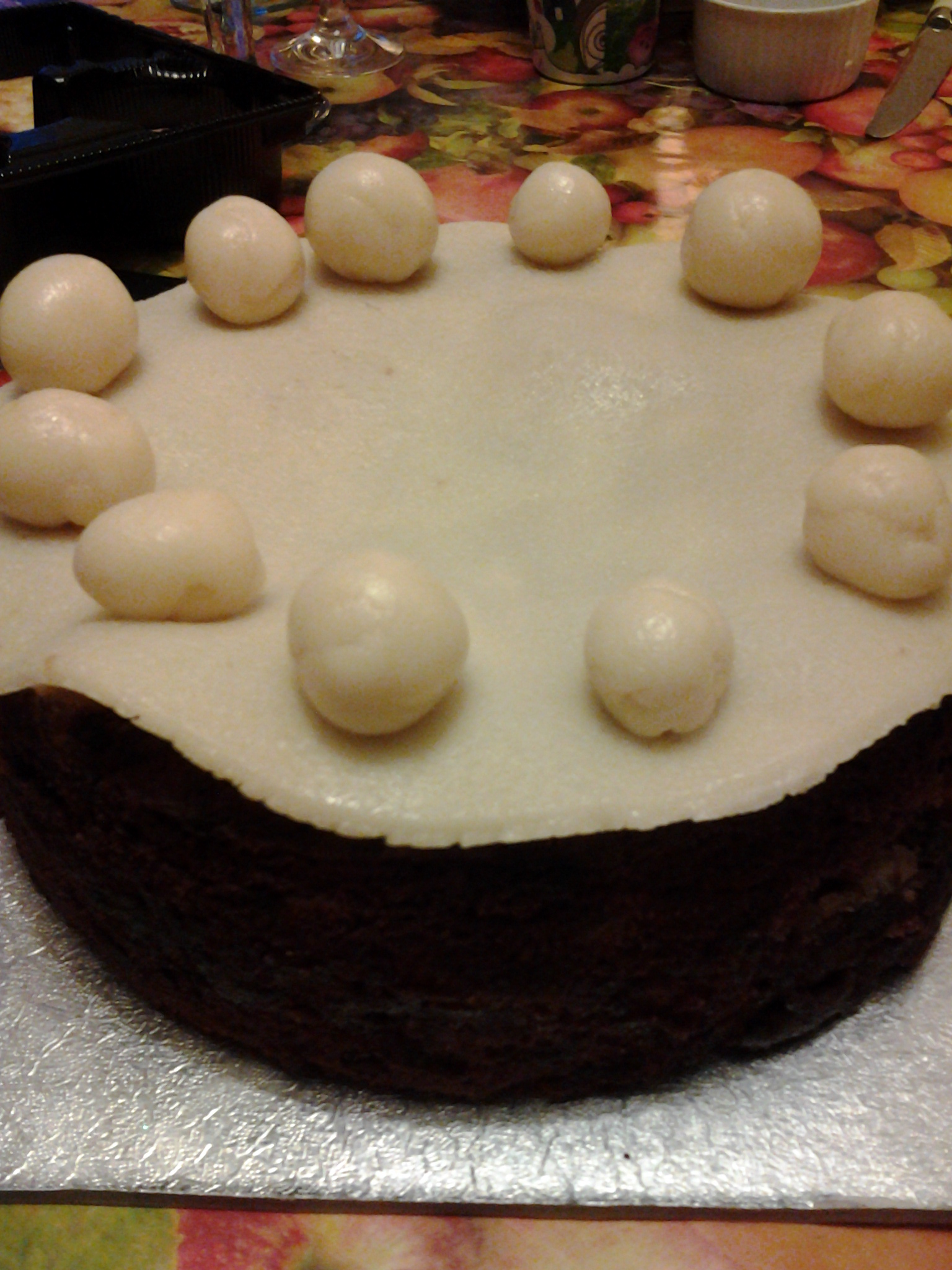
I’m not entirely sure what madcap idea took hold last week,  but I decided to spend part of Good Friday baking Easter biscuits and Simnel Cake for M and G to enjoy.  My experience of these 2 culinary delights is limited; I have had the odd Easter biscuit to eat in the past 30-odd years, but have to confess that I’ve never even nibbled at a slice of Simnel Cake.  What possessed me to try my hand at a cake that I couldn’t pick out of a blind taste test, I have no idea, but I was inspired to produce adequate alternatives and let M and G try some traditional treats.

I expected Simnel cake to be my biggest challenge and decided to start researching a relatively easy recipe to adapt for M.  To my surprise and absolute delight, my Google search uncovered this wonderful recipe for gluten-, dairy- and egg-free SImnel cake that was published in The Guardian newspaper on April 12th.  I don’t think I have ever seen a recipe that is so allergy-friendly in the mainstream media and I couldn’t wait to start baking.

Not bad for a first attempt!

Not bad for a first attempt!

I was thrilled with the end result and decided to decorate it in a manner that dates back to the Victorian era.  Traditionally, 11 balls of marzipan are rolled and used, with the story that these represent the 12 apostles minus Judas, though you can also use 12 marzipan balls for Jesus, the 12 apostles minus Judas.  In trying to understand the meaning behind this decoration, I discovered that Simnel cake was traditionally baked on the middle Sunday of Lent, which is also Mothering Sunday in the UK, and allows a relaxing of the 40-day fast typically followed during Lent.


First item ticked off the list and it was time to move on to the Easter biscuits.  Having grown up in the West Country, I decided to use another traditional recipe and use Cassia Oil to flavour these delicate biscuits, instead of the usual mix of cinnamon and mixed spice.  Thanks to the amazing blog, Alimentary Bites, I was presented with not just one recipe, but 2 to choose from.  I picked one at random, made a few minor adjustments to accommodate M’s dietary needs and whipped up a batch for the children to try.  There’s nothing to match the delicious smell of home-baking filling the house and G and M quickly gathered around the oven to make their claim as the biscuits emerged from the oven.

20140418_154823

All in all, a winning baking session and 2 more recipes to add to my M-friendly repetoire. Both biscuits and cake were delicious, scored full marks from my discerning duo and disappeared quickly over the Easter weekend.  Children and adults alike complimented me on the flavour of these goodies and I’m thrilled to have successfully navigated another festival with some wonderful and safe treats.

The Pellet Study

Courtesy of sfia.org

Courtesy of sfia.org

Sometimes having a child with a chronic illness is like becoming part of a secret society.  You suddenly become well versed in a world of specialised language, medical tests and medicines that you never knew existed in your life pre-diagnosis.  Having spent a long time researching EGID both before and after M’s diagnosis, I thought I had come across most things, even if I had no idea what half of them were and whether they’d ever be relevant to M, but the turmoil of the last couple of months and the subsequent plan of action put into place with GOSH was to show me just how wrong I was.

As I agreed with the registrar over the phone about the next steps we needed to take following M’s abdominal x-ray, the words “pellet study” and “slow transit colon” were thrown in my direction.  The brief explanation given was probably not enough to satisfy my inner control freak, who needs to know everything and understand the whys and the wherefores, but I figured that I could boost my understanding by a quick further investigation with Dr Google.  Sadly, I hadn’t anticipated just how difficult I would find it to get the details and comprehension that I needed from that source.

Courtesy of warriorfitness.org

Courtesy of warriorfitness.org

This time round however, I knew where to turn.  Within minutes of getting off the phone to GOSH and my failed attempts to uncover more useful information on the internet, I hopped across from Google to Facebook and posted a question on the FABED forum.  I may have mentioned just once or twice before how wonderfully knowledgeable the wonderful FABED parents are and this time was to prove no exception.  A couple of hours after my original posting, several Mums had offered their support and advice and one even offered to phone me and talk it through.

Michelle, if you’re reading this, you were an absolute life-saver with that offer and that phone-call.  I really can’t thank you enough.

I now had a better understanding of what the pellet study was, what they were looking for and some key pointers to discuss with the doctors before we took the test any further.  Most importantly, I had some affirmation that my belief that waiting until October to perform the study, as was originally proposed, was just too long, especially for my desperately unhappy lad and I felt confident that I could go back to GOSH and argue my case.

As it happens, this turned out to be unnecessary as my follow-up call after the Movicol introduction, saw me talking to a new registrar, who agreed that we needed to be testing M now to understand what was going on with him and to make sure we were doing all that we could to help him back to the road of recovery.  However, I was able to ask my questions, understand not only what they were looking for, but what they would do with their findings and know where we were headed over the next few months.

The pellet study looks at how quickly food moves through the intestinal tract and whether there are any issues with a slow transit that could have led to M’s chronic constipation.  Over 3 days, M needed to take a series of “pellets”, which are capsules containing mildly radioactive and different shaped markers.  The pellets are taken at the same time on 3 consecutive days and then on the 4th day, he had another abdominal x-ray.  The images below show how the x-rays could turn out:

As you can see, image 1 shows a person with normal transit, who would have passed all or most of the markers out of their body by the time the x-ray is taken.  Number 2 shows someone with a slow-transit intestine, which means that the body is failing to move food through the intestinal tract as it should, which can lead to constipation.  The final image shows that whilst the transition through the intestines has worked as it should, a blockage at some point has prevented the markers being passed out as they should.

If M’s x-ray turns out to be like image number 1, then we are back to the drawing board to understand what’s going on in his insides, but a normal transition is great news.  Number 2 means the introduction of medicine number 8, a stimulant laxative which would effectively irritate the intestines into reacting as they should and push the food eaten along the intestinal tract.  Number 3 would be an indication that there is a blockage of some description at a point in the bowel and carries the likelihood for investigative surgery to find out what that blockage is.  None of them is an ideal answer, but at least we feel that we’re being proactive in trying to find out exactly what’s going on.

Answers

So, the million dollar question has to be – Which x-ray image will M have?  Answers on a postcard please…

BBQs and Bakewell tarts

bbq

The incredible summer weather that we’ve been enjoying this weekend, can only mean one thing; it’s time for a barbecue.  True to form, by around 5pm on Friday evening, the shelves of all the local supermarkets had been cleared of the sausages, burgers and other BBQ meats, but for once that didn’t spoil our plans.  Most of the BBQ selections available contain wheat, gluten or even soya, which makes them unsuitable for use in our household.

Instead, I took to a recipe that we developed after seeing a similar meal prepared on Canadian TV programme “You’ve gotta eat here“.  For those of you who haven’t seen this series, and I highly recommend that you don’t even attempt to watch it when feeling peckish,  presenter John Catucci tours Canada, searching out exceptional meals found at various cafes, diners and restaurants across the country.  The food featured not only tastes good, but often comes in proportions that defeat even those with the healthiest of appetites.  Whilst the burgers we watched being made were traditional in using beef, I adapted them to use family favourites, Welsh lamb and fresh mint.  You can find the recipe here.

The final recipe is easy and quick to prepare, delicious to eat and best of all, contains nothing that is not M-friendly.  They take around 5 minutes to cook on the BBQ or indeed in the oven and were perfect for a Saturday lunch in the sun.

SAM_1215

One of things that M has been missing, other than the by now famous egg mayonnaise sandwiches, is Bakewell tarts.  Around 12 months ago, we had discovered Costa‘s gluten-free Cherry bakewells and, as they were dairy, soya and wheat-free and M was trialling egg at the time, we were able to try them out as a treat.  M loved them and we had found something he could eat when we popped out for a coffee or were on a road trip.

SAM_1242

However, this January’s decision to tighten up M’s diet meant these had to go back on to his forbidden list.  It was a disappointment as there is so little available when we’re out and about, but we had the hope that the next trial of egg would mean that he might be able to start eating them once again.  Sadly, the current relapse and subsequent medical response means that there is no likelihood of this for the foreseeable future.

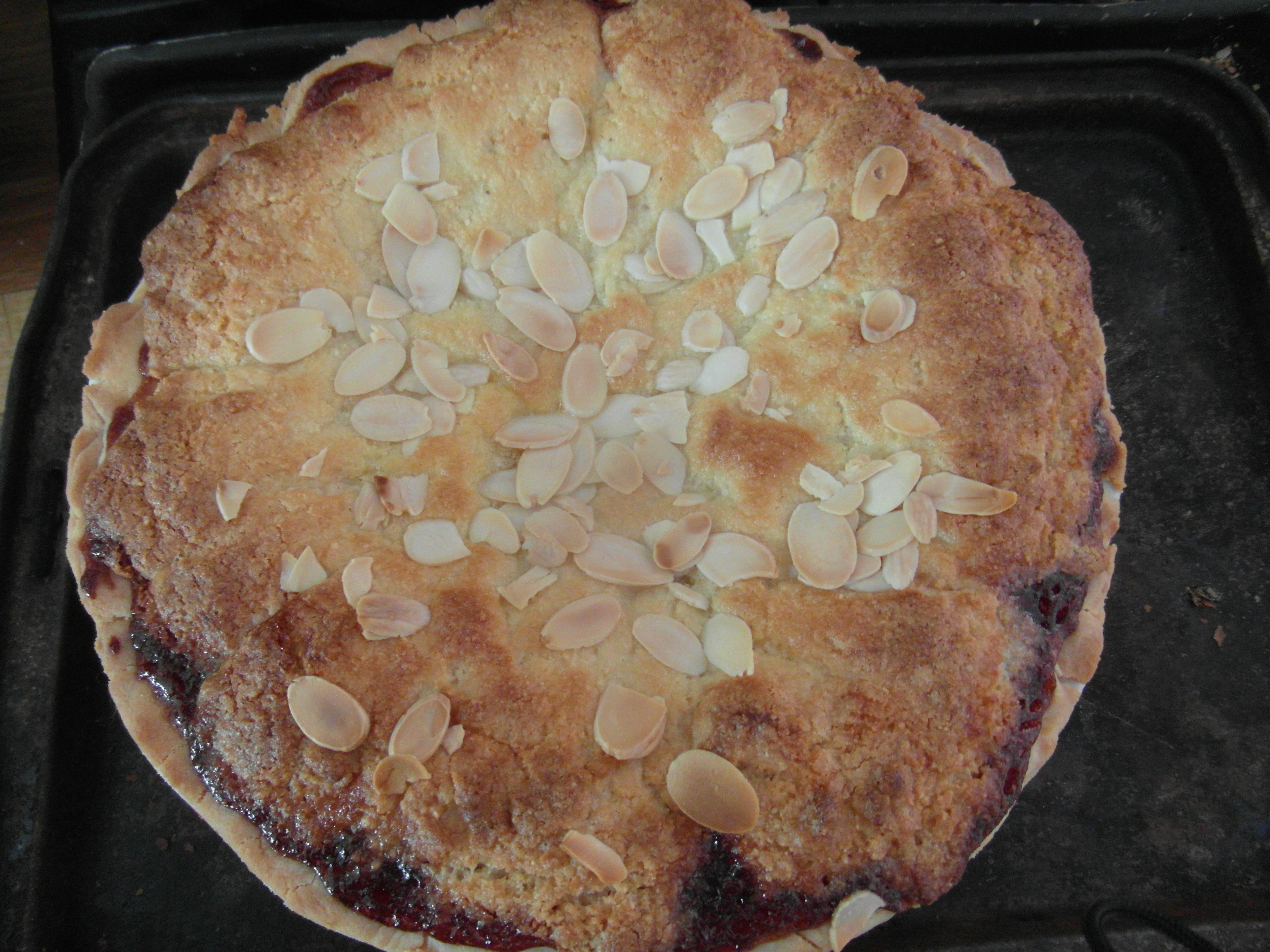
M has been hit hard by his current flare-up and so I decided to make a weekend of it and bake some much needed M-friendly treats for both M and G.  I quickly decided to investigate whether there was any possibility of making a M-friendly Bakewell tart. Having never even attempted to make Bakewell tarts in my lifetime, even before all the food allergies hit my kitchen, I looked up a recipe to see if I could adapt it.

I was confident I could make a reasonable everything-free pastry base, having successfully mastered pastry at Christmas for mince pies.  I have quickly learned that vegan recipes are my friends as they don’t contain any animal products and so instantly remove the issue of being dairy- and egg-free.  So, I quickly moved on to the next item on the list, raspberry jam.  Fortunately, M suffers no ill-effects from fruit jams at the moment, so that was an easy tick and on to the final element of the recipe: the frangipane.

This filled me with dread.  Frangipane is an almond-flavoured sweet pastry cream which, depending on the particular recipe you decide to follow, contains anywhere between 1 and 3 eggs and I just couldn’t see a way round it.  With little hope and as a somewhat last-ditch attempt, I used that faithful friend, Dr Google, once again to see if someone, somewhere had created a vegan alternative to frangipane.  Imagine my delight on discovering this wonderful recipe from fellow blogger, lucysfriendlyfoods.

I noted the ingredients, checked my store cupboards to see what I already had in stock and drew up my shopping list.  A quick visit to the supermarket and we had everything I needed to bake this masterpiece.  To my delight, every step of this recipe was easy to follow and put together.  40 minutes in the oven and my work was done.

SAM_1240M was thrilled and had to try a slice before it had cooled fully.  The slice I gave him disappeared quickly and his only comment was that he would prefer me to make individual tarts next time.  What’s more, G also tried some and enjoyed it.  All in all, this weekend has been a resounding success, be it the BBQ burgers or the Bakewell tart.

Parent Power

I don’t know why anything surprises me any more when it comes to dealing with our local authority or the NHS or those involved in M’s education or, indeed, any combination of the three, but yet again, I have been amazed and astounded to find that the best way to get support for him is for us to take the initiative and forge the way, showing the professionals the best and most efficient way to get the job done.

support

We first discovered the power we wielded as parents approximately 12 months ago, when we came to the conclusion that M needed some speech and therapy help.  Actually, that’s not exactly true.  We first discovered it when we insisted on following our instincts and getting the referral to GOSH, but it would be accurate to say we were reminded of this yet again a year ago.  M was a late developer when it came to his speech and for a long time was extremely difficult to understand.  The only people who could understand what M was trying to communicate was G and me, which led to frustration all round as I was continually having to interpret for him and he hated the fact that nobody understood what he was trying to say.

Two things happened last summer that made us decide that we finally needed to address the issue.  First of all, M failed his phonics testing at school as his pronunciation suggested that he didn’t know his phonics.  His teacher hadn’t wanted to raise his speech as an issue with us before because of all the other health worries we were dealing with, but when Mike expressed his concerns with her, she was quick to concur.  Despite our requests, we were told that there was nothing that the school could do to refer us for speech and language therapy and so we needed to see what, if anything, we could do ourselves.

The second was during a visit to our local National Trust property for a fun day out.  G and M befriended another little boy and started playing quoits with him and his father.  When the father asked M to repeat for the third time how old he was, “six”, and then turned to G to seek confirmation of M’s age, I could see the frustration reflected on M’s face and determined then and there that we had no other choice.

speeh

At that time, I thought that the only way forward was for us to pay for private speech therapy for M and so set Mike the task of speaking to a couple of local speech therapists about starting the process and seeing if they could help M or not.  Within minutes of his first conversation, Mike was told something startling.  Not only could M’s speech problem be identified – he pronounced his sounds through his nose, known as “nasal fricative” pronunciation – but there was definitely something a therapist could do to help and, what was more, Mike and I could complete a parent referral on the NHS for treatment.

We filled the forms, returned them to our local health authority and waited for the assessment date, which was scheduled for about 6 weeks later.  The assessment completed, the therapist agreed that he should receive therapy within the school setting and 3 months later, M started 12 weeks of SaLT (Speech and Language Therapy) 2-3 times a week at school, all courtesy of the NHS.  If we had listened to the advice of M’s school, we would have paid for the privilege of the therapy that M was entitled to and that has changed his speech and his confidence beyond recognition.

Now, a year on, we are again in a position where we could have ended up paying privately or waiting an inordinate amount of time for something M is entitled to receive.  One of the recommendations made following M’s diagnosis with dyslexia and dyspraxia is that he receives Occupational Therapy (OT) to help develop his motor skills and his muscle strength, which, in turn, will improve his handwriting.  The Dyslexia Centre gave us details of local, private OTs who would be able to provide M with the therapy he needs to see him develop.

OT

I was told by another Mum, who’s child receives OT support through our local authority, that the waiting list for NHS-provided OT is in the region of 8-9 months, which is a long time to wait for something that could make a significant difference to M right now.  It was here that I hit the next wall of confusion.  I was advised to ask our GP to refer him, but she informed me that the only way to refer M for local OT was through his school.  Now, given that M’s school hadn’t identified there even being a problem academically and were surprised that we had taken the decision to have him assessed for dyslexia and dyspraxia, I had no confidence whatsoever that we would get a referral from them, particularly after the whole speech therapy debacle.

So, once again, Mike took to the phone and made some strategic phone-calls.  His first point of call recommended calling our local cottage hospital as it provides physiotherapy and OT for the community. One quick phone-call to there and we had an answer.  We needed to print out a copy of M’s report from the Dyslexia Centre which details the benefits of OT to him, write a quick covering letter and send it directly to the Physio department at the hospital, whereupon they would review it and let us know.

Today, this plan changed again.  The Physio department called me to ask why we had sent them the report.  I explained the advice given and she was stumped.  They don’t work in OT with children at the hospital and so advised that I called Children’s services at the local authority or alternatively the nearby Children’s Hospital.

You can probably guess where I’m going with this, but no sooner had I called Children’s Services, than I was advised that OT was run out of a different location and I needed to contact them direct.  I have just spoken to a wonderfully helpful lady from Community Children’s Services, who has told me I need to go to either the school or the GP to get the OT referral M needs!  Back to square one.

square1

Don’t get me wrong, I’m a big fan of the NHS and am impressed by the range of services and support they are able to provide, free of charge, to so many people, but once again, the link between NHS, the local authority and the school is an inefficient one.  Over the course of the last week, I have gone full circle and am now back to where I started without making any discernible steps forward.  However, I am now armed with the advice that I need to get the referral made and a name for the GP to send it to.  When the lead-in time for much needed help is so long, every moment wasted is frustrating for us all.  The support that M needs is going to have to start with us and I will be fighting his battles, and any that G faces in the future, before anyone else wants to get involved.  Maybe re-training as an Occupational Therapist would be the quickest solution to our current need, or perhaps I shall return to the wise advice offered by Dr Google to see if I can pick up any tips from there to try whilst we wait for the referral to be made…

What else can I say?  Parent power rules!

Pictures July 06 030

Hyper-sensitive M

lighttunnel

Now many of you might have looked at that title and wondered on the use of “hyper-sensitive” in reference to M.  Over-sensitive may well have seemed reasonable and I’d agree, having seen the wild mood swings and tantrums that sometimes rock my youngest, but hyper-sensitive was a word that I chose deliberately.

You may remember from a blog back in April that I had been awakened by a distressed M in the early hours of the morning.  What I didn’t share back then was that the reason behind his disturbed night was an unexpected allergic reaction to a mint.  Yes, you read that correctly, the humble mint has caused a month of suffering for M and we are only now beginning to see a faint, flickering light at the end of that very dark tunnel.

I have to admit to feeling like a dreadful parent once I realised the cause behind the relapse.  Perhaps the quick scan of the list of ingredients hadn’t been enough?  Perhaps I had missed the warning that said it contained something that M was allergic to?  Perhaps I need to insist that he doesn’t have a treat when with friends, but only ever eats what I’ve provided.  Well, the last point might be valid, but in this case, I’ve discovered that actually there was nothing that I could have done differently and my guilt was unjustified.

The only reason I know that the mint was the culprit is thanks, yet again, to my mighty friend, Dr Google.  The night after that very disturbed one, having seen the consequences of the unexpected relapse throughout the day, I examined in minute detail the food diary we keep for M to see what, if anything, was different about his diet.  As part of the process of discovering exactly what M is allergic to, I keep a daily food record of every item of food that passes his lips as well as noting if he’s been feeling unwell, had a temperature or has had a soiling accident and so I knew that the answer to our puzzle was likely to be found in there.

food diary

The previous afternoon we had met up with a school friend of M and his family for a play and a catch-up away from the playground.  Whilst there, M’s friend B asked if M was allowed to have a Mento mint.  I scanned my eyes over the ingredients quickly and saw nothing to suggest that M couldn’t have one.  I gave my permission and the boys ran off to share the packet between them and their big sisters.  Using Google the following evening, I discovered to my dismay that the glucose syrup contained in Mento mints is derived from wheat, which is not stated anywhere on the packaging itself.

After the exclusion of gluten from his diet back in January, we had seen the disappearance of the last allergic reaction as M finally become fully toilet-trained for the first time in his 7 years.  We celebrated 30 days of being accident-free with a trip to Build-a-Bear workshop and M became much happier and calmer in himself as he no longer needed to worry about whether he was going to get to the toilet on time or not.  Now that had all disappeared.  I couldn’t believe that something so seemingly simple was the cause of a great deal of heartache and frustration for the whole family as M went into relapse and we were back to square 1.

We had an appointment booked at GOSH for the beginning of May and I looked forward to the opportunity to discuss the problem with the team there.  Their initial response was somewhat sceptical, I have to confess, as this product is considered safe by Coeliac UK, who are a respected advisory group to those suffering from wheat and gluten allergies.  However, I knew that these were the only thing that could have caused M’s reaction and was adamant that this was the problem.  Fortunately, my standpoint was further strengthened by the fact that we knew that M reacted to soya lecithin despite being assured that this is usually safe for soya-allergy sufferers.  This we had sadly discovered was not true for M at Easter, when he had a mild reaction each time he ate any of his “everything but soya lecithin free” Easter egg.

The conclusion was simple.  M suffers not only from multiple food allergies, but is considered to be hyper-sensitive to them.  This means that whilst some ridiculously high percentage of wheat- and gluten-allergy sufferers will not react to by-products such as this glucose syrup derived from wheat, and likewise soya-allergy sufferers will not react to soya lecithin, M will do.  He may grow out of these as he gets older, but he might not.  He could develop further allergies, or he could not. There is no simple answer to the problem of having a hyper-sensitive, multiple food allergy suffering child.  I can ensure that as much of the food I buy is as M-friendly as possible and I can attempt to restrict him to only those treats I’ve researched and deemed safe, but there will be times when we might just have to take the chance and I will have to support him and deal with the consequences.

rainbow

The most difficult challenge for us now is taking M anywhere.  The risk we have to consider is whether M will be okay with a food if we don’t know categorically what it contains and are certain it’s safe.  That immediately restricts the restaurants we can take him to on the occasional day out and means that I am going to be paranoid and become “that Mum” who is over-anxious about what their child is being fed in anyone else’s home.  The truth is I don’t mind being labelled as a fussy Mum, I’m sure I’ve been called much worse, if it ensures that we get M back to the road to recovery and keep him there for a few months at very least.