Tag Archives: FABED

7 things to do in hospital when you’re 8 (& 3/4)

Two weeks in hospital is long enough to challenge the sanity of any adult, let alone that of an 8-year-old who is used to being on the go all the time.  As well as his daily visits to the hospital school, M was fortunate enough to have a number of other activities to take part in, which helped wile away the ever-lengthening hours.  I don’t know how many of these same opportunities, or others like them, are available at children’s hospitals across the country, but this is a selection of some of those M chose to do during his stay at GOSH:

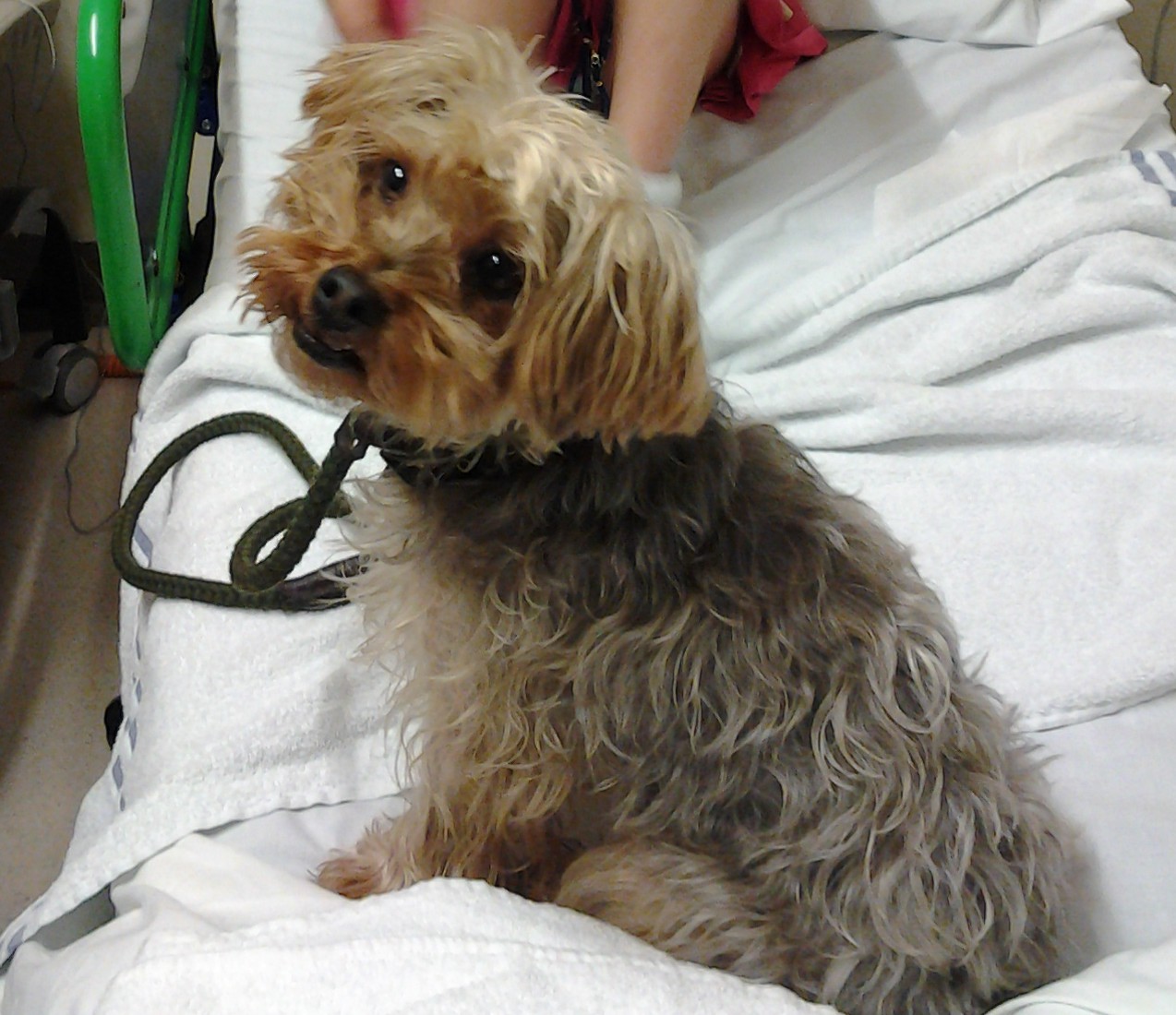
Pets as Therapy20141209_131336We were lucky enough to have 3 separate visits from 2 of the amazing “Pets as Therapy” dogs, Molly and Woof.  These charming animals are specially chosen for their gentle manner and make regular visits into hospitals, care homes and special needs schools to bring a great deal of comfort and love to those in the greatest of need.  I wrote a blog post not so long ago about just how much calm and comfort M draws from our cats at home and I saw the same things happening as he was able to pet and cuddle both dogs in his own space in hospital.  G was lucky enough to also have the chance to meet and fuss Molly as she visited on both Saturdays whilst Mike and G were visiting, and both children were encouraged to offer her treats for her patient behaviour when she was with them.


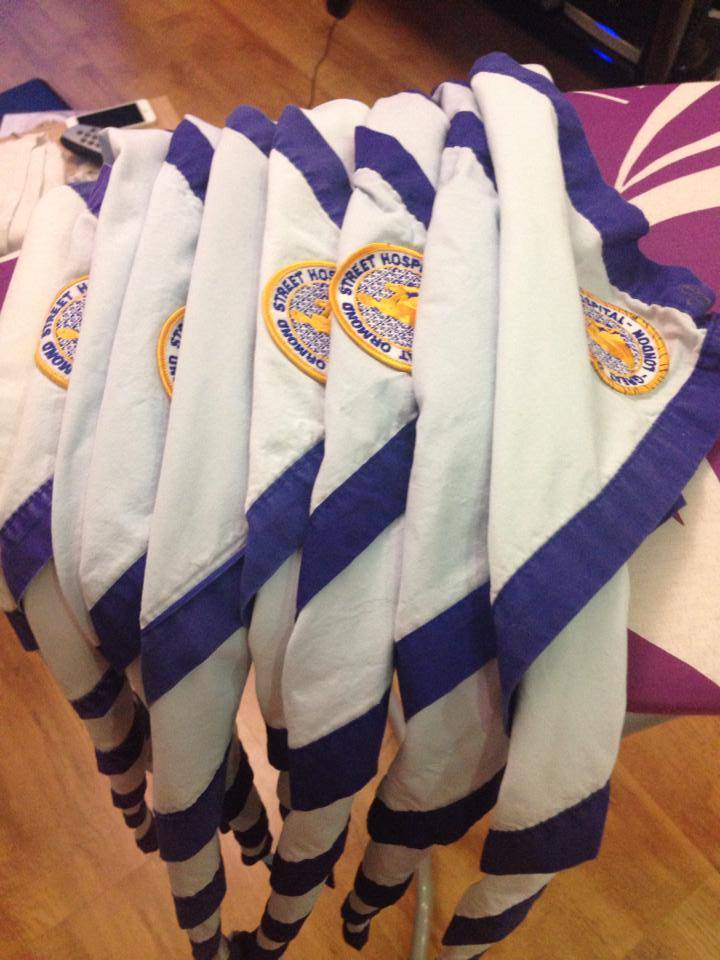
ScoutsscoutsThe visit to the 17th Holborn Scouts and Guides at Great Ormond Street Hospital was one of the highlights of M’s last hospital stay in 2013 and since finding out he was due another admission, he had talked of little else.  His biggest disappointment was that he was admitted on a Wednesday as Scouts meet every Tuesday evening and he had to wait a whole week before he could go again. During the evening, they provide a range of different crafts and games which are tailored for the differing ages and needs of the children attending that week and even reward regular attendance, an important boost for those children who are there on long-term admissions.  Sadly, M only managed to make one meeting again this year, but is already asking when he can go to Scouts again!


Courtesy of gosh.nhs.uk

Courtesy of gosh.nhs.uk

Saturday Club – Every Saturday afternoon, the activity centre (located next door to the school) is opened to patients and their siblings and friends for a couple of hours of crafts, games and some much-needed time together, away from the constraints of the ward.  On our first Saturday in hospital, M wasn’t keen on venturing too far from his bed, but the arrival of 2 of the Saturday club play volunteers, who engaged him and G in some riotous games of “Extreme Uno” as well as giant snakes and ladders, convinced him to change his mind.  By week 2, both G and M were chomping at the bit to join in the fun and whilst the staff there helped my 2 celebrate G’s 11th birthday with some rather nifty face-painting, an elegant birthday crown and Christmas crafts galore, Mike and I were able to escape for a sneaky 45 minute catch-up over coffee and cake in the hospital restaurant.

 

Courtesy of scholastic.co.uk

Courtesy of scholastic.co.uk

ReadWell book trolley – This was a treat we almost missed during our first week as the trolley came round as we were enjoying the ballet at the Royal Opera House, but thanks to some near-perfect timing, we stepped out of the lift just as the trolley was about to leave the ward.  M was able to choose from the wide selection of books displayed on the trolley and took great pleasure in being able to spend some time before deciding on an author we had not come across before.  To his absolute delight, not only did he have a free choice of books, but he also got to keep the books he picked out and he has enjoyed reading them since we got back home.  M also had the chance to create his own story with one of the ReadWell workers, who came into the school and acted as scribe as he weaved his adventurous tale of aliens visiting earth.
 

20141214_105928Ward Playroom – Whilst this was not the biggest room in the world, it held a vast array of games and activities to entertain the most particular of children.  M played on the Wii, found new board games to master and was able to borrow a DVD player and DVDs to watch over the weekends.  We made Christmas decorations, painted pictures, experimented with creating circuits with a science kit and M even decorated a ceramic money-box as part of his Christmas present to G.  20141214_105916


Courtesy of magicfree,net

Courtesy of magicfree,net

Magic – As well as a fleeting hello to the Clown doctors as we passed them in the ward corridor, one afternoon was brightened by the promise of a visiting magician.  M sat enthralled with a small group of his new hospital friends as this talented gentleman performed one awe-inspiring illusion after another.  He invited both children and parents alike to participate in some of the tricks and wowed us with his skills.  He listened as the children asked him questions about what he was doing and even watched M perform a rope trick of his very own.  My Dynamo-wannabee loved every moment of the show and dissected the tricks at length afterwards, trying to work out the secret of how they’d be done.


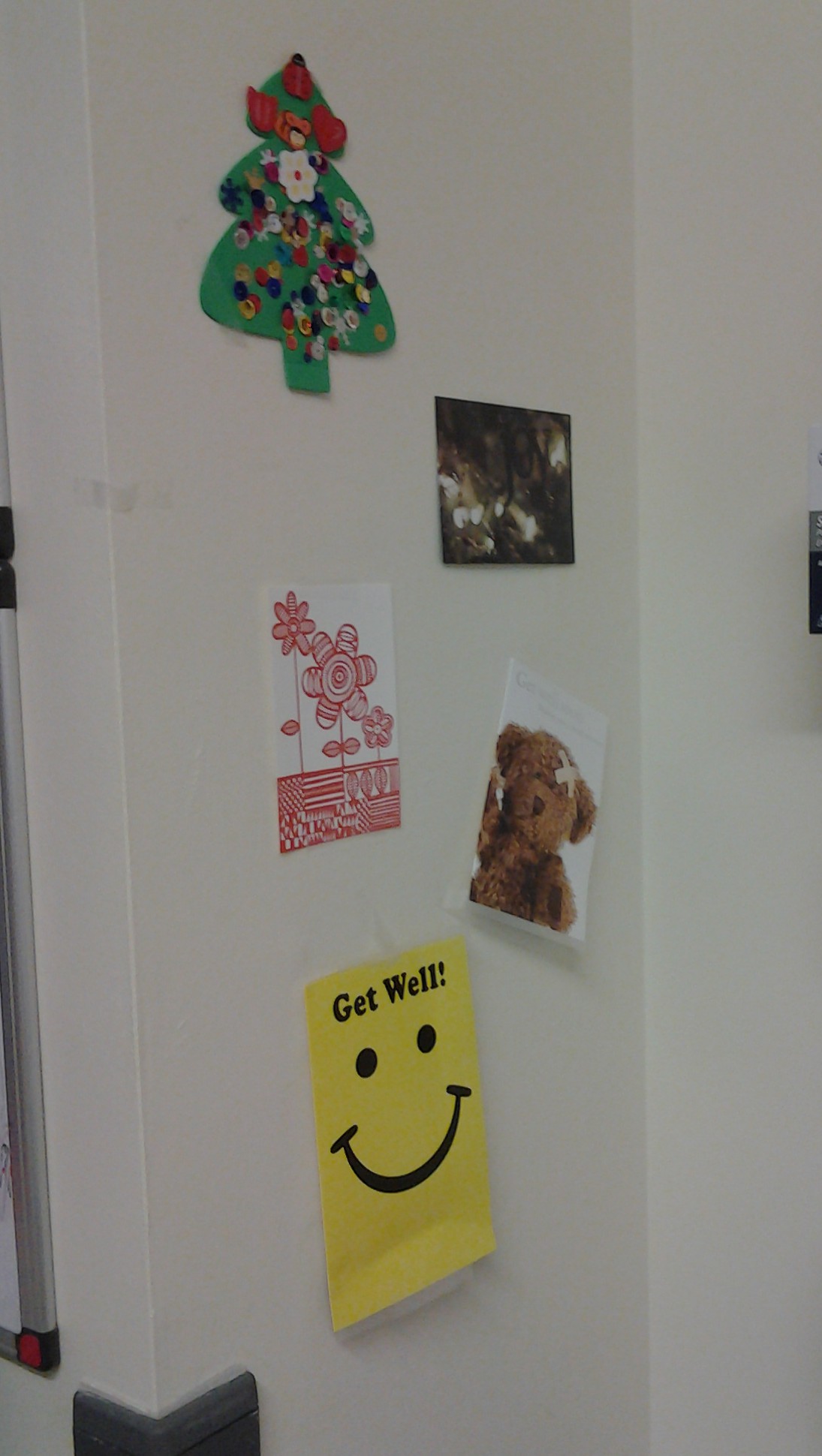
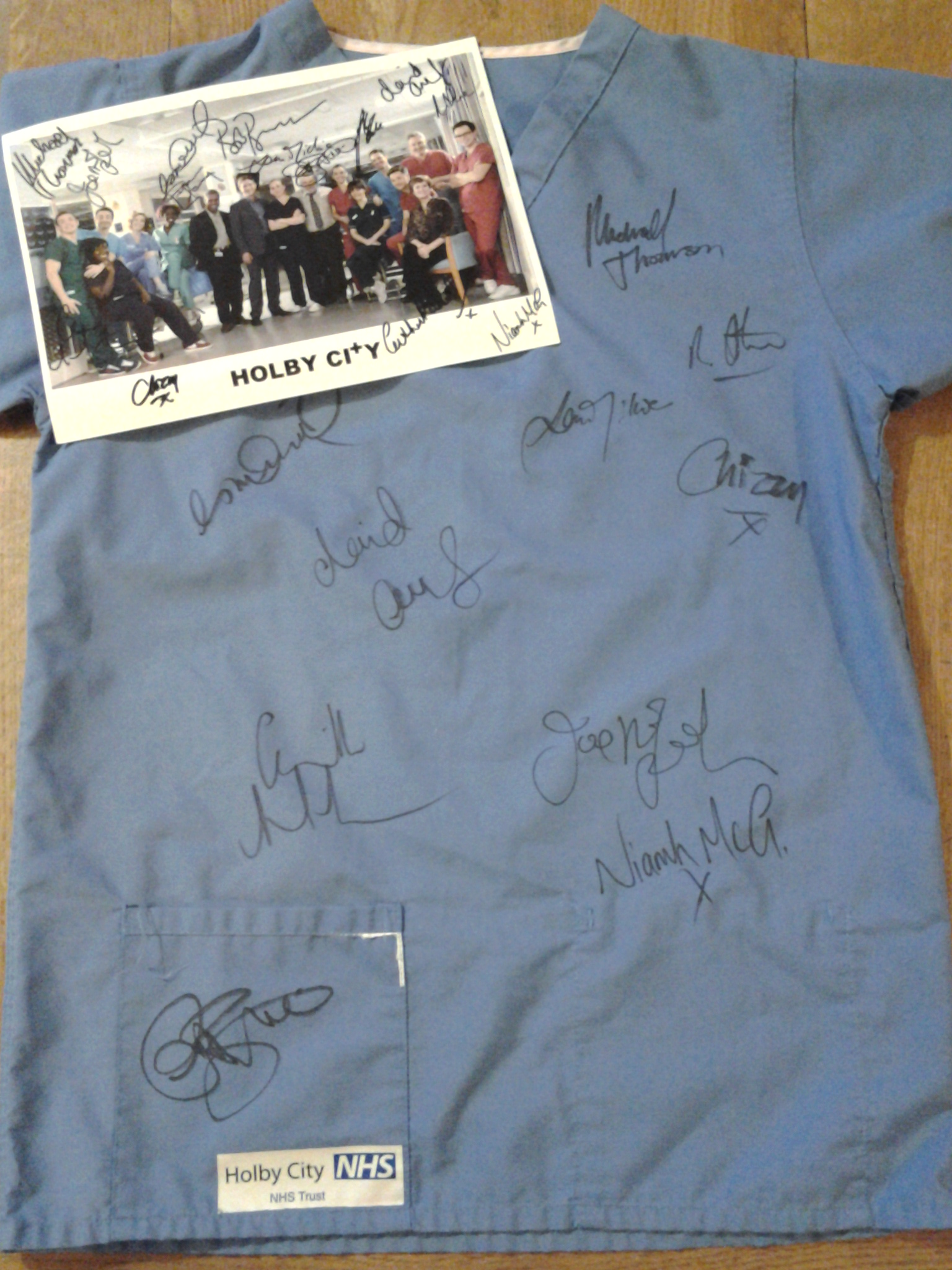
20141219_184138Post – Last, but not least is an activity that had nothing to do with GOSH itself, but everything to do with the amazingly thoughtful family and friends who were determined to bring a little cheer to our dreary corner of the long-term gastro ward.  Messages came from around the world – Canada, Madeira and across the UK – and each was special in its own way.  M received get well cards, postcards, books, stickers, games and other gifts that were guaranteed to entertain him day or night.  We decorated his bed space with the cards and added a Christmasy feel with the decorations that we had made in the playroom.  Knowing that people were thinking of us, loving us and sending us get well wishes and prayers sustained us both during the most difficult moments of the admission and brought some much-needed sunshine on the darkest days.   From the Christmas card from M’s class at school, to 2 pages of messages from Mike’s cousin and her friends and colleagues in Calgary; from cards and presents from our friends at church, to a card from the lovely members of my choir; and the 2 extra-special gifts of Angry Birds Jenga from our fabulous FABED family and signed photos and scrubs for both G and M from Holby City, courtesy of Simon Harper, my man at the BBC; all the mail was gratefully received and enjoyed hugely by us both.
                        20141220_193939

Here’s to 2015

That’s another year done, more adventures experienced and new lessons learned.  We’re starting 2015 with a positive outlook – the switch to NG-tube and elemental feeding has already started to see some health improvements for M and we finally have a plan for moving forward that will be looking for the root cause for some of his health problems.  Both children are happy and settled at school and G is looking ahead to moving into secondary school in September. We’ve met and made friends with several of the lovely FABED families and have been able to help raise funds and awareness for this charity and the condition it supports.  I’m not sure what 2015 holds for us all, but, if nothing else, I’ve learned to hold tightly to my hat as it’s certain to be a bumpy ride!

Wishing you all a happy, ssuccessful and peaceful 2015.  May your wishes and dreams be fulfilled. 


Merry Christmas!

May your Christmas be filled with love and laughter; times of happiness and of reflection; family and friends…

20141222_193603[1]

…and may 2015 be a year that brings new hope, understanding and peace.

20141225_012022[1]

Busy days

Now that Halloween and Bonfire night are behind us and Christmas is fast approaching, there’s finally a little time to look back and reflect on the start of the new academic year.  September seems like a lifetime ago and yet was a busy month with appointments right, left and centre that have had a lasting impact on decisions about M’s long-term care.  We had appointments with GOSH, a new community paediatrician, M’s OT and with CAMHS; and I needed to be the thread that linked them all to ensure that M remained at the centre of their focus and that all agencies were working together to provide the best support they could.

Courtesy of travaasa.com

Courtesy of travaasa.com

The OT’s review was everything we needed it to be and she has already started going into school once a week to work with M on his handwriting skills.  The clinical psychologist he meets with fortnightly through CAMHS is slowly building a relationship with him and gently pushing him to talk about how he feels about life with EGID and the frustrations he experiences.  As for the new community paediatrician, who was recommended by our local hospital, well, lets just say we won’t be rushing to meet with her again.  Her complete lack of understanding of his condition was glaringly evident as she suggested that regular toileting and a sticker chart were the answers to all our problems.  How I refrained from saying something very rude is nothing short of a miracle!

The most important of all these, for us, was our regular appointment at GOSH with the gastro team charged with M’s care.  The restricted diet and increased medications over the last 3 years have not brought about the results we’ve been aiming for and M continues to be symptomatic a lot of the time.  We have become increasingly concerned about his emotional well-being as he struggles with the impact of EGID and multiple food allergies on his daily routines and I was determined to come away from that appointment with a tangible plan in place.  Despite our best efforts with the challenging treatment suggested by the local consultant leading into the summer, our worst fears were realised when the registrar told us that M appeared to be impacted again and we would need another course of fairly heavy-duty laxatives to empty his bowel.

planningThat led into a lengthy discussion about where we’re headed and what the most sensible next steps for M’s care are.  Short-term plans are all well and good, but we now need a long-term care plan put in place.  He agreed that we can’t keep limping from one appointment to the next and promised to discuss M’s current situation with our consultant.  Medical terms such as “pellet study“, “elemental diet” and “manometry” were bandied around and I am glad that, thanks to the support from other FABED families, I have a reasonable layman’s understanding of what all these terms actually mean.

We left the hospital feeling that we were beginning to making some progress in dealing with the problems that continue to dog M’s every step and a short-term plan that would start to deal with the current impaction issue.  The longer term decisions would be discussed both internally and with us before anything was settled on for definite.  A follow-up appointment with the consultant herself was made and our step was just a teeny bit lighter as we felt our concerns were being heard and addressed.

Courtesy of abercrombierealestate.com

Courtesy of abercrombierealestate.com

However, since that day, over 7 weeks ago, I have spoken to GOSH at least once a week and almost daily over the past 10 days.  The improvements expected haven’t happened and so the decision has been made to admit M into the hospital for further testing.  We need to understand whether his bowel is working as it should or not as that will give us a clue as to the direction we need to head.  We have also agreed with his consultant that the diet and medicines just aren’t helping his hugely allergic colon and so have made the decision to remove all food from his diet and follow the elemental diet via NG-tube for a while.  This should give his bowel and body some much-needed time to rest and recuperate, something I believe it so desperately needs.

The Message from “My Man” at the BBC

Three weeks on from that episode of the BBC’s hospital drama, Holby City and I’m still reeling from the amazing response to my blog post and the unexpected bonus of two phone-calls with series producer, Simon Harper.  When I penned my heartfelt response to what Mike and I had watched on-screen, I expected to reach a few more than my usual readership and dared to hope that I might beat my previous “top score” of 186 readers in a 24-hour period with my letter to our local hospital.  I never dreamed that over 2,000 people across the world would read, comment on and share that plea for responsible portrayal of chronic illness in the mainstream media.  As well as sharing my thoughts through my blog, I made a formal complaint to the BBC and, through the wonder of Google, managed to track down Simon Harper and sent him an e-mail, expressing my concerns about the inaccuracies about EGID portrayed in that episode.

Courtesy of bbc.co.uk

Courtesy of bbc.co.uk

I didn’t expect to hear anything back, so you can only imagine my surprise and absolute delight when Simon not only replied to my e-mail, but also offered to pick up the phone and discuss the matter with me.  We agreed a day and time to talk and I spent the week making notes and talking to fellow EGID parents through FABED and other on-line forums to get their points of view on what I needed to raise in my conversation.  That first phone-call lasted for around 30 minutes and at no point did I feel that Simon was keen to close down the conversation and finish the call,  He was genuinely interested in learning more about EGID and understanding why this episode had caused such distress in the on-line community. We spent a long time discussing the difference between “intention” – what the program was trying to portray – and “perception” – what the viewing public understood – when it comes to producing a drama for television viewing and here Simon explains it in his own words:

The intention: “the guest character’s general allergies were a dramatic smoke screen to the actual underlying cause of his pain, neuralgia – but that in no way were those allergies supposed to suggest a condition as specific and, as I now know from talking to you, severe as EGID.  In no way was the story supposed to say that EGID was in fact just neuralgia!“.

The perception:I think it comes down to one scene where Zosia (the doctor) mentions that Nigel’s eosinophils are up –  due to his general allergies – and she then goes on to mention “his eosinophilic gastro-enteritis”.  What I can see maybe wasn’t clear was that Zosia, excitedly bandying round theories and possible prognoses at this stage of the story, is in fact supposed only to be raising EGID at a possibility at that moment.  perceptionA possibility that, in fact, turns out not to be the case.  But I can see that the phrasing “his” – combined with the fact that dramatically speaking, we never see Zosia rule out EGID (a moment we assume happens off-screen) – could have given the wrong impression.  It’s a tough call with medical drama – you never play on-screen every single beat of medical treatment that would happen in real life, choosing the moments which best serve the story,  and sometimes rely on the audience’s imagination to assume and deduce. It’s a delicate balance, and there is definitely a lesson to be learned here, because evidently, missing out that moment has in this case given the wrong impression.

I also mentioned my concerns that a range of inflammatory bowel diseases had appeared to be ruled out through a simple ultrasound, whilst those of us living with this family of illnesses know, from our first-hand experiences, that endoscopies, colonoscopies and biopsies are the only reliable ways to confirm a final diagnosis.  The conversation ended with an agreement that Simon would spend time investigating what research was done, talking to the consultant concerned and checking out the ultrasound situation before phoning me back a week later to talk some more.  I was struck by his commitment to unpicking where and how things went so wrong and have to confess to being cheeky enough to send another e-mail, thanking him for his honest discussion with me and pointing him in the direction of various EGID websites, so that he could truly understand what our families deal with on a daily basis.

A week later and that second phone-call happened.  Another 30 minutes valuably spent clearing up those outstanding points, including his agreement that the discussion regarding the ultrasound came across as far more definitive than was their intention.  I have to say I’m impressed with the research into EGID he had done during that week and appreciate that he took the time to properly review the research done originally for the program.  Finally, and definitely most importantly, he has sent a huge apology to our EGID family and I truly believe it is a heartfelt one.

apology

Courtesy of psmag.com

I repeat,  I  am absolutely aware that despite all this, an upsetting impression was given due to the way EGID was referenced and never ruled out on-screen and there is absolutely a lesson to be learned there for the future.  I can’t undo any upset caused, I realise, but do so hope I have been able to reassure you that we take the medical research aspect of HOLBY with the utmost seriousness and that in this instance, it truly was not an instance of inaccuracy, but, I think, a point of clarity that had an unforeseen impact on how the story came across.

 I truly have enjoyed our conversations, as not only did I get an education on the condition that  your son,  you, your family and many others are so courageously living with, but, as a producer, it is always absolutely invaluable to get insights on how our story intentions actually translate to an audience member –  that gives us great help in the way we tell our stories for the better to make HOLBY an entertaining but hopefully also stress-free hour!  And I do hope that you will continue to watch and enjoy the show.

A big thank you to Simon Harper for his willingness to be open and honest about the research done for this storyline, the errors of judgement made in the production, to talk to me not just once, but twice and his apology for the upset unintentionally caused.  As one of my fellow EGID Mums asked (and I wholeheartedly agree):

Any chance they’ll get Mr Allergy (grrrrrr) back and do a proper episode on EGID?

Simon, I wait for your answer!

EGID – the real story

I am still reeling from the astounding response to my last blog post, Dear BBC Controller.  When I asked you, my wonderful readers, to share what I had written in a hope of raising some much-needed awareness about EGID, I have to admit to only expecting the odd person to possibly share the link on Facebook with a few of their friends and nothing prepared me for what happened next. From the 20 shares that I know about, that post gathered momentum and I experienced a fantastic demonstration of exactly what social media can do.  Within 48 hours of publication, that blog was viewed by over an amazing 1,800 people across 33 countries and the statistics are still creeping up on a daily basis.  I have been humbled by this response to my plea and I can do nothing more than extend my heartfelt thanks to you all.

One of the things I realised, however, is that I have never given a comprehensive explanation of EGID and that my last blog post may have left new readers wondering what on earth all the fuss was about. Those of you who follow my blog will have an understanding of how this chronic illness impacts our lives and for those who know our family personally, you have probably had a brief explanation of the disease along the way.  In that last blog post I didn’t want to go into the finer details of what exactly EGID is, so now I want to set the record straight, so to speak, and explain in a little more detail M’s condition.

17348-custom-ribbon-magnet-sticker-Eosinophilic+Disorders+++AwarenessEGID, or Eosinophilic Gastro-Intestinal Disorders, are a complex and chronic group of digestive system disorders caused by an abnormally raised level of eosinophils within the gastro-intestinal tract.  Eosinophils are an important type of white blood cell, which normally help the body fight off certain infections and parasites and are typically involved in attacking the causes of allergic reactions, thus protecting the body.  In some individuals, the body produces too many eosinophils in a particular part of the GI tract, which leads to chronic inflammation and can cause extensive tissue damage in that area.  It is currently thought that there is both auto-immune and genetic involvement in EGID, but further research will be needed to confirm these links.  Like many inflammatory bowel diseases, EGID is a classic waxing and waning condition, meaning that the symptoms and their severity can change on a daily basis.

This family of rare diseases is diagnosed depending on where in the GI tract the elevated eosinophilic count has been found:

  • Eosinophilc Oesophagits (EE or EoE) – in the oesophagus and is the most commonly diagnosed form of EGID
  • Eosinophilic Gastroenteritis (EG) – in the stomach and/or small intestine
  • Eosinophilic Enteritis (EGE) – in the small intestine
  • Eosinophilic Colitis (EC) – in the large intestine (colon)

This last one is the type that M has been diagnosed with, which means he has, in typical M-fashion, a relatively rare type of a rare chronic illness.  Statistics are not readily available as it was only first recognised during the first half of the 20th century, but over the last 20 years, cases have been recorded in the UK and there are currently in the region of 700 cases looked after at Great Ormond Street Hospital.  This suggests around 2,000 diagnosed cases across the UK as a whole and there are also known cases of EGID in other countries, including Australia and Canada, with a starting point of 3,000 people diagnosed in the USA.

Symptoms of EGID include:

  • Diarrhoea
  • Constipation
  • Blood and/or mucous in the stools
  • Stomach pains
  • Lethargy
  • Mouth Ulcers
  • Rash
  • Asthma attacks
  • Sore throat
  • Joint Pains
  • Headaches
  • Vomiting
  • Nausea
  • Reflux
  • Failure to thrive
  • Sudden weight loss
  • Loss of appetite
  • Mood swings
  • Excessive sweating/body odour
  • Loss of colour in the skin
  • Dark rings under the eyes

None of these symptoms is exclusive to EGID and not all are experienced by all patients.  We had noticed a number of these with M in the years leading up to his diagnosis and it was the odd combination of them – diarrhoea, poor weight gain, joint pains, mood swings, excessive sweating, body odour and dark shadows under his eyes – that led to our conclusion that this could well be what he had.

As eosinophils are part of the body’s response to allergic reactions, it comes as no surprise that many people with EGID also struggle with a varying level of food and environmental allergies. What makes it even harder is that these allergies can also wax and wane and therefore can change over the years.  allergiesWhen M was diagnosed we were asked to put him on a MEWS (Milk, Egg, Wheat, Soya) free diet, which is a common starting point for those with EGID.  Over the years, we have also had to remove gluten, potatoes, raisins and raspberries from his diet to try and alleviate his symptoms and we still don’t seem to have the answer to whether this list is complete or not.  Some of the lovely families we have met through FABED have had to go a step further and remove all foods from their child’s diet due to a constant flare-up of their EGID. These brave children are now tube-fed an elemental diet in an attempt to help them feel better and grow stronger.

These families have to cope with numerous hospital visits, regular hospital stays, invasive diagnostic procedures such as colonoscopies and endoscopies, tube-feeding, colostomies, huge amounts of medicines daily and the unavoidable emotional fall-out from children who long to be just like their peers.  All of this is why it’s important that the media realises that EGID is not about “Mr Allergies” and why such factually inaccurate portrayals of chronic illnesses are problematic for this EGID Mum.


If you are interested in finding out more about EGID, you can also look at these sites: 

FABED   CURED    Apfed   ausEE

***Breaking news – today I received an e-mail response to my complaint from the Holby City series producer.  He has offered to look into the research done for this story-line and will discuss it with me, over the phone, later this week***

Dear BBC Controller

Sometimes something happens that leaves me lost for words.

Having heard the furore on Facebook from fellow EGID parents, Mike and I sat down last night to watch Tuesday’s episode of “Holby City” on the I-player.  To say that I was speechless as the drama unfolded would be an under-statement; to say that by the end I was fuming would be a gross denial of the feelings that it had caused.  My hackles started to rise from the moment we were introduced to the character later described acerbically as “Mr Allergies” and we both sat in stunned disbelief as the storyline ended with everything being cured by a rapid diagnosis and a special injection.

For those of you who aren’t Holby City fans, or who didn’t have the misfortune to catch it when it aired on Tuesday night, let me give you a quick precis.  A young man, portrayed from the start as little more than a time-waster and with a list of allergies as long as your arm, is admitted into the hospital.  Nobody can pinpoint what’s wrong, but the doctor in charge of his care recognises that his symptoms fit with EGID.  She performs that little-known-as-highly-reliable diagnosing tool of an ultrasound (!) to rule out Crohns disease and Diverticulitis and comes to the conclusion that it could possibly be EGID, but is more likely to be a mental health issue due to him craving being a “rare” individual and the attention that obviously affords him.  On the basis of all this, and having given him leaflets about planning his own funeral, she tells him it’s a previously unidentified trapped nerve, gives him an injection and within minutes he’s up on his feet, completely cured and feeling better than he has in years.

If only M’s life were that simple.  If only a simple injection could take away the pain and acute discomfort that M struggles with on a daily basis.  If only I could tell him that the magic wand we both are longing for has finally appeared and all his hurt and frustration and despair will be gone, just like that.  If only it was likely that since he was small, my distraught 8 year-old has been craving nothing more than extra attention by being a medical rarity.  If only I’d known that it was all in his mind, or, more likely, all in mine as I’ve known from babyhood that there was something very wrong.

It has taken 7 years for us to reach a diagnosis, bypassing multiple doctors who thought it nothing more than a bad case of toddler diarrhoea and a somewhat neurotic mother.  Even though we now know his chronic illness by name, lack of funding and research means that we still don’t have any answers and every step taken with GOSH is a step of faith that something will help at some point. Every day I meet with people who have no idea what EGID is and the impact it can have on the family as a whole, let alone on my 8 year old himself.  Most of the medical staff we see have never heard of the illness, do not understand the subtle nuances of this hidden disease and have no idea how much we all need their help.  And we’re not on our own.  There are over 300 other families who look to FABED for support and share the highs and lows of this illness with each other, as we can understand like no outsider can; and that’s just in the UK.

 I’ve done my bit:

I’ve made my complaint known – via Twitter, via Facebook and via the BBC online complaints system – and I’ve written this blog.  BUT the damage is done.  Nothing is going to be able to take away their careless portrayal of EGID to the 5 million who watched Holby City on Tuesday night.  I would love to meet the researchers and writer for Tuesday’s episode to understand who they spoke to and where their information was sourced.  The daily battle that M and other EGID children struggle with bears no ressemblance to what was shown, but sadly that is the viewpoint the public will now hold.  I would love for them to spend time living life in the shoes of an EGID family, even for a day, so they could experience a fraction of the living hell that that life can be at times.  To comprehend the heartbreaking decisions we EGID parents have to make and the challenges of restricted foods, bowel problems, chronic pain and a multitude of daily medicines our babies deal with.  This type of inaccurate and frankly irresponsible representation of a serious illness is not what I associate with the BBC and it is left to parents like me, who have enough daily battles to fight, to raise awareness and voice our concerns.

You can do your bit too:  Just share this blog.  Make your family; friends; colleagues; strangers in the street aware of it and the rare illness that affects children like M and families like mine.  I don’t mind how you do it – RT it; link it to your Facebook page; send it out to your email address list; print it out and pin on noticeboards around your town; or get it emblazoned across the sky – but please do it and help us get our voice heard.

And now, the end is here…

Today marks the end of an important week for our family.  It’s been an interesting week of sharing more about life with EGID with friends and colleagues as well as reminding ourselves of just how tough it can be to follow M’s restricted diet.  I’m not usually a snacker, but this week, perhaps because it hasn’t been easy to just go to the cupboard and grab a handful of whatever I’ve fancied, I’ve wanted to snack at the drop of the hat.  Even with our cupboards and fridge full of M-friendly foods, the options for breakfasts, lunches and snacks are incredibly limited and I’ve found myself returning to the same things, time and time again because there really is no choice.

This week, a fellow EGID and FABED Mum put together this amazing video to mark National Eosinophil Awareness Week, which includes some of the brave children we’ve had the privilege of getting to know during our journey to get a diagnosis for M.  Some of you may already have seen it – the statistics suggest it has already been viewed over 9,000 time through the social media – but take a look again: these are the faces of children and families who battle EGID on a daily basis. These are children like M and families like ours:

One day left to go in our mission to “eat like M” for the week and perhaps the hardest food challenge of all…a BBQ social at a friend’s house!

M

Me

Mike

Breakfast
  • Bowl of free-from rice pops
  • Maple syrup
  • Rice milk
  • Toast (1/2)
  • Peanut butter
  •  Rice flour toast (2 slices)
  • Peanut butter
  • Rice flour toast (2 slices)
  • Rice milk
Lunch
  • Bruschetta made with:
  • 4 slices rice flour toast
  • Tuna, corn, cucumber & egg free mayonnaise
  • Mackarel


  • Apple (1/2)
  • Pear (1/2)


  • Bruschetta made with:
  • 2 slices rice flour toast
  • Tuna, corn, cucumber & egg free mayonnaise
  • Mackarel


  • Pear (1/2)


  • Bruschetta made with:
  • 2 slices rice flour toast
  • Tuna, corn, cucumber & egg free mayonnaise
  • Mackarel


  • Apple (1/2)
  • Pear (1/2)


Dinner
  • Baked sweet potato
  • M&S Venison sausages (2.5)
  • Olives
  • Pistachio nuts
  • Carrot cake cupcake
  • Sainsburys Free-from sausages (1.5)
  • Sweet potato
  • Salad – lettuce, cucumber, tomato, avocado
  • Baked sweet potato
  • M&S Venison sausages (3.5)
  • Green salad
  • Banana
  • Nectarine
Snacks
  • Nakd cocoa orange date bar
  • Fruit buttons (lemon)

The best laid plans…

Cupcake anyone?

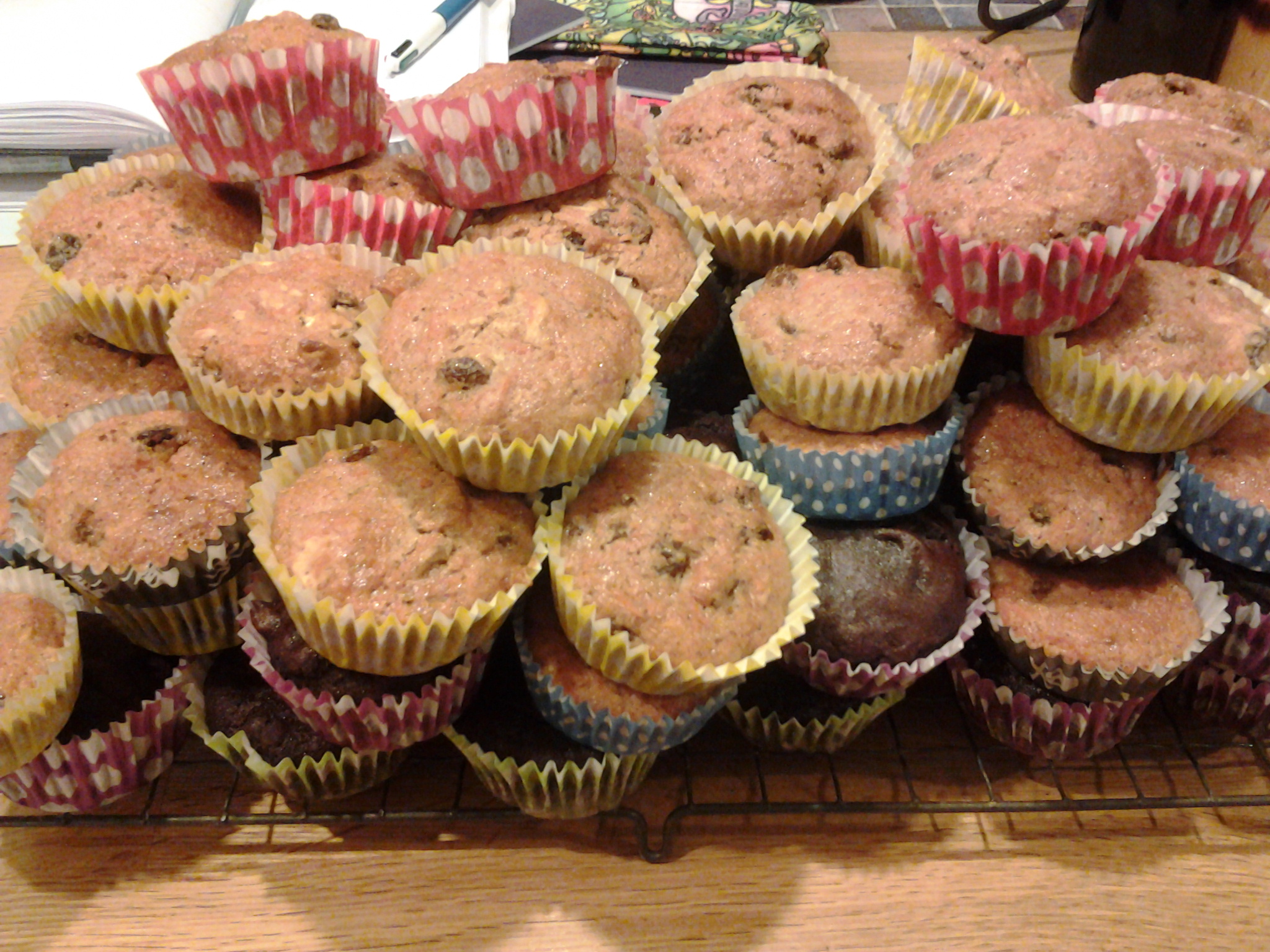
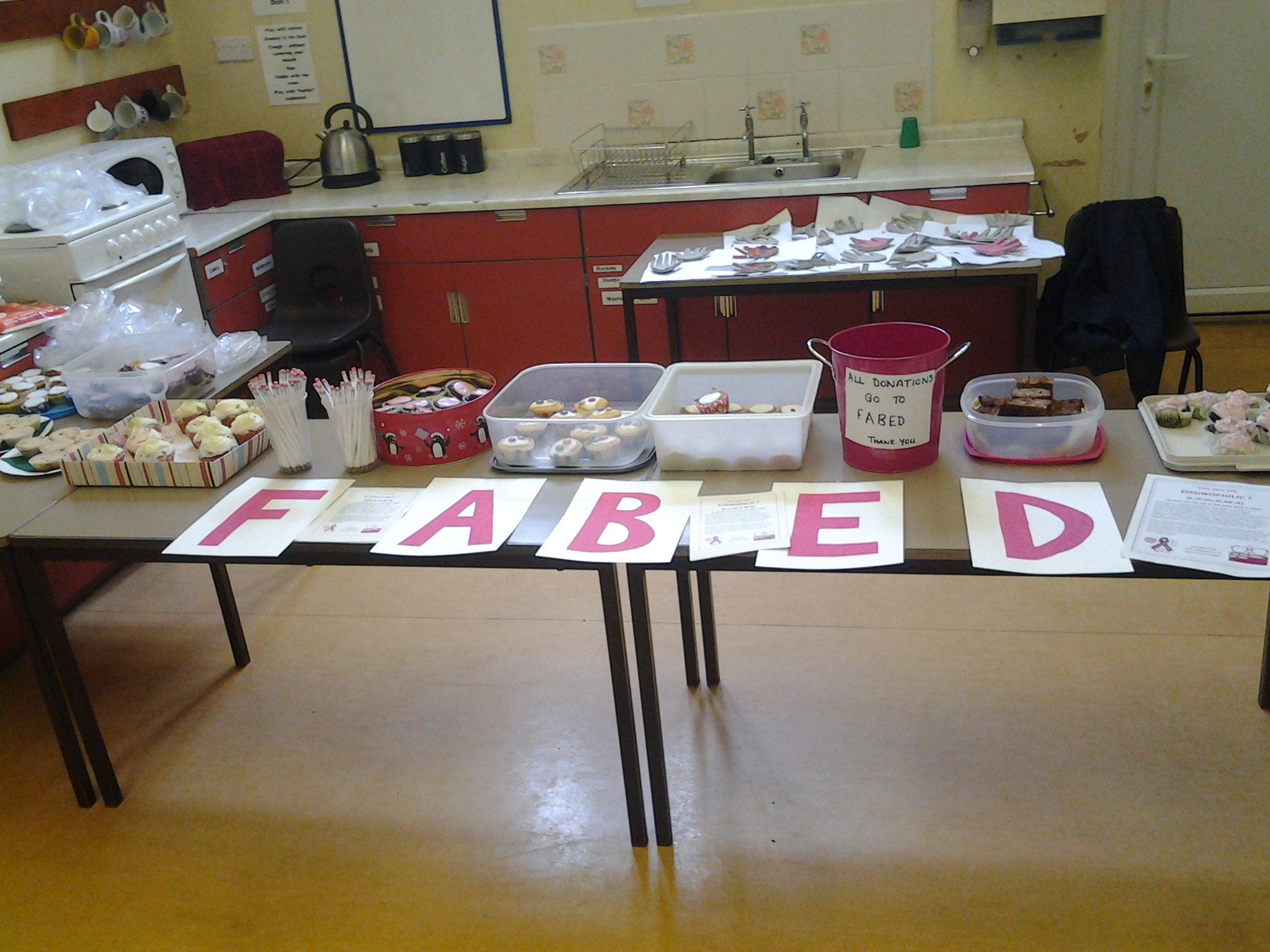
Today is the penultimate day in National Eosinophil Awareness Week and our plans were to raise awareness and funds for FABED at school.  I had approached M and G’s headteacher last week to ask if we could hold a cake sale – and yes, I do realise the irony in that choice – during today’s Sports Day.  He readily agreed and the call went out, letting parents know about our cause and asking for donations of cake, and cash, for the day itself.  However, at around 2am this morning, when I heard the rain pounding down outside the bedroom window, I realised with a sinking heart that there was no chance of Sports Day happening and I would need to agree an alternate plan with the school to get rid of the 100 M-friendly cupcakes that were littering our kitchen. 20140523_152824 Fortunately, school have been fantastically supportive of our fundraising efforts this week and we were able to hold the cake sale at the end of the school day instead. Despite the last minute change to our plans, we raised an amazing £87 for FABED and even managed to hand out some information flyers about EGID to interested parents.  I was encouraged to be told by one parent that she had never heard of EGID before receiving the e-mail about the sale and so had gone on-line to find out more about the condition.  That, for me, has made all our efforts this week worth-while.

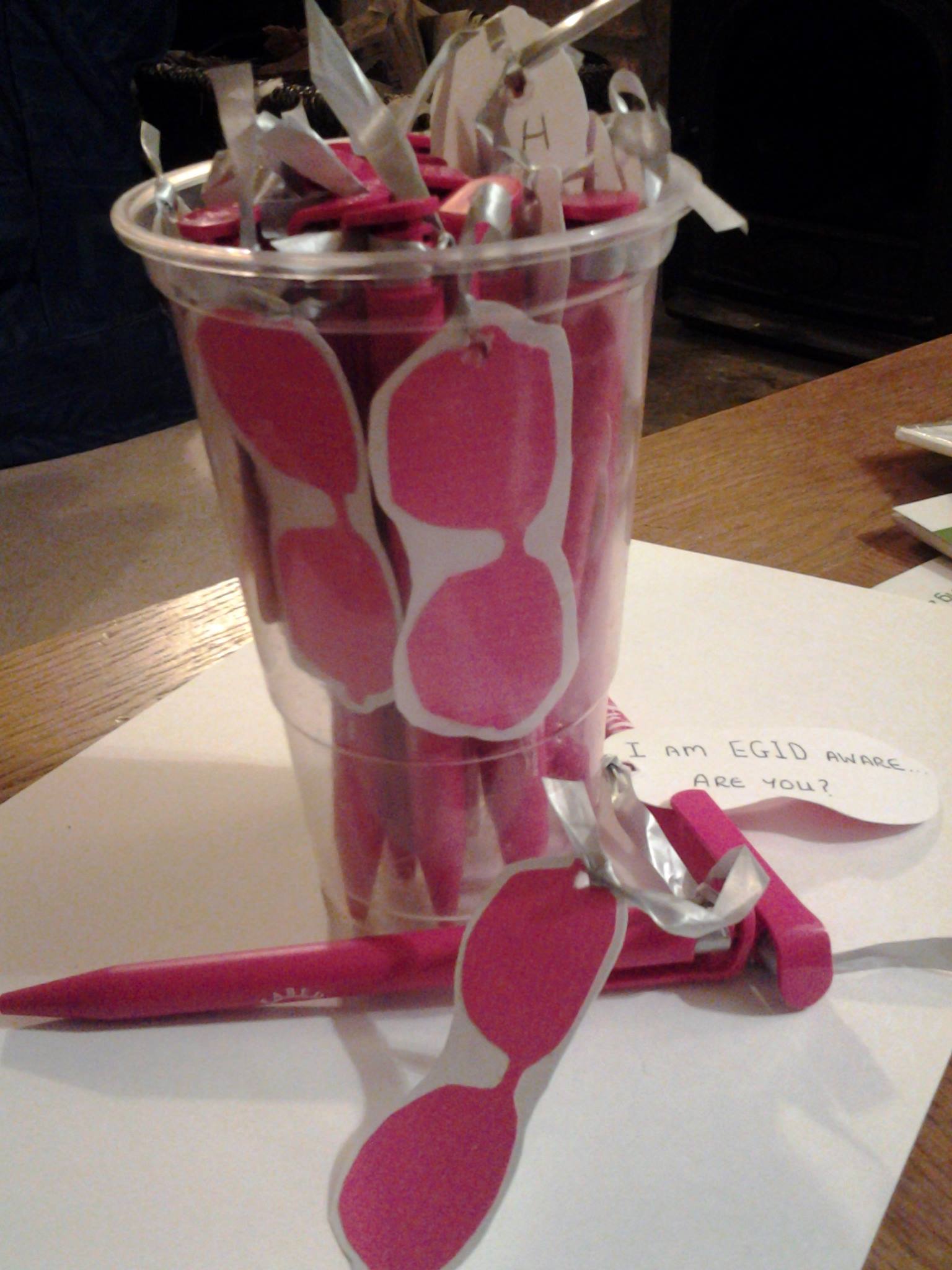
10368328_10152062730306123_2476405082926815390_oM and G were also keen to raise awareness with their teachers and late Wednesday evening, I came up with a plan that would get our message out.  Thanks to the generosity of FABED, I had a stash of their pens at home – bright pink and bearing the FABED logo – and, following a hasty head-count of the members of staff in the school, realised that there was enough for every teacher to be given one.  I painstakingly cut out pairs of glasses from “FABED-pink” paper, glued them to hand-made white card tags, inscribed them with the words “I am EGID aware..are you?” and attached the tag to each pen.  The end result was effective and M was delighted to be able to take them in to school with him this morning and hand them out to the teachers.  We had lots of positive feedback as they received their pens from him and I hope that this will encourage them to also find out a little more about EGID.  Knowing that at least 3 teachers have decided to use the FABED pens as their dedicated register pens assures me that it’ll be a constant reminder of EGID and not just a nice thing that happened on the Friday before half-term.  Not content to leave our awareness-raising with just school today, M also took some pens and left-over M-friendly carrot cake cupcakes to Stagecoach tonight for his teachers there to enjoy.  He’s been fab at handing them out today and has grown in confidence about explaining what it’s all about – as long as Mummy’s alongside to lend a helping hand when needed.

20140523_202419On the food front, Mike decided to eat exactly the same food as M today, matching him mouthful for mouthful, even down to the obligatory serving of Neocate at the end of the day.  I chose not to do the same this year as M has been off his food this week due to his flare and I need to keep my carbohydrate intake up to keep my T1D on an even keel, although I too have endured enjoyed a glass of Neocate!

M

Me

Mike

Breakfast
  •  Sliced pear
  • Black coffee
Lunch
  • Sakata rice crackers (4)
  • Free from spread
  • Fruit stars
  • Sesame snaps
  • Orgran Mini chocolate Outback biscuits


  • Rice flour toast (3 slices)
  • Smoked salmon trimmings mixed with cucumber, tomato and egg-free mayonnaise


  • Sakata rice crackers (4)
  • Free from spread
  • Fruit stars
  • Sesame snaps
  • Orgran Mini chocolate Outback biscuits


Dinner
  •  4 tbsp Risotto (Arborio rice, onion, garlic, bacon, courgette, mushroom, corn & vegetable stock)
  • 150mls rice milk
  •  Risotto (Arborio rice, onion, garlic, bacon, courgette, mushroom, corn & vegetable stock)


  •  4 tbsp Risotto (Arborio rice, onion, garlic, bacon, courgette, mushroom, corn & vegetable stock)
  • 150mls rice milk


Snacks
  • Carrot cake cupcake
  • Nakd Cocoa Orange Date bar
  • 1x 350mls Neocate Active flavoured with Crusha strawberry milkshake syrup
  •  1x 350mls Neocate Active flavoured with Crusha strawberry milkshake syrup
  •  Carrot cake cupcake
  • Nakd Pecan Pie Date bar
  • 1x 350mls Neocate Active flavoured with Crusha strawberry milkshake syrup

If you would like to donate to FABED and the wonderful work they do supporting families like ours coping with children with EGID, please see their JustGiving page at https://www.justgiving.com/FABED/


Medicines galore!

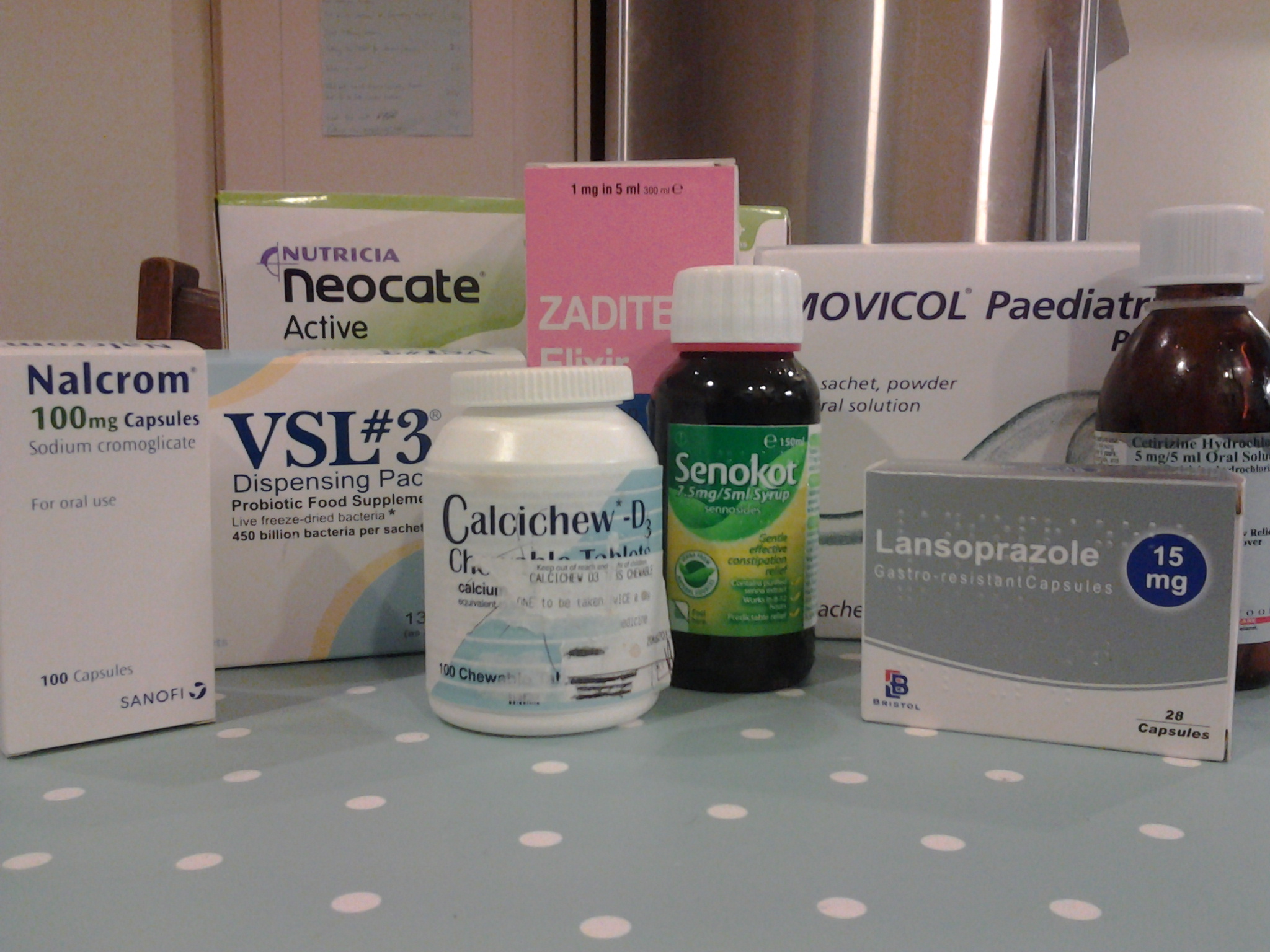
M's daily batch of medicines

M’s daily batch of medicines

Today’s post was going to be a relatively short one.  One to just give you a glimpse of the amount of medicine M takes every day.  One to raise your awareness of the medical impact of this condition; but the thing is, taking 9 medicines on a daily basis is never going to be a short story, even though compared to some EGID children, this isn’t necessarily a lot.  M does a great job of taking his daily doses and has moved on from last summer’s need for Grandma’s jam to being grown-up enough to take his capsules the “adult” way, sometimes even swallowing both of his lunch tablets at the same time – something I don’t think I could do.  I’m also going to attempt to explain what each medicine does and why he takes it, but keep in mind that I’m no medic and so my knowledge is that of an EGID Mum, nothing more.

Medicine Dose When taken Why?
Calcichew D3 1 tablet
  • Breakfast


A calcium supplement to ensure calcium intake is sufficient to protect bones due to malabsorption issues
Movicol 1 sachet mixed with 65mls milk
  • Breakfast
An osmotic laxative, which means that they relieve constipation by drawing water into the bowel to soften stools. Used to ensure M doesn’t get impacted again and we can adjust the dose as we need
Cetirizine 5mls
  • Breakfast
  • Dinner
This is an anti-histamine and is used to reduce or relieve the symptoms of an allergic reaction.   Typically used to help skin reactions and hayfever.
Ketotifen (Zaditen) 5mls
  • Breakfast
  • Dinner
This is an anti-histamine and is used to reduce or relieve the symptoms of an allergic reaction. Typically used to help symptoms of allergic rhinitis.
Nalcrom (Sodium cromoglicate) 1 capsule
  • Breakfast
  • Lunch
  • Dinner
  • Before bed
An anti-allergy medicine specifically used to prevent the symptoms of food allergy. It works to prevent the allergic reaction happening when food is eaten
Lansoprazole 1 capsule
  • Lunch
A Proton pump inhibitor (PPI) used to reduce the amount of acid produced by the lining of the stomach when digesting food and thereby reducing acid reflux
Senokot 5mls
  • Dinner
A stimulant laxative used to encourage the muscles of the bowel to move the stools through the body and prevent constipation. Again, we are able to adjust the dose as M needs
Neocate Active 1 sachet mixed with 300mls water
  • Evening
An elemental feed that contains amino acids, carbohydrate, fat, vitamins and minerals. Used to provide dietary supplementation for children with multiple food allergies. In M’s case, we believe that this is what helps him maintain his weight
VSL #3 Probiotic 1 sachet mixed into his Neocate
  • Evening
A probiotic supplement frequently used in patients with Inflammatory Bowel Disease (IBD). It works by forming a protective barrier on the walls of the GI tract

sweetsAs well as keeping on top of all that and making sure M has the right medicines in the right doses at the right times, we also have to make sure he’s eating well and nothing creeps into his diet that shouldn’t.  Tonight was “Film night” at school and I was the parent standing at the tuck shop, scanning the ingredients of each and every item being sold to check what was and wasn’t M-friendly!  In comparison, our meals today were a lot easier:

M

Me

Mike

Breakfast
  • Milk (200mls)
  •  Sliced pear
Bowl of:

  • Free-from cornflakes
  • Rice milk
Lunch
  • Sakata rice crackers (2)
  • Fruit stars


  • Sakata rice crackers (6)
  • Peanut butter
  • Celery
  • Orange


  •  Sakata rice crackers (10)
  • Peanut butter
  • Orange
  • Apple
Dinner
  • Chicken and bacon pasta (Glutafin corn pasta twirls, bacon, cucumber, carrot, corn, coconut cream and egg-free mayonnaise)


  • Chicken and bacon pasta (Glutafin corn pasta twirls, bacon, cucumber, carrot, corn, courgette, mushrooms, tomato, coconut cream and egg-free mayonnaise)
  • Chicken and bacon pasta (Glutafin corn pasta twirls, bacon, cucumber, carrot, courgette, mushroom, tomato, corn, coconut cream and egg-free mayonnaise)


Snacks
  • Sliced pear (1/4)
  • Nakd cocoa orange date bar
  • Dried apricots (3)
  • Sakata rice crackers (2)
  • Peanut butter
  • Sweets
 
  •  Carrot cake cupcake