Tag Archives: Education

Quiet day

After the excitement of an early start to our awareness week at the end of last week and the unexpected challenge of a sickness bug for poor M on Friday night, we had something of a quieter day today.  Mike and I both have some dietary challenges to face in the week ahead and Mike’s started today with a business trip, which needed some very careful and canny purchasing of lunch whilst he was out on the road.  He was reasonably successful, though he found the choices extremely limited, especially given the further restrictions to M’s diet over the last year and the prices higher for the few items he could choose to eat.

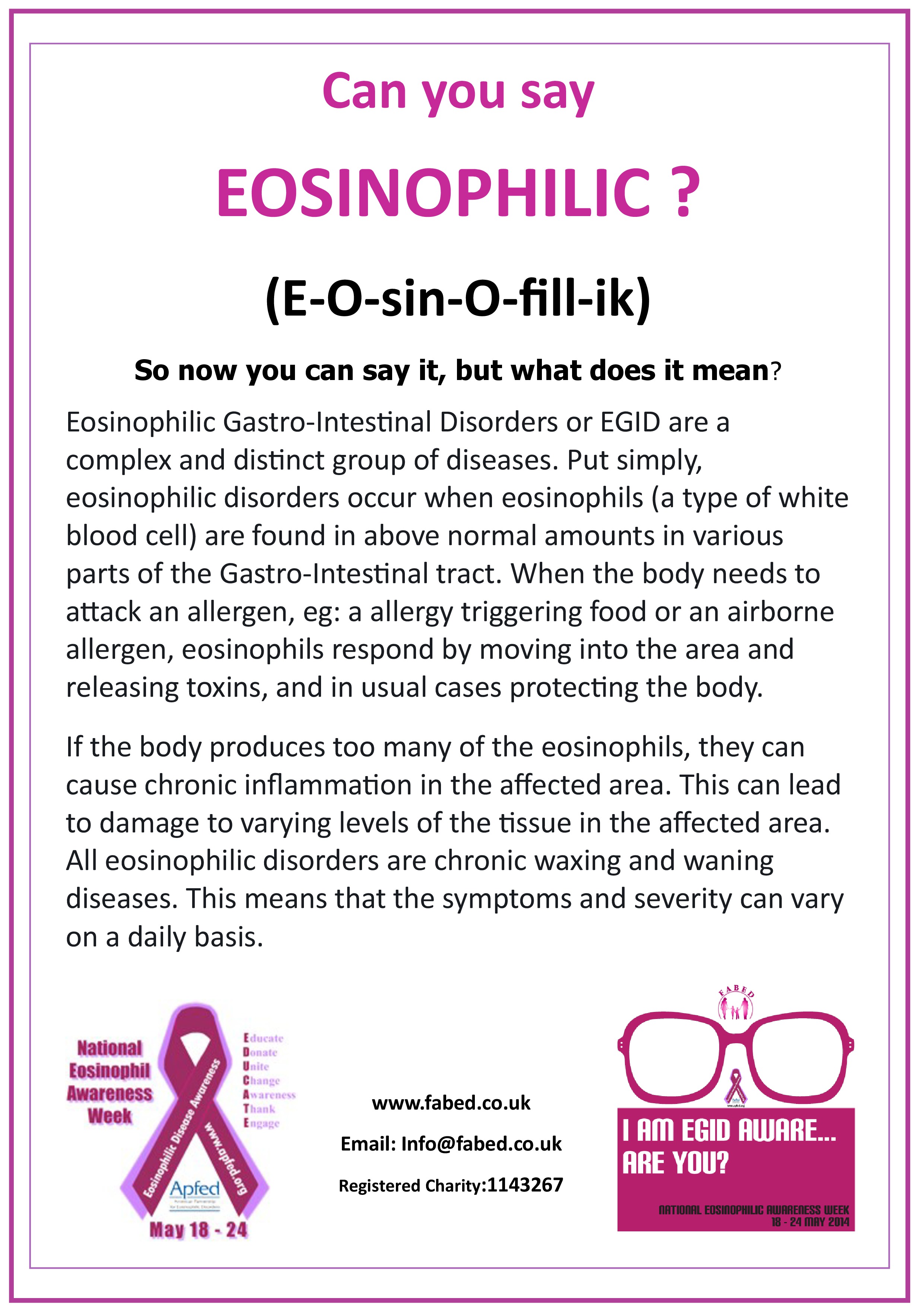
One of the things we’ve been encouraging M to do since his diagnosis, is to develop the confidence and skill to explain a little about his condition and share information about his food allergies with new acquaintances.  During this past week, I have been proud to discover that he has been doing this and doing a pretty good job of it, all things considered.  He has been able to give an explanation that has partly explained his food allergies and, in both cases, the Mums he’s been chatting to have been comfortable enough to approach me and ask more questions about EGID.  There is an alarming lack of knowledge and information concerning EGID, but this wonderful information flyer, produced by FABED, gives an easy-to-understand explanation of what is a complex condition:

NEAW_Flyer-page-0


And, just to finish today’s blog post, here’s our meals for the day.  As you can see, M is struggling with a poor appetite because of the bug, so getting anything into him is a win right now, however small it is:


M

Me

Mike

Breakfast
  • Banana (1/4)
  •  Sliced pear
Bowl of:

  • Free-from cornflakes
  • Rice milk
Lunch
  • Nakd Berry Delight date bar


  • “Chicken on a stick”
  • Eat Natural Brazil & Sultana bar (2)
  • Apple
  • Banana
Dinner
  • Orgran Mini Outback chocolate animals
  • Smoothie (1/2 banana, 4 strawberries, 100mls rice milk)


  • Rice
  • Home-made chicken casserole (onion, garlic, chicken, mushrooms, courgette, carrot, corn, tomato, coconut cream, chicken stock)
  • Rice
  • Home-made chicken casserole (onion, garlic, chicken, mushrooms, courgette, carrot, corn, tomato, coconut cream, chicken stock) 


Snacks
  • Fruit buttons (apple)
 
  •  Blueberry smoothie

An early start to Awareness week

local_radio_graphicNational Eosinophilic Awareness Week started today, but my bid to raise awareness of this rare condition in fact started on Friday afternoon.  Last year, Mike and I looked to raise awareness amongst our work colleagues, so my plans for this year obviously had to be bigger and better and I started by e-mailing the local press to see if anyone would be interested in running our story.  To my delight, late last Wednesday I was invited to appear on our local BBC radio station to talk about M, EGID and coping with the daily battles we have to face, including cooking for a child with multiple food allergies.  I accepted the offer and Friday afternoon saw me heading into the BBC building with a batch of freshly baked M-friendly cupcakes to share with the presenter and other guests.


10348778_10152049176741123_2166202480088495019_oThe cakes were well received, even by the security guards, who were keen to find out more about why I was bringing the cakes into the studio and enjoyed the M-friendly treats I left with them after the show. It was an amazing experience and I can’t thank our local radio enough for giving me the opportunity to get the message about EGID out into our community.  I was able to share, both on and off air, a little about the challenges those of us living with EGID have to deal with and the prognosis for M and children like him.

But, our Awareness week activities don’t stop there.  This time last year, I wrote about our decision to “eat like M” during the week:  one year on and we’re repeating the experience, although we have the added challenge of dropping raisins, raspberries and potatoes out of the diet too.  Actually, this isn’t as tough for me as it is for Mike – I’m not a big fan of raisins and can’t eat potatoes at all due to my own intolerance to them.  We have some more awareness-raising events planned for the week ahead, but for now, I’ll leave you with our meals for the day:

M

Me

Mike

Breakfast
  •  Sliced pear
Bowl of:

  • Free-from cornflakes
  • Free=from rice pops
  • Rice milk
Lunch
  • Roast chicken
  • Sweet potato wedges
  • Corn
  • Peas
  • Carrots
  • Roast parsnips
  • Really not dairy mayonnaise


  • Roast chicken
  • Sweet potato wedges
  • Corn
  • Peas
  • Carrots
  • Roast parsnips
  • Really not dairy garlic mayonnaise
Dinner
  • Rice bread toast (2)
  • Peanut butter
  • Orgran tinned spaghetti
  • Apple (1/2)
  • Cucumber


  • Corn tortilla chips
  • Home-made tomato salsa (Tinned tomatoes, onion, garlic, chilli flakes, chilli powder, olives, corn)
  • Home-made cucumber raita (coconut cream, chopped cucumber, chilli flakes)


  • Corn tortilla chips
  • Home-made tomato salsa (Tinned tomatoes, onion, garlic, chilli flakes, chilli powder, olives, corn)
  • Home-made cucumber raita (coconut cream, chopped cucumber, chilli flakes)


Snacks


  •  Dried apricots

Eosinophilic Awareness Week 18th-24th May 2014

This week I’m delighted to welcome Kate from The Recipe Resource as my guest blogger. Her blog was set up to support those catering for multiple food allergies, particularly in children and Kate is a fellow EGID Mum, who I’ve been privileged to meet through the fantastic FABED.  I was going to write a post to tell you all about Eosinophilic Awareness Week, but found Kate had already done an amazing job on her own blog and she kindly agreed to let me share it with you all:


18th-24th May 2014 is Eosinophilic Awareness Week.  Read about EGID here

Gastro research is drastically UNDER FUNDED.  It is not “glamorous” and rarely on the radar for celebrities and focus groups, and rarely attracts public interest unlike cardiac care and cancer research.  Gastro conditions are badly neglected in the UK when it comes to research funding allocation, but without research treatment and outcomes are not likely to improve much.

Approximately 1% of the total amount of medical research funding available in the UK can be accessed for Gastro research.  There are currently no listed projects specifically for Eosinophilic Disorders on the National Research database.  GOSH are running a Gastro Research Project that will include related conditions/problems.  Alarmingly, children with allergic gut conditions are reaching epidemic proportions according to GOSH.

No one knows why the UK has the highest incidence for Allergy.  I went to Westmnister to attend the All Party Group for Allergy in October 2013 and heard how in the 19th Century, a study into Hay Fever took two decades as it was so rare and there were insufficient people to include in the study.  Today it is incredibly common.  The UK tops the league table in the incidence of allergy in its population, with Australia second – which is interesting as their population obviously share a similar root.  Allergic gut conditions are becoming common and hugely problematic for NHS paediatric services and Eosinophilic Disease is a specific subset of this group.

FABED is the main UK charity supporting families with members (adult and children) who suffer from eosinophilic disease.

FABED

FABED are UK partners supporting the United States Eosinophilic Awareness Week.  This is coordinated by APFED.  Two years ago they made this video to promote awareness.

Read more about Eosinophilic Diseases here.

During Eosinophilic Awareness Week, do something to raise awareness.  Tell someone about EGID and the appalling lack of funding for gastrointestinal disorders in the UK.


This blog was first posted on May 9th 2014 at The Recipe Resource here

Allergy UK Annual Conference

20140428_150922To say that mornings and I do not get along is something of an understatement, and early mornings are the worst.  I am, without a shadow of a doubt, a genuine, bona fide, card-carrying night owl and so anyone who saw me out and about at 6.30am last Saturday, was probably left checking their watches and convinced that something extraordinary was going on. The occasion was Allergy UK‘s first annual conference, being held at St Thomas’ Hospital in London.  I first heard about the event at the start of this year and had been excited about the prospect of finding out more about allergies from the experts attending and presenting at the conference.  The day had been designed to address the needs of individuals and families dealing with allergies on a daily basis and consisted of speeches and workshops as well as open Q&A sessions held during the afternoon.

Professor Peter Howarth of Southampton General Hospital was the keynote speaker for the day.  He opened the conference with a fascinating insight into the on-going and future research that is currently being carried out in the area of allergies and allergic responses. He talked about the recently well-discussed research into peanut allergies, which is looking at whether it is possible to “switch off” the allergic response through regular exposure to peanuts in known sufferers, and whether this approach could be applied to other allergies too.

I was also fascinated to learn from Professor Howarth about the link that appears to exist between Vitamin D and the allergic response.  Studies carried out suggest that Vitamin D can help to reduce the allergic response, particularly in individuals suffering from asthma or urticaria and it is evident that much more research into this area could be extremely beneficial, although there is no funding available for this at the moment.  This is definitely an area I will be keeping an eye on to see if it could be of benefit to M in the future.

Mike and I then attended 2 afternoon sessions, the first of which was a child allergy workshop and proved invaluable, not least because Dr Jo Walsh, who ran the session, explained clearly and concisely the difference between intolerances, IgE allergies and non-IgE allergies.  Her excellent explanation simplified what is a complex and much-misunderstood area and would be an amazingly useful tool when trying to explain M’s food allergies to anyone who comes into contact with him.  She also touched briefly on how to manage the risks to an allergic child out of the home and brought to our attention the NICE guidelines drawn up in 2011, that cover the diagnosis of food allergies and intolerances in children.

The second workshop was run by Dr Helen Brough and was aimed at looking at dealing with allergies with teenagers.  Although this workshop promised a lot, I felt that it didn’t really deliver on our expectations.  The time allowed was just too limited to even begin to touch on what is a complex situation and certainly didn’t really offer any practical tips on how to deal with your teenager and their approach to life with their allergies.  She focussed a lot on the Adolescent allergy clinics they are beginning to introduce, but the time was spent discussing what the parents and teens in the room would like from such clinics, rather than on what is actually provided.

All in all, we were impressed with the day and would be keen to attend another one should Allergy UK decide to hold it again.  There was lots of information available on the day, but I would recommend that the workshop sessions be extended in length as 45 minutes was just not long enough to spend in discussion on such an involving subject.  I will be keeping my ear to the ground to see if Allergy UK run another conference next year and will let you know the minute I hear anything about it.


Oh la la, the ultimate baking challenge

Courtesy of theguardian.com

Courtesy of theguardian.com

Two weeks ago, G and M came home from school bursting with details of their up and coming MFL Day – a day to experience more about the Modern Foreign Languages they both learn at school.  Not content with themed craft activities, dance lessons and extra language practice on the day itself, school naturally decided a food treat would be an ideal extra for the day too.  G and the rest of Years 5 and 6 would be baking and then tasting their efforts in school, whereas M and the others in Years 3 and 4 were simply going to enjoy eating a shop-bought version. The teachers couldn’t decide on an easy, Spanish treat, so the whole school would try a French delicacy instead.

Just when I thought baking couldn’t get any harder, I was presented with the ultimate baking challenge – chocolate croissants!

It was relatively easy to accommodate G’s dietary needs for the day as she is only wheat- and dairy-free.  G could participate in the French cookery lesson, where the children were using supermarket croissant dough and milk chocolate to create their masterpieces, but rather than eating her own creation, G would give hers to her teacher and instead enjoy one of the marvellous Genius gluten-free Pains au chocolat that I had tracked down in our local Tesco. We hadn’t tried these before, but G assures me that they were absolutely delicious and she can’t wait to enjoy them again.

croissants

M, naturally, was a completely different story.  School had agreed that I could provide a M-friendly chocolate bar as an alternative to the chocolate croissants the rest of his class would be enjoying, but I wanted to see if I could bake an equivalent for him to eat.  Had I realised just how much work was involved in making these French delicacies, I might not have even entertained the thought, but having researched a recipe, I thought I’d give it a go.  M has been finding things tough recently and I didn’t want him to feel even more different from his classmates.  I was determined to attempt an edible and reasonably delicious safe version of chocolate croissants.

The original recipe I found was a vegan one and needed a little tweaking to allow for M’s current wheat- and gluten-exclusions.  I replaced the plain flour with rice flour and took the decision to not add xanthum gum this time round.  The croissant dough that resulted was difficult to work and I found it nearly impossible to perform the “laminating” process that is required when making this specialised pastry,   20140328_082805 (1) I will no doubt attempt these again and will play around with my recipe to include xanthum gum to see if I can achieve the perfect consistency needed for this dough.  I added the chocolate, baked the croissants and was pleasantly surprised at just how authentic my first attempt looked.

However, whilst the end result was not quite as I had imagined it, M was delighted that I had managed to produce a reasonable croissant and declared it an immediate hit.  At the end of the day, I got the result I was after, one happy boy!


“Nothing can hold us back”

1526106_690529504302729_1628131005_n

This week is “Feeding Tube Awareness Week” and a great opportunity to raise awareness and garner support for those brave children and young people who are currently living with a tube to provide essential nutrition.  Their motto for the week is “Nothing can hold us back” and for many a feeding tube allows them to take precious steps forward.  There are a number of different feeding tubes that can be used: NG-tubes, NJ-tubes and TPN to name just a few, and you can find out more information about all of these from The Feeding Tube Awareness Foundation here.  The reasons for a feeding tube are even more varied then the number of tubes available and can include premature birth, EGID, Cerebral Palsy and over 200 other conditions and diseases.

As well as the initial trauma of facing the decision to start your child on tube-feeding and the challenge of placing the tube, families then have to learn all about giving feeds, looking after the tubes, replacing them when necessary and how to deal with the little complications that can make a big difference.  The prospect of tube-feeding can be a frightening one, but these children are able to go to school, play and participate in after-school activities alongside their peers with the right support given by trained medical staff, friends and family members.

M

Ms first tube

Whilst our journey so far with M has been tough and continues to throw new challenges at us from time to time, this is one thing that so far we have not had to face.  M has had feeding tubes twice – once when he was first born so prematurely at 33 weeks and secondly, for just a week back in October, when he was admitted to GOSH.  As I recounted then, it took a while for my brave boy to become accustomed to it and to stop worrying that it might fall out at any moment, but he did.  We know that we are extremely lucky as there are a number of EGID children out there who are dependent on a feeding tube to give them the daily nutrition they need.

October 2013 and another tube

October 2013 and another tube

The decision to start your child on such a path is a difficult one for any parent to make and there are no guarantees as to just how long that tube might be in place. At the moment some of our wonderful FABED friends are surviving life with a feeding tube, some have finally managed to say goodbye to that tube and others are contemplating whether a tube may be the next step for their child.  To all those families, this week is for you and about you and the support and understanding you all deserve.

You can read more first-hand experiences here:

Big decisions

Courtesy of stuff.co.nz

Courtesy of stuff.co.nz

We’ve recently had to make a decision about where we’re headed with M’s health and what tests, if any, we want to push GOSH to consider.

We’ve had a mixed success with the Movicol as he has started using the toilet successfully again and we’ve been able to banish the pull-ups to the bottom of the cupboard for the next time there’s a “just in case” situation.  However, M now seems to be fluctuating between constipation and chronic diarrhoea and we’ve reduced his dose down to 3 sachets a day as the 4 were really proving to be too much for his system. We’ve tentatively settled there, even though it doesn’t yet feel 100% right.

The positive and best thing is that he’s conquered the toileting struggles.  These had been a major source of distress over the summer and it’s nice to back on an even keel.  M feels as if he’s more in control of his body – well as much as he can be whilst dealing with the ongoing battle with the symptoms of the EGID – and he’s really happy in school.  What’s more, school have been working hard at putting a medical care plan in place for him to deal with the changing nature of his EGID and his medicines, which means that we feel confident that they’re taking the situation seriously and will support him during the school day.

Courtesy of warriorfitness.org

Courtesy of warriorfitness.org

BUT – and you all knew that was coming didn’t you? – I’m still feeling unsettled about his over-all health and have a feeling that we’re not really dealing with the root cause of the problem. Despite some days when it appears he could eat for Britain, his appetite is down and his lunch-box is emptier than ever.  He’s beginning to object more to taking his daily medicines and there’s been numerous mornings recently when I’ve held my sobbing child on my lap and had to coax him to take the full implement prescribed.

His sleep patterns are off once again and I’ve lost count of how many mornings I’ve woken up to find a small limpet-like child clinging to me and stealing the duvet from my back.  Last night, I disappeared into my bed at 11.20pm, having found M still avidly reading his atlas and discovering new and interesting facts to share with me.  It has to be said that a lot of the sleep problems appear to be related to his emotional and psychological health as when Mike came upstairs just 10 minutes later, M was flat out and fast asleep in his own bed.  It’s as if he needs to be reassured that Mummy is nearby and once that’s clear, then all is well with the world and he can let himself drift off to sleep.

He’s emotional and tired and fed-up; and, to be honest, so are we.  We’re working hard at remembering and focussing on the positives, but sometimes that feels like a step too far. The constant barrage of frustrated behaviour, food management, pain relief, sleeplessness, appointments. emails and phone-calls have drained me completely and I just felt unable to face another discussion with yet another faceless registrar at GOSH, who has little or no knowledge of M and needs me to bring them up to speed before I even get to the point of the phone-call.

So, at the beginning of the week, I asked Mike to speak to GOSH and put forward our case for another set of scopes.  It’s been nearly 2 years since the last ones were done and we felt it was high time he was checked again.  We’ve got no real answers as to whether all the medicines are 1) necessary or 2) working, the limited diet is a strain and this past week we seem to have added raspberries to the list of forbidden foods.  This might seem like an easy decision to make, something of a no-brainer, but, as some of you may remember from my previous blog posts, M suffers from an allergic reaction to the anaesthetic. It’s been a big decision to make to put him through an ordeal that we hope might provide some answers, but that we know will definitely cause him pain.

rainbow

All I can say is that someone must have been smiling down on Mike on Monday.  I’d warned him that his initial phone-call would only get us put on the list and that if he was lucky he’d speak to a registrar on Tuesday or maybe Wednesday.  I fully expected that we’d then have to wait for M’s consultant, Dr H, to be consulted and that we might get a final answer by the end of the week.  If he argued our case well enough, then there was a possibility we’d get a yes, but I prepared him for battle.  So imagine my surprise at getting a text message at 3.45pm on the same day saying that not only had the registrar been spoken to, but they had agreed to recommend scopes and, what was more, Dr H had been contacted, given her agreement and scopes would be scheduled for 6-8 weeks time.

The GOSH gastro team have expressed the same concerns about M’s progress as us and made making that big decision for more investigations much easier than I could ever have hoped. So all we need to do now is wait for the appointment date to be set and it’ll be full steam ahead.

Play-date anyone?

It is amazing how something so simple can make such a big difference to a small child.

As M started a new school this September and is still getting to know the children in his class, we decided to invite a new friend home for tea after school.  M chose C, another child who’s new to the school. I ambushed his Mum a couple of weeks ago to broach the subject of whether he’d like to come home for a play, eventually got round to passing on my contact details and finally settled on a day.

Courtesy of gsapublishing.com

Courtesy of gsapublishing.com

This Tuesday I left work promptly to make sure I was in the right place at the right time to pick up M, C and G.  The weather held so they could all burn off their energy and excitement by bouncing on the trampoline and tearing around the paddock like wild things. I chuckled quietly to myself as I heard the 3 of them discussing the ghosts in our house and heard C promising that he would bring back his ghost-detector from home once he’d fixed it – a child with an imagination to match M’s, I thought. I fed them everything-free fish fingers, potato wedges and a variety of veggies determined by the preferences of each individual child.  We even survived M having a soiling accident and successfully changed him without C being aware it had even happened.

Nothing particularly out-of-the-ordinary or revolutionary, you might be thinking and you’d be right.  The bit that made all the difference came when C’s Mum came to pick him up.

Thank you so much for having C home for tea,” she said, “he’s the happiest I’ve seen him since we made the move.”  And then she uttered the magical words, “Would M like to come home to ours for a play-date next Tuesday after school?

Before I’d even had a chance to reply, she continued “I can cook just plain chicken drumsticks with vegetables for them for tea, or you can pick him before tea if you’d prefer.”

This woman, who has swiftly become a new friend, had unwittingly just rocked my world.  In the last 2 years, since we embarked on our free-from journey with M, he has been home to friends’ houses just twice.  The prospect of feeding my food-intolerant child was too daunting to so many of the Mums I’d got to know during M’s first year of school that they just stopped inviting him back after school.  One Mum had even told M three separate times that she’d talk to me about arranging a day and what he could eat, and then never bothered to make that effort.  Needless to say, that was a friendship that quickly fizzled out as M couldn’t understand why the promised invite never came.

So, for someone who’d known us approximately 5 minutes to take M’s situation and tricky diet completely in her stride and willingly offer to have him home from school, has felt like a real blessing.  We’ve got to iron out a couple of wrinkles that are playing on M’s mind – chiefly his medicines and the whole “what if I have an accident whilst I’m at C’s house Mummy” concern – but I’ve got those sussed and I think M is reassured that every eventuality is covered.

ghostbusters

Which leaves my 7-year old eagerly anticipating the opportunity to fix the broken ghost-detector – “though I’m not entirely convinced he’s not just making the whole thing up Mummy” – and me as one happy Mummy.

*I’ve just found this article “I’m not neurotic, my kid has food allergy” which helps you understand      even more about how important this sort of compassion can be to a family supporting a child          with food allergies

Dyspraxia support

Courtesy of shoreline-pt.com

Courtesy of shoreline-pt.com

As well as going back to school, we’ve also had M’s referral appointment for Occupational Therapy to support him with his dyslexia and dyspraxia.  We had been warned that we might have to wait up to 9 months for the referral to be made, so you can imagine my delight to be offered an appointment just 3 months into the process.  The therapist, D was fantastic and a lot of the health professionals we’ve seen along the way could learn a great deal from her approach to helping M.

Unsurprisingly, she had not come across EGID before, so had spent some time researching the condition and understanding how this might impact on M before we got to the appointment.  She had read thoroughly the reports completed by the Dyslexia Centre, school and us, but then spent more time clarifying points with me, taking into consideration the change of schools and asking what we were hoping to achieve through OT.  As we chatted, D observed M as he played with the various activities she had set out in the room, including a bat and ball, foam football and low-level balance beam.  Her conclusion was that he most needs the support in improving his fine motor skills, which will directly impact his academic prowess and that working on those will then lead to an improvement in his gross motor skills and balance.

She then switched to assess his writing, cutting and cutlery-holding skills, all of which I had mentioned as areas that I felt needed some work.  M showed his reluctance to write by insisting on discussing each task she set him, obviously in the hope that he could browbeat her into leaving them untouched, but he had met his match.  D listened to his comments, acknowledged them and then prompted him to get on with what she had asked.  He may have grumbled each and every step of the way, but he did them all and enabled D to assess as she needed.

Creating and then dismantling paper-clip chains

Creating and then dismantling paper-clip chains

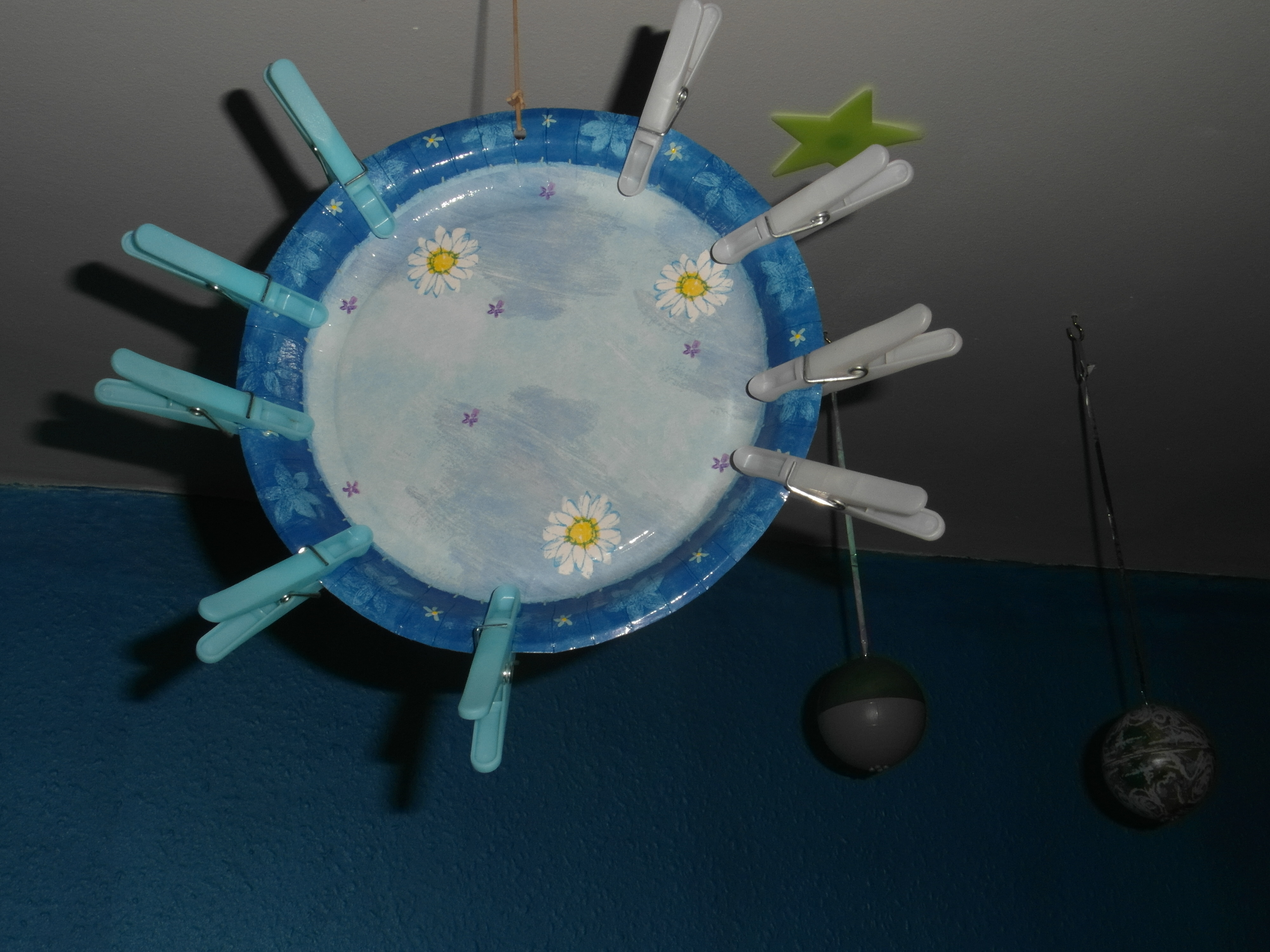
D suggested a number of games using everyday items – clothes pegs, marbles and paperclips – and explained how these would help build his finger strength.  She set him challenges and played the games with him, so that he could understand what was required and she could check that he was doing them correctly.  What impressed me the most was that D gauged accurately how many games to introduce and how long to play each one such that she didn’t overwhelm him with suggestions.  Playing these games at home several times a week will bring about improvement and I foresee a number of family challenges to see who can perform the best.

A paper plate sun with peg rays to attach every morning

A paper plate sun with peg rays to attach every morning

D also agreed that using a writing slope at school will make a massive difference to his writing ability.  As it is highly unlikely the school will have one lying around, the OT department will arrange to lend one to the school for 3 weeks, which will allow the teachers to assess the difference it makes to his work. This will be followed up by a written recommendation and a school visit, where D will be able to observe M in the classroom setting and see what else might be done to support M and help him achieve, before meeting with the SENCo and suggesting how some funding from their SEN budget will help.

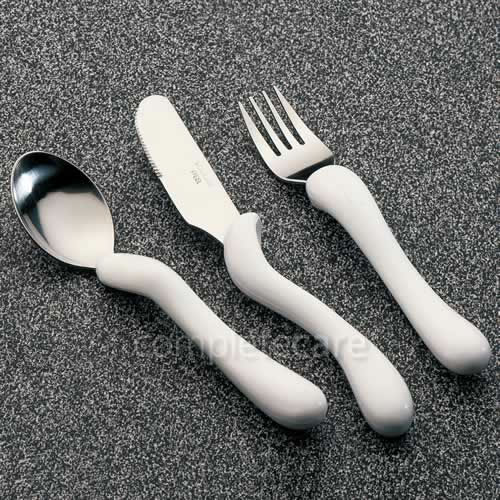
This school visit will then be followed up by a return appointment with M himself, whereby she can see if the daily activities she has suggested have helped and whether school have followed her recommendations and funded the special equipment he needs.  I have already invested in a set of “caring cutlery” to help him at meal-times:

Courtesy of completecareshop.co.uk

Courtesy of completecareshop.co.uk

Whilst we continue to struggle with his gastro health, it is a huge encouragement that there is something useful that we can actively do to improve M’s school-work and performance. He is a bright and articulate child and it will be both fascinating and exciting to see how things develop over the coming months.

A new term

September marks the start of the new school year and an opportunity to look ahead and plan for the coming months.  For our household, September has seen M starting at his new school as well as a number of appointments to make and keep regarding his health. There’s been so much to deal with that, for my own sanity as well as ease of reading, I’ve spread my thoughts over a couple of blog posts.

Courtesy of carevan.org

Courtesy of carevan.org

School-wise, the start of term has gone amazingly well for both M and G, who have enjoyed meeting their new teachers and are slowly settling down into their new school routines.  G was a little nervous on the first couple of days meeting her new teachers (she has 2 who job-share), but her class is the same, so she’s with her friends. It’s hard to believe that my first-born is starting in Year 5 and makes me feel old to realise that I’ve been parenting for nearly a decade.

Sadly, the continued use of Movicol meant that M wasn’t able to start back without wearing a pull-up as we had hoped.  The risk of an accident during school hours and the massive negative impact this would have on him left the school and us in agreement that the pull-up was a necessary evil, and M reluctantly agreed.  It has been hard to judge his real feelings about this as he has been deliberately disengaged from the decision-making, which has been no surprise at all.  He just doesn’t want to face this new reality at the moment and who can blame him? His biggest fear is that his classmates might find out, but the school and I have worked alongside each other to make sure this possibility is minimised.  The pull-up is hidden by his underwear – a sensible pair of trunks long enough to cover it completely – and school suggested he uses the classroom toilet to change for PE, away from prying eyes.

His sensitivity to his “different” lunch-box has been handled well by his new teacher, Miss K, who suggested a special circle time at the end of the first week to introduce his diet and health issues to the class.  By the Friday, M had decided he was open to answering any questions his new friends might have and, as we expected, most of them revolved around what he could or couldn’t eat.  Following that Q&A session, Miss K has also suggested that perhaps we could arrange a “tasting” session for the class, so that they can see, taste and understand some of the foods M has to eat.  M loves the idea of being able to share his diet with his new friends and is drawing up a list of what to take into school as we speak.

Which will make the final cut?

Which will make the final cut?

School have also made allowances regarding his use of the toilets and impressed me by thinking around the matter of which toilets he would need to access.  They considered what could happen if the toilet was in use when he needed to go and have given him special permission to use the Year 6 boys toilet, which is just along the corridor.  They’ve also agreed that as long as the adult in charge is aware he’s dashing off to the loo, then he can forego the need to ask permission before he leaves the classroom or playground. All important when time really is of the essence.

All of this is a refreshing change for us and a real affirmation that we made the right decision in choosing to move schools.  Their positive approach to working with us and with M means that we all feel a great deal more relaxed about the school day.  School are keen that the day is as stress-free for M as it can be and the effect of this on M is clear, as so far we’ve had no toileting issues at school and he is the happiest we’ve seen him in a long time. They really have restored my confidence that M will be supported as he needs and the lines of communication are very much open for us all.

Well, it might be a bit more high tech than this... Courtesy of www.lifeschocolates.com

Well, it might be a bit more high tech than this…
Courtesy of http://www.lifeschocolates.com