Tag Archives: Awareness

Eosinophilic Awareness Week 18th-24th May 2014

This week I’m delighted to welcome Kate from The Recipe Resource as my guest blogger. Her blog was set up to support those catering for multiple food allergies, particularly in children and Kate is a fellow EGID Mum, who I’ve been privileged to meet through the fantastic FABED.  I was going to write a post to tell you all about Eosinophilic Awareness Week, but found Kate had already done an amazing job on her own blog and she kindly agreed to let me share it with you all:


18th-24th May 2014 is Eosinophilic Awareness Week.  Read about EGID here

Gastro research is drastically UNDER FUNDED.  It is not “glamorous” and rarely on the radar for celebrities and focus groups, and rarely attracts public interest unlike cardiac care and cancer research.  Gastro conditions are badly neglected in the UK when it comes to research funding allocation, but without research treatment and outcomes are not likely to improve much.

Approximately 1% of the total amount of medical research funding available in the UK can be accessed for Gastro research.  There are currently no listed projects specifically for Eosinophilic Disorders on the National Research database.  GOSH are running a Gastro Research Project that will include related conditions/problems.  Alarmingly, children with allergic gut conditions are reaching epidemic proportions according to GOSH.

No one knows why the UK has the highest incidence for Allergy.  I went to Westmnister to attend the All Party Group for Allergy in October 2013 and heard how in the 19th Century, a study into Hay Fever took two decades as it was so rare and there were insufficient people to include in the study.  Today it is incredibly common.  The UK tops the league table in the incidence of allergy in its population, with Australia second – which is interesting as their population obviously share a similar root.  Allergic gut conditions are becoming common and hugely problematic for NHS paediatric services and Eosinophilic Disease is a specific subset of this group.

FABED is the main UK charity supporting families with members (adult and children) who suffer from eosinophilic disease.

FABED

FABED are UK partners supporting the United States Eosinophilic Awareness Week.  This is coordinated by APFED.  Two years ago they made this video to promote awareness.

Read more about Eosinophilic Diseases here.

During Eosinophilic Awareness Week, do something to raise awareness.  Tell someone about EGID and the appalling lack of funding for gastrointestinal disorders in the UK.


This blog was first posted on May 9th 2014 at The Recipe Resource here

The Digestive Biscuit Challenge

After weeks of complicated bakes, this week brought about a new challenge, the humble digestive biscuit.  The reason behind our need for digestives was the upcoming Enrichment morning at school.  The previous 3 such mornings have been crafts, but this one, the last of the year, saw G and M preparing vegetable soup, bread rolls and a chocolate and biscuit dessert for their lunch. School had been great about making sure both children could fully participate in the activity and had emailed me the recipes, so that I could make any adjustments needed.

Courtesy of artisansbaking.co.in

Courtesy of artisansbaking.co.in

The vegetable soup contained a number of vegetables – butternut squash, carrots, broccoli, mushrooms – as well as potatoes, mustard, paprika and cheddar cheese.  I asked if they could exchange the potatoes for sweet potatoes, which M can eat and miss out the cheddar cheese completely.  The answer was a resounding yes and the result, according to M, was delicious, although he felt it would have been even better without the broccoli!  He enjoyed it so much that he’s keen to have a go at home for a family lunch one weekend.  I didn’t bother with the bread roll as I’ve yet to find a good, simple and tasty rice flour bread recipe and I simply sent it some slices of M’s bread to be toasted and eaten with their soup.

20140429_171226The bigger challenge was the dessert.  It was a relatively simple recipe and I could easily replace most of the ingredients with M-friendly ones.  However, digestive biscuits were more of a challenge.  Due to our current exclusion of potatoes from M’s diet, it is almost impossible to buy safe biscuits for M as potato flour is a commonly used replacement in gluten-free recipes. So. there was only one thing for it and I rolled up my sleeves, pulled out my trusty tablet and found a great recipe for gluten-free digestives.  I replaced the oats with millet flakes so that they were G-friendly too and quickly baked a batch.  I measured out enough for the school baking project and tried the leftovers on my 2 willing taste-testers.  Another instant hit and I have to admit that even I was impressed with how much like “normal” digestives they look, a bake I’m definitely proud to have made.

Even better, and just in time for enrichment morning,  the brand new allergen substitution sheets produced by the amazing Allergy Adventures fell into my inbox.  These simple and easy-to-follow sheets show easy substitutes, including quantities, for common allergens and give useful notes about the ingredients too.  We first discovered Allergy Adventures at last year’s Allergy and Freefrom show and have found them a brilliant source of information and tips for families dealing with food allergies.  If you’ve not visited Allergy Adventures before, I would highly recommend a look.  I printed the sheets out and handed them into school, not so much for this baking session, but rather as a reference for future planning when it comes to both G and M.

Enrichment morning was a great success.  Soup and toast was eaten and their chocolate/biscuit creation enjoyed.  There was even a little leftover to bring home to finish off at home, even if it looked a little nibbled when I took it back out of the box.  A great end to the week!

Not much was left, but it definitely tasted delicious!

Not much was left, but it definitely tasted delicious!

I

Allergy UK Annual Conference

20140428_150922To say that mornings and I do not get along is something of an understatement, and early mornings are the worst.  I am, without a shadow of a doubt, a genuine, bona fide, card-carrying night owl and so anyone who saw me out and about at 6.30am last Saturday, was probably left checking their watches and convinced that something extraordinary was going on. The occasion was Allergy UK‘s first annual conference, being held at St Thomas’ Hospital in London.  I first heard about the event at the start of this year and had been excited about the prospect of finding out more about allergies from the experts attending and presenting at the conference.  The day had been designed to address the needs of individuals and families dealing with allergies on a daily basis and consisted of speeches and workshops as well as open Q&A sessions held during the afternoon.

Professor Peter Howarth of Southampton General Hospital was the keynote speaker for the day.  He opened the conference with a fascinating insight into the on-going and future research that is currently being carried out in the area of allergies and allergic responses. He talked about the recently well-discussed research into peanut allergies, which is looking at whether it is possible to “switch off” the allergic response through regular exposure to peanuts in known sufferers, and whether this approach could be applied to other allergies too.

I was also fascinated to learn from Professor Howarth about the link that appears to exist between Vitamin D and the allergic response.  Studies carried out suggest that Vitamin D can help to reduce the allergic response, particularly in individuals suffering from asthma or urticaria and it is evident that much more research into this area could be extremely beneficial, although there is no funding available for this at the moment.  This is definitely an area I will be keeping an eye on to see if it could be of benefit to M in the future.

Mike and I then attended 2 afternoon sessions, the first of which was a child allergy workshop and proved invaluable, not least because Dr Jo Walsh, who ran the session, explained clearly and concisely the difference between intolerances, IgE allergies and non-IgE allergies.  Her excellent explanation simplified what is a complex and much-misunderstood area and would be an amazingly useful tool when trying to explain M’s food allergies to anyone who comes into contact with him.  She also touched briefly on how to manage the risks to an allergic child out of the home and brought to our attention the NICE guidelines drawn up in 2011, that cover the diagnosis of food allergies and intolerances in children.

The second workshop was run by Dr Helen Brough and was aimed at looking at dealing with allergies with teenagers.  Although this workshop promised a lot, I felt that it didn’t really deliver on our expectations.  The time allowed was just too limited to even begin to touch on what is a complex situation and certainly didn’t really offer any practical tips on how to deal with your teenager and their approach to life with their allergies.  She focussed a lot on the Adolescent allergy clinics they are beginning to introduce, but the time was spent discussing what the parents and teens in the room would like from such clinics, rather than on what is actually provided.

All in all, we were impressed with the day and would be keen to attend another one should Allergy UK decide to hold it again.  There was lots of information available on the day, but I would recommend that the workshop sessions be extended in length as 45 minutes was just not long enough to spend in discussion on such an involving subject.  I will be keeping my ear to the ground to see if Allergy UK run another conference next year and will let you know the minute I hear anything about it.


And that’s a wrap

cookery

I don’t know about you, but I frequently find that mealtimes can get a bit repetitive, especially when we’ve had to cut yet another staple from M’s diet.  Much as I love to cook and bake, sometimes I really, really hate having to decide what to prepare for dinner.  Add into the mix the need for packed lunches on a daily basis, which are generally formed of the same key ingredients due to a restricted diet and I end up pulling my hair out in desperation.  M’s recent longing for a prawn mayonnaise sandwich meant that I had to seek inspiration and work out whether it was possible to create something even vaguely similar or not.

prawnsThe easy bit, believe it or not, was the prawn mayonnaise.  Using a squirt of some Really Not Dairy original mayonnaise, a dash of Heinz tomato ketchup and a generous serving of prawns, I was able to whip up a reasonable prawn cocktail. I diced a chunk of cucumber, grated some carrot and threw a handful of sweetcorn in to add a couple of portions of vegetables to the filling too.  This mayonnaise is egg-, dairy- and soya-free and tastes more like salad cream than traditional mayonnaise, but it does the job and has been a great find for M.

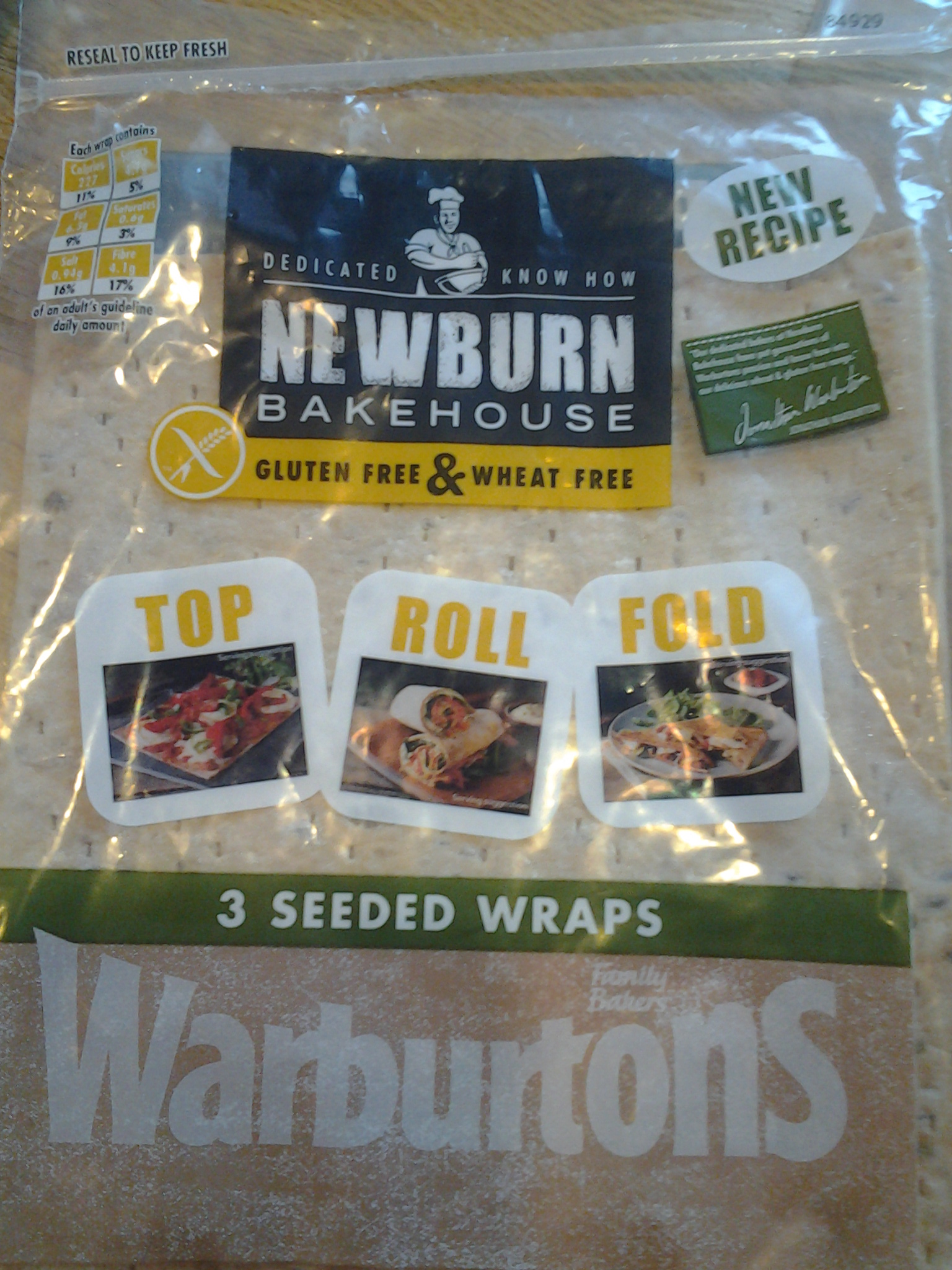
Next came the more challenging aspect, the bread.  G is able to enjoy Genius bread, which is the best gluten- and wheat-free bread we’ve tried, but unfortunately it contains both egg white and potato starch which are now excluded from M’s diet. 20140317_171113 M’s sandwiches are usually made from Sakata rice crackers as his bread is really only edible when toasted, but these are small and don’t lend themselves to being a critical part of a prawn mayonnaise sandwich!  Mike and I both enjoy eating wraps, either for lunch or filled and baked for a Mexican inspired dinner and at last year’s Allergy and Free From show we stumbled across the amazing Bfree gluten-free wraps.  These taste delicious and both children enjoyed them whilst we had some.  Unfortunately, they are incredibly difficult to source in the UK, though most larger Asda stores do stock them now and I headed to our nearest shop with my fingers tightly crossed to see if they were available.

Part of my regular shopping routine, even when buying foods that I’ve bought before, is to scan quickly through the ingredients list for anything that isn’t M-friendly.  Recipes do change, even on tried and tested products, so it’s worth those few extra minutes to avoid days or even weeks of pain because of a missed offending food.  To my dismay, I noted that the wraps contained potato starch, which is now a forbidden food for M and I thought my chances of buying a good alternative to satisfy M’s cravings were over.  I went home and even attempted to make some M-friendly wraps, but the rice flour didn’t lend itself to the recipe and the kids understandably turned their noses up at the finished product that was presented to them.

20140317_170320It was a couple of weeks later when I was in our local Waitrose, that I spied a new-to-me package on their free-from shelves, Newburn Bakehouse gluten-free wraps.  I picked it up to cast my eye over the ingredients, fully expecting to find either egg or potato flour or both lurking there, but to my delight, this new product contained nothing that wasn’t M-friendly and I quickly snapped up the remaining pack to take home and try.

I prepared M’s lunch using one of the Newburn Bakehouse wraps and a generous spoonful of my home-made prawn mayonnaise and called him to the table.  He was overwhelmed to see his much longed-for sandwich waiting for him and made short work of devouring it all.  He relished every bite and, what’s more, requested a second wrap, something that doesn’t happen all that often in our household.  The wraps looked and tasted good and, with 3 to a pack, there was enough left for his school lunchbox on Monday.  Both M and I award them with a much-deserved 10 out of 10 – a great product, delicious to eat and suitable for a MEWS-diet, what more could a Mum ask for?

20140317_170719

Another birthday celebration

Guess what?

Today marks the first birthday of this blog.

First birthday

It seems unbelievable that I have spent 12 months writing about our experiences over the last 8 years and sharing our struggles, our successes and more than a few recipes to boot.  We’ve had our highs and our lows, but with the support of our family, our friends, medical professionals and other bloggers we know we can keep on going.  When I started the blog I wanted to be able to share the story of M’s life and our fight to get a diagnosis for him and the best care and support we could.  My aim was to raise awareness of this rare and little known condition and I always said that if I managed to make a difference to just one other person who was living our experiences, then I would be more than happy.  Amazingly in the last couple of months, I’ve received kind messages that have told me that I have achieved that goal.

A few statistics to share about the last year:

  • Date of first post:                          March 13th 2013
  • Number of blog posts written:    95
  • Number of “followers”:                297
  • Most popular post:                       To whom it may concern
  • Total views of that post:               220
  • Highest number of hits:               165 in one day
  • Number of recipes shared:          27
  • Most popular recipe:                    The best chocolate cake ever
  • Total number of comments:        218
  • Total number of views:                 7,867

As ever, we’ve no idea what lies ahead for M, for G or for us as a family, but the one thing I do know is that I will continue to share our journey with you and every development as it happens.

Local update

update-timeYou may remember that back in December, M was referred on an urgent referral to our local hospital based on the advice of GOSH.  He was suffering from chronic constipation, was in considerable pain and was losing weight as his appetite decreased.  Sadly, our local hospital felt it was unable to admit or treat M and instead our only option was to treat him at home, using a strong laxative and bucket-loads of patience as he struggled to recover his health. Our urgent referral resulted in the offer of an appointment with a general paediatrician in February, nearly 12 weeks after the referral was originally made.  We thought long and hard about whether we wanted to take up this appointment or not, given our previous experience with our local hospital, but we knew that local input could make a big difference to all our lives and felt that this could be our way into the local system.

apptFebruary’s appointment arrived quicker than we could have imagined and we went along with an attitude of “hoping for the best, but expecting the worst”.  The symptoms that M was suffering back before Christmas have disappeared and we have had the challenge of changing his diet and his medicines again in an attempt to reach a status quo with the EGID. What we hoped for was a local doctor who would listen to our concerns and who would offer us the helping hand we so desperately need.  We wanted a local doctor who could point us in the right direction at the hospital and would support our search for shared care between our local hospital and GOSH for M.

Instead we got a doctor who, through their less-than-professional manner, vocal criticisms of both our GP and GOSH and obvious impatience, left us feeling let down once again.  They belittled our decision to seek a second opinion when the local hospital had let us down 3 years ago and were unimpressed that we had our own point of view concerning the care given to M.  They reluctantly agreed to refer us on to the gastro team at the hospital, but made it clear that they believed it highly unlikely any of the gastro consultants would willingly take M on a shared care basis with GOSH.  Mike and I weren’t surprised, but we were disappointed that this consultant chose to make their opinions known so clearly in front of our impressionable and sensitive 7 year old.

complaintNeedless to say, we are not letting things drop there.  We have written a letter of complaint to our local hospital and are now waiting for their response to our concerns.  I am writing to our MP to make him aware of how badly M is being let down health-wise locally, to see if he will get involved on our behalf.  We will persist with the onward referral to one of the gastro consultants because we remain strong in our belief that shared care between our local hospital and GOSH is something M needs;  AND we will continue to fight M’s corner to make sure that he is put first and gets the support he needs.

“Nothing can hold us back”

1526106_690529504302729_1628131005_n

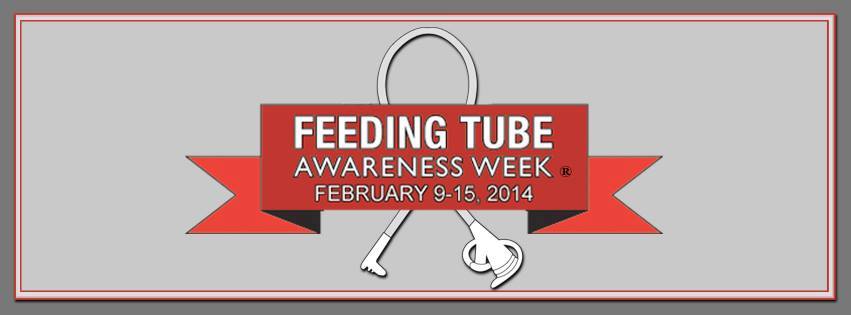
This week is “Feeding Tube Awareness Week” and a great opportunity to raise awareness and garner support for those brave children and young people who are currently living with a tube to provide essential nutrition.  Their motto for the week is “Nothing can hold us back” and for many a feeding tube allows them to take precious steps forward.  There are a number of different feeding tubes that can be used: NG-tubes, NJ-tubes and TPN to name just a few, and you can find out more information about all of these from The Feeding Tube Awareness Foundation here.  The reasons for a feeding tube are even more varied then the number of tubes available and can include premature birth, EGID, Cerebral Palsy and over 200 other conditions and diseases.

As well as the initial trauma of facing the decision to start your child on tube-feeding and the challenge of placing the tube, families then have to learn all about giving feeds, looking after the tubes, replacing them when necessary and how to deal with the little complications that can make a big difference.  The prospect of tube-feeding can be a frightening one, but these children are able to go to school, play and participate in after-school activities alongside their peers with the right support given by trained medical staff, friends and family members.

M

Ms first tube

Whilst our journey so far with M has been tough and continues to throw new challenges at us from time to time, this is one thing that so far we have not had to face.  M has had feeding tubes twice – once when he was first born so prematurely at 33 weeks and secondly, for just a week back in October, when he was admitted to GOSH.  As I recounted then, it took a while for my brave boy to become accustomed to it and to stop worrying that it might fall out at any moment, but he did.  We know that we are extremely lucky as there are a number of EGID children out there who are dependent on a feeding tube to give them the daily nutrition they need.

October 2013 and another tube

October 2013 and another tube

The decision to start your child on such a path is a difficult one for any parent to make and there are no guarantees as to just how long that tube might be in place. At the moment some of our wonderful FABED friends are surviving life with a feeding tube, some have finally managed to say goodbye to that tube and others are contemplating whether a tube may be the next step for their child.  To all those families, this week is for you and about you and the support and understanding you all deserve.

You can read more first-hand experiences here:

Eating my words

For some time now, we’ve been seeking some emotional support for M as he struggles to come to terms with his condition and the impact of a restricted diet and the associated health issues on his day-to-day living.  As the result of a GOSH recommendation, we sought a referral to our local CAMHS service to see if they could offer any counselling to M.  We also hoped that we would have access to some family support as we all find it difficult at times, G especially, as she deals with her own reactions as well as M’s mood-swings.

Courtesy of connectsociety.org

Courtesy of connectsociety.org

Sadly, our experience of CAMHS has been less than favourable.  The worker we saw had not read M’s notes, didn’t understand why we had gone to GOSH for treatment and had no idea that he had been diagnosed with a chronic bowel condition.  She talked about using sticker charts to encourage him to use the toilet and failed to recognise that, in M’s case, it wasn’t that he wouldn’t use the toilet, but rather that he couldn’t.  At our last meeting, Mike and I sat in disbelief for nearly an hour and a half whilst she repeated her theory that a reward system would be the answer to all our woes; and our jaws hit the ground when our repeated comments about his “diagnosed chronic bowel condition” finally sunk in and she pondered whether maybe she would benefit from taking a look at the letters written by his consultant from GOSH.

ticklistIn the letter that followed, she discharged him from her care and suggested that we instead got a referral to our local NHS Bowel and Bladder clinic for their input.  I was unsurprisingly sceptical, having spent some time at one when G was suffering from her own bowel problems a few years ago, and feared that the ubiquitous zticker chart would form the crux of their treatment plan.  However, I have long since come to the conclusion that the only way to get the help that we need, is to agree to whatever steps the health professional concerned recommends and tick those boxes to prove that we really are taking the situation seriously.

And so this past week saw us attending the local Continence clinic, which runs once a month in our GP’s surgery.  I was brutally honest with the nurse we met with, T, telling her within minutes of sitting down that I was not expecting much to come from our meeting.  I apologised for my negative attitude, but admitted that I felt I needed to be honest, so that she understood the position we were starting from.  At this point, my expectations were low – and about to be blown out of the water!

T was not phased by my comment, but instead admitted that she too was uncertain whether she could help M or not, but having read his notes thoroughly and all the letters from GOSH, she was keen to offer whatever help and support she could.  I knew at this point, that this meeting was going to be a very different one from that I had been anticipating and the following 45 minutes proved this to be very much the case.  We talked at length about M’s history, his diagnosis, the experiences over the last 9 months and the problems we have recently faced.

She expressed no surprise that M has been struggling emotionally to come to terms with his life as it now is and discussed with me about how isolated M must be feeling.  She pointed me back in the direction of the wonderful charity, Eric, which offers support and advice about childhood continence issues.  Not only do they have a telephone helpline manned by knowledgeable and sympathetic volunteers, but there is also an area specifically designed to enable children to discuss their toileting problems with others in the same situation should they want.  We had made extensive use of their website when struggling with G’s problems, though we had never thought to look at the children’s area with either G or M.

Most importantly, she suggested a change to M’s prescribed laxatives, but was insistent that I discussed her proposals with our gastro team at GOSH, who fortunately we were seeing the following day.  My biggest fear was that she would be as reluctant as our local hospital to get involved in M’s care and would not be willing to discuss him with GOSH – nothing could be further from the truth.  T reassured me that she would work alongside GOSH, and us, to make sure that M is getting the very best care and would help us make those little adjustments to his medicines that feel so complicated when I’m discussing them over the phone to London.

We still have an initial assessment with our local paediatric team in place for February, and it would be fantastic to have them on board too, but I no longer feel so dependent on that relationship working out this time round.  We have found instead, an even more local solution to our need for support and I have never been so glad to be left eating my words and being proved wrong.

Ringing in the New Year!

As we count down to the New Year, I have to confess to being glad to saying goodbye to 2013.  The last 2 years have been tough for our family and I’m looking forward to a more positive 2014.  We’re still not at our ideal place with M, but we now have a diagnosis and every day sees us taking a step – be it forwards, backwards or just to tread water to stay where we are – and we’re hoping to make some real progress in the 12 months ahead.  All that being said, there have been many highlights of 2013, not least of which has been the adventure of starting this blog and below are a few of my favourite:

Wishing you all a happy and peaceful 2014. May your new year wishes be fulfilled.

To whom it may concern

Dear Local Hospital

28 years ago, your specialists saved my life.

My family and I owe our gratitude to those skilled doctors who were on duty the night of my 9th birthday, when I was admitted perilously ill and closer to not making it through the night than my parents could have imagined.  Their wonderful care brought me back from the brink as my Type 1 diabetes was diagnosed and they supported me for the next 11 years of my life.  It is not ridiculous for me to say that I owe my life to you and had every confidence that when Mike and I started a family of our own, we could entrust the health of our children to your care.

2 and a half years ago, your consultants told me that there was nothing wrong with my son, other than a minor complaint he would grow out of in time.  Your doctors left me questioning my instincts and made me feel that they viewed me as a neurotic mother.  They even queried why we, as loving parents, would consider putting our child through an experience as horrendous as an endoscopy, when it was obviously not needed.  Mike and I began to doubt our judgement and, at breaking point and in desperation, we took our child and walked away from your care.

Our wonderfully sympathetic GP listened and sent us to one of the top Children’s Hospitals in the world for a second opinion. At our very first appointment there, we were told that he was a very ill little boy, but that they could help.  They have diagnosed a chronic condition that he will probably never outgrow, a condition that has changed his life.  For 2 years, we have juggled our family’s lives to make the regular and necessary trips to London to search for answers and to work out how to return our son to better health.

Six months ago, our son was struggling with new symptoms and GOSH requested a test to rule out any infections in his system.  A simple test that, due to its nature, needed to be carried out locally and our GP readily agreed and sent off the sample with the appropriate paperwork.  Within days, you replied that you wouldn’t do the test due to funding and suggested that if GOSH wanted the test done, then we should travel to London for them to carry it out.  It was with a sinking heart that I accepted this decision and vowed silently that I would never willingly bother your hospital again.

Five months ago, he needed urgent abdominal x-rays and I reluctantly agreed to attempt a referral to your hospital for these.  To my surprise, you agreed and once again I was reminded of the competence and compassion of the dedicated people who work there as they cheerfully showed my inquisitive child the x-rays of his poorly tummy.  A tiny seed of hope began to sprout – maybe we could develop a relationship with you that would put my son first.

Two months ago, we were prepared to give you another go.  GOSH wanted him to be admitted to you for the extensive bowel prep he needed prior to his scopes, due to the chronic constipation that had been identified over the summer.  I was willing to see if things had improved, now that we had the “big guns” at GOSH involved. You let us down again.  I don’t know fully the conversation that happened between your gastro team and the team at GOSH, but you refused to admit him and instead we had to face the upheaval of a week away from home to make sure he got the care he needed.  That tiny seed of hope had obviously been trampled on thorny ground.

A couple of weeks ago, I noted anxiously that he was showing some signs of chronic constipation once again and our best efforts were woefully ineffective.  GOSH advised that he needed to be admitted before Christmas for another bout of heavy duty bowel preparation to clear his system and once again suggested we tried you.  Once again, our stalwart GP sent an urgent referral across to you and once again, you refused to take him. This time you insisted that you wouldn’t even consider a referral sanctioned by GOSH unless he was examined by a GP first, so we did as asked, got him examined and re-sent the referral.

We are now nearly 3 weeks on and the best you can offer is an initial assessment in February 2014.  If this is your response to an urgent referral, I dread to think how long a child might need to wait for a so-called non-urgent one.  Our GP has been fantastic and can’t do enough to support us.  Their admin staff are searching high and low for any possible alternatives for us and making phone-calls that are definitely above and beyond their call of duty.

You have been fantastically dreadful and are refusing to budge on your decision.

I understand that you are busy.  I understand that your beds are full of other sick children.  I understand that you feel you don’t know my child any more and are reluctant to offer him treatment based on the recommendation of other health professionals.

BUT, you are failing a 7 year old child.

A child who is in constant pain that waxes and wanes to an increasing level every day.  A child who wakes in the night crying because of the pain in his tummy.  A child who needs medical intervention now, so that the problems don’t multiply and escalate in the lead up to Christmas.  A child who is at emotional breaking point and desperately needs some help.  A child who doesn’t understand why I can’t make him better and why you won’t help.

GOSH is helping as best they can and is working alongside our GP to prescribe a series of stronger laxatives for us to use safely at home.  The problem is that we won’t know for sure whether they’ve worked or not and will just have to keep trying during the festive season. What’s more we’re back at GOSH in the New Year, the best part of 6 weeks before you’ll see him and I’m left wondering what to do for best.

We’ve been told that we need a local paediatrician to be involved in his care.  Someone we can liaise with when things get this bad and who can help us get the local care that our child needs.  I’m caught between a rock and a hard place.  I don’t trust that you will give him that help and support and yet we can’t be dependent on continual telephone consultations, especially when we know local input would be less of a strain on us all.  Frustratingly, I don’t have options.  I know just how excellent you can be and yet the last few years have been one disappointment after another. The best alternative to you is in Wales and we can’t get there because of NHS funding policies.  We’re caught in a political trap, where everything comes down to money, or the lack of it, and postcodes; and everyone loses sight of the most important thing:

That at the centre of it all there’s a 7 year old boy who just needs someone to help him feel better.