Tag Archives: health issues

Welcome to the House of Fun!

It may seem an unlikely description of M’s week-long stay at GOSH, but we did end up having a week that was filled with fun and not just fear.  I had dreaded the tedium of being confined to the ward and had managed to pull together some games and treats to see us both through.  What I hadn’t anticipated were the events and activities that would be “on tap” at GOSH itself.

Courtesy of magicfree,net

Courtesy of magicfree,net

Sadly M didn’t manage to get to the first of these opportunities as we were battling the interminable wait to get him admitted onto the ward on Monday morning and the rest of the week were barely able to leave his bed or the ward.  However, the week we were there was celebrating “50 years of National Play in Hospital”.  It recognised the hard work regularly put in by fully trained play workers, who go into the hospital setting and entertain the children who have been admitted.  The launch on the Monday included face-painting, magic shows and other entertainers to give that day’s visitors an escape from the often frightening reality of being in hospital.  You can read more about this special week here.

Courtesy of scouts.org.uk

Courtesy of scouts.org.uk

Tuesday’s adventure started with a visit at 6.45pm from the leaders of the GOSH Scouts and Guides group.  They had avoided disappointment by checking with the ward nurses whether there were any children that would be able to go to the weekly Scout meeting, either on their own or accompanied by their parent.  They appeared at the curtains to M’s cubicle and invited him along for an hour of creativity and socialising.  He refused point-blank to allow me to go with him and merrily trotted off with another child from the ward – disconnected from his drip and in a state of excitement to be escaping.

Just after 8pm he re-appeared, clutching a treasure box, leaf bracelet, sheets of word-searches, puzzles and colouring, and his new most treasured possession – his first Scouts badge.  M was filled with stories of the 10 other children he’d been with, what they’d been up to and, most importantly for him, the fact that several of the others had also had NG-tubes and the news that one little girl was even “drinking her milk through it, Mummy!” Scouts is a new experience for M, but the opportunity to not stand out from the crowd because of his tube and his allergies was one he couldn’t have missed and he would have loved to have stayed another week in hospital just to go to the next meeting!
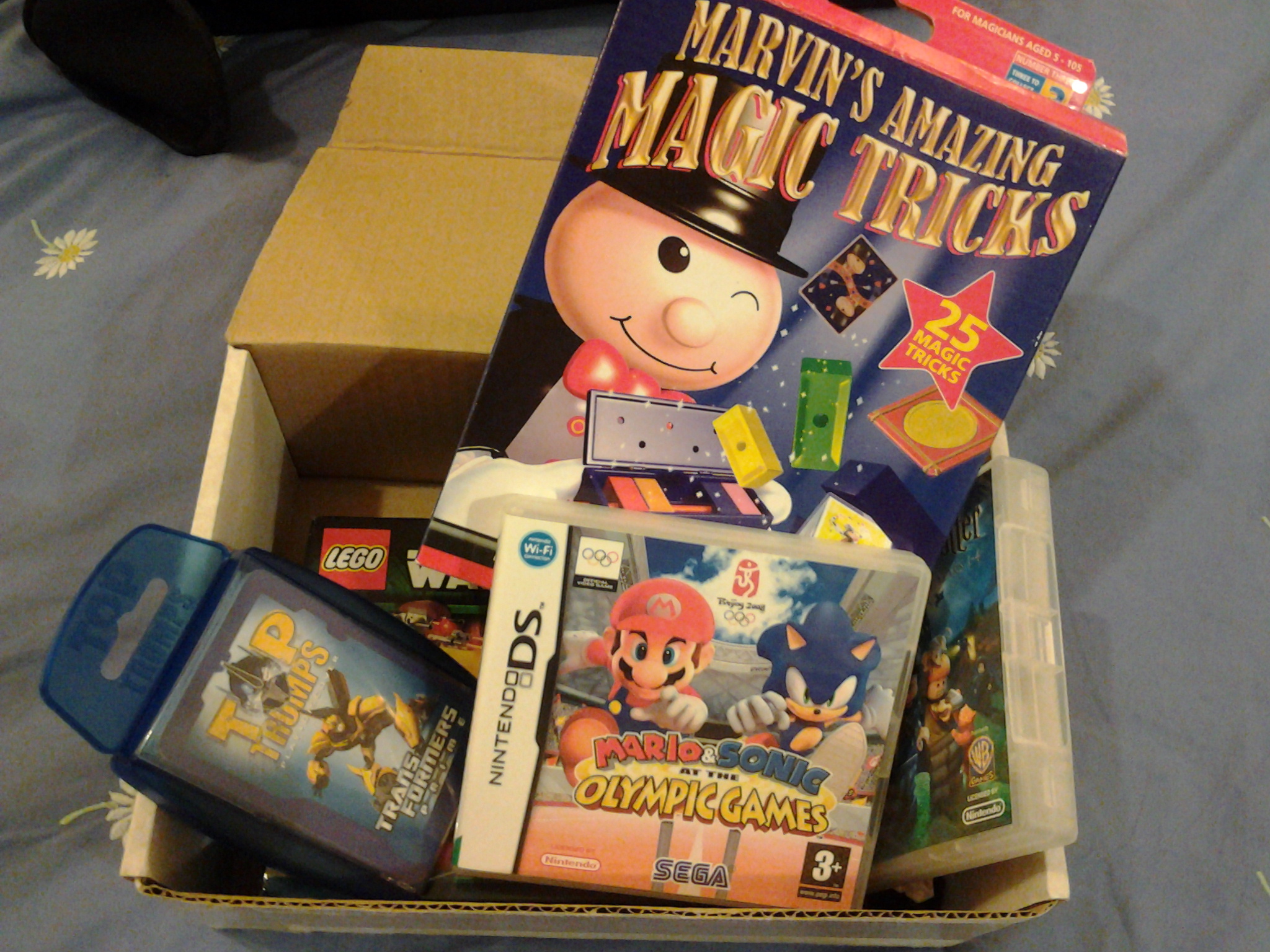
20131020_184703Treats number 3 and 4 both arrived on Wednesday.  The first was the surprise arrival of a parcel from M’s godmother, Auntie L.  She had packed a “Bored box” with an array of treats to satisfy any small  boy – Top Trumps cards, a Lego Star Wars set, a magic set, 3 packs of Angry birds trading cards, a pack of silly putty and other bits and pieces were hidden inside.  M didn’t know where to start, but slowly and surely he made his way through the box, which kept him occupied not just for the rest of the week, but for days afterwards too.  Along with the box, M also received several Get Well cards from friends and family, which brightened his day as he loves to receive post and often moans that nothing ever drops through the door at home for him.

The final surprise for the week, was a visit from Dr Mattie, a clown doctor from the Theodora Children’s Trust.  The use of Giggle Doctors in Children’s hospitals has come under debate many times, including recently in an article published by The Guardian newspaper.  Whilst it cannot be denied that some children and adults are frightened by clowns – indeed, one of M’s nurses commented that the Clown doctors gave her nightmares – they cheered M’s day. M wasn’t amused by their jokes and he wasn’t that interested in the “Spot the difference” he was given, but he waited anxiously to check that Dr Mattie would stop and chat and not miss him out of his rounds, and was fascinated by the unbreakable bubbles that clung to every surface and constantly checked to see just how long those bubbles would last.  Perhaps that old adage is true and laughter really is the best medicine.

He might not be everyone's cup of tea, but he certainly made M smile.

He might not be everyone’s cup of tea, but he certainly made M smile.

Playing the waiting game

I have tried to write this post over and over again tonight and, having reached draft number 4, I’m still not 100% happy with it.  I’ve really struggled with how to put this past week into words without sounding long-winded or overly-dramatic or twee.  It was a tough week for us all and I’m not sure that there are really words that can encapsulate our emotions and reactions.  All I can try to do is to share our experiences and give you a sense of where we are now that we’ve reached the end of it all.  I’ve decided to split the week into more than one blog-post as there is just too much to share in one simple offering.

Courtesy of bbc.co.uk

Courtesy of bbc.co.uk

The first day was filled with long waits and I wish that this had been something I’d been prepared for, but my survival guide gurus hadn’t pointed this out as a possibility.  I was naïve in believing that the process of getting M booked in and admitted onto the ward would be a straightforward one, especially given the chaos of sorting the appointment out, but I had successfully talked myself out of my anxieties and lulled myself into a false sense of security.

Despite my last phone conversation with S confirming that I needed to have M at GOSH for 10am on Monday morning, the information hadn’t fully trickled through their systems and we started the day with a 20-minute wait to even get into the waiting area for the ward.  Having found M’s notes and confirmed that we were indeed due there at that time – no, it wasn’t a figment of my imagination –  we were then subject to a further 1 hour and 20 minutes waiting before M was seen by a nurse.

Fortunately for me, M discovered a sympathetic father in the waiting room, who was able to help him get the x-box working and gave him tips on how to play Lego Indiana Jones on it.  M and another boy tackled the game together whilst I took a seat nearby, where I was able to keep an eye on M as well as listen out for his name to be called.

Indiana Jones - a great distraction for a long wait

Indiana Jones – a great distraction for a long wait

Eventually I heard M’s name and the process of getting him booked in began.  His measurements was taken, discussions were had about when and how to tackle the various medical procedures that were needed over the next few days and finally we were shown to his bed.  It was at this point that the nurse apologised for the delay, “But we hadn’t been expecting M until 4pm” she said, I shrugged my shoulders and inwardly sighed.  We had a bed, the nurses were going to get the NG-tube fitted later to start him on the Klean-prep (a strong laxative) and all we needed for the time-being was some lunch.

Unfortunately, we had waited so long to be admitted that it was now too late to arrange a special diet meal for M and instead he and I wrapped up against the rain and headed out to a nearby supermarket to buy some M-friendly foods to satiate his appetite.  We filled the afternoon with activities and TV as well as participating in a brand new research study that M had been invited to join at the end of the week before.

The George Cross awarded for "acts of the greatest heroism or of the most conspicuous courage "

The George Cross awarded for “acts of the greatest heroism or of the most conspicuous courage “

It wasn’t until around 4.30pm that we finally tackled the matter of the NG-tube.  To say that I was, and still am, incredibly proud of my brave little boy is a gross understatement.  This was a new procedure for him and he sat without making a noise as they passed the tube through his nose and down into his tummy.  His distress at the pain was obvious as I watched a single, solitary tear roll down his cheek.  The only sound was uttered once it was in place, “Cuddle Mummy“.  That nearly broke my heart, to hear my usually lively, garrulous and loud lad reduced to a single heartfelt request.

They started him on the first 4 litres of the Klean-prep and so our wait began.  We had no idea whether M was still constipated or not after the summer, so the proposed plan of attack was 3 days on the Klean-prep at a rate of 4 litres a day, adding the standard pre-procedure laxatives of senna and picolax on day 3 and then, if there was any doubt whether his bowels were clear, an enema was booked for Thursday morning before the scopes happened.  By Wednesday, it was looking possible that the enema might be needed, but we finally had the necessary break-through on Wednesday evening and that little joy was avoided.

At this stage, M and I had been more or less confined to the hospital buildings since around 2pm on Monday.  I had been able to pop out to grab meals, but poor M hadn’t been able to leave at all.  We had taken advantage of 2 occasions of being disconnected from his drip and stretched his legs beyond the space of Kingfisher ward.   It had been an interminable 3 days and in very many ways, we still had a lot of waiting to do.

A Parent’s Survival Guide to staying in hospital

I have lots of experience of extended stays in hospital, but the proposed week ahead with M felt more daunting than normal.  It might have had something to do with his very obvious nerves and reluctance to go, but I worried about how I was going to keep him entertained and comfortable for a week filled with heavy-duty bowel prep, anaesthetic and scopes.  I turned once again to the support of FABED, where I knew a number of parents had experience of, not only an extended stay at GOSH, but on Kingfisher ward too, and asked them for their suggestions of essential things to take with us.

So, it is with many, many heartfelt thanks to those wonderful individuals, we survived the week and I’ve put together a list of the “must-haves” for a hospital stay:

20131020_205620

  • A supply of easy-to-store snacks and squash for both parents and child – remember that your child might be on a restricted diet in preparation for their procedure, so be flexible and prepared to nip out to a local supermarket to add to your stock if needs be 
  • I-pad/tablet/DS plus games AND chargers – these were invaluable as M was confined to bed for a lot of the week.  I loaded a number of his favourite audio books on to my tablet, which gave M something to listen to at bedtime.  A crucial part of his regular night-time routine
  • Favourite books – a mix of something your child can look at on their own as well as old favourites that you both can share
  • Favourite toy/comforter – M’s cat travelled with us as always and went almost everywhere with M.  It’s not so much that M struggles to sleep without him, but he’s a source of comfort when uncomfortable medical procedures have to be endured

    Cat ready in his scrubs for the week ahead

    Cat ready in his scrubs for the week ahead

  • Colouring In/Stickers/Craft activities – anything that can keep them occupied whilst they’re in bed.  A friend suggested we could start on our Christmas cards whilst there – I just wish I’d had time to sort that one out as it would have been something we could have begun with no pressure of having to complete it when M had had enough
  • School-work – ask if your child’s school is prepared to send some work for them to do during their stay.  Needless to say, M was extremely reluctant to do any during the week, but we persevered and read some books as well as practised some spellings ready for a test on his return

    A little reading and some spellings to learn

    A little reading and some spellings to learn

  • Headphones/ear-plugs – if you find it difficult to sleep in a quietly busy location, then these will be invaluable to making sure you get some rest.  We bought a set of headphones for M, which were a real life-saver during the week.  He was able to listen to the TV and audio books without disturbing anyone else and that really helped him to settle to sleep each night
  • Mini lego sets/action figures – M has recently enjoyed playing with some plastic soldiers that he “won” when we were last on holiday in Canada.  For this stay, I bought a pack of them which included tanks, planes, helicopters and bunkers – hours of fun that constantly changed and that could be put away quickly too
    M and Daddy putting together some new Star Wars Lego

    M and Daddy putting together some new Star Wars Lego


  • Top trumps or travel games – they’re small, easy to pack and entertaining for at least 5 minutes!  We could play a game and then pack it away as soon as M wanted 20131020_184801
Courtesy of waitrose.com

Courtesy of waitrose.com

  • Clothes – Enough clothes and sets of pyjamas to see you through the week.  As M was having bowel prep, I packed masses of underwear as well as pairs of pjs – it still wasn’t enough, but got me through 24hours without too much stress
  • Warm jumper – for both the child and the parent for when the nights get chilly
  • Washing powder/gel – we went through M’s clothes far quicker than I had anticipated.  Fortunately GOSH has a Patients laundry room with 2 washing machines and 2 tumble dryers.  I was able to run a load through both every evening at a cost of no more than the washing powder to clean the clothes
  • Slippers – I really, really wish I’d thought of taking slippers with us for both me and M.  I didn’t want to wear my shoes all the time, but wasn’t always comfortable to walk around in nothing more than my socks
  • Blanket/pillow – it’s nice to have that extra bit of comfort that reminds you and your child of home.  M had 2 blankets with him, which he curled up with every night whilst giving Cat a much needed cuddle
  • Treats for Mum (or Dad!) – hand cream, lip balm, comfy socks, soft loo roll were among the suggestions and all were invaluable to me for the week

And then. my 3 favourite suggestions, that brought a smile to my face and were in much demand during our week at GOSH:

  • Gin in a tin
  • A sense of humour
  • and a LOT of patience!
Courtesy of tesco.com

Courtesy of tesco.com

Whirlwind week

Having written my last blog about finally making the big decision to request that M has more scopes done, we settled in to what we assumed would be an inevitable wait for the appointment to be made.  Having been told 6-8 weeks, I studied the calendar and figured out that 6 weeks would be right in the middle of October half-term and, knowing that there was no chance that we could be that lucky,  assumed that instead we were looking at a date in the middle of November.

Courtesy of telegraph.co.uk

Courtesy of telegraph.co.uk

A week after Mike had spoken to the registrar at GOSH, I received a call from the pre-admissions nurse, S, to talk through M’s notes and agree the arrangements for the scopes.  I was reassured to learn that M’s notes clearly state that there is a problem with him coming round from the anaesthetic and S suggested that, as a precaution, he be admitted to Kingfisher Ward for 2 nights to allow close monitoring as he recovered.  We discussed the possibility of a pre-med, which is supposed to calm the child before they are given the anaesthetic.  She felt this might lessen his reaction, though I was warned that there is a risk that it can have the opposite effect and might make him more aggressive.  We agreed that I am open to him taking it, but will discuss it fully with the Consultant Anaesthetist the day before.

However, not unusually when it comes to M, there have been some added complications due to the chronic constipation and impaction he had over the summer. GOSH wanted to admit him for a week into our local hospital to have a fairly heavy bowel prep done – they need to monitor him to ensure he doesn’t get dehydrated plus insert a NG-tube to give him the meds as it seems unlikely that he’s going to be co-operative about taking 4 litres of a “vile-tasting laxative” (the words of the medical staff, not me!).

Mum had some holidays booked during the 6-8 weeks and I had my fingers crossed that the dates wouldn’t clash as G would be staying with her whilst Mike and I stayed up in London with M.  S confirmed that she thought the appointment would most likely be in mid-November and that the admissions team would call me within the week to confirm a date.  All seemed to be going to plan and I informed both school and work that the appointment would be coming up and that I would let them know as soon as I had a date.

And then last week, the whirlwind hit.  Hold on to your hats, this could be a bumpy ride.

Courtesy of m.flikie.com

Courtesy of m.flikie.com

Friday afternoon 2.30pm – Phone-call from GOSH to say that the proposed date has suddenly become, not 6 weeks away, but rather the week after next, just 10 days notice for all concerned.  No time to confirm what the position with our local hospital was, that will have to wait until Monday.  Let school know that M will be away for the week and ask if they could organise some work for him whilst he’s there – I know, mean Mummy!

Weekend – Confirm arrangements for G.  Mum not away that week, so G can stay with her and stick to her normal routine as much as possible

Monday 10.45am   Speak again to S, the pre-admissions nurse, who has yet to phone our local hospital, but who has a doctor on hand at GOSH to argue our case.  Given M is supposed to be admitted there on Wednesday, it all feels a bit tight and needless to say, stress-levels are slowly rising.  Suddenly, the 3 days off work and school have become over a week, but still just about manageable as I can do the school-run and so on with G.

Monday 1pm – GOSH doctor calls to confirm some further bits of information including the name of our local consultant (we don’t have one) and which ward M is normally admitted to locally (he’s not).  Assured this won’t be a problem and that either she or the local hospital will ring later to confirm when I need to get him there.

Monday 6pm – Phone-call from S to say that the local hospital has refused to take him and so we’ve got to move to Plan B – getting him admitted into GOSH to have it done instead. No idea whether they’ll have a bed for him or when they want to admit him. They need to review the abdominal x-rays done over the summer (by the local hospital!) to see whether he needs to be in the full week or not.  Someone will call tomorrow to let me know.

Tuesday 9.30am – Wondering what time GOSH will call and hoping that it’s good news. still waiting

Tuesday 12.45pm – Still waiting to hear

Tuesday 3.30pm – Still waiting, but hoping they don’t phone whilst I’m on the school-run.

Tuesday 4pm – Following call from Mike to see if I’ve heard anything – doesn’t he know I’d have rung him if I had? – decide to call and leave a message for the admissions nurse.  She is amazingly, wonderfully supportive and has reassured me that she will come up with a Plan C if needs be, though goodness only knows what that will be!

Tuesday 5.15pm – ARRRRGGGHHHH!!!  Appointment cancelled as GOSH can’t find him a bed for the week.  Profuse apologies from S, who tells me she’s turning grey trying to organise it for us, but that admissions will phone me tomorrow to set up a new date.  They’re not going to bother with the local hospital at all, I’m guessing they’ve been unco-operative which fits our experience of them, and instead will do it all at GOSH.

Tuesday 6.30pm – You really, really couldn’t make this stuff up!  Phone-call from S, as I’m en-route to taking G to her gymnastics lesson, to say that they’ve found him a bed for next week and so it’s all back on.  Can’t confirm what time we’ll need to be there on Monday, so I’m now planning on M and I travelling to London on Sunday.  She will phone tomorrow to confirm all details.

Courtesy of telegraph.co.uk

Courtesy of telegraph.co.uk

Wednesday 11.45am – Hurrah!  Get the champagne flowing, we have lift off.  Final confirmation that M will definitely be in from Monday 10am, no ifs, buts or maybes left.  S has been a star and has promised to come visit us once he’s on Kingfisher ward on Monday.  I can’t wait to meet her and say a huge thanks for persevering with getting this all sorted.

Now, I’m off to work out what we’ll need and how we’re getting to London next week.

Big decisions

Courtesy of stuff.co.nz

Courtesy of stuff.co.nz

We’ve recently had to make a decision about where we’re headed with M’s health and what tests, if any, we want to push GOSH to consider.

We’ve had a mixed success with the Movicol as he has started using the toilet successfully again and we’ve been able to banish the pull-ups to the bottom of the cupboard for the next time there’s a “just in case” situation.  However, M now seems to be fluctuating between constipation and chronic diarrhoea and we’ve reduced his dose down to 3 sachets a day as the 4 were really proving to be too much for his system. We’ve tentatively settled there, even though it doesn’t yet feel 100% right.

The positive and best thing is that he’s conquered the toileting struggles.  These had been a major source of distress over the summer and it’s nice to back on an even keel.  M feels as if he’s more in control of his body – well as much as he can be whilst dealing with the ongoing battle with the symptoms of the EGID – and he’s really happy in school.  What’s more, school have been working hard at putting a medical care plan in place for him to deal with the changing nature of his EGID and his medicines, which means that we feel confident that they’re taking the situation seriously and will support him during the school day.

Courtesy of warriorfitness.org

Courtesy of warriorfitness.org

BUT – and you all knew that was coming didn’t you? – I’m still feeling unsettled about his over-all health and have a feeling that we’re not really dealing with the root cause of the problem. Despite some days when it appears he could eat for Britain, his appetite is down and his lunch-box is emptier than ever.  He’s beginning to object more to taking his daily medicines and there’s been numerous mornings recently when I’ve held my sobbing child on my lap and had to coax him to take the full implement prescribed.

His sleep patterns are off once again and I’ve lost count of how many mornings I’ve woken up to find a small limpet-like child clinging to me and stealing the duvet from my back.  Last night, I disappeared into my bed at 11.20pm, having found M still avidly reading his atlas and discovering new and interesting facts to share with me.  It has to be said that a lot of the sleep problems appear to be related to his emotional and psychological health as when Mike came upstairs just 10 minutes later, M was flat out and fast asleep in his own bed.  It’s as if he needs to be reassured that Mummy is nearby and once that’s clear, then all is well with the world and he can let himself drift off to sleep.

He’s emotional and tired and fed-up; and, to be honest, so are we.  We’re working hard at remembering and focussing on the positives, but sometimes that feels like a step too far. The constant barrage of frustrated behaviour, food management, pain relief, sleeplessness, appointments. emails and phone-calls have drained me completely and I just felt unable to face another discussion with yet another faceless registrar at GOSH, who has little or no knowledge of M and needs me to bring them up to speed before I even get to the point of the phone-call.

So, at the beginning of the week, I asked Mike to speak to GOSH and put forward our case for another set of scopes.  It’s been nearly 2 years since the last ones were done and we felt it was high time he was checked again.  We’ve got no real answers as to whether all the medicines are 1) necessary or 2) working, the limited diet is a strain and this past week we seem to have added raspberries to the list of forbidden foods.  This might seem like an easy decision to make, something of a no-brainer, but, as some of you may remember from my previous blog posts, M suffers from an allergic reaction to the anaesthetic. It’s been a big decision to make to put him through an ordeal that we hope might provide some answers, but that we know will definitely cause him pain.

rainbow

All I can say is that someone must have been smiling down on Mike on Monday.  I’d warned him that his initial phone-call would only get us put on the list and that if he was lucky he’d speak to a registrar on Tuesday or maybe Wednesday.  I fully expected that we’d then have to wait for M’s consultant, Dr H, to be consulted and that we might get a final answer by the end of the week.  If he argued our case well enough, then there was a possibility we’d get a yes, but I prepared him for battle.  So imagine my surprise at getting a text message at 3.45pm on the same day saying that not only had the registrar been spoken to, but they had agreed to recommend scopes and, what was more, Dr H had been contacted, given her agreement and scopes would be scheduled for 6-8 weeks time.

The GOSH gastro team have expressed the same concerns about M’s progress as us and made making that big decision for more investigations much easier than I could ever have hoped. So all we need to do now is wait for the appointment date to be set and it’ll be full steam ahead.

Dyspraxia support

Courtesy of shoreline-pt.com

Courtesy of shoreline-pt.com

As well as going back to school, we’ve also had M’s referral appointment for Occupational Therapy to support him with his dyslexia and dyspraxia.  We had been warned that we might have to wait up to 9 months for the referral to be made, so you can imagine my delight to be offered an appointment just 3 months into the process.  The therapist, D was fantastic and a lot of the health professionals we’ve seen along the way could learn a great deal from her approach to helping M.

Unsurprisingly, she had not come across EGID before, so had spent some time researching the condition and understanding how this might impact on M before we got to the appointment.  She had read thoroughly the reports completed by the Dyslexia Centre, school and us, but then spent more time clarifying points with me, taking into consideration the change of schools and asking what we were hoping to achieve through OT.  As we chatted, D observed M as he played with the various activities she had set out in the room, including a bat and ball, foam football and low-level balance beam.  Her conclusion was that he most needs the support in improving his fine motor skills, which will directly impact his academic prowess and that working on those will then lead to an improvement in his gross motor skills and balance.

She then switched to assess his writing, cutting and cutlery-holding skills, all of which I had mentioned as areas that I felt needed some work.  M showed his reluctance to write by insisting on discussing each task she set him, obviously in the hope that he could browbeat her into leaving them untouched, but he had met his match.  D listened to his comments, acknowledged them and then prompted him to get on with what she had asked.  He may have grumbled each and every step of the way, but he did them all and enabled D to assess as she needed.

Creating and then dismantling paper-clip chains

Creating and then dismantling paper-clip chains

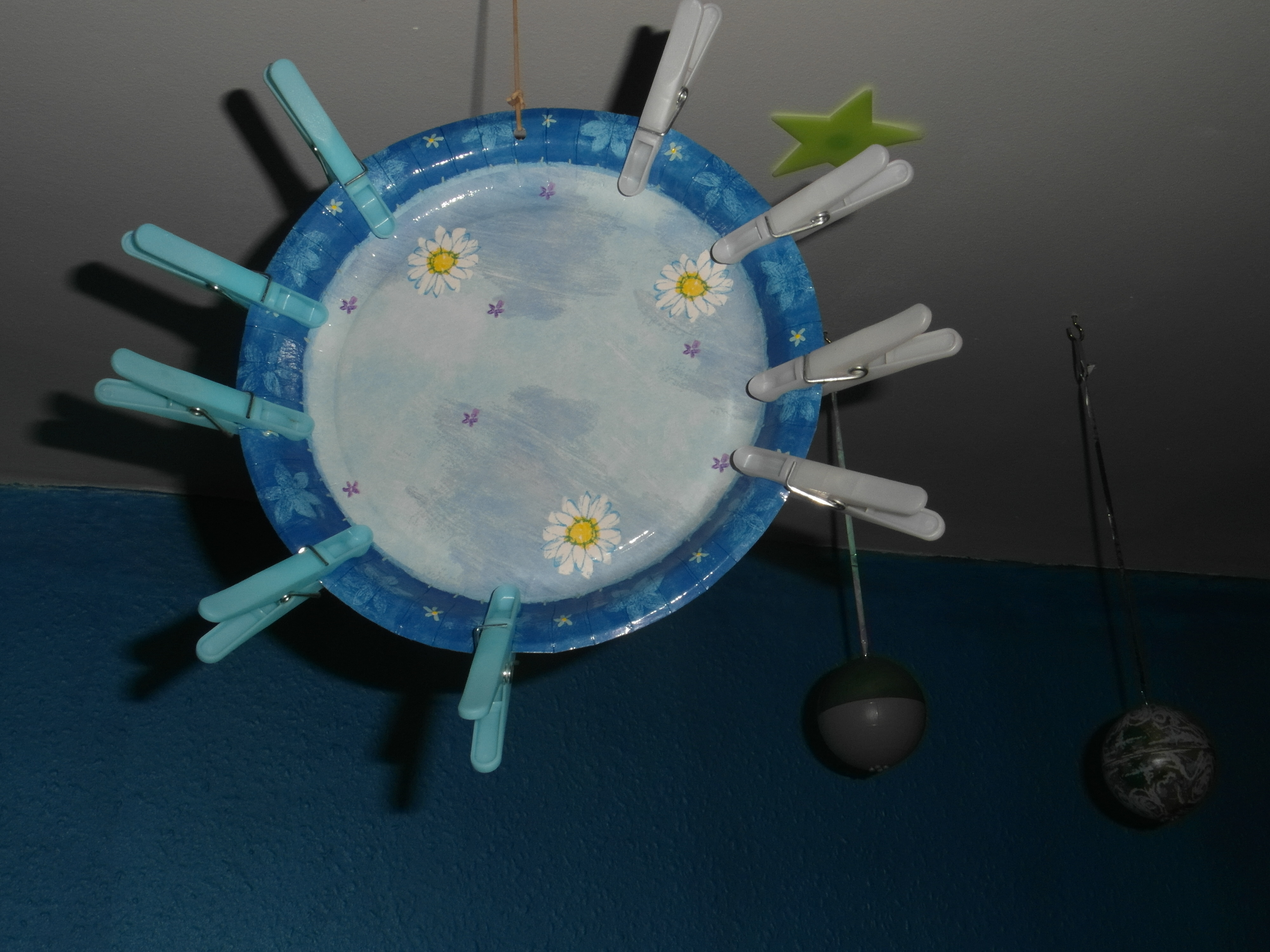
D suggested a number of games using everyday items – clothes pegs, marbles and paperclips – and explained how these would help build his finger strength.  She set him challenges and played the games with him, so that he could understand what was required and she could check that he was doing them correctly.  What impressed me the most was that D gauged accurately how many games to introduce and how long to play each one such that she didn’t overwhelm him with suggestions.  Playing these games at home several times a week will bring about improvement and I foresee a number of family challenges to see who can perform the best.

A paper plate sun with peg rays to attach every morning

A paper plate sun with peg rays to attach every morning

D also agreed that using a writing slope at school will make a massive difference to his writing ability.  As it is highly unlikely the school will have one lying around, the OT department will arrange to lend one to the school for 3 weeks, which will allow the teachers to assess the difference it makes to his work. This will be followed up by a written recommendation and a school visit, where D will be able to observe M in the classroom setting and see what else might be done to support M and help him achieve, before meeting with the SENCo and suggesting how some funding from their SEN budget will help.

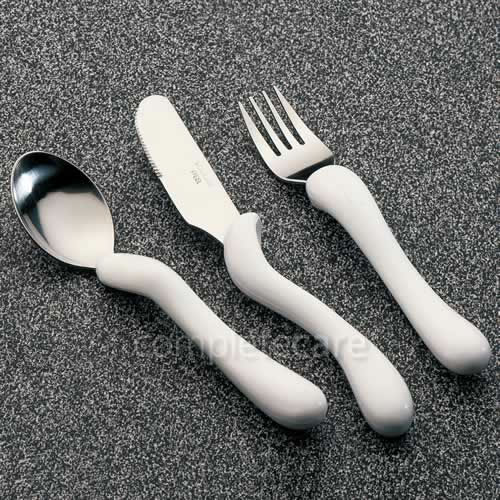
This school visit will then be followed up by a return appointment with M himself, whereby she can see if the daily activities she has suggested have helped and whether school have followed her recommendations and funded the special equipment he needs.  I have already invested in a set of “caring cutlery” to help him at meal-times:

Courtesy of completecareshop.co.uk

Courtesy of completecareshop.co.uk

Whilst we continue to struggle with his gastro health, it is a huge encouragement that there is something useful that we can actively do to improve M’s school-work and performance. He is a bright and articulate child and it will be both fascinating and exciting to see how things develop over the coming months.

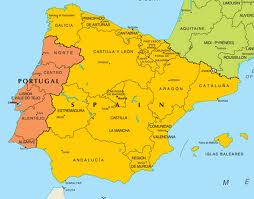
Viva Portugal – and our answer on a postcard!

Courtesy of mapsof.net

Courtesy of mapsof.net

Preparing for this summer’s holiday to Portugal went well as we completed the Pellet study with M and I finally answered the question of how to carry all of M’s medicines and foods without paying for an extra bag. So, all I needed to do in the last two days was pick up our holiday money, pack the suitcases and speak to GOSH about the test results from the abdominal x-ray.

Needless to say, the first two list items were quickly ticked off and I even managed to fill the extra suitcase for M without forgetting anything essential.  Tracking GOSH down and speaking to them sensibly took a little longer.  I was anxious to discuss the results of the Pellet Study and what the next step was before we went on holiday, especially given that M’s move up to his new school was imminent soon after our return.  The registrar I finally spoke to on the Friday morning had a real mix of news for me.

The good news was that the x-ray showed that M had passed most of the radiopaque markers – his x-ray was a mix of images 1 and 2 – which suggested that there was no real issue with his gut motility.  The bad news was, that despite 12 days on an increased level of Movicol, M was still heavily impacted. What wasn’t clear was whether we had ever successfully emptied his bowel or if he had become re-constipated during the 5 days he was not taking the Movicol during the study.

The next decision was not an easy one to make, especially with a week abroad on the horizon.  We had to continue with the Movicol, taking 4 sachets daily for the week we were away, which would hopefully keep things moving and empty his bowel out as was so desperately needed.  Both the registrar and I felt it was likely that the 4 sachets would be too much for M’s system, but we really had no other choice and reluctantly I agreed, with a follow up phone-call planned for the first Monday back home. Into the suitcase went the required sachets and extra packs of pull-ups to see us through the week.

Despite the challenges we knew this would bring, we were determined to enjoy the much needed break and the sun.  We set off with plenty of time to spare “just in case”, breezed through check-in and customs, survived the 2 hour wait to our flight and eventually landed safely in Faro.  An hour’s taxi ride to the resort, a quick late night tuna pasta dinner (courtesy of the supply suitcase) and we were into bed for a good night’s sleep before our holiday started properly.

SAM_1590  SAM_1591

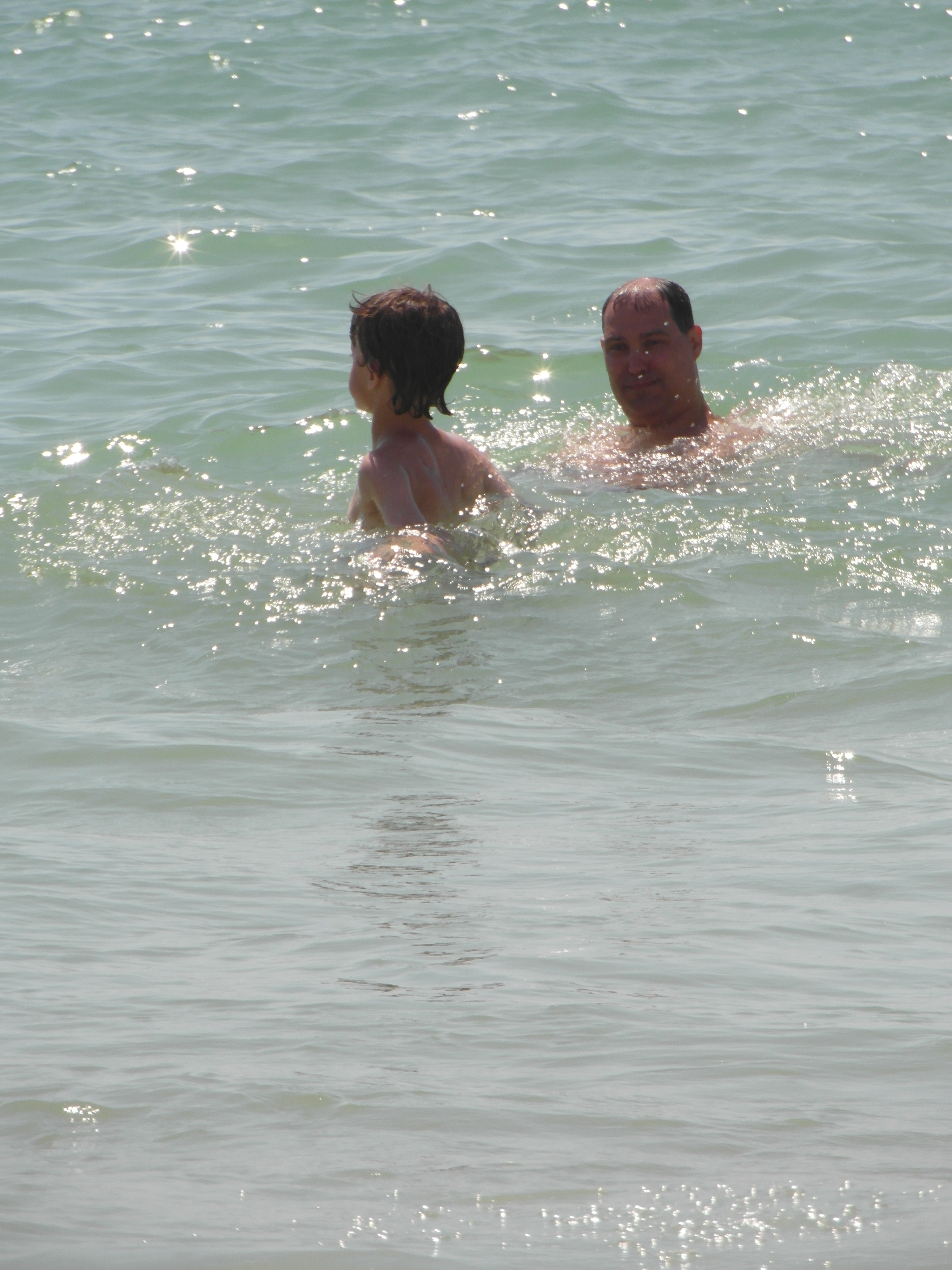
The week was amazing.  The kids loved every moment of both the beach and the pool and  we were all amazed at how much their confidence had grown in the last year.  M revelled in splashing about and jumping waves, which was something he wouldn’t do the first time we went just 2 years ago.  He was also brilliant at wearing a pull-up under his swimming trunks to avoid any unwanted problems in the water.  It was far more challenging to change him because of the combination of damp bodies, tight-fitting pull-ups and wet trunks, but we survived it.

He had his moments and we had a couple of major melt-downs as he let out his frustrations about his condition and all that was going on.  Unfortunately, Mike suffered the brunt of this as he’s not usually the one on-hand all day, but he survived it too. The upside is that it gives more ammunition and examples to pass on to the CAMHS team when we see them later this month to argue the case for M needing more support to cope with his emotional and psychological well-being.

M's trusty friend "Cat", came on holiday with us and the maids made M smile by dressing him in M's pjs

M’s trusty friend “Cat”, came on holiday with us and the maids made M smile by dressing him in M’s pjs

We even managed our meals.  This year we chose to eat breakfast and lunch in our apartment every day, rather than venture to the breakfast buffet provided at the hotel.  It was a difficult decision because both children love the opportunity to chose from the vast array of food available, but we knew that it would be a far too limited choice for M.  Instead we ate out every evening at a number of local restaurants along from the hotel.  One of the best things about eating out in Portugal is that it was surprisingly easy to accommodate M’s food restrictions.  His love for most things fish and seafood meant that we were able to order fresh fish that was cooked in olive oil with a side order of chips and he was satisfied.  We found that most of the restaurants were helpful in preparing prawns or fish without any sauces and we skipped dessert as none of us needed it.

As expected, the movicol made the week difficult, but it made a big difference to be dealing with all the stresses and strains in a sunnier climate.  We all needed the break from the daily grind at home and I came back feeling refreshed and ready to tackle the challenges of the new term.

One of the many sandcastle creations M built during the week

One of the many sandcastle creations M built during the week

With a little help from Easyjet

Courtesy of bankingtech.com

Courtesy of bankingtech.com

This summer we travelled once again to Portugal for a week of sun, sand and sangria.  On our 2 previous holidays, Mum and I filled our suitcases, not just with the necessary sun-cream, hats, swimwear and shorts, but also with a supply of M-friendly foods to get us through the week relatively unscathed.  I’ve previously always taken a more relaxed stance to M’s diet whilst away from home as it’s a great deal harder to ensure that his diet is as strictly adhered to as it is at home and we have coped with the resulting consequences, accepting it as our decision.

However, we decided that this year had to be different.  M’s struggles over the last few months with his health have been well-documented on my blog and the accompanying emotional frustrations and challenging behaviour meant that I felt we needed to endeavour to follow his diet as much as we humanly could.  This, of course, meant that we needed to take a lot more M-friendly foods with us – free-from spread, rice milk, cereal, bread, rice cakes and snacks to name but a few.

This increased amount of food, plus all the additional medicines M is now taking – he has increased to 7 medicines daily compared to last year’s 4 and the previous year’s 0 – meant that I needed to find an alternative means of carrying it all as otherwise I’d be leaving some essential clothes behind.

Fortunately, a tip from the “Special Diets” thread on the Dibb website suggested that it might be possible to carry all of M’s medical supplies including the food, as additional hand or hold luggage at no additional cost.  I immediately contacted our airline, Easyjet, to see what advice they could give me.

Frustratingly, it wasn’t as simple as phoning a helpline, but rather I had to go through the rather convoluted route of e-mailing their customer services and waiting for a reply.  However, the small amount of effort required was well worth it as I received the following confirmation from them:

Easyjet would like to advise you that if you need to travel with any kind of medication or medical equipment you can do so, if you provide us with a doctor’s letter at the check-in desk, confirming the name of the passenger who needs them, the amount and names of each medication, doctor’s signature and stamp. You will be allowed to travel with the medication in a separate extra piece of hand or hold luggage without any extra charge. Please remember that in the extra piece of luggage you will be allowed to put only the medical stuff and nothing else.

Please also advise our Special Assistance Department about your need, so they will add this additional information to your booking to make the airport staff aware of your needs.
You can contact them by calling on a free of charge from landline number: 0800 998 1130.

So, I did as I was told and contacted the Special Assistance department.  They put a note onto M’s flight details to advise that we would be travelling with an additional bag free of charge and reiterated that I needed a signed medical note detailing all the medicine and foods we needed to carry with us and how much was needed each day.  I then spoke to our GP, who agreed to list out everything we might possibly need during our holiday.  The letter was duly written, signed and paid for and we were all set for the flight.

Courtesy of telegraph.co.uk

Courtesy of telegraph.co.uk

The ease of being able to take a dedicated bag just for M’s medicines and foods was a real godsend and I was impressed at how easy it was to successfully check-in with not a hassle in sight.  There was no question about taking the additional piece of hold luggage through and even the return journey was simple, though I would recommend also having a copy of the actual prescription with you instead of just the medical letter if at all possible.  Travelling with small children is difficult at the best of times and when you add medical needs into the mix, it becomes even more of a challenge, but Easyjet lived up to its name and made our life just that little bit easier.

The Pellet Study

Courtesy of sfia.org

Courtesy of sfia.org

Sometimes having a child with a chronic illness is like becoming part of a secret society.  You suddenly become well versed in a world of specialised language, medical tests and medicines that you never knew existed in your life pre-diagnosis.  Having spent a long time researching EGID both before and after M’s diagnosis, I thought I had come across most things, even if I had no idea what half of them were and whether they’d ever be relevant to M, but the turmoil of the last couple of months and the subsequent plan of action put into place with GOSH was to show me just how wrong I was.

As I agreed with the registrar over the phone about the next steps we needed to take following M’s abdominal x-ray, the words “pellet study” and “slow transit colon” were thrown in my direction.  The brief explanation given was probably not enough to satisfy my inner control freak, who needs to know everything and understand the whys and the wherefores, but I figured that I could boost my understanding by a quick further investigation with Dr Google.  Sadly, I hadn’t anticipated just how difficult I would find it to get the details and comprehension that I needed from that source.

Courtesy of warriorfitness.org

Courtesy of warriorfitness.org

This time round however, I knew where to turn.  Within minutes of getting off the phone to GOSH and my failed attempts to uncover more useful information on the internet, I hopped across from Google to Facebook and posted a question on the FABED forum.  I may have mentioned just once or twice before how wonderfully knowledgeable the wonderful FABED parents are and this time was to prove no exception.  A couple of hours after my original posting, several Mums had offered their support and advice and one even offered to phone me and talk it through.

Michelle, if you’re reading this, you were an absolute life-saver with that offer and that phone-call.  I really can’t thank you enough.

I now had a better understanding of what the pellet study was, what they were looking for and some key pointers to discuss with the doctors before we took the test any further.  Most importantly, I had some affirmation that my belief that waiting until October to perform the study, as was originally proposed, was just too long, especially for my desperately unhappy lad and I felt confident that I could go back to GOSH and argue my case.

As it happens, this turned out to be unnecessary as my follow-up call after the Movicol introduction, saw me talking to a new registrar, who agreed that we needed to be testing M now to understand what was going on with him and to make sure we were doing all that we could to help him back to the road of recovery.  However, I was able to ask my questions, understand not only what they were looking for, but what they would do with their findings and know where we were headed over the next few months.

The pellet study looks at how quickly food moves through the intestinal tract and whether there are any issues with a slow transit that could have led to M’s chronic constipation.  Over 3 days, M needed to take a series of “pellets”, which are capsules containing mildly radioactive and different shaped markers.  The pellets are taken at the same time on 3 consecutive days and then on the 4th day, he had another abdominal x-ray.  The images below show how the x-rays could turn out:

As you can see, image 1 shows a person with normal transit, who would have passed all or most of the markers out of their body by the time the x-ray is taken.  Number 2 shows someone with a slow-transit intestine, which means that the body is failing to move food through the intestinal tract as it should, which can lead to constipation.  The final image shows that whilst the transition through the intestines has worked as it should, a blockage at some point has prevented the markers being passed out as they should.

If M’s x-ray turns out to be like image number 1, then we are back to the drawing board to understand what’s going on in his insides, but a normal transition is great news.  Number 2 means the introduction of medicine number 8, a stimulant laxative which would effectively irritate the intestines into reacting as they should and push the food eaten along the intestinal tract.  Number 3 would be an indication that there is a blockage of some description at a point in the bowel and carries the likelihood for investigative surgery to find out what that blockage is.  None of them is an ideal answer, but at least we feel that we’re being proactive in trying to find out exactly what’s going on.

Answers

So, the million dollar question has to be – Which x-ray image will M have?  Answers on a postcard please…

This summer

This summer has not been the sunny, fun-filled and relaxing one we were hoping for.  This summer has thrown up a few unexpected bumps in the road which we’ve had to negotiate whilst trying to hang on to our sanity.  This summer has had its highs and its lows, but we’ve got there in the end and have lived to tell the tale, just.

Courtesy of i360life.com

Courtesy of i360life.com

I haven’t been able to share the truth about this summer before now because this summer has been incredibly hard on M.  It is only now that we are through the worst and have a plan of action, that I feel able to talk about it.  I have made numerous phone-calls to GOSH to try and reach a place that has left us all feeling reassured and relatively happy.

At the beginning of July, M had an abdominal x-ray as well as starting on his new medicine, Nalcrom, but we had seen no improvement for him.  To my complete surprise, the x-ray showed that M was chronically constipated and impacted all the way from his colon to his rectum.  The first thing to tackle was clearing his system out, thereby giving him a fighting chance to recover the toileting improvements that he’d experienced at the start of the year.

This meant the return of our old friend, Movicol, a softening laxative that enables the body to better pass the stools without too much pain.  We had used it when G was struggling with her own gastro difficulties, but the intervening 3 or 4 years had rendered my memory somewhat hazy as to how to manage this medicine.  However, for once I felt confident that I knew what I was dealing with.

The plan was to embark on a routine that would see M taking an increasing dose of Movicol to enable the fecal impaction to be cleared from his body.  Once this happened, he would need to continue on a maintenance level to keep his system moving until our next appointment at GOSH in October. Whilst this may sound easy enough, at the maximum level we were asking M to drink an extra 500mls of medicine a day and one that he hated taking and it was a struggle every step of the way.

Courtesy of myblogz.us

Courtesy of myblogz.us

The downside was that, whilst on the increased dosage, M would suffer from even more chronic diarrhoea until the blockage was out and I knew that he would really struggle with this proposal.  Just imagine the horror of being an active 7 year-old boy with minimal control of your bowels and a fear that someone might find out and make fun of you.

On the flipside, the advantage of being in the summer holidays was that we could tackle the problem thoroughly and hopefully resolve it fully before M starts at his new school in September.  I suggested to M that for the relatively short time he was on the medicine he returned to wearing a pull-up.  This would solve any embarrassing incidents whilst we were out and about during the summer and would give him the reassurance that other people wouldn’t know when he soiled himself.  He reluctantly agreed, being obviously torn between the nightmare of wearing pull-ups as a 7 year old and that of being unable to control his bowel when in public.

The first 14 days were hell, but the medicine did its thing and progress seemed to have been made.  He struggled to cope and his fears of discovery and frustrations about his toileting spilled over into his day-to-day behaviour and those of us closest, Mike, G and me, suffered the consequences.  He and I spent time together, seeing who could shout out louder and rant and rave more about how unfair the situation was.  M needed to scream out the tension because it was unfair. Unfair that my beautiful, bright 7 year old was once again subject to the fraility of his body and couldn’t be like all of his friends.  Unfair that I had to hold him sobbing once more because he just couldn’t understand why all this was happening to him and didn’t know how to cope. Unfair that the one person in the world who should be able to make it all better (me), couldn’t guarantee that there was an end in sight. His one over-riding fear was that he would need to continue to wear the pull-ups when he went back to school.  The hardest thing for me was not being able to reassure him 100% that that wouldn’t be the case.  We hope it won’t be for his sake, but as I’ve quickly learned, there are no guarantees especially when it comes to this condition.

Unfortunately, despite the promising start, we discovered blood in a number of his stools as well as mucous, both of which are an indicator of intestinal damage.  Having a plan in place, even if contains new tests and possibly more medicines, means that I know we will get to the point of some answers, although they might not be as conclusive as we would want.