Tag Archives: support

“Nothing can hold us back”

1526106_690529504302729_1628131005_n

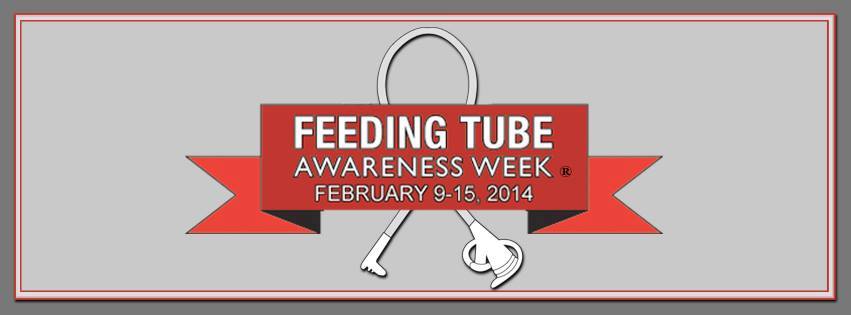
This week is “Feeding Tube Awareness Week” and a great opportunity to raise awareness and garner support for those brave children and young people who are currently living with a tube to provide essential nutrition.  Their motto for the week is “Nothing can hold us back” and for many a feeding tube allows them to take precious steps forward.  There are a number of different feeding tubes that can be used: NG-tubes, NJ-tubes and TPN to name just a few, and you can find out more information about all of these from The Feeding Tube Awareness Foundation here.  The reasons for a feeding tube are even more varied then the number of tubes available and can include premature birth, EGID, Cerebral Palsy and over 200 other conditions and diseases.

As well as the initial trauma of facing the decision to start your child on tube-feeding and the challenge of placing the tube, families then have to learn all about giving feeds, looking after the tubes, replacing them when necessary and how to deal with the little complications that can make a big difference.  The prospect of tube-feeding can be a frightening one, but these children are able to go to school, play and participate in after-school activities alongside their peers with the right support given by trained medical staff, friends and family members.

M

Ms first tube

Whilst our journey so far with M has been tough and continues to throw new challenges at us from time to time, this is one thing that so far we have not had to face.  M has had feeding tubes twice – once when he was first born so prematurely at 33 weeks and secondly, for just a week back in October, when he was admitted to GOSH.  As I recounted then, it took a while for my brave boy to become accustomed to it and to stop worrying that it might fall out at any moment, but he did.  We know that we are extremely lucky as there are a number of EGID children out there who are dependent on a feeding tube to give them the daily nutrition they need.

October 2013 and another tube

October 2013 and another tube

The decision to start your child on such a path is a difficult one for any parent to make and there are no guarantees as to just how long that tube might be in place. At the moment some of our wonderful FABED friends are surviving life with a feeding tube, some have finally managed to say goodbye to that tube and others are contemplating whether a tube may be the next step for their child.  To all those families, this week is for you and about you and the support and understanding you all deserve.

You can read more first-hand experiences here:

Eating my words

For some time now, we’ve been seeking some emotional support for M as he struggles to come to terms with his condition and the impact of a restricted diet and the associated health issues on his day-to-day living.  As the result of a GOSH recommendation, we sought a referral to our local CAMHS service to see if they could offer any counselling to M.  We also hoped that we would have access to some family support as we all find it difficult at times, G especially, as she deals with her own reactions as well as M’s mood-swings.

Courtesy of connectsociety.org

Courtesy of connectsociety.org

Sadly, our experience of CAMHS has been less than favourable.  The worker we saw had not read M’s notes, didn’t understand why we had gone to GOSH for treatment and had no idea that he had been diagnosed with a chronic bowel condition.  She talked about using sticker charts to encourage him to use the toilet and failed to recognise that, in M’s case, it wasn’t that he wouldn’t use the toilet, but rather that he couldn’t.  At our last meeting, Mike and I sat in disbelief for nearly an hour and a half whilst she repeated her theory that a reward system would be the answer to all our woes; and our jaws hit the ground when our repeated comments about his “diagnosed chronic bowel condition” finally sunk in and she pondered whether maybe she would benefit from taking a look at the letters written by his consultant from GOSH.

ticklistIn the letter that followed, she discharged him from her care and suggested that we instead got a referral to our local NHS Bowel and Bladder clinic for their input.  I was unsurprisingly sceptical, having spent some time at one when G was suffering from her own bowel problems a few years ago, and feared that the ubiquitous zticker chart would form the crux of their treatment plan.  However, I have long since come to the conclusion that the only way to get the help that we need, is to agree to whatever steps the health professional concerned recommends and tick those boxes to prove that we really are taking the situation seriously.

And so this past week saw us attending the local Continence clinic, which runs once a month in our GP’s surgery.  I was brutally honest with the nurse we met with, T, telling her within minutes of sitting down that I was not expecting much to come from our meeting.  I apologised for my negative attitude, but admitted that I felt I needed to be honest, so that she understood the position we were starting from.  At this point, my expectations were low – and about to be blown out of the water!

T was not phased by my comment, but instead admitted that she too was uncertain whether she could help M or not, but having read his notes thoroughly and all the letters from GOSH, she was keen to offer whatever help and support she could.  I knew at this point, that this meeting was going to be a very different one from that I had been anticipating and the following 45 minutes proved this to be very much the case.  We talked at length about M’s history, his diagnosis, the experiences over the last 9 months and the problems we have recently faced.

She expressed no surprise that M has been struggling emotionally to come to terms with his life as it now is and discussed with me about how isolated M must be feeling.  She pointed me back in the direction of the wonderful charity, Eric, which offers support and advice about childhood continence issues.  Not only do they have a telephone helpline manned by knowledgeable and sympathetic volunteers, but there is also an area specifically designed to enable children to discuss their toileting problems with others in the same situation should they want.  We had made extensive use of their website when struggling with G’s problems, though we had never thought to look at the children’s area with either G or M.

Most importantly, she suggested a change to M’s prescribed laxatives, but was insistent that I discussed her proposals with our gastro team at GOSH, who fortunately we were seeing the following day.  My biggest fear was that she would be as reluctant as our local hospital to get involved in M’s care and would not be willing to discuss him with GOSH – nothing could be further from the truth.  T reassured me that she would work alongside GOSH, and us, to make sure that M is getting the very best care and would help us make those little adjustments to his medicines that feel so complicated when I’m discussing them over the phone to London.

We still have an initial assessment with our local paediatric team in place for February, and it would be fantastic to have them on board too, but I no longer feel so dependent on that relationship working out this time round.  We have found instead, an even more local solution to our need for support and I have never been so glad to be left eating my words and being proved wrong.

Feeling normal

Courtesy of evotivemarketing.com

Courtesy of evotivemarketing.com

One of the hardest parts of M’s EGID journey is that he no longer feels like a normal child and is massively aware that he stands out from the crowd.  Every day is filled with numerous medicines to be taken, carefully planned meals, aches, pains and a constant awareness of needing to make sure he gets to the toilet on time.  As I’ve alluded to before, M is incredibly self-conscious about his condition and spends a great deal of time worrying that he will be picked on or bullied because of his illness and restricted diet.  He has a tendency to isolate himself in group situations with his peers, though he will spend hours chatting to any available adult who’s prepared to listen.

We refuse to let his chronic illness get in the way of his life any more than is necessary, so he goes to school, takes part in after-school clubs and has friends home for tea just like all his friends.  However, every new thing he participates in has to be carefully assessed and I spend a lot of time talking to teachers and organisers about M, his condition and the consequences they might have to deal with.  We have been lucky that we have never come across anyone who isn’t prepared to work with M’s needs and accommodate them so that he can take part.

fish

A recent week has been a perfect example of how wonderful it can be when M can feel like part of the crowd and not stand out for being so different.

Both G and M have been attending our local Stagecoach theatre school for a number of years and enjoy performing.  They were lucky enough to be part of the 25th Anniversary celebrations for Stagecoach back in March and took part in a massive performance of CATS at the Birmingham Indoor Arena.  We are also avid theatre-goers and love nothing more than seeing a musical on stage.  When I heard that the Youth Music Theatre Academy (YMTA) were running a drama workshop for a week this summer and that they were going to be learning and performing routines from a hit West-end musical, I knew I had to sign the 2 of them up.

G and M have been excited about this opportunity for weeks and, since the start of the summer holidays, have been counting down the days until the course began.  By some strange quirk of fate, Mike and I had booked tickets to take them to see this show on tour the weekend before the workshop began, long before we even knew about the course and it was the perfect introduction to the week.  What made the performance even more special was that some of the cast members were coming out to teach on the course during the week and we spent the interval musing over who the kids might get to meet.

The only grey cloud on the horizon was the difficult time M was going through with his health in the lead up to the course.  By the Thursday of the week before, it was evident that he wasn’t going to find the week easy and I needed to be on site with him for those “just in case” moments that might happen.  Fortunately, Jo (the course organiser) had no issue with my presence and welcomed me and M on board with an excitement that meant a lot.  When you have a child who’s chronically ill, then it’s these little acts of inclusion that make all the difference.

I spent the week sitting quietly with my trusty laptop, tablet, mobile phone and books in a corner tucked away from view, armed with snacks, coffee and anything and everything M might need.  The children knew I was there as a security blanket for them both, but I wasn’t an ever-present reminder that there was anything wrong, especially to those who were meeting M for the first time.  He sang, danced and acted his heart out, learning new routines, perfecting familiar songs and most of all, having an amazing and fun time.  We managed his medicine and his toileting with the minimum of fuss and I doubt that any of the other children really realised that there was anything different about him.

Courtesy of www.oscars.org

YMTA – this Oscar’s for you!

The Friday performance to the parents was fantastic and a real testament to the talents of those who had happily given of their time that week to teach the youngsters some new skills.  We were amazed by how much had been achieved in such a short amount of time. My thanks have to go to Jo, Rosie, Joe, Holly and Zach, who didn’t let M’s EGID phase them, but supported and encouraged him every step of the way.  He had an amazing time and can’t wait for the next workshop to be arranged!  Best of all, M had a week where his health didn’t stop him from taking part and he was able to feel and be as normal as any other child who was there.