Tag Archives: Dyslexia

Proud Mummy moments

A little while ago, I wrote a post about everyone needing a hero and pondered on who M and G would adopt as their heroes as they got older.  This week I’m adding to my choice of heroes and am including my children at the top of my list.

In their own ways, they have been brilliant over the last few weeks and I am so proud of them both.  This post is a tribute to them and their awesomeness and will act as a good reminder to me on those occasions when they’re pushing my patience to its very limits.

Pictures July 06 019

Marvellous M

This week I’ve had M’s school report and Stagecoach report to enjoy.  I was equally thrilled with both.  I expected the Stagecoach report to be glowing, after all, as his drama teacher stated, “M was born to perform on the stage”, but I was a little more apprehensive about his school report.  I know his behaviour is impeccable there, but academically this has been a tough year.  The last 5 weeks, since we got the dyspraxia/dyslexia diagnosis, have seen a real turn-around in his attitude to his school-work.  All the aids we’ve put into place have seen him make huge strides forward and he’s much more confident in how well he can do.

To my delight, we also finally got to see the short charity film that M took part in about 6 weeks ago.  It focussed on Domestic violence and is hard-hitting though not overly graphic.  He performed well and enjoyed every moment of the filming.

He’s also understood that G has had to focus on her own school-work (see more details below) and has given her space to just sit down and get on with it.  I was immensely proud of his attitude on the last night of working on it, when he had to entertain himself for the best part of 2 hours as G and I reviewed, finalised and polished her final effort.  I heard not a word of complaint from him and he regularly checked in with me to make sure I knew where he was and what he was up to.

However, it’s not just his reports that have made him my hero this week.  It has been his approach and stoicism to taking his medicine.  As I’ve mentioned several times, his recent flare-up has been hard and has really knocked his faith that things would improve.  The revolution of Grandma’s jam, as mentioned in a previous post, has helped enormously when it comes to his new medicine.

To put it simply, he’s taking it.  Despite feeling poorly, hating the taste and with a depleted appetite, M is taking all his medicines every day without argument, or at least with the minimum of fuss, because he knows he needs to and there is still a small spark of hope that this will help hiding somewhere inside.

P1000101

Gorgeous G

I’ve also had the pleasure of G’s music, school and Stagecoach reports to read.  Each report commented on her hard work, positive attitude and determination to give 100% to every new task set.  Despite her nerves, she has performed solos on her clarinet at school and in the end of term performance for Stagecoach and really gave her all.  She listens well, takes instructions and applies them to the task in hand.  She doesn’t have M’s academic struggles to cope with, but she does have to deal with me having to give attention to M at home when they’re doing their homework and she’s worked hard to complete as much of hers on her own as she can.

Mr.G, G’s teacher this year, praised her for being “always cheerful, courteous, co-operative and helpful…very reliable and always willing to help with a smile”; whilst her Head teacher commented that it was an “impressive report” and her continued efforts would see her having a “very successful Year 5.”

G has been working incredibly hard over the last 5 weeks on a project for school, where she had to choose her own topic and complete independent study and research for it.  She decided to write about Canada and has spent her time reading reference books, researching on the internet and talking not only to Mike, but her cousins and grandparents too.  The piece of work she has produced is amazing and she is rightly proud of it.  She finished it by preparing a powerpoint presentation and photo montage to show in class, which was a learning experience for us both as it’s not a piece of software I’ve particularly used before.

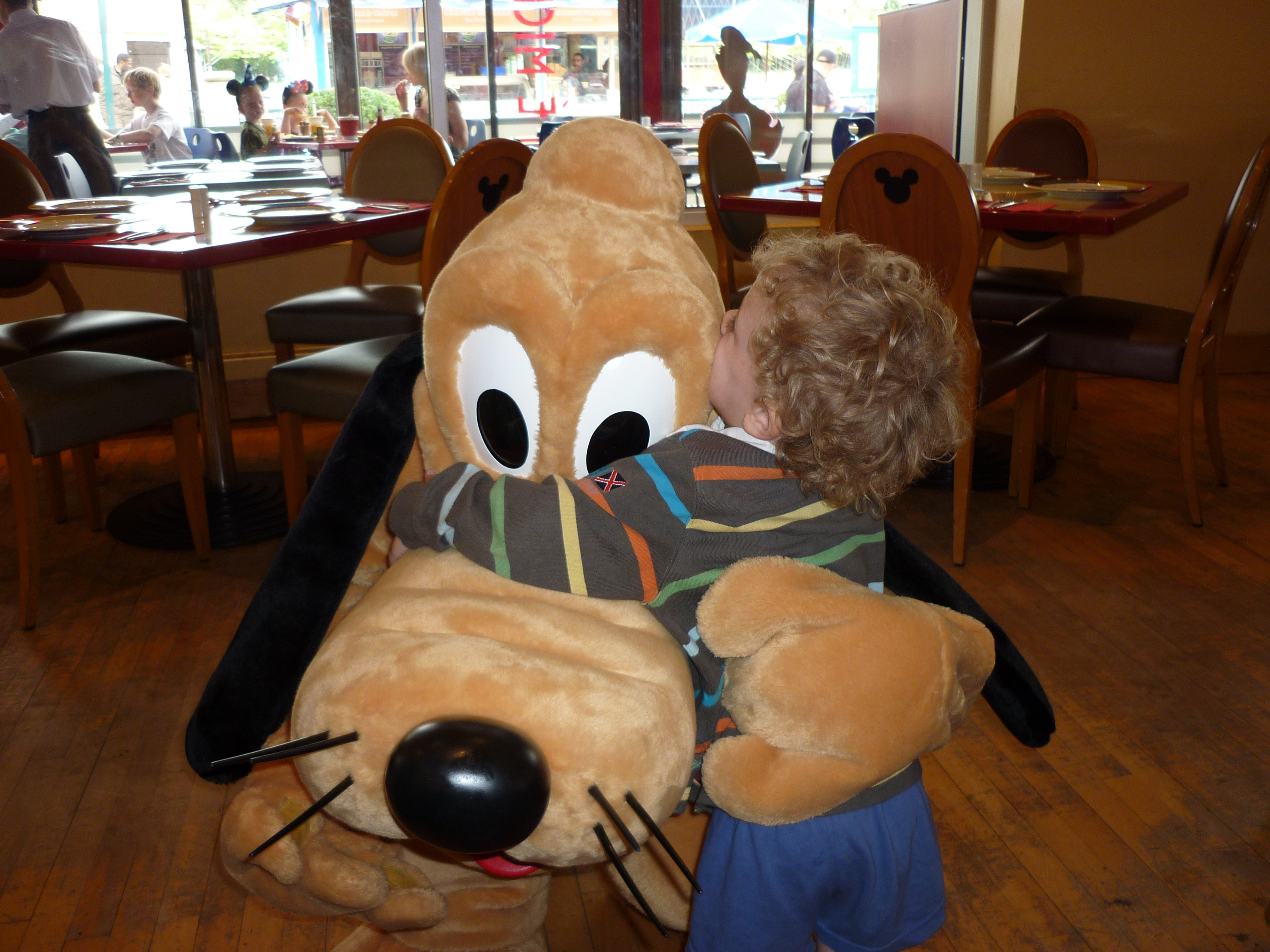
Most importantly, despite her disagreements with M and the frequent sibling wars we have in the house, G has also been aware of M’s struggles with his new medicine and has encouraged and cheered him on every step of the way. She has given him massive support and has managed to coax him to take “just one more mouthful” when he’s found it especially difficult and my powers of persuasion are failing.  M is very lucky to have a big sister who will hold his hand and let him cuddle her teddy bear when times are rough.
P1000073

Sometimes my children are a challenge and I find myself rolling my eyes as I pull them apart for what feels like the twentieth time that day.  Sometimes I want to disappear from their world and just go back to being “me” – not head chef, not referee, not problem-solver extraordinaire.  Today, I’m happy and proud to be Mummy and to shout out loud about all their achievements.

There's nothing like team-work!

There’s nothing like team-work!

Where there’s hope

“Where there’s hope, there’s life.  It fills us with fresh courage and makes us strong again”

– Anne Frank, The Diary of a Young Girl

This has been a quote that has resonated with me over the last week. As I wrote in my last blog, we have been struggling with a relapse that has left us all feeling despair and wondering what our next steps were destined to be.  Dealing with IT changes and financial year-ends at work, as well as M’s challenging behaviour at home, has left me feeling battered, bruised and emotionally fragile.

In the midst of the week, I desperately needed a little hope to remind me that there is more to life than the rubbish I’ve been dealing with recently and it came on Thursday, from what was, to me, a surprising source.

school

M is fast-approaching the end of his final year in Infants and will be moving up to our local Junior school in September.  G has been there since Christmas and has really flourished and we felt that it was the right place for M to continue his education.  We haven’t had the support we had hoped for or that we are entitled to from M’s current school and I have been concerned as to whether things would improve when he made the move.

On Thursday, I arranged a meeting with the Head teacher, SENCo (Special Educational Needs Co-ordinator) and class teacher to discuss all of M’s needs from the EGID to the newly diagnosed dyslexia and dyspraxia.  I spent considerable time reading around what we were entitled to in terms of support for all of these issues, spoke to our local authority about whether we could hope for any help from them and what exact questions I needed to be asking to make sure my boy gets the help he so desperately needs in the classroom setting.

meeting

I went to the meeting with the lowest of expectations as I know how hard the world of SEN can be from following the experiences of others and talking to those in the know, but I was quickly proved wrong.  The staff members were interested in M, asked questions along the way and made suggestions of how best to help him within the classroom.  They made copious notes about what small things we have already found help him and where we need to make improvements to support him more.

The SENCo had already put a phone-call in to his current school to ask for information from them about what procedures, if any, they’ve put in place for him and had read through the report from the Dyslexia Centre which contained the Educational Psychologist’s recommendations for help.  She checked whether we had made the referral to Occupational Therapy, which our GP did during the week, as she was happy to do that for us, but felt it would be quicker coming from the GP than from school.

Even before the OT referral eventually happens, the school are happy to support his dyslexia and dyspraxia by:

  • the use of a writing slope (provided by us!) in the classroom
  • the use of triangular pencils and pencil grips (again from us) in the classroom
  • photocopying or printing worksheets onto yellow paper as this helps M to see writing clearer
  • the use of lined, yellow paper when he’s writing or doing spelling tests, where practical
  • the use of a stress ball to warm his right hand before he starts writing
  • encouraging him to use a yellow overlay when he’s reading as this helps him track the words

Then we got to the biggie, the matter of M’s EGID, multiple food allergies and his current frustrations and emotional issues surrounding it.  I printed out a letter for the school, which I sourced from FABED and which I could personalise to highlight M’s exact condition, allergies, medicines and reactions.  Both his class teacher and the SENCo gave the document a quick scan and then listened intently as I explained the finer details of what this condition entails.

One of my biggest concerns was how they would handle it if M experienced a soiling accident at school.  We have been fortunate that over the last 3 years of his education, this has happened only a handful of times, but given his current relapse and all the anxieties of moving up to a new school, I wanted to pre-warn them that this could be an issue.  They instantly agreed that there would be a need for additional support for M in case this happened and wanted to discuss it further with the Head, particularly as they don’t currently have a shower or suitable facilities to make changing him easy.  At no point did I feel that this was an inconvenience and whilst I don’t expect miracles, or funding, to happen overnight, I am confident that they will find a way to make sure his needs are met.

ticklist

I had discussed the meeting with M the night before as I felt it important that he understood that the school wanted to help him and also to gain an insight into whether there was anything he was particularly worried about regarding the move.  M has had some issues in building friendships and he was worried that the other children in his class would ask him a lot of questions and then be mean to him because of the food allergies.  He is overly sensitive and as emotionally fragile as me at the moment and this was obviously playing on his mind a lot.

I raised M’s concerns and was thrilled to hear his class teacher instantly suggest that they discuss his food allergies as part of the circle time during the first week of term.  They will be talking about all the children and asking them to share something about themselves, so will be a perfect opportunity for M’s allergies to become known in a non-confrontational way.  M can choose to have as much involvement in that discussion as he wants and will help him understand what the other children are told about him.

The staff were concerned and interested enough to reassure me that they would do everything they could to support M in school.  They will be working on a health care plan as well as some short-term targets that will cover all of his health issues and educational needs.  They will ensure that all adults who come into the school, and not just those dealing directly with M, are made aware of his multiple allergies and that his photo, name and list of those allergies will be displayed in the staff-room.  Most importantly, they will maintain a strong communication link between us and them, to make sure that any problems that arise either from their point of view, or from home, are dealt with quickly and not left to develop into something worse.

hope

My difficult week has ended with some hope that, whilst I can’t control M’s health, we will be able to influence his education and that hope really has given me some courage and has renewed my belief that we are strong enough to walk this path.

Parent Power

I don’t know why anything surprises me any more when it comes to dealing with our local authority or the NHS or those involved in M’s education or, indeed, any combination of the three, but yet again, I have been amazed and astounded to find that the best way to get support for him is for us to take the initiative and forge the way, showing the professionals the best and most efficient way to get the job done.

support

We first discovered the power we wielded as parents approximately 12 months ago, when we came to the conclusion that M needed some speech and therapy help.  Actually, that’s not exactly true.  We first discovered it when we insisted on following our instincts and getting the referral to GOSH, but it would be accurate to say we were reminded of this yet again a year ago.  M was a late developer when it came to his speech and for a long time was extremely difficult to understand.  The only people who could understand what M was trying to communicate was G and me, which led to frustration all round as I was continually having to interpret for him and he hated the fact that nobody understood what he was trying to say.

Two things happened last summer that made us decide that we finally needed to address the issue.  First of all, M failed his phonics testing at school as his pronunciation suggested that he didn’t know his phonics.  His teacher hadn’t wanted to raise his speech as an issue with us before because of all the other health worries we were dealing with, but when Mike expressed his concerns with her, she was quick to concur.  Despite our requests, we were told that there was nothing that the school could do to refer us for speech and language therapy and so we needed to see what, if anything, we could do ourselves.

The second was during a visit to our local National Trust property for a fun day out.  G and M befriended another little boy and started playing quoits with him and his father.  When the father asked M to repeat for the third time how old he was, “six”, and then turned to G to seek confirmation of M’s age, I could see the frustration reflected on M’s face and determined then and there that we had no other choice.

speeh

At that time, I thought that the only way forward was for us to pay for private speech therapy for M and so set Mike the task of speaking to a couple of local speech therapists about starting the process and seeing if they could help M or not.  Within minutes of his first conversation, Mike was told something startling.  Not only could M’s speech problem be identified – he pronounced his sounds through his nose, known as “nasal fricative” pronunciation – but there was definitely something a therapist could do to help and, what was more, Mike and I could complete a parent referral on the NHS for treatment.

We filled the forms, returned them to our local health authority and waited for the assessment date, which was scheduled for about 6 weeks later.  The assessment completed, the therapist agreed that he should receive therapy within the school setting and 3 months later, M started 12 weeks of SaLT (Speech and Language Therapy) 2-3 times a week at school, all courtesy of the NHS.  If we had listened to the advice of M’s school, we would have paid for the privilege of the therapy that M was entitled to and that has changed his speech and his confidence beyond recognition.

Now, a year on, we are again in a position where we could have ended up paying privately or waiting an inordinate amount of time for something M is entitled to receive.  One of the recommendations made following M’s diagnosis with dyslexia and dyspraxia is that he receives Occupational Therapy (OT) to help develop his motor skills and his muscle strength, which, in turn, will improve his handwriting.  The Dyslexia Centre gave us details of local, private OTs who would be able to provide M with the therapy he needs to see him develop.

OT

I was told by another Mum, who’s child receives OT support through our local authority, that the waiting list for NHS-provided OT is in the region of 8-9 months, which is a long time to wait for something that could make a significant difference to M right now.  It was here that I hit the next wall of confusion.  I was advised to ask our GP to refer him, but she informed me that the only way to refer M for local OT was through his school.  Now, given that M’s school hadn’t identified there even being a problem academically and were surprised that we had taken the decision to have him assessed for dyslexia and dyspraxia, I had no confidence whatsoever that we would get a referral from them, particularly after the whole speech therapy debacle.

So, once again, Mike took to the phone and made some strategic phone-calls.  His first point of call recommended calling our local cottage hospital as it provides physiotherapy and OT for the community. One quick phone-call to there and we had an answer.  We needed to print out a copy of M’s report from the Dyslexia Centre which details the benefits of OT to him, write a quick covering letter and send it directly to the Physio department at the hospital, whereupon they would review it and let us know.

Today, this plan changed again.  The Physio department called me to ask why we had sent them the report.  I explained the advice given and she was stumped.  They don’t work in OT with children at the hospital and so advised that I called Children’s services at the local authority or alternatively the nearby Children’s Hospital.

You can probably guess where I’m going with this, but no sooner had I called Children’s Services, than I was advised that OT was run out of a different location and I needed to contact them direct.  I have just spoken to a wonderfully helpful lady from Community Children’s Services, who has told me I need to go to either the school or the GP to get the OT referral M needs!  Back to square one.

square1

Don’t get me wrong, I’m a big fan of the NHS and am impressed by the range of services and support they are able to provide, free of charge, to so many people, but once again, the link between NHS, the local authority and the school is an inefficient one.  Over the course of the last week, I have gone full circle and am now back to where I started without making any discernible steps forward.  However, I am now armed with the advice that I need to get the referral made and a name for the GP to send it to.  When the lead-in time for much needed help is so long, every moment wasted is frustrating for us all.  The support that M needs is going to have to start with us and I will be fighting his battles, and any that G faces in the future, before anyone else wants to get involved.  Maybe re-training as an Occupational Therapist would be the quickest solution to our current need, or perhaps I shall return to the wise advice offered by Dr Google to see if I can pick up any tips from there to try whilst we wait for the referral to be made…

What else can I say?  Parent power rules!

Pictures July 06 030

Another day..

…and another challenge.

scrabble

Today has been a different kind of challenge for us.  We have long been aware that as well as his dietary difficulties, M has also struggled in the classroom.  He’s a bright lad, articulate and with an imagination that many would envy, but he has struggled to learn to read and write.  He loves to be creative, to perform and can sometimes answer mental arithmetic faster than G, but he struggles to spell and put his creativity down on paper as the written word.

Having finally found the diagnosis for his health issues, Mike and I decided we needed to seek an answer to the academic ones.  M completed 12 weeks of fairly intensive speech therapy at Easter which enabled him to say his “s” sounds clearly and we have seen his confidence grow.  Now it’s time to see if we can give him a pair of metaphorical wings and watch him soar.

So, this morning, instead of heading off to school and work with our packed lunches in tow, M and I made our trek to the Dyslexia Centre for an assessment.  M met with a lovely Educational Psychologist for just over 2 hours, where she put him through his paces.  The answer came back with a resounding “yes”; they could identify the problem and there is something we can do to help.  M has dyspraxia and possibly also visual dyslexia.  This is going to be a steep learning curve for us, but in a nutshell, he is going to struggle with processing the messages his brain sends as they are not properly or fully transmitted.

We came away with 2 coloured acetates, one yellow and the other “celery” (I kid you not), which will help him track lines when reading text or numbers – this is the visual dyslexia part.  We now need to research the options for an occupational therapist to help with the dyspraxia, an optician who specialises in the diagnosis of visual dyslexia and the processes we can put in place and can ask school to do to help him.  Whilst this seems, and feels, like yet another set of labels for M, I am relieved to have an answer to his academic struggles and a resource to be able to find some fixes for it.

On the dietary front, both Mike and I have managed okay and, as I type this blog, Mike is putting the final touches to tonight’s dinner.  My biggest struggle today has been hunger pangs, I have found that I don’t feel as full on M’s diet as I usually do, but I don’t think that’s necessarily a bad thing.  Mike’s is the continued avoidance of the cakes and cookies at work, which is definitely not a bad thing. The hardest thing for tonight’s dinner?  No mayonnaise, which I love to eat with Corn fritters and sausages normally.

M

Me

Mike

Breakfast
  • A handful of raisins
  •  Sliced apple
Bowl of:

  • Cornflakes
  • Raisins
  • Rice milk
Lunch
  • Crispbreads x2
  • Ham
  • Cucumber (3 slices)
  • Fruit smoothie
  • Crisps (Plain)
  • Bear’s Fruit yo-yo
  • Crispbreads x4
  • Ham
  • Salt & Vinegar Mini rice-cakes
  • Leftover cooked rice and Chicken Korma
  • Apple
Dinner
  • 2 Tesco Free-from sausages
  • 3/4 Corn fritter (home-made using my pancake recipe)
  • Carrot (1 stick)
  • Cucumber (3 slices)


  • 2 Tesco Free-from sausages
  • Tomato
  • Mushrooms
  • Asparagus
  • Corn Fritters with added chilli flakes
  • 2 Tesco Free-from sausages
  • Tomato
  • Mushrooms
  • Asparagus
  • Corn Fritters with added chilli flakes
Snacks
  • Nkd Cocoa Mint date bar
  • Fruit Factory Fruit stars
  • Doves Farm Fig and Quinoa cookies (2)
  • Banana


  • Peppermint tea
  •  Banana
  • Apple